| Key Takeaways |
|---|
| • Cool-season grasses benefit most from fall fertilizer, with an application in early fall and an optional late-fall feeding. • Warm-season grasses rarely need fall nitrogen, but a potassium-only application can help them survive winter. • Use soil temperature, not the calendar, to decide when to fertilize. |
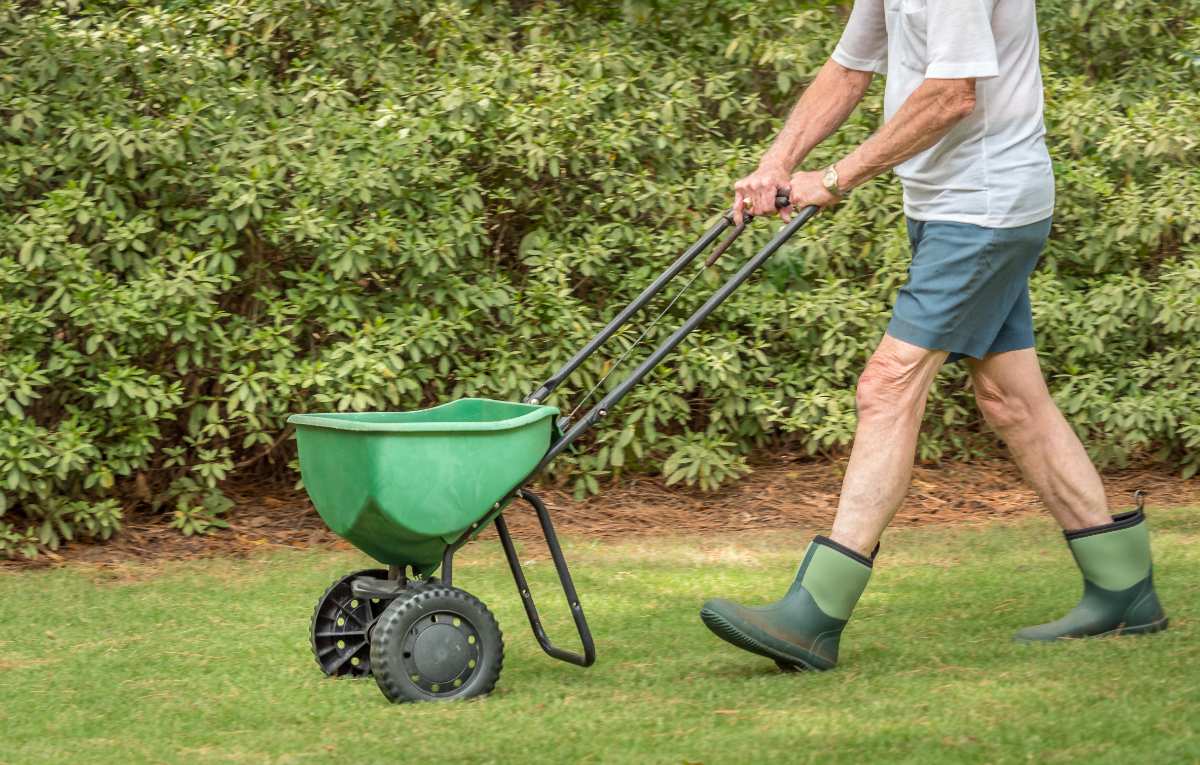
The best time to apply fall fertilizer is usually September through November, but it depends on your grass type and location. Fertilize when soil temperatures reach 50 to 65 degrees for cool-season grasses, or 65 to 75 degrees for warm-season varieties.
Fall fertilizers determine how your lawn handles winter stress and bounces back in the spring. They can boost or ruin your grass’s health, so plan the application carefully.
Getting the timing and formula right can be tricky, especially if you have a mix of grass types. LawnStarter’s lawn treatment pros can handle fall fertilizing for you so you get the results without the guesswork.
Why Fall Fertilization Matters
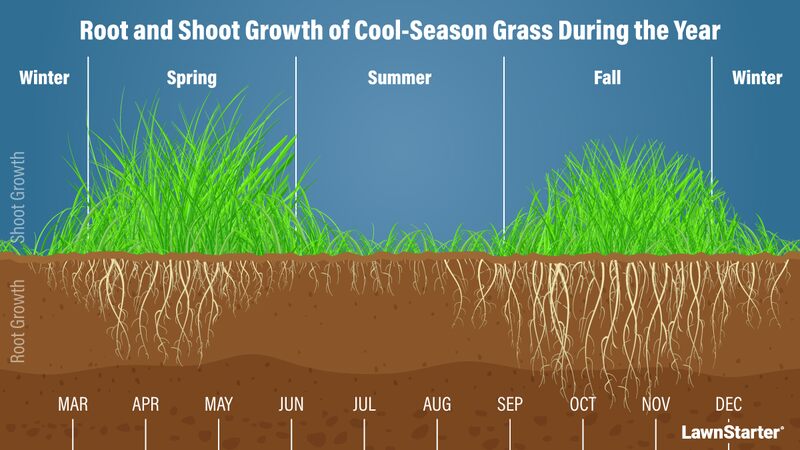
Fall is the most important fertilizing season for cool-season grasses. Even as blades slow down their growth, roots do their heaviest growing. Cool-season root growth peaks when soil temperatures are between 50 and 65 degrees.
A fall feeding fuels deeper root growth that stores energy for winter and speeds up spring green-up. It also thickens the turf, crowding out weeds before they get a foothold the following year.
What about warm-season grasses? Warm-season varieties like Bermudagrass, Zoysiagrass, and St. Augustinegrass naturally slow their growth in fall as they prepare for dormancy.
Nitrogen applied too late can force new growth that cannot harden off before frost, leaving the grass vulnerable to winter damage. For warm-season lawns, a potassium-only fertilizer in early fall is the safer choice.
When to Apply Fall Fertilizer by Region
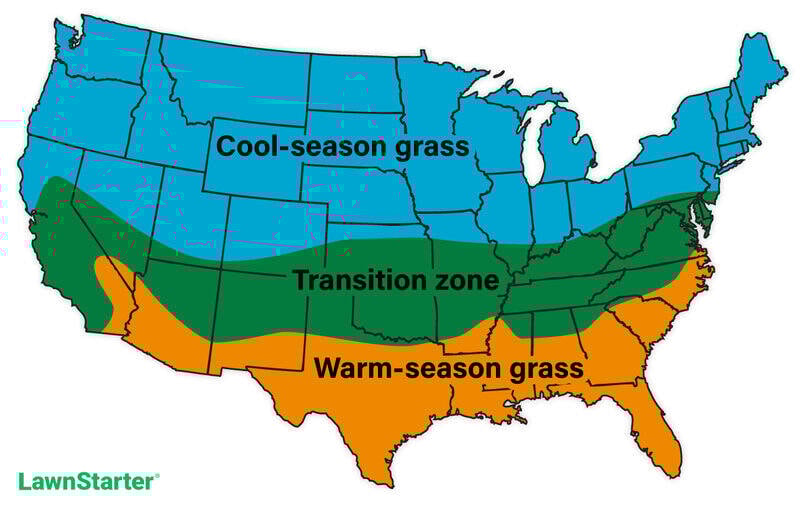
For both grass types, the best time to apply fall fertilizer changes as you move from north to south across the country.
See Related: When to Fertilize Your Lawn
Cool-Season Grasses in Northern Regions
Fall is cool-season grasses’ second growing season, so tall fescue, Kentucky bluegrass, and ryegrass benefit the most from fall fertilizers. It gives them:
Thicker, healthier grass: Denser turf crowds out weeds
Increased winter hardiness: Stronger roots survive cold better
Prolonged green color: Grass stays green longer into fall
Faster spring green-up: Stored energy fuels earlier recovery
Because of milder summers and harsher winters, northern regions start and finish fall lawn care earlier. Check the chart below for timing and cues to help you figure out when to fertilize during fall in your area.
| Early Fall Application (Essential) | Late Fall Application (Optional) | |
| Months | Mid-August to early September | Mid-September to late October |
| Soil temperature | Under 65 degrees | Over 50 degrees |
| Frost cue | 6 to 8 weeks before the first frost | 2 to 3 weeks before ground freeze |
| Grass appearance | Grass turns green if it went brown in summer | Grass is still green |
In some of the coldest states (North Dakota, Maine), fall fertilizing usually starts in August, when summer temps drop, and wraps up by mid-September.
Moving south, the season shifts later. In states like Kansas and Missouri, the fall fertilization window is early September to early November. For a lush appearance, Scott Culala, of The Lawn Cypress, in Gardner, Kansas, recommends fertilizing more than once: “Treat it twice in the fall, twice in the spring.”
Use a high-nitrogen fall fertilizer with slow-release nitrogen, potassium, and phosphorus. It supports fall growth and winter hardening. For late fall, select a fertilizer with quick-release nitrogen.
Do not apply grass fertilizer on frozen ground. Plants cannot absorb it, and it will run off with the snowmelt, polluting the groundwater.
Tip: Labor Day is a perfect time for early fall fertilization in some northern regions. Take advantage of the long weekend and feed your lawn.
See Related:
Transition Zone in the Middle of the Country
The middle of the U.S. (called the transition zone) grows both warm-season and cool-season grasses, so fall fertilizing schedules vary.
Cool-Season Grasses
Summers are hotter and longer than up north, so there is more risk of fertilizing cool-season grasses too early. Follow the cues in this chart to get the timing right.
| Early Fall Application (Essential) | Late Fall Application (Optional) | |
| Months | Late August to mid-September | Mid-October to mid-November |
| Soil temperature | Under 65 degrees | Over 50 degrees |
| Frost cue | 6-8 weeks before first frost | 2 to 3 weeks before ground freeze |
| Grass appearance | Grass turns green if it went brown in the summer | Grass is still green |
Wait until daytime temperatures stay below 80 degrees for a week before fertilizing. Go too early, and you risk fertilizer burn and runoff.
Some states restrict fertilizer use in late fall. Check local rules before buying fall fertilizer for your grass. For example, Maryland bans phosphorus fertilizers year-round and prohibits nitrogen from Nov. 16 to March 1 under fertilizer blackout dates designed to protect the Chesapeake Bay.
See Related: Cities Limiting Use of Lawn Fertilizers and Pesticides
Warm-Season Grasses
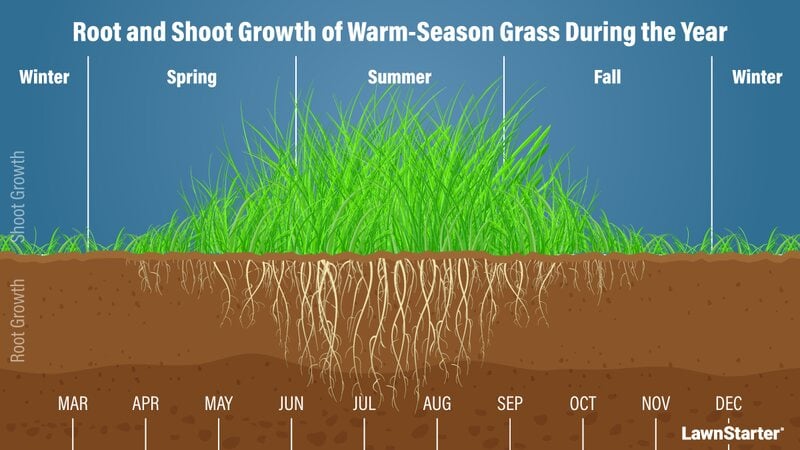
Warm-season grasses (Bermudagrass, Zoysiagrass, centipedegrass, St. Augustinegrass, and bahiagrass) thrive from late spring to late summer and go dormant in the winter, which comes early in the transition zone.
If you need to feed your lawn with a fall fertilizer, the best time is mid-August through September.
| Months | Mid-August through September |
| Soil temperature | 65 to 75 degrees |
| Frost | 6 to 8 weeks before first frost |
| Grass appearance | Still green, not dormant |
Avoid fertilizing with nitrogen after early September, as this can delay dormancy and increase the grass’s susceptibility to winter damage. The best time to fertilize warm-season grasses with nitrogen is late spring to early summer.
Note: If you need to fertilize with nitrogen in the fall, use a fertilizer with quick-release nitrogen so the grass can absorb it before dormancy begins.
In September, you can apply a potassium-only fertilizer that helps the grass better withstand the cold. Use phosphorus only if the lawn is deficient and the local rules allow it.
Warm-Season Grasses in the Southern U.S.
The further south you live, the longer warm-season grasses keep growing. If you fed your lawn enough in spring and summer, you can skip fall fertilizer. If your lawn needs it, you have a bigger window.
| Months | September through October |
| Soil temperature | 65 to 75 degrees |
| Frost cue | 6 to 8 weeks before first frost |
| Grass appearance | Green grass |
Fall fertilizing might be necessary when:
You maintain a short, dense, golf-course quality lawn
You grow hungry grasses like Bermudagrass or St. Augustinegrass in Florida
Your lawn lacks potassium needed for winter hardiness
If you need to apply nitrogen, keep the rate conservative, around 0.25-0.50 pounds per 1,000 square feet or less. Otherwise, stick to potassium-only fertilizer.
See Related:
Best Fall Fertilizer to Use
The right fall fertilizer depends on your grass type and when you are applying it. Here is a quick breakdown of what to look for on the bag.
| Scenario | NPK ratio | Why |
| Cool-season, early fall | 24-0-12 or 20-8-8 (slow-release) | Steady root growth without top-growth surge |
| Cool-season, late fall | 20-0-10 (quick-release) | Final nutrient boost before ground freeze |
| Warm-season, early fall | 0-0-25 (potassium only) | Winter hardiness without new growth |
For cool-season grasses in early fall: Choose a slow-release nitrogen formula. It feeds the lawn gradually over several weeks, promoting steady root growth without a surge of top growth.
For cool-season grasses in late fall: Switch to quick-release nitrogen with added potassium. Quick-release nitrogen gives a final nutrient boost before ground freeze, and potassium strengthens winter hardiness.
For warm-season grasses: Skip high-nitrogen formulas. A potassium-only fertilizer in early fall helps the grass prepare for dormancy without triggering new growth.
You should test your soil first: A soil test tells you exactly which nutrients your lawn needs and whether your pH is in the right range. Many university extension offices offer affordable tests.
See Related: How to Choose the Best Fall Lawn Fertilizer
How to Apply Fall Fertilizer
Mow your lawn and rake up leaves before spreading fertilizer so granules reach the soil. Use a broadcast spreader for large areas or a drop spreader near flower beds where you need precise edges.
As Chelsea Morris, of High Class Grass, in Virginia Beach, Virginia, puts it, “Proper timing and correct application rates matter far more.” Follow the label rate, usually around 1 pound of nitrogen per 1,000 square feet for cool-season grasses in early fall. For late fall, cut that rate in half.
After spreading, water lightly to help the granules dissolve and reach the root zone. For a full walkthrough of technique and equipment, see our guide on how to fertilize your lawn.
See Related: Should You Mow Before Fertilizing Your Lawn?
FAQs
Yes. If you are overseeding in the fall, either spread a starter fertilizer after seeding or wait until the new grass sprouts and then fertilize the entire area.
You know your grass needs fertilizer if you notice slow growth, yellowish or fading color, an increase in weeds and pests, or thinning patches.
See Related: 5 Tell-Tale Signs Your Lawn Needs Fertilizer
For cool-season grasses, you can apply a late-fall fertilizer up to 2 to 3 weeks before the ground freezes. For warm-season grasses, stop all nitrogen applications by September to avoid delaying dormancy. Never fertilize on frozen ground.
Let the Pros Handle Fall Fertilizing
Fall fertilizing is essential for cool-season grass but tricky for warm-season varieties. One wrong move and you could damage your lawn. LawnStarter’s lawn treatment pros in your area can get the timing and formula exactly right for thick, healthy growth.
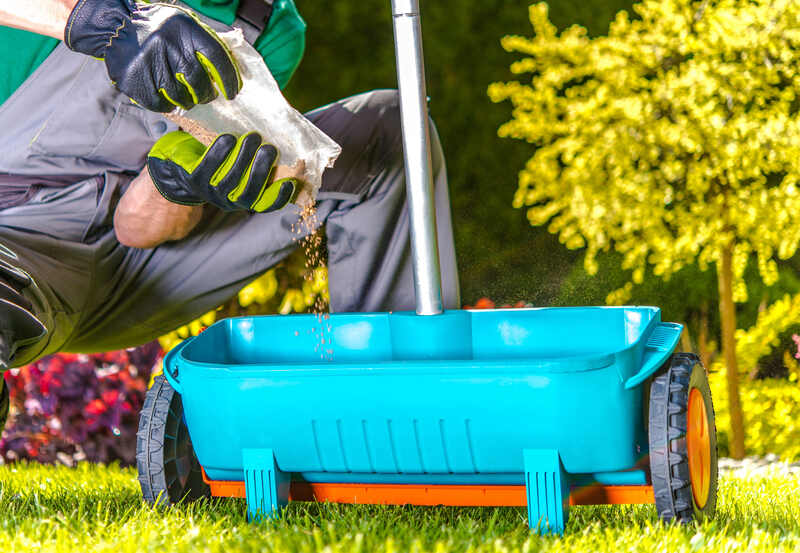
Main Image: Person fertilizing a lawn using a spreader. Image Credit: Scott Habermann / Adobe Stock
Related Posts: