| Key Takeaways: |
|---|
| • Lawn bowls is a precision sport played on a “green”: This sport demands much stricter and more meticulous turf maintenance than a typical lawn. • The 2026 US Open runs Nov. 1–7 in Sun City, Sun City West, and Surprise, Arizona, and is open to World Bowls affiliate members worldwide. • Meet the US Open players: 4 players share their experiences as lawn bowls competitors and what they love about the sport. |
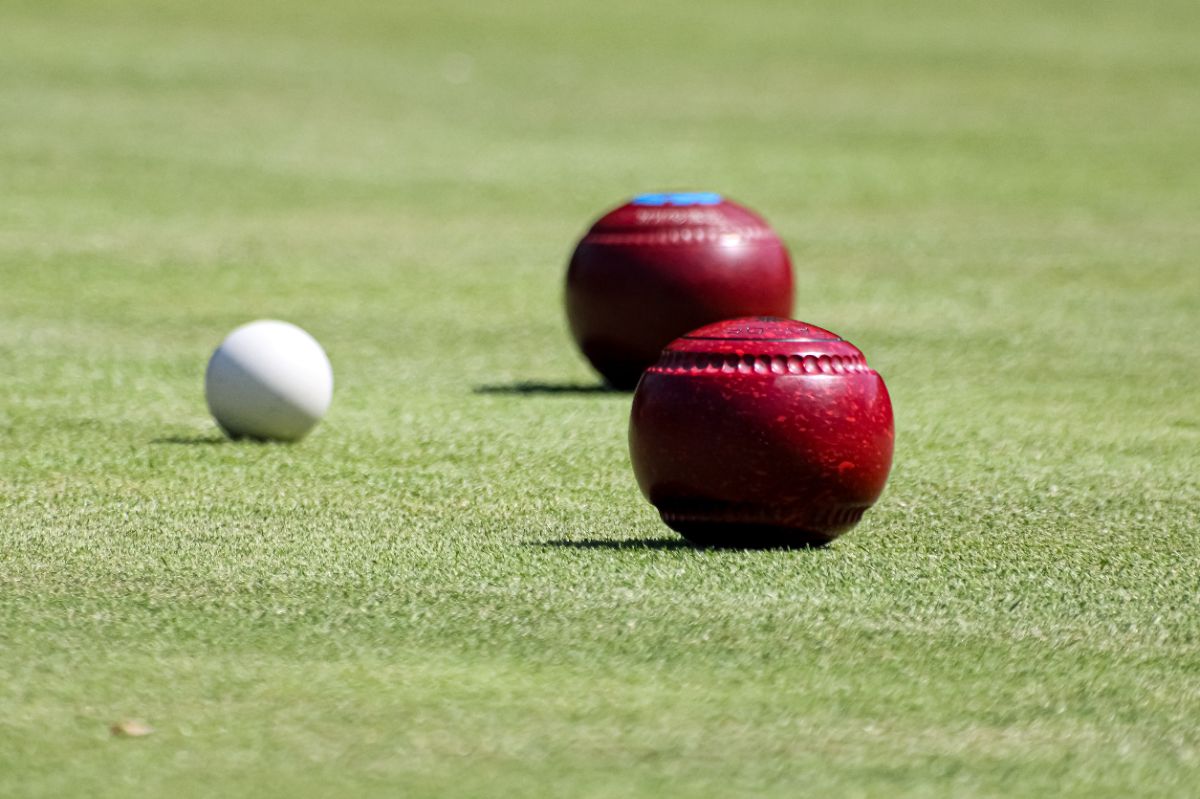
Most Americans have never heard of lawn bowls, but for thousands of players across the country and around the world, it’s a strategic sport built around a perfectly maintained patch of grass or an artificial carpet.
From November 1-7, 2026, Bowls USA will host the US Open in Sun City, Sun City West, and Surprise, Arizona, drawing nearly 300 lawn bowls competitors from 10 countries.
LawnStarter spoke with four of this year’s players to learn why they enjoy the game and how groundskeepers take care of natural (and artificial) greens in Arizona’s challenging conditions.
What Is Lawn Bowls?
Lawn bowls, also called “lawn bowling,” is a precision sport in which players roll resin balls (called bowls) across a playing field called the green.
The goal: The object is to land the bowls as close as possible to a small white or yellow target ball, called the “jack.”
The ball: Unlike a bowling ball, a bowl is deliberately imbalanced, so it curves as it slows. This characteristic, called “bias,” separates lawn bowls from similar lawn games like bocce or pétanque. Bowls are asymmetrical and not quite round; they come in varying sizes, designs, weights, biases, and colors.
The green: Lawn bowls is played on a flat grass surface, called the “green.” The green is 120 feet long and divided into parallel strips, called rinks, each 14 feet wide. These rinks allow multiple games to be played simultaneously. To catch stray balls, the green is surrounded by a sand-filled ditch.
Matches include 2-8 players:
- Singles: 1 player per side
- Pairs: 2 players per side
- Triples: 3 players per side
- Fours: 4 players per side
The 2026 US Open: What to Know
| The US Open is open to all World Bowls affiliate members and billed as Bowls USA‘s premier event, drawing hundreds of competitors from the U.S. and abroad. | |
| Dates | Sunday, Nov. 1 – Saturday, Nov. 7, 2026: Check the US Open webpage for match times and venues, as well as livestream links. |
| Location | Sun City, ArizonaSun City West, ArizonaThe Grand in Surprise, Arizona |
| Match Type (Men’s and Women’s) | SinglesPairsFours |
| How to Watch | Watch the finals via livestream on the Bowls USA Facebook page. Videos for each finals match will also be published on Bowls USA’s YouTube channel at the end of the day. |
Meet the Players
Lawn bowls isn’t only about strategy and physical exercise: It’s also about community, socializing, and having fun. There are 290 competitors participating in the US Open this year. We spoke with 4 of them.
Anne Nunes: 2025 National Champion – Women’s Singles
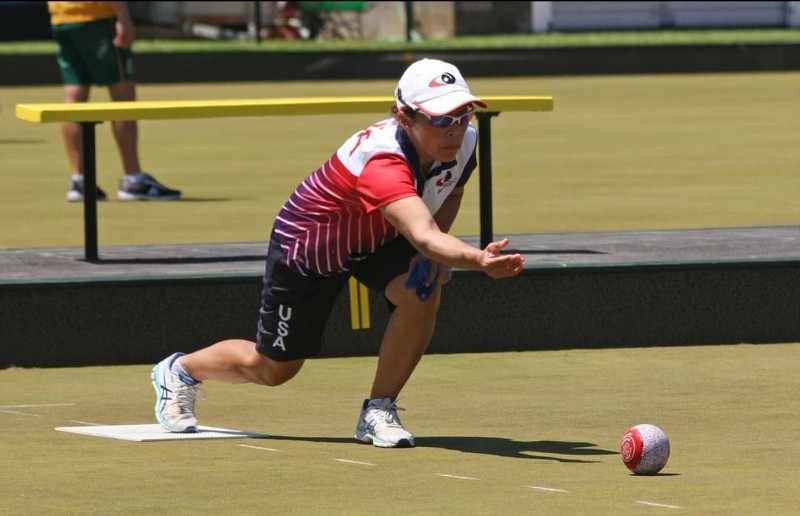
| ● Competed in the World Bowls Champion of Champions 7 times ● Bronze at the 2022 World Bowls Champion of Champions ● Gold at the 2023 World Bowls Champion of Champions ● Silver at the 2024 World Bowls Champion of Champions ● Won the National Championship Singles for the 13th time in 2025 |
Anne Nunes’s father introduced her to lawn bowls when she was 27 years old. “During a lunch break, he had me roll some bowls at Laguna Beach, and I did pretty well. Before I knew it, I was hooked!” she says.
Now 57, Nunes has been playing for the past 30 years.
After only her first year of lawn bowling, California native Nunes was asked to join Team USA. “I was named to a team that was going to play against Canada at the 1998 North American Challenge, and I’ve been on Team USA ever since,” she says.
Nunes enjoys the sport’s combination of physical and mental challenges. “It’s been compared to playing chess on the green – anticipating what shot your opponent is going to play before they play it.”
For Nunes, it’s not just about the competition, but the lawn bowls community, as well. “Even with national or international titles, the best part of this game is the friendships made at the local bowls clubs, around the U.S., and all over the world,” she says.
Manya Urane: Winner of 2025 US Open Women’s Pairs
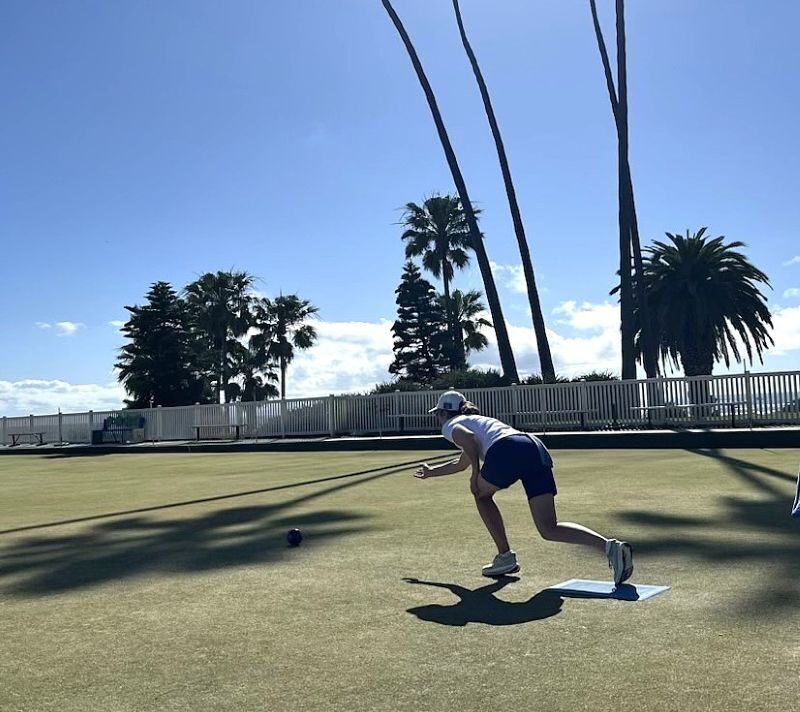
| ● Gold in 2025 US Open Women’s Pairs ● Silver in 2025 US Open Women’s Fours ●Qualified twice for the National Championships ● Women’s Bowler of the Tournament in the 2025 US Open |
Manya Urane, a member of the Long Beach Lawn Bowling Club, has been bowling for 4.5 years. When she isn’t bowling, she splits her time between Long Beach, California, and San Antonio, Texas.
She started playing lawn bowls after a dinner conversation when a friend asked if she’d like to try free group lessons. Urane began bowling at the club 2 days a week, and her interest in lawn bowls kept growing. “It’s addictive,” she says.
The challenge and competition of lawn bowls is what Urane loves about the sport. “While I enjoyed social bowling at the club, it was when I began to compete in tournaments that the sport really became interesting to me.
“The tournament community is a lot of fun, with stiff competition and a sense of belonging,” she says. “It’s opened up a world of friendships.”
Here’s what Urane would tell those who haven’t tried lawn bowls: “Give it a try – lessons are free.” And best of all: “It’s FUN!”
Sadri Jazayeri: Winner of the 2025 US Open Men’s Pairs
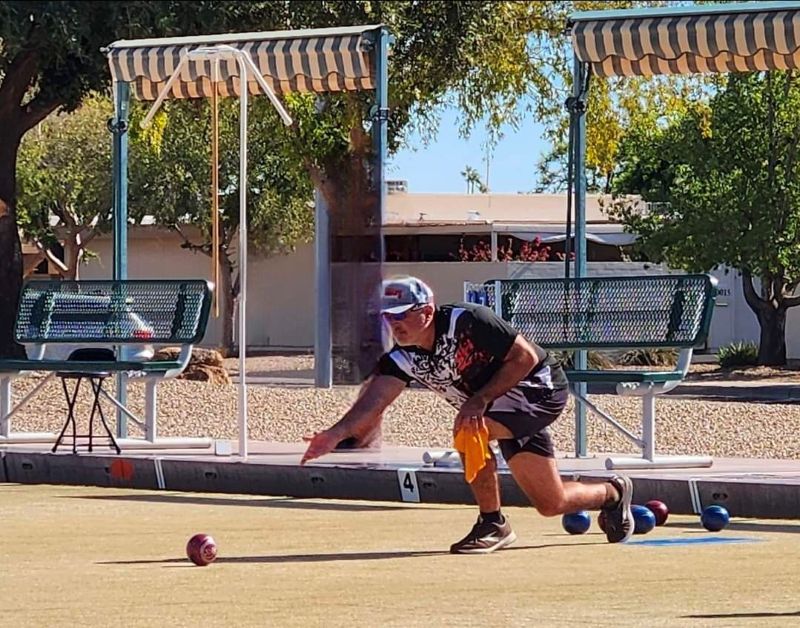
| ● Winner of the 2025 US Open Men’s Pairs ● Silver in the 2025 US Open Men’s Fours ● Men’s Bowler of the Tournament in the 2025 US Open |
Sadri Jazayeri, 49, from Rancho Santa Margarita, California, plays with his home club, the Laguna Beach Lawn Bowling Club. He began playing in July 2023, when his good friend Charlie Herbert introduced him to the sport.
“I was hooked immediately,” he says.
The strategic challenges of lawn bowls drew Jazayeri to the sport: “It is never the same experience because of the changing environment, such as the weather, the greens, etc.”
The social aspect is another part of what Jazayeri loves about the sport: “You get to be outdoors and enjoy the experience with great people. The competition is fierce, but the camaraderie is just as strong,” he says.
Here’s his advice for newcomers: “Give it a chance. It is a lot more fun than it looks, and it can definitely be a great exercise or outdoor activity to add to anyone’s lifestyle.
“This sport has changed my life for the better,” he says.
Scottie Marzonie: Winner of the 2025 US Open Fours
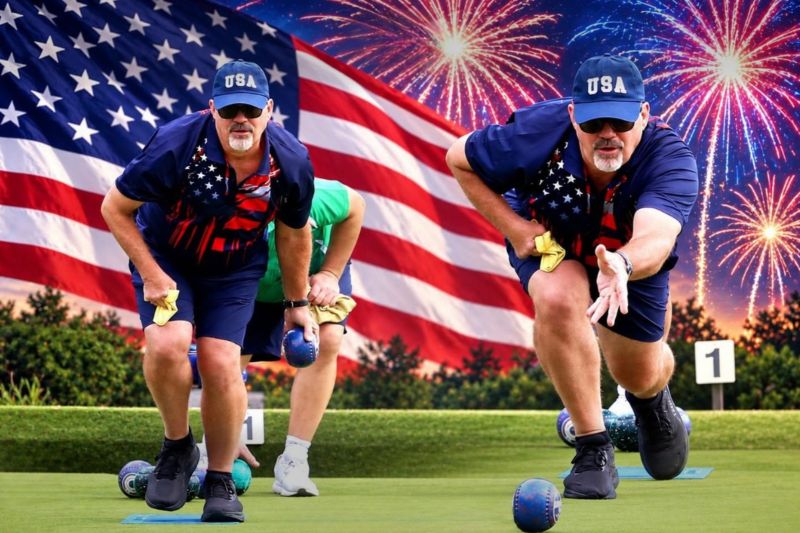
| ● Winner: 2023 U.S. Nationals Pairs ● Winner: 2025 Southwest Division Open Singles ● Winner: 2025 US Open Fours |
California-based Scottie Marzonie, a proud member of Team USA, has traveled the world to compete in international lawn bowls tournaments.
Marzonie first discovered lawn bowls in 2010 on a father-son trip when his dad played in the US Open. After that event, Marzonie bought all the equipment needed for lawn bowling and decided to try it himself.
The sport quickly became a family affair: Marzonie went on to compete in Pairs with his father in 3 US Open tournaments. “We had a blast,” Marzonie says. “It was a great way to reconnect with my dad, and it was such a fun sport.”
Lawn bowls became the next natural entry in Marzonie’s sports career. Growing up, he played baseball, football, and basketball, and later coached as well. I am “very competitive by nature,” he says.
Marzonie’s myth buster: “When I started, it was considered an old man’s sport, but at the elite levels, it’s still a young man’s sport. You walk two miles every game and we play three, four games a day in tournaments,” he says.
Outside of competition, “Anybody can play, from 4 to 94, even 104,” he says. “We’ve got a guy who still bowls, and he’s still good. So the misconception is people trying to label it one way or the other.”
What It Takes to Build a Championship Green
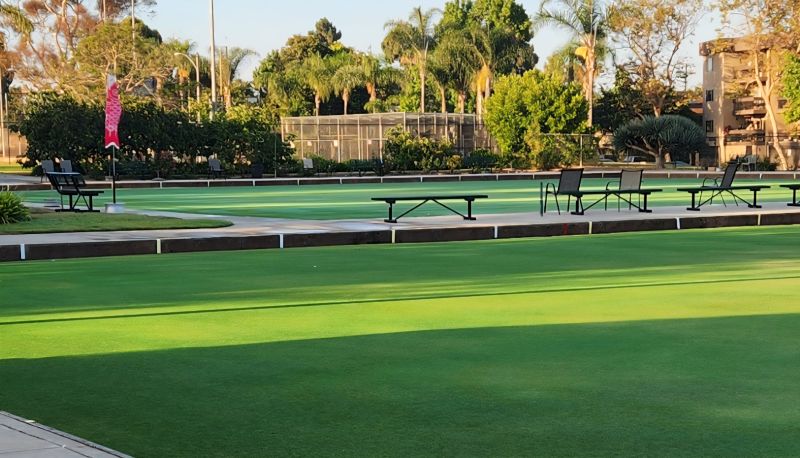
“Maintaining a bowling green requires much more precision and uniformity than a typical residential lawn,” says Scott Jones, master lawn bowls groundskeeper at Sun City, Arizona. “The whole objective is to have an effective green, where the bowls roll consistently in the direction they’re intended to go.”
Unlike a golf course, “we don’t want it to be pretty and bright green,” says Marzonie. “We want it to be cut, have strong roots, and be level and fast.”
Any dip, rise, or excessive thatch throws off a shot. That demands more precise maintenance than residential lawns and golf greens.
“Even a small flaw or variation in the surface can change the path of a bowl. You have to pay attention to the details and make sure the entire playing surface is consistent,” Jones says.
Bowling greens require intensive lawn maintenance:
- Frequent mowing. Bowling greens are mowed at 1/8 inch tall, so they require mowing several times per week. “We use specialized mowers (with rollers) designed to cut the grass very short and maintain a consistent surface,” Jones says.
- Regular dethatching and aeration. Thatch must be minimized for a quality playing surface. In addition, aeration “encourages deeper root growth and helps create stronger turf that can better withstand regular foot traffic,” Jones says.
- Disciplined irrigation. Water is key for healthy growth and recovery. “In Arizona, you have to pay close attention to the grass and make sure it gets the moisture it needs to handle the heat and continue growing,” Jones says. “When I notice a struggling or dry spot, I adjust the watering to help it recover.”
- Smart fertilization. Too much nitrogen can encourage thatch, but not enough, and the grass doesn’t recover well from foot traffic. Resilience “starts with building a strong root system,” Jones says. “Once you have a healthy foundation, the grass is better equipped to hold up to the demands of the sport.”
It’s also important for players to wear flat-soled shoes to protect the green. Seeds can get stuck in grooved shoes, which spread unwanted weeds onto the playing field.
See Related: How to Dethatch Your Lawn (Plus When to Hire a Pro)
The Lawn Bowling Greens in the US Open
This year, the 2026 US Open will be played at 3 different venues. Here’s a quick look at the 3 bowling greens:
Sun City and Sun City West
“We chose Sun City and Sun City West because they are iconic venues with excellent facilities and greens, and we have used them for the past 2 years for this event,” says Veronica Sum, Bowls USA immediate past president and chair and 2026 tournament director for the US Open.
“Arizona is considered the home of the finest greens in (the) U.S.A.,” she says.
“We use TifTurf Bermudagrass at Sun City,” Jones says. “We mow the greens every other day to approximately 0.120 inches.” The goal is to keep grass short and uniform enough to make it easy for balls to roll without damaging the turf.
The Grand
The Grand’s artificial turf bowling green requires regular attention and maintenance, too.
“We don’t have the mowing, irrigation, fertilizing, overseeding, and other maintenance that would come with keeping a natural grass lawn bowling green in good playing condition year-round,” says Jamie Svoboda, facilities maintenance director at The Grand in Surprise, Arizona.
But even artificial greens need constant maintenance, especially in tough climates.
The most challenging part of maintaining the artificial turf at the Grand is keeping the surface clean and in good condition, Svoboda says, which means constantly clearing debris and ensuring proper drainage.
In addition, The Grand’s bowling green routinely faces Arizona’s tough conditions, including extreme heat and UV exposure, dust, wind and debris, and monsoon storms, he says.
“We also monitor the condition of the turf, seams, edges, and surrounding areas,” Svoboda says. “With any recreational surface, we want to catch small maintenance issues before they develop into larger repairs.”
See Related: When and How to Plant Winter Grass in Arizona
Takeaways for Home Lawn Care
You’ll never need tournament-grade precision in your backyard, but the core principles behind caring for grass apply at any scale, including:
- Mow properly: Trim your lawn to the right mowing height for your turf grass type, follow the one-third rule, and mow regularly during the active growing season. “I’d also tell homeowners to keep their mower blades sharp. That makes a difference in getting a clean cut,” Jones advises.
- Aeration: Most lawns need to be aerated once a year. Lawns that endure heavy foot traffic or have compacted soil may need to be aerated as frequently as twice a year.
- Proper irrigation: Underwatering can lead to brown grass, but overwatering your lawn invites pests, fungal growth, or lawn disease.
- Fertilize to boost growth: During your lawn’s active growing season, adding fertilizer can give your grass the boost it needs. Find out when to fertilize your lawn.
See Related: How to Aerate Your Lawn: A Complete Guide
How to Get Involved
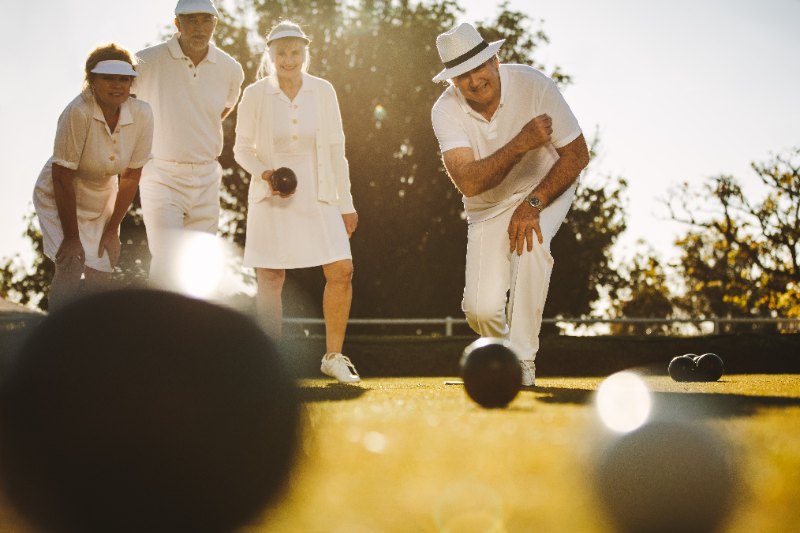
“Lawn bowls is the BEST sport!” Nunes says. “It is fun, can be challenging, and it’s social. It really is a sport for everyone.”
New to the sport? Bowls USA maintains a directory connecting players to local clubs across the country, so use their club locator to find one near you. Bowls USA has over 3,300 members and more than 80 clubs that cater to members of all ages, not only retirees.
Every sport has its own lingo. Some common and colorful phrases heard at lawn bowling matches include:
- “Fast green,” referring to a surface which offers little resistance to the progress of the bowl
- “Toucher,” a bowl which during its course has touched the jack
- “Wick off,” referring to a bowl which comes into angled contact with another bowl, thus causing the course of the moving bowl to be altered.”
“If you catch the bug, you’ll have a sport for life,” says Marzonie. “That’s kind of a motto of lawn bowls: Something that you can play forever. So go out there and catch the bug.”
Sources:
• “A Comparison of Bowling Green and Golf Green Maintenance.” By Lloyd Woods, greens consultant. Michigan State University Libraries.
• Anne Nunes, winner of the 2025 National Championships – Women’s Singles, CA. Personal interview.
• “Game Play and Rules.” Pétanque America.
• “Games of Bowls.” Ball Games of the World.
• “Introduction to Lawnbowling.” By J. Michael Henry, farm advisor. California Turfgrass Culture.
• Jamie Svoboda, the facilities maintenance director at The Grand in Surprise, AZ. Personal interview.
• Manya Urane, lawn bowls player and winner of the 2025 US Open Pairs, Long Beach, CA, and San Antonio, TX. Personal interview.
• “Resource for Bowlers.” Bowls USA.
• Sadri Jazayeri, lawn bowls player and winner of the 2025 US Open Pairs, Rancho Santa Margarita, CA. Personal interview.
• Scott Jones, master lawn bowls groundskeeper, Sun City, AZ. Personal interview.
• Scottie Marzonie, lawn bowls player and winner of the US Open Fours, Mammoth Lakes, CA. Personal interview.
• Veronica Sum, immediate past president and chair and 2026 tournament director for the US Open Bowls event with Bowls USA. Personal interview.
• “What Is Lawn Bowl? A Beginner’s Guide and How to Play.” Sunseeker.
• “Wivenhoe Bowls Club’s Glossary of Terms.” Wivenhoe Bowls Club.
Main Image: Lawn bowling bowls and a jack ball on the grass. Serge / Adobe Stock
Related Posts: