| Key Takeaways: |
|---|
| • Identify your grass type and test your soil before doing anything. • A soil test reveals pH, nutrients, and organic matter, which helps determine what fertilizer your lawn needs. • Issues the previous owner left behind (weed seeds, compacted soil, pH imbalance) can negatively impact the overall health of your lawn. |

A new lawn doesn’t come with a manual. Whether you just closed on a new construction house or you’re staring at a yard the last owner clearly didn’t touch, you might be left guessing what it needs.
Incorrectly diagnosing a lawn issue is how new homeowners end up buying the wrong fertilizer, overseeding the wrong grass, or implementing a treatment plan built for a completely different grass type.
Getting the lawn diagnosis right prevents wasted time and money. Once you know your grass type and soil condition, you’re ready to build an action plan. If you don’t want to mess with the details, hand your results straight to a local LawnStarter pro.
How to Assess Your New Lawn
Before you pull out your wallet, do a quick assessment of your lawn: Walk through the yard, identify your grass type, and test your soil. Then note any potential pest or disease issues. These 4 simple steps tell you exactly what you’re working with and help you make the most of every dollar.
1. Walk the Lawn First: What to Look For
If you haven’t yet taken a detailed look at the lawn, now’s the time. Take a walk through the lawn (front, back, and sides) and note what you see:
- Thin patches: Bare, sparse, or missing grass.
- Compacted soil: Press a screwdriver into the ground. If it won’t sink 2 inches with hand pressure, it’s a sign of compacted soil.
- Thatch buildup: Thatch is a spongy brown layer between the grass blades and soil. As a general rule, once it exceeds 1/2 inch, it’s time to dethatch.
- Drainage problems: Low spots that hold standing water after rain.
Write down everything you find.
“Check the soil for compaction, look for thatch buildup, scan for weeds and bare patches, and watch for signs of grubs or pests,” says Adam Gorham, a new homeowner in Massachusetts and founder of Adam Gorham Films.
“Note where water pools after rain, too, because drainage problems hide until they’ve already done damage.”
See Related: 7 Ways to Improve Drainage in Your Yard
2. Identify Your Grass Type
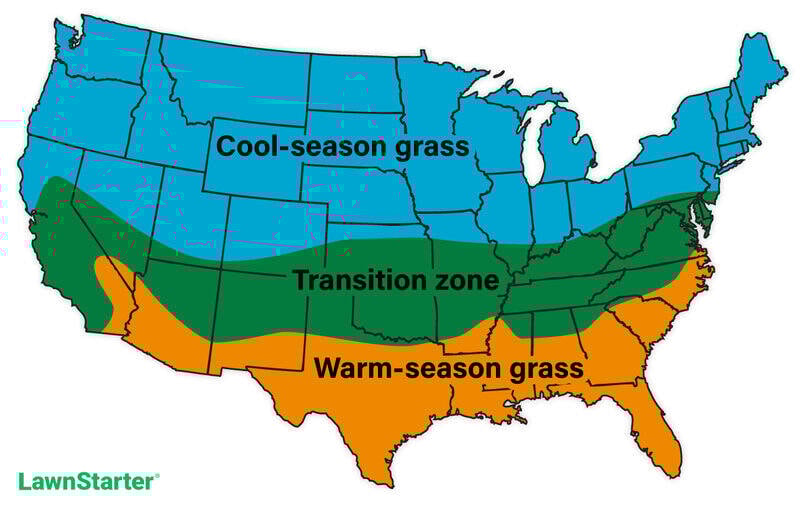
Every lawn care decision (fertilizer timing, mowing height, whether to overseed) depends on knowing what type of grass you have.
The U.S. is split into 3 growing zones:
- Northern zone: Cool-season grasses such as Kentucky bluegrass, tall fescue, and ryegrass usually grow in northern lawns. Cool-season grass actively grows during the fall and spring.
- Southern zone: In the warm regions of the South, lawns usually have warm-season grasses such as Bermudagrass, St. Augustine, and Zoysia. Warm-season grasses go dormant or slow their growth by fall.
- Transition zone (middle third of the country): Both warm-season and cool-season grasses grow here, so misidentifying your grass leads to the most expensive mistakes.
Gorham recalls how he identified his grass type at his first new house: “I pulled a small plug, took close-up photos of the blades, and matched them against a local Extension guide.”
If you are still having difficulty identifying your grass, take it to your county Extension office or try Ask Extension. Upload photos of your grass and ask Extension experts for help.
3. Test Your Soil: pH, Compaction, and Nutrients
A soil test is the single most useful $10-$25 you can spend on a new lawn. It measures pH, nutrient levels, and organic matter, all factors that determine whether fertilizer will actually work.
Most grass performs best between a pH of 6.0 and 7.0, according to Oklahoma State University Extension. Outside that range, nutrients in the soil become less soluble, so even a perfectly timed fertilizer application won’t help much if plants are unable to absorb the nutrients.
Here’s how to prepare a soil sample for testing:
- Dig 8-15 small plugs that are 4-6 inches deep from different spots in the yard.
- Mix them together.
- Send them to your local Extension office or run them through a soil test kit. Results from your Extension service typically take 1-3 weeks.
Testing frequency: The University of Minnesota Extension recommends retesting the soil every 3-5 years once your lawn is established, or whenever you are planning to make a change to your lawn, such as installing a new garden bed.
See Related: How to Read a Soil Test Report
4. Watch for Signs of Pests and Disease
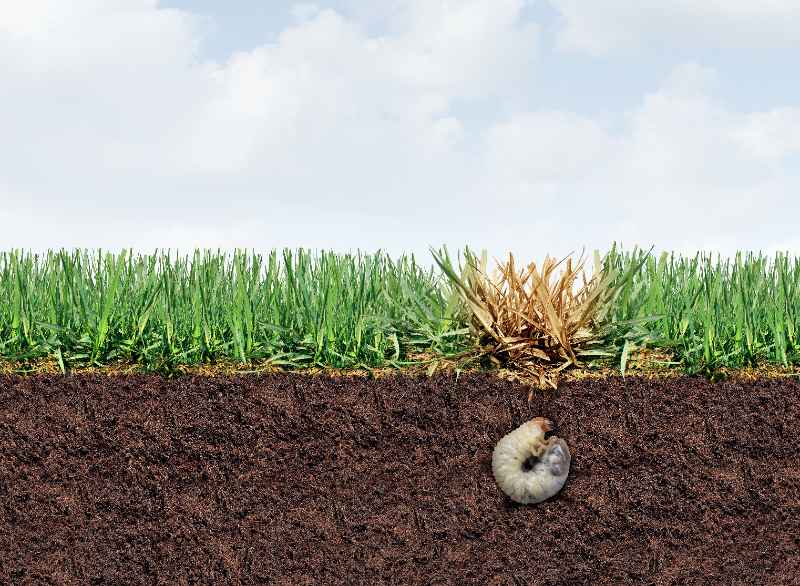
Irregular brown or yellow patches that lift like loose carpet point to white grubs, the beetle larvae that eat grass roots from below.
Here are the times of year when grub damage typically shows up:
- Fall: Late August through October
- Spring: March to early May
Confirm a grub infestation by cutting a one-square-foot section of grass 2-3 inches deep and folding it back. If you find 10-20 or more C-shaped white grubs, you likely need to treat them. Check out the common signs your lawn has grubs for what healthy vs. infested grass looks like.
Circular or ring-shaped dead spots point to lawn diseases rather than pests. Lawn diseases are the more likely culprit if your walk-through also turned up too much thatch buildup (over 1/2 inch) or drainage problems. Both excess moisture and excess thatch feed fungus.
What the Previous Owner May Have Left Behind
Here are 4 common issues new homeowners might discover in their lawn:
- Dormant weed seeds: If the previous owner let weeds go to seed, they’re already in your soil waiting for the right conditions to grow. A pre-emergent herbicide applied in early fall or early spring can stop many of them from germinating.
- Soil pH imbalance: Certain soil types have a pH outside of the ideal 6.0-7.0 range, leaving your yard with either too many or too few nutrients. A soil test will catch this before you waste money on unneeded fertilizer.
- Compaction: New-construction lots often have severely compacted soil from heavy equipment. Need to measure soil compaction? Try our screwdriver test. Aeration is one of the best ways to fix compacted soil.
- Grub eggs: Adult beetles lay eggs from June to August. If the previous owner never treated for grubs, your lawn’s roots may already be under attack by the time brown patches show up.
Gorham recalls his own yard being in a rough state when he moved in.
“The previous owner had let it go, so we inherited patchy grass, thick weeds along the fence line, and a layer of thatch choking everything underneath. We didn’t try to fix it all at once. We started by raking out the thatch and pulling the worst weeds, then aerated and overseeded the bare spots that fall.”
“It wasn’t glamorous, but by the next summer the lawn was thick enough that the weeds had nowhere to move in,” he says.
Turn Your Assessment Into an Action Plan
Once you know your grass type, soil results, and what the previous owner left behind, you’re ready to act.
Whatever the problem is in your lawn, use these guides to learn how to fix it:
- How to Aerate Your Lawn: A Complete Guide
- How to Dethatch Your Lawn (Plus When to Hire a Pro)
- Lawn Grubs: How and When to Kill Them
- How to Fix Patchy Grass
- What are the Different Types of Soil Amendments for Turfgrass Lawns?
If DIY yard work isn’t for you, hand over your soil test report to a local lawn care pro who can help you formulate and execute a precision plan for your lawn.
FAQ
Yes. Blade shape, color, and growth pattern (spreading vs. clumping) usually provide enough info to identify the grass type on your own. A soil test is a separate step that tells you about pH and nutrients in your soil, not grass species.
Yes. A soil test tells you why the weeds are winning. For example, if the pH balance is too acidic, it encourages weeds. By identifying nutrient deficiencies in your yard, a soil test informs how to amend your soil before you waste money on a weed treatment that doesn’t address the root cause.
The yard walk through, grass ID, and soil sample are all DIY-friendly. A professional assessment is worth it if the lawn’s condition is unclear, the yard is large, or you’d rather start treatment immediately once the diagnosis is done.
Hire a Local Lawn Care Pro
Assessing and rehabbing a lawn takes a keen eye, the right equipment, and time you may not have. If you’d rather leave it to someone who does this every day, LawnStarter’s mowing pros make it simple: Get an instant quote, choose a time, and a background-checked local pro will handle the rest.
Get a free mowing estimate near you →
Sources:
- Adam Gorham, homeowner in Massachusetts and founder of Adam Gorham Films. Personal interview.
Main Image: A family of four embraces on the green lawn of their newly purchased home next to a sold sign. Photo Credit: Moller/peopleimages.com / Adobe Stock
Related Posts: