| Key Takeaways |
|---|
| • Slit seeding delivers up to 90% germination and is best for severely damaged or bare lawns. • Overseeding germinates at 15% to 30% and works well for routine thickening of healthy lawns. • Slit seeding costs more per square foot, but it wastes far less seed on damaged turf. |
Struggling with a patchy lawn is frustrating, especially when you’re not sure which fix will actually thicken it. In short, slit seeding is best for severely damaged lawns, while overseeding works well for routine maintenance.
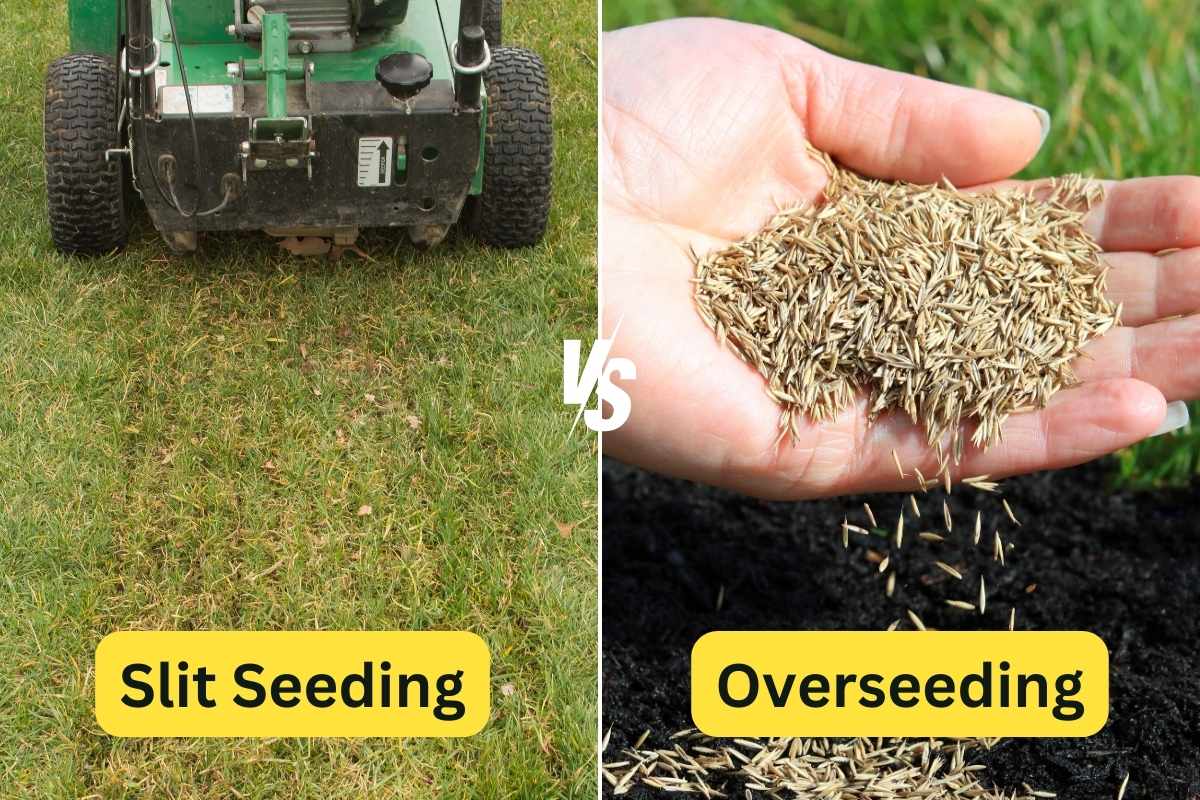
The difference between the two most common fixes comes down to how the seed is applied. Slit seeding uses specialized machinery to cut grooves and plant seed directly into the soil. Overseeding simply spreads seed over your existing grass.
Choosing the right method takes some know-how about your lawn’s condition, grass type, and timing. If you’d rather have a pro take a look, LawnStarter connects you with local aeration and overseeding pros who can handle the right solution.
Quick Comparison: Slit Seeding vs. Overseeding
Slit seeding is best for severely damaged or bare lawns, while overseeding is the better pick for routinely thickening a healthy lawn. The table below breaks down the key differences, from germination rates to costs and equipment:
| Factor | Overseeding | Slit Seeding |
| Best For | Healthy lawns with thin patches or for green winter color | Severely damaged or bare lawns |
| Cost per sq. ft. (professional) | $0.04-$0.08 (with no aeration) | $0.08-$0.18 |
| Germination Rate | 15%-30% | Up to 90% |
| DIY Difficulty | Easy | Moderate to difficult |
| Equipment Needed | Spreader ($20-$75) | Slit seeder ($85-$175 per day rental) |
| Existing Grass Impact | Minimal | Some disruption to roots |
What Is Slit Seeding?
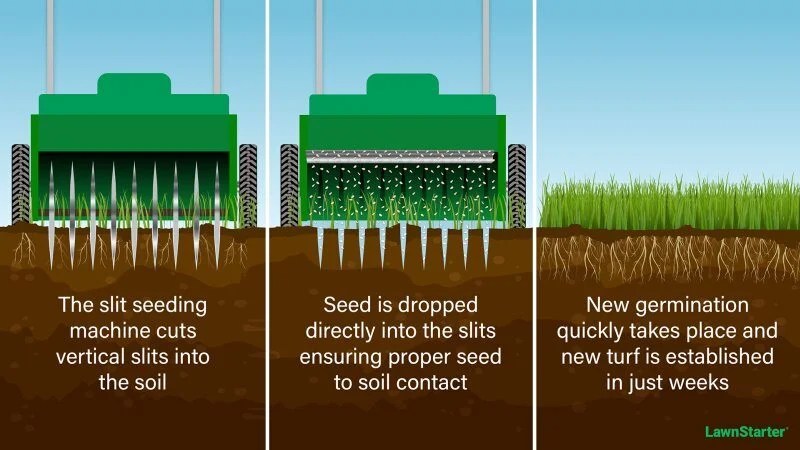
Slit seeding (also called slice seeding or power seeding) uses specialized equipment to cut narrow grooves in your soil and drop seeds directly into them.
A slit seeder is a heavy machine with rotating vertical blades that slice through grass and soil, creating furrows about 1 inch deep. As the blades cut, a hopper dispenses seeds directly into the grooves for strong seed-to-soil contact.
This method excels at renovating lawns with large bare patches, heavy traffic damage, or areas that need complete rejuvenation from bare dirt.
See Related:
Slit Seeding Pros and Cons
Slit seeding produces strong results, but it might not be the right solution for your lawn. Here’s a quick look at the pros and cons:
Pros
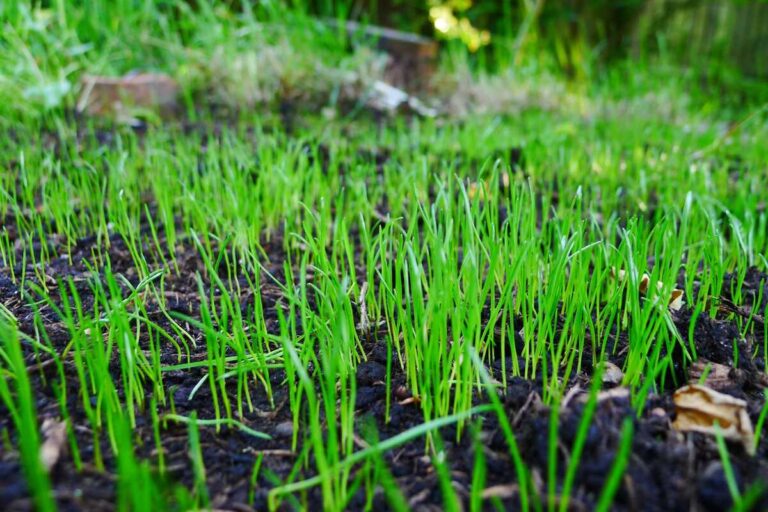
Superior germination: Up to 90% germination rates because every seed has direct soil contact and protection from birds and weather.
Better results on sloped lawns: Seeds stay put in the slits and don’t slide downhill as easily, which is an advantage on slightly sloped lawns.
Perfect for severe damage: The best choice for lawns with large bare patches or areas that need complete renovation. It handles problems that overseeding simply can’t fix.
Cons
Higher upfront cost: It costs $0.08-$0.18 per square foot to hire a pro to slice seed your lawn. For large lawns, this adds up quickly.
Requires skill and equipment: Operating a slit seeder is physically taxing, requires a truck to transport, and is usually loud and gas-powered. Most homeowners hire landscaping professionals to slice seed their lawns.
Can damage healthy grass: The blades cut through existing grass roots, so it’s not recommended for people with a healthy lawn that only needs to be thickened.
What Is Overseeding?
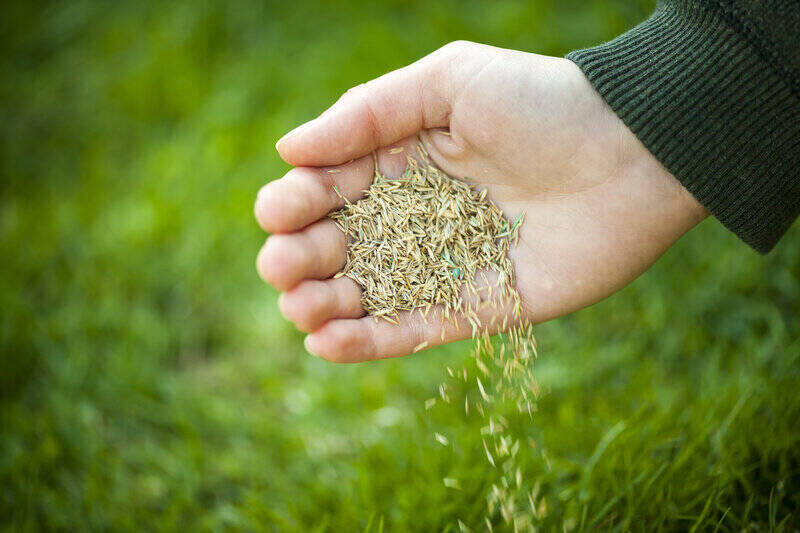
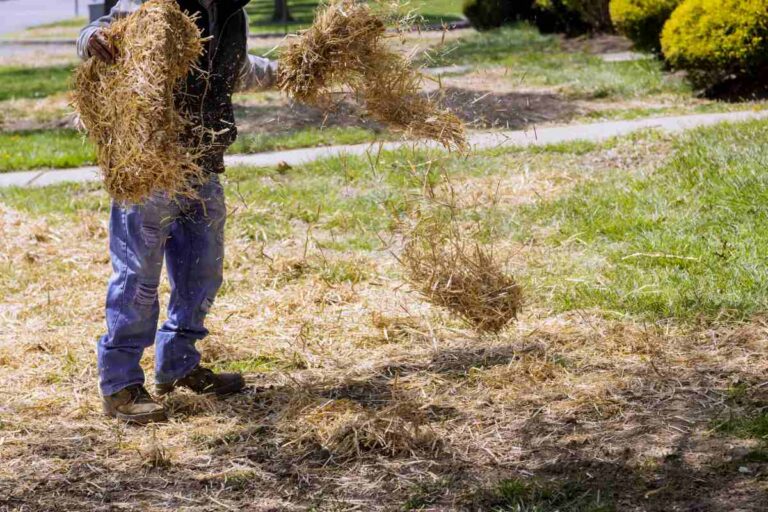
Overseeding means spreading new grass seed over your existing lawn to fill in thin or damaged areas. It’s the go-to method for homeowners who want to thicken up their turf without major renovation from bare dirt.
In Southern lawns, overseeding is also commonly done in early fall to establish cool-season grass that keeps lawns green during winter while warm-season turf goes dormant.
How Overseeding Works
The basic process involves 3 steps: Prepare your soil by raking and loosening the top layer, distribute seeds evenly using a broadcast or handheld spreader, and water consistently (2-3 times daily) until germination.
Core aeration before overseeding dramatically improves results by removing plugs from the soil, increasing seed-to-soil contact, and boosting germination rates.
As LawnStarter pro Scott Culala of The Lawn Cypress in Gardner, Kansas, explains, “When you aerate, the grass (seed) will spread naturally.”
See Related:
Overseeding Pros and Cons
Before going with overseeding, it helps to weigh its benefits against its limitations:
Pros
Cost-effective: At $0.04-$0.08 per square foot, hiring a pro to overseed costs less than slit seeding. However, if you include aeration, costs climb to $0.07-$0.23 per square foot.
DIY-friendly: No specialized skills required. If you can push a spreader and set up a sprinkler, you can overseed your lawn. Most homeowners complete the job in 3-4 hours for an average-sized yard.
Minimal disruption: Since you’re not cutting into soil, overseeding doesn’t disturb existing grass roots. Your lawn stays mostly intact during the process.
Cons
Lower germination rates: Only 15% to 30% of seeds typically germinate with overseeding. Many seeds fail to make adequate soil contact or get washed away, eaten by birds, or dry out before sprouting.
Requires perfect soil contact: Seeds sitting on top of thick grass or thatch layers won’t germinate well. This is why proper soil preparation and aeration are critical. Skip these steps, and you’re wasting seed.
Not effective for major damage: If your lawn has large bare spots or severe damage, overseeding alone won’t cut it. You need more aggressive intervention.
See Related: How Much Does It Cost to Seed a Lawn?
Slit Seeding vs. Overseeding: How to Choose
Use the guidelines below to decide which method makes the most sense for your situation:
| Choose Overseeding If: | Choose Slit Seeding If: |
| • Your lawn is mostly healthy, with scattered thin patches • You prefer a DIY approach with minimal equipment • You’re doing routine annual maintenance | • Your lawn has large bare spots or severe damage • You want maximum germination and faster results • You have a sloped lawn where broadcast seeds would wash away |
Where to Rent Equipment
If you decide to take the DIY route, choosing the right equipment is key to getting good results. The tools you use for overseeding or slit seeding affect seed placement, coverage, and the overall success of the job.
Slit seeder rental options:
Home Depot, Lowe’s, and Sunbelt Rentals: $85-$175 per day
Search “slit seeder rental near me” for local availability
Overseeding equipment:
Spreaders: $20 for a hand spreader, $60-$140 for a broadcast spreader (buying)
Core aerators (recommended before overseeding): $100 per day (rental)
Best Time for Slit Seeding or Overseeding
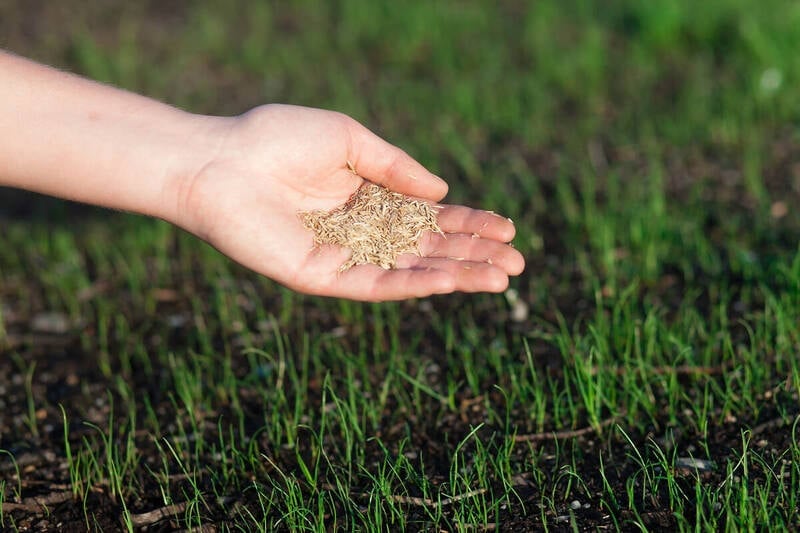
The best time to slit seed or overseed depends on your grass type, since different grasses establish at different soil temperatures. In practice, most overseeding is done in late summer to early fall because the grasses that benefit most are typically cool-season grasses.
Give new seed time to establish before the weather turns. LawnStarter pro Chuck Vogt of Metro Lawns in Atlanta, Georgia, notes it takes “4 to 6 weeks for the seed to really germinate and root.”
Cool-season grasses should be seeded when soil temperatures are between 50 and 65 degrees. This usually means late summer to early fall, with early spring as a backup option.
Warm-season grasses establish best when soil temperatures reach 65 to 75 degrees, typically in late spring to early summer.
See Related:
FAQs
Aeration before slit seeding helps if your soil shows signs of severe compaction, such as standing water after rain or a hard-as-concrete feel. However, slit seeders create their own openings in soil, so aeration isn’t always necessary unless compaction is confirmed.
See Related:
• How to Fix Compacted Soil
• How to Tell You Have Compacted Soil
Wait until new grass reaches 3-4 inches tall before mowing, typically 2-4 weeks after seeding. Remove only the top one-third of the grass height with a sharp mower blade, since mowing too soon can pull up newly rooted seedlings.
See Related: When to Mow After Overseeding
Yes, but it’s best to wait 6 to 8 weeks after seeding before you fertilize your lawn. Learn why in our article: Can You Fertilize and Overseed at the Same Time? (3 Reasons Not To)
See Related: How to Care for New Grass
It depends on your lawn’s condition. Aeration with overseeding suits mostly healthy lawns that need thickening, while slit seeding is the better choice for lawns with large bare spots or severe damage since it plants seed directly into the soil for much higher germination.
Get Professional Results Without the Work
Slit seeding delivers superior results for damaged lawns but requires cumbersome equipment and expertise. Overseeding works well for routine maintenance and minor thin spots, plus it’s budget-friendly and DIY-manageable.
Not sure which approach your lawn needs? LawnStarter’s local aeration and overseeding pros can assess your lawn’s condition, recommend the right seeding method, and handle everything from soil prep to post-seeding care. Get a free quote today and let the experts restore your lawn to thick, healthy grass.
Read More:
Main Image: Side-by-side image of slit seeding and overseeding.
Image Credits:
Slit Seeding: Shutterstock
Overseeding: dean / Adobe Stock Free / License
Related Posts: