| Key Takeaways |
|---|
| • Most grass seed germinates in 3 to 30 days, with perennial ryegrass the fastest and Kentucky bluegrass and warm-season types the slowest. • Grass type, soil temperature, time of year, and consistent moisture are the biggest factors in how fast your seed grows. • You can speed things up by planting in season, keeping the soil moist, and using quality seed and starter fertilizer. |
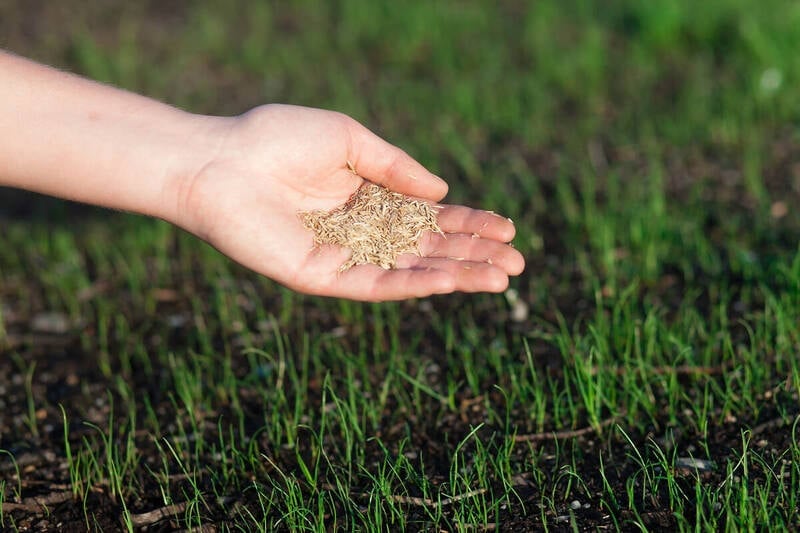
New grass seed starts germinating within 1 week to 1 month. The time it takes for grass seed to grow depends on a few things: grass type, climate, and soil conditions.
For best results, choose a grass type fit for your area of the country, plant at the right time of year for your grass type, and keep your soil moist. We’ll hear from experts on how other factors, like pH, soil temperature, and time of year, also influence seed germination in your lawn.
If your busy spring or fall season doesn’t allow for planting a new lawn, reach out to a LawnStarter landscaping pro to get your new grass off to the best possible start.
Grass Seed Germination Times
Most grass seed germinates in 3 to 30 days. Although many factors impact grass growth (more on that later), here are the standard germination times for all common cool- and warm-season grasses.
Perennial ryegrass is the fastest germinating grass (as quickly as 3 days), with tall fescue and fine fescues not far behind. Bahia, Bermuda, buffalo, and bluegrass may take up to 30 days (or more for bahia) to germinate and start to fill in your turf.
| Grass Type | Germination Time |
| Bahiagrass | 14 to 30+ days |
| Bermudagrass | 10 to 30 days |
| Buffalograss | 14 to 30 days |
| Carpetgrass | 7 to 10 days |
| Centipedegrass | 10 to 21 days |
| Fine fescues | 6 to 15 days |
| Kentucky bluegrass | 14 to 30 days |
| Perennial ryegrass | 3 to 10 days |
| Tall fescue | 5 to 12 days |
| Zoysiagrass | 10 to 28 days |
Note: St. Augustinegrass does not grow via seed (only sprigs, plugs, or sod), so it was not included in this list.
Factors That Affect New Grass Growth
Depending on the type of grass you’re planting, the time of year, your area’s climate and weather, and your yard’s soil conditions, grass seed can take anywhere from a few days to 1 month to start sprouting.
This period of time is known as germination, which is simply when a grass seed grows into a seedling (or young grass plant).
Types of Grass Seed
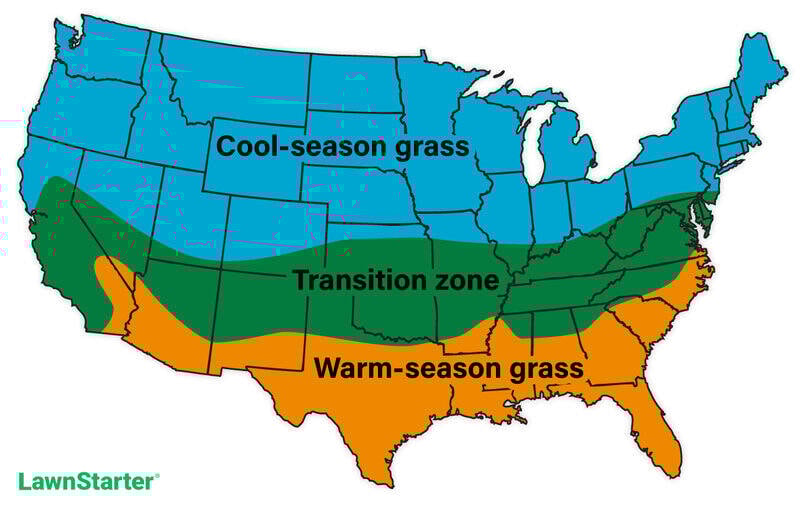
The most significant factor impacting grass seed germination time is the type of seed you choose, but location also matters.
Warm-season grasses work well in southern states, while cool-season grasses can survive the frigid northern winters. If you live in the transition zone (see map above), either grass type will work, depending on your climate and yard’s conditions.
Plant the wrong type for your climate zone, and you’ll end up with grass seed that doesn’t grow at all or quickly dies.
Warm-Season Grass Growth
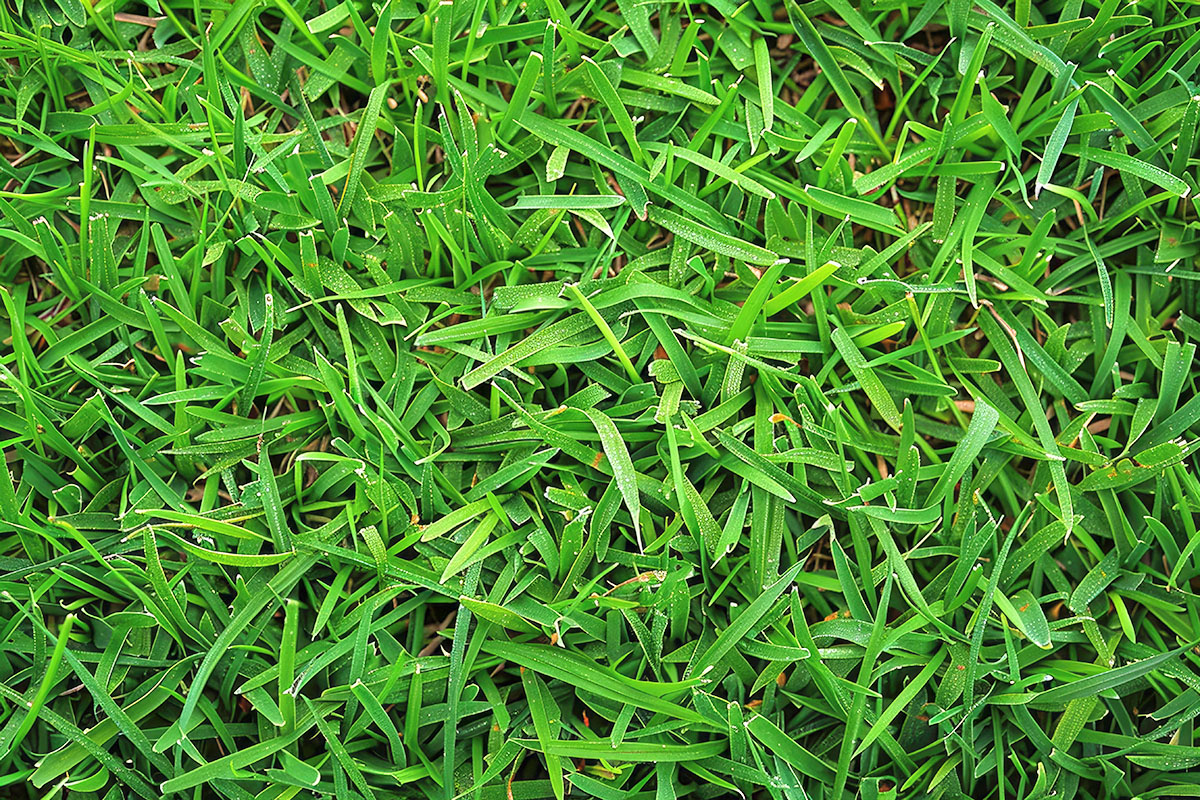
Generally, warm-season grasses should germinate within 7 to 30 days of planting. These grass types are suited to hot weather (typically thriving in air temperatures from 80 to 95 degrees), need lots of sun to grow, and are drought-tolerant. Warm-season grasses are largely found in the South, places like Texas, Florida, and along the lower East Coast.
| Warm-Season Grass Type | Germination Time |
| Bahiagrass | 14 to 30+ days |
| Bermudagrass | 10 to 30 days |
| Buffalograss | 14 to 30 days |
| Carpetgrass | 7 to 10 days |
| Centipedegrass | 10 to 21 days |
| Zoysiagrass | 10 to 28 days |
Pro Tip: Look for scarified bahia seed for the fastest germination times.
Cool-Season Grass Growth

Cool-season grasses grow a bit faster, typically taking 3 to 30 days to germinate. The optimal growing conditions for cool-season grasses are air temperatures between 60 and 75 degrees. You’ll find this type of grass growing in northern and upper midwestern states (e.g., Maine, New York, Nebraska, and Oregon).
“Here in New England, I mainly work with cool-season grasses like Kentucky bluegrass, perennial ryegrass, and fine fescues. These seeds typically take 5 to 21 days to sprout, depending on conditions,” says Frank Sturm, CEO of Green Ace Lawn Care in Mansfield, Massachusetts.
“Ryegrass is the speed demon, popping up in about 5 to 7 days, while Kentucky bluegrass takes its time at 14 to 21 days,” he says.
| Cool-Season Grass Type | Germination Time |
| Fine fescues | 6 to 15 days |
| Kentucky bluegrass | 14 to 30 days |
| Perennial ryegrass | 3 to 10 days |
| Tall fescue | 5 to 12 days |
Time of Year and Temperature
If you’re planting grass the traditional way (i.e., not pre-germinating) and want it to germinate as quickly as possible, align your planting time with your grass type’s growing season. Plant warm-season grasses in late spring or early summer and cool-season grasses in late summer or early fall (about 45 to 60 days before the first frost).
That’s just a general rule, but to ensure successful grass growth, check the soil temperature, too. Warm-season grasses germinate when the soil is between 65 and 70 degrees. For cool-season grasses, the soil temperature should be between 50 and 70 degrees.
“Temperature plays a huge role, and I’ve seen seeds germinate twice as fast when soil temperatures stay between 65 and 75 degrees,” Sturm says.
“The best time to seed varies by region, but here in New England, I strongly recommend early fall, typically late August through mid-September. The soil is still warm from summer, we usually get reliable rainfall, and there’s less competition from weeds,” he says.
“Down South, they can actually seed in late spring, since their warm-season grasses like Bermuda and Zoysia thrive in the heat,” he adds.
See Related: When is the Best Time to Plant Grass Seed?
Soil Moisture and Overall Condition
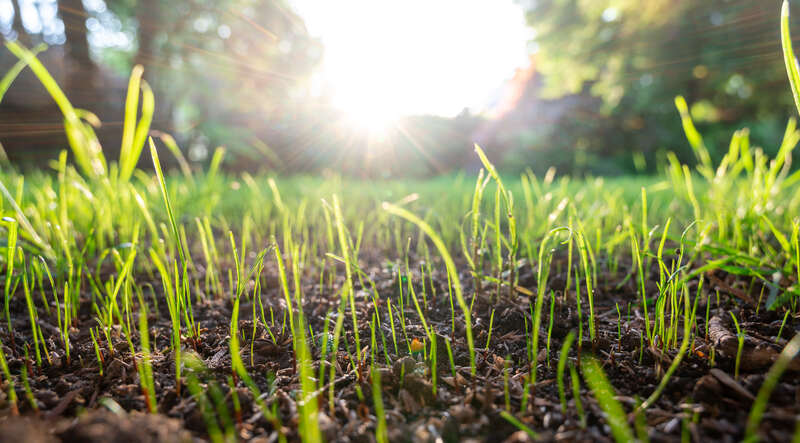
The condition of your soil, including hydration level and pH, also plays a role in the time it takes for grass seed to grow.
It’s recommended to water new grass seed twice a day (early morning and early evening) for 5- to 10-minute intervals to keep the top layer of soil moist.
After germination begins and the roots become established, slowly decrease watering to once per day, then every other day. Once it’s as tall as the rest of the lawn, water 1 to 2 times per week.
As for your soil’s overall condition, Francis Daniels, founder and CEO of TurfPro in Bristol and Norfolk, Massachusetts, recommends testing your soil before spreading grass seed to check nutrient levels and pH. He says most lawns need a pH level between 6.0 and 7.0.
He also says properly preparing the soil by dethatching and aerating helps the grass seed have better contact with the soil (called seed-to-soil contact), increasing the chances for successful germination.
“Creating these ideal growing conditions might take a bit more work upfront, but it’s the difference between a lawn that merely survives and one that thrives,” Daniels says.
See Related:
Tips for Faster Grass Seed Growth
Once you choose the right grass type, plant at an ideal time of year, and optimize your pH, take these other considerations into account for faster grass growth:
Pre-germinate your grass seed: For every day you pre-germinate (soak) the grass seed (up to about 5 days), you remove 1 day from the seed’s average germination time. So, if you soak Kentucky bluegrass for 5 days, your minimum germination time is reduced from 14 days to 9 days.
Provide adequate sunlight: Adequate sunlight warms the soil, speeding germination.
Limit foot traffic: Stay off the lawn until the new grass is as high as your existing lawn to avoid crushing new seedlings.
Use starter fertilizer: Starter fertilizer provides high levels of phosphorus, important for strong root development.
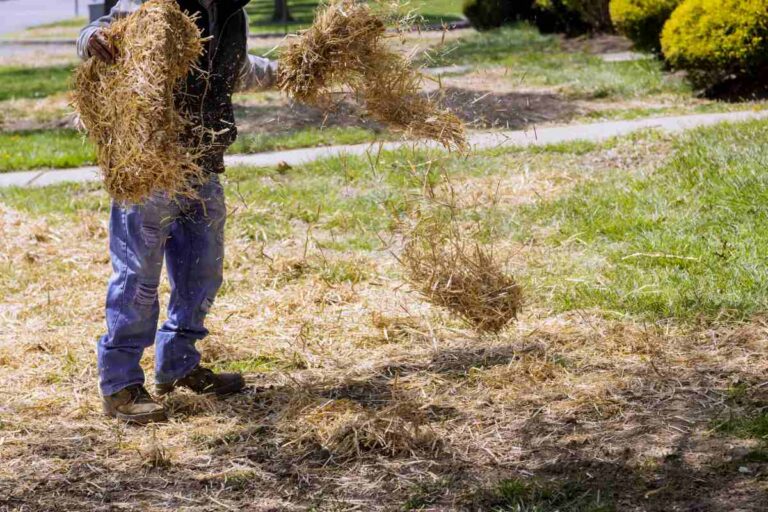
Control weeds: Hand-pull weeds while the new lawn germinates to reduce competition for water and nutrients. Putting down a layer of straw (weed-free) also blocks the sunlight many weeds need to grow and helps regulate soil temperature.
Use good-quality grass seed: High-quality grass seed gives your lawn a better start from day 1. Look for certified seed with close to 0% weed seed, high percentages of seed purity and germination, low inert matter, and 0% noxious weed seed.
See Related: How to Plant Grass Seed
FAQs
Wait until new grass reaches about 3 to 4 inches tall, which is roughly the height of your existing lawn. That usually takes several weeks after the blades first appear. Mowing too early can uproot tender seedlings and thin out your new turf.
The most common reasons are planting the wrong grass type for your climate, poor seed-to-soil contact, soil that is too cold, or letting the seedbed dry out. Old or low-quality seed can also fail to sprout, so start with fresh, certified seed.
Germination is only the first step. After the seed sprouts, grass needs several more weeks to develop deep roots and thicker blades, and a new lawn can take a few months to fully fill in and mature.
Hire a Pro to Care for Your New Lawn
You’ve followed our advice and successfully sprouted a new lawn. Keep your yard looking its best by hiring one of LawnStarter’s local mowing pros to mow, trim, and edge. They’ll know how to properly maintain your grass type and keep it as green as your neighbor’s envy season after season.
Sources:
- Francis Daniels, founder and CEO of TurfPro in Bristol and Norfolk, MA. Personal interview.
- Frank Sturm, CEO of GreenAce Lawn Care in Mansfield, MA. Personal interview.
Main Image: Hand holding grass seeds outdoors. Image Credit: rades / Adobe Stock
Related Posts: