| Key Takeaways |
|---|
| • Fast, tough germination: Perennial ryegrass germinates in about 5 to 10 days and tolerates heavy foot traffic. • Three growing roles: It serves as a permanent northern lawn, Southern winter color, or temporary nurse grass. • Ongoing care basics: Water 1 inch weekly, mow at 1.5 to 3.5 inches, and reseed bare patches. |
Need grass fast without spending a fortune or laying sod? Perennial ryegrass is one of the quickest, toughest cool-season grasses you can grow, greening up a bare yard in a matter of weeks.
With expert insights, this guide covers what perennial ryegrass is, whether it suits your climate, how to plant it from seed, and how to keep it healthy season after season.
But if you’d rather leave the hard work for someone else, LawnStarter’s local lawn mowing pros can keep your ryegrass looking its best.
Perennial Ryegrass at a Glance
Classification: Cool-season grass
Spreads by: Bunch-type grass
Soil type: Highly fertile, well-draining
Soil pH: 6 to 7
Mowing height: 1.5 to 3.5 inches
Shade tolerance: Low
Drought resistance: Low (may go dormant in the summer)
Foot traffic tolerance: High, but does not recover well
Maintenance needs: Varies depending on cutting height
Potential for disease: High
Insect pest tolerance: Low to moderate
Other notes: Most often mixed with Kentucky bluegrass and fine fescue. It has excellent striping ability, germinates rapidly, is often used as a temporary lawn, and needs moderate levels of fertilizer.
The Basics of Perennial Ryegrass
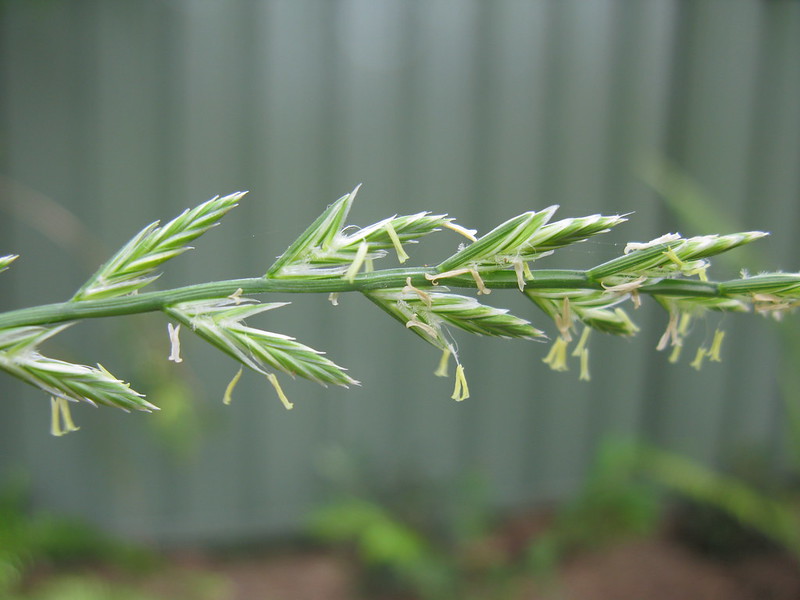
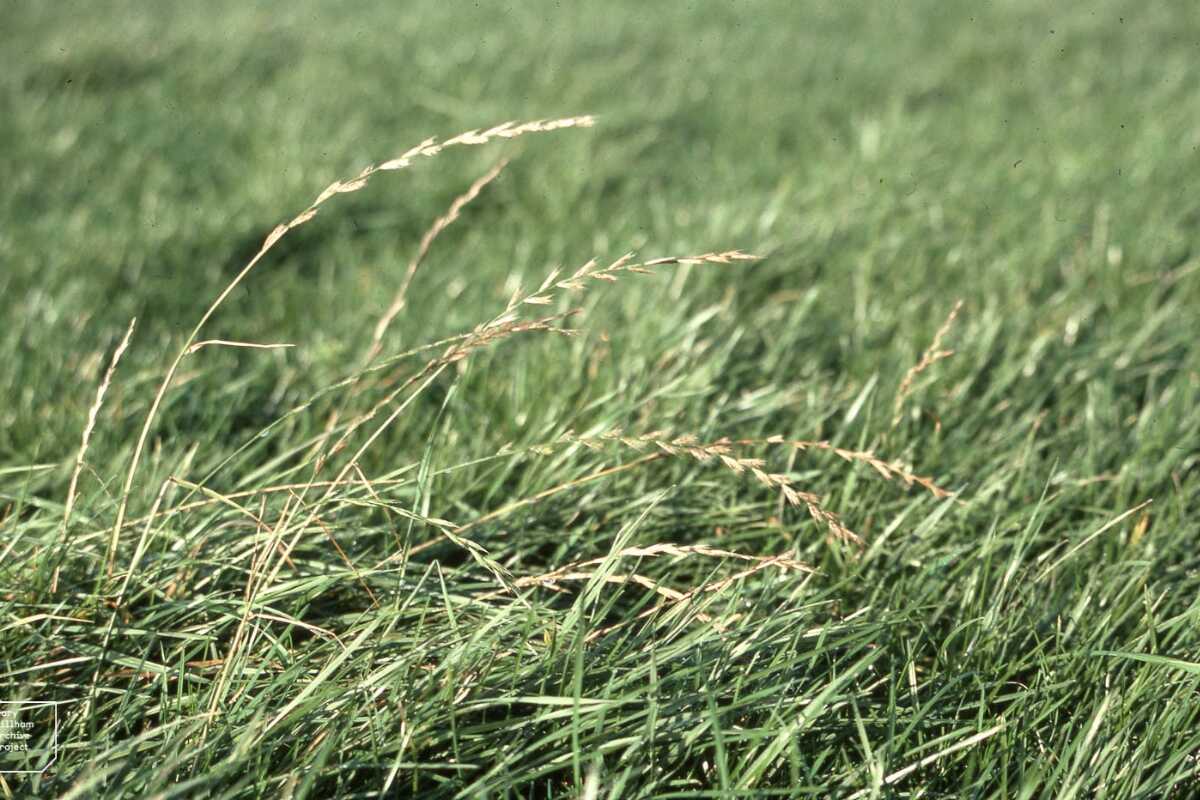
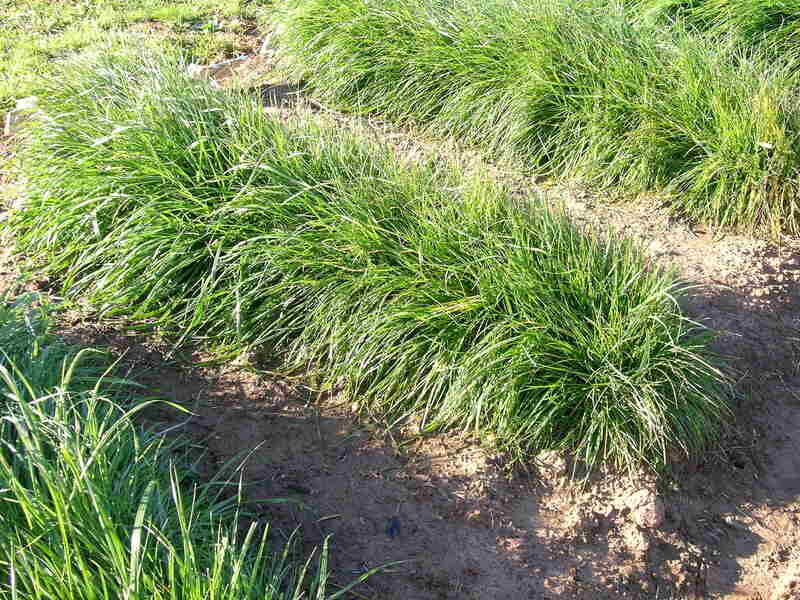
Perennial ryegrass (Lolium perenne) takes on a lighter green color and develops clumps instead of a thick, dense carpet, like Kentucky bluegrass or Zoysia. It loves full sun but tolerates partial shade.
If you need grass fast or a durable lawn, though, it is hard to beat. “Under most conditions, both annual and perennial ryegrass tend to germinate in approximately 5-10 days,” says Matthew McKernan, consumer horticulture Extension associate at Kansas State University.
“Most of the time, annual and perennial ryegrass are utilized as a fast-germinating turfgrass that will help reduce erosion,” McKernan says. “In sports turf and in heavily trafficked sites, this also decreases the amount of time necessary before traffic can resume in these areas.”
Because of its bunch-type growth habit, damaged or thinned turf cannot repair itself, so you will need to overseed. It is also less cold-hardy than other cool-season grasses and dislikes temperatures below 30 degrees for long periods.
There are 3 different ways to grow it, which sets it apart from many other grasses:
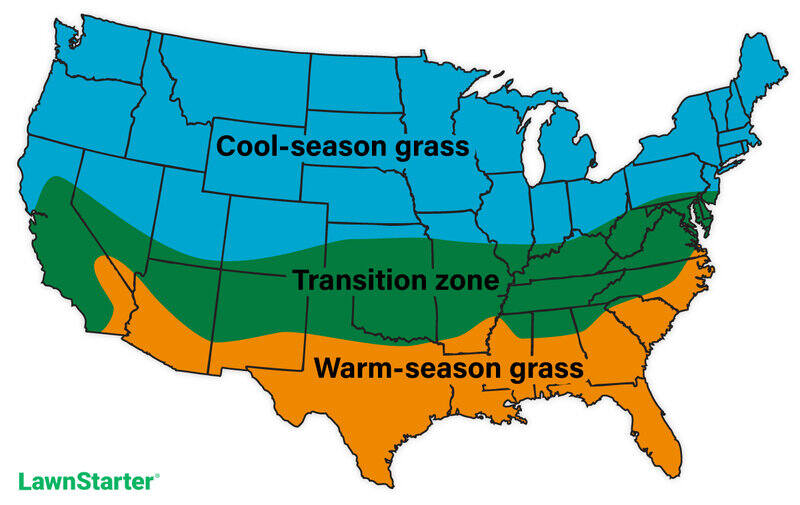
- As a permanent lawn in cooler northern climates and the transition zone. In these regions, it goes dormant over winter, then greens up again in spring. True winterkill is mainly a risk in the far north and Canada, where sustained hard freezes can exceed its cold tolerance.
- As winter color in the South, where warm-season grasses go dormant for winter. Unlike in the North, ryegrass is not expected to survive the summer: As heat returns, it dies out rather than going dormant, and the warm-season grass resumes growth. This is why Southern lawns need to be overseeded with new ryegrass every fall.
As a temporary grass, thanks to quick germination. Landscapers often pair it with Kentucky bluegrass to cover soil until the bluegrass fills in.
Perennial Ryegrass Cultivars
Breeders keep releasing improved cultivars with better disease tolerance, cold tolerance, and deeper green color. A few new types even have small stolons (above-ground stems) that help the grass fill in when it thins. Research which cultivar fits your needs. Commonly available options include:
Amazing A+
Haven
Karma
Nexus GT
Nexus XD
Nexus XR
Overdrive 5G
Shield
Signet
Stamina
Pros and Cons of a Perennial Ryegrass Lawn
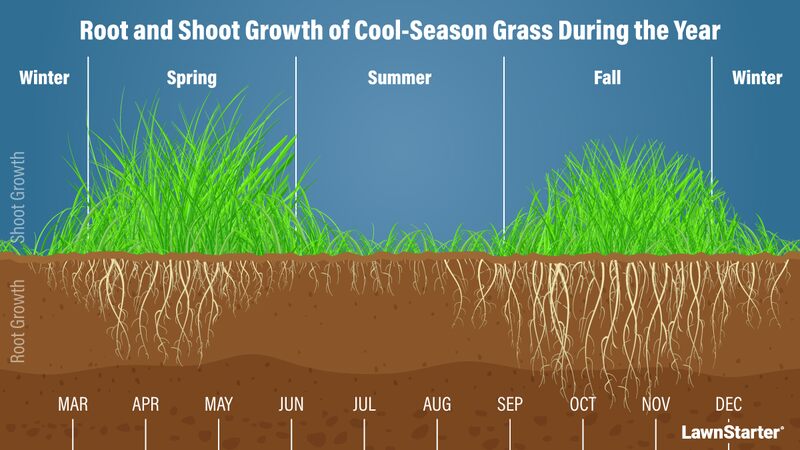
Perennial ryegrass suits homeowners who want something practical and low-maintenance, less so those chasing a flawless look. Weigh the pros and cons to decide if it is right for you.
Pros
Not prone to building thatch
Great for reel mowers
Germinates fast
Excellent striping ability
Medium to dark green color
Soft to walk on barefoot
Excellent foot traffic tolerance
Cons
Low shade tolerance
Poor damage recovery due to lack of rhizomes
Low heat and drought tolerance
Often looks patchy
Susceptible to fungal diseases, especially in hot, humid climates
Expert Insight: When Perennial Ryegrass Makes Sense
Perennial ryegrass germinates fast. That speed can be valuable, but it doesn’t necessarily make perennial ryegrass the best long-term choice, especially in regions with hot, dry summers.
According to McKernan, faster germination may be beneficial “if heavy rains are forecasted, if the site is large and has undergone significant construction, if it is a sports turf field that will be used soon, or if you are planting outside the normal planting window.”
It may also make sense when establishing a new lawn after regrading. In these situations, getting grass growing quickly can help cover bare soil, reduce erosion, and make the area usable sooner.
However, homeowners should weigh those short-term benefits against perennial ryegrass’s limited heat and drought tolerance. “[For] most home lawns, these benefits don’t outweigh the drawbacks of planting a ryegrass that will not be able to survive the heat and drought of Kansas summers,” McKernan says.
The takeaway: Perennial ryegrass can be useful when rapid establishment is especially important, but it may not be a lasting solution in Kansas and other areas with similarly hot summers. In those climates, a more heat- and drought-tolerant grass, such as tall fescue, is generally a better choice for a permanent home lawn.
How Do You Establish Perennial Ryegrass?
You establish perennial ryegrass almost entirely from seed. It is rarely started from sod, and in many places sod is not even available. The reason is speed: seeds germinate in as little as 5 days, versus up to 30 days for Kentucky bluegrass. That fast start crowds out weeds and establishes the lawn quickly, so sod is rarely needed.
The Cost of Starting Perennial Ryegrass
Perennial ryegrass seed: Seed is the affordable, do-it-yourself route. Sow 3 to 5 pounds of seed per 1,000 square feet.
Perennial ryegrass sod: When available, ryegrass sod costs about $0.28 to $0.58 per square foot for materials.
When to Plant Perennial Ryegrass Seed
You can seed anytime, but a scorching 85 degrees will stall a new lawn. Time seeding to the cooler temps of spring and fall, when the grass grows most. The best time to plant a new lawn is early fall, followed by late spring, so the grass establishes before summer heat.
“The warmer the soil temperature, the faster the seeds will germinate, however, the more supplemental irrigation that is often required too,” McKernan says.
In northern areas, sow seed from mid-August to mid-September. In the transition zone, sow from mid-September through early or mid-October.
In the South, when growing ryegrass as a temporary winter cover, sow once soil temperatures cool in fall (typically mid-October to November), and at least a few weeks before the warm-season grass goes fully dormant.
Choosing Between 100% Perennial Ryegrass and a Mixed Grass Lawn
Despite its strengths, perennial ryegrass is not grown as a monostand (single-grass lawn) as often as other cool-season grasses. It is usually mixed with other species and may not even be the primary grass in the seed mix.
Because it germinates quickly, perennial ryegrass can serve as a nurse grass, establishing early cover while slower-germinating grasses take hold. In a mixture with Kentucky bluegrass, for example, ryegrass helps provide quicker coverage and greater traffic tolerance, while Kentucky bluegrass offers better cold tolerance and can spread to repair thin or damaged areas.
You can still grow a 100% perennial ryegrass lawn, ideally where winters and summers are mild, such as Oregon, Washington, or the Carolinas. Because the grass does not spread through rhizomes or stolons, expect to reseed bare patches to maintain even coverage. Before buying seed for a monostand:
Buy only improved turf-type varieties. Common or forage-type seed will not produce a high-quality lawn.
Talk to a local Cooperative Extension specialist. Ask whether a monostand suits your climate, since it is prone to winterkill in the cold and disease pressure in hot, humid weather.
How to Care for an Established Perennial Ryegrass Lawn
Perennial ryegrass is low-maintenance compared to other turfgrasses, but it still takes some care to look its best.
Keep Your Perennial Ryegrass Well-Watered
The key is enough water, especially in summer, to prevent dormancy. This grass has a short root system and is not very drought-tolerant, so it needs at least 1 inch of water a week from rain or irrigation. If it goes summer dormant, it recovers slowly and becomes more prone to insects, diseases, and weeds.
This applies to permanent ryegrass lawns in the North and transition zone, where the goal is to keep the grass alive through summer. It does not apply to Southern winter overseeding, which is expected to die out in late spring regardless of watering.
If you’re seeding ryegrass for the first time, you need to pay extra attention. “If a lawn has an irrigation system, or can be easily watered lightly a couple of times per day during germination, grass seed will germinate very quickly in late August. Once germinated, however, grass seed cannot be allowed to dry out, as this will kill the newly emerging plants,” McKernan says.
See Related:
Fertilize to Keep It Looking Nice
Fertilize with 4 pounds of nitrogen (N) per 1,000 square feet each year while the grass is actively growing. For Northern and transition-zone lawns, that’s roughly February to June and October to December.
For Southern winter overseeding, active growth runs mainly from fall through early spring, so skip the summer applications since the grass will be dying out by then.
Run a soil test every few years for the most accurate recommendations.
See Related:
Choose Your Mower Based on the Grass Height
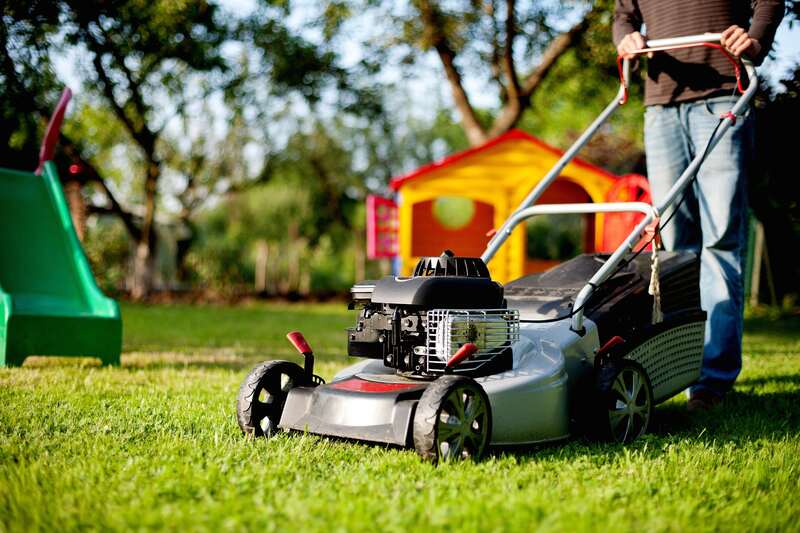
Mow a 100% perennial ryegrass lawn at 1.5 to 3.5 inches with a standard rotary mower. If you’re overseeding a Southern warm-season lawn for winter color, mow at the height recommended for the warm-season grass underneath instead, since the ryegrass is temporary and needs to match that lawn.
See Related: How to Mow Your Lawn: A No-Nonsense Guide
Keep Air and Water Moving Into the Soil
Because it is a bunch-type grass, perennial ryegrass rarely builds thatch, so dethatching is seldom needed. You do still need to watch for soil compaction and aerate the lawn as needed.
Over time, the mower and foot traffic compress the soil, squeezing out the pockets that hold water, oxygen, and nutrients and keeping them from reaching the roots.
Core aeration is the most efficient fix. Aerate heavy clay soils every spring or fall, and lighter soils every 2 or 3 years. LawnStarter’s aeration and overseeding pros can take this task off your plate.
Weed Control Options
Ryegrass is allelopathic: as it grows, it releases a chemical that stunts nearby plants once they absorb it through their roots. This slows weed growth but will not eliminate every weed, so keep it in mind when planting near something you do not want affected.
To stop weeds before they start, use a pre-emergent herbicide in early spring or fall, then spot-treat with a post-emergent product such as 2,4-D, dicamba, or mecoprop as needed.
Pro Tip: Pre-emergents work only when soil temperatures are below a certain threshold. Check with your local Extension Office for the best timing.
Prevent Insect and Disease Problems
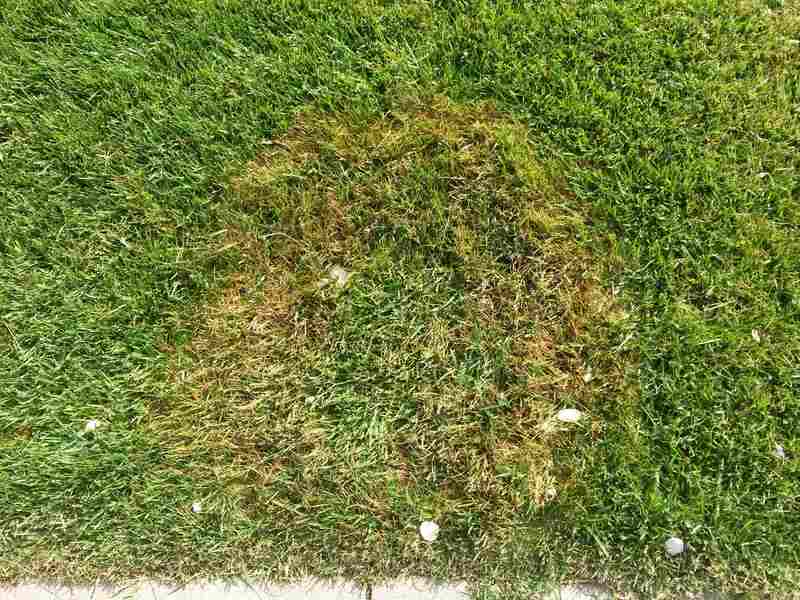
Pests and diseases can trouble perennial ryegrass, but early action keeps small issues from becoming big ones. Scout your lawn regularly and treat problems fast. Common insects include:
Greenbug aphids
Endophyte-enhanced varieties produce alkaloids that deter many of these insects. Perennial ryegrass is also susceptible to these fungal diseases:
Prevention keeps disease to a minimum: do not overapply nitrogen, avoid overwatering, and aerate so water moves through the soil. Planting a mix of perennial ryegrass and disease-resistant turf-type tall fescue also helps.
FAQs
It depends on the climate. In the North and transition zone, a stretch of heat around 87 degrees sends ryegrass into dormancy rather than killing it. In the South, though, spring and early summer heat kills ryegrass, which is why it has to be reseeded again each fall.
Perennial ryegrass returns year after year when cared for, as long as temperatures are not too extreme. Annual ryegrass grows for a single season, or occasionally two as a biennial, if the winter is mild enough for it to keep growing.
Yes. Because it is a bunch-type grass that cannot fill in on its own, you will need to reseed when you see bare patches or thin spots. It is best to seed in early fall, at least 60 days before the first expected fall frost.
Get Help With Your Lawn Care
Perennial ryegrass is a great choice if you need a lawn that stands up to kids and pets. If it sounds like a good fit, LawnStarter’s local lawn care professionals can help you mow, aerate and overseed it.
Source:
Matthew McKernan, consumer horticulture Extension associate at Kansas State University, Manhattan, KS. Personal Interview.
Main Image: Perennial Ryegrass. Photo Credit: Dr Mary Gillham Archive Project / Flickr / CC BY 2.0
Related Posts: