| Key Takeaways |
|---|
| • Core aeration removes soil plugs for long-term compaction relief, and is the better choice for most yards. • Spike aeration only pokes holes that reseal quickly, but it may work for small lawns with mild compactions. |
Compacted soil starves your lawn of water, nutrients, and oxygen. Core aeration pulls out soil plugs to relieve compaction long-term, while spike aeration simply pokes holes that can reseal.
Both methods create openings in the ground, but the results are very different. Choosing the wrong method can waste your time or even make compaction worse.
If you want lasting results, LawnStarter’s aeration services take the guesswork out of the process.
What Is Core Aeration?
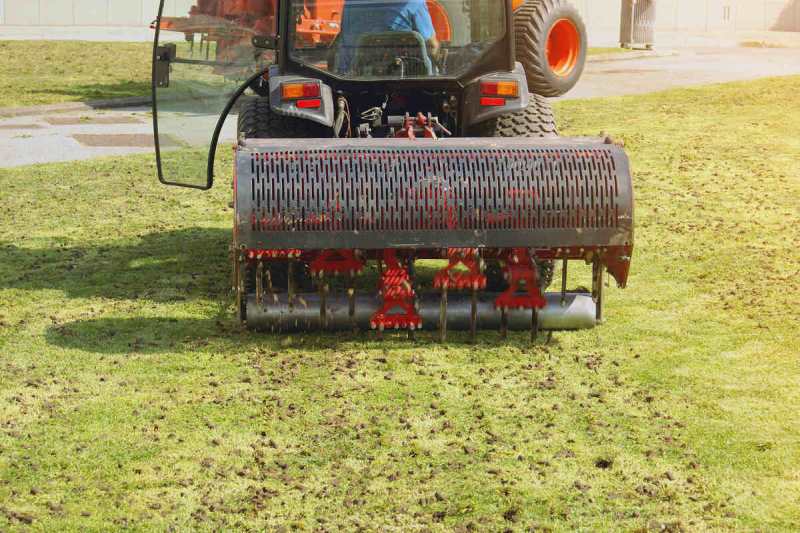
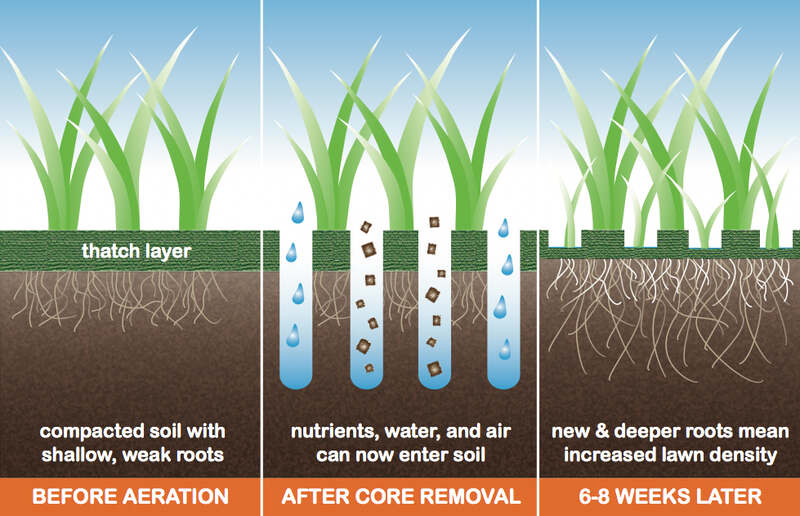
Core aeration uses hollow tines to pull soil plugs out of the ground. Unlike spike aeration, which only pokes holes that can reseal, core aeration physically removes soil to reduce compaction and let water, nutrients, and oxygen reach the roots.
The holes are typically 2 to 4 inches apart with a diameter of about 1 inch. After aerating, you will see soil plugs scattered across the lawn surface.
Leave the plugs in place. They break down within 1 to 2 weeks, releasing beneficial nutrients back into the soil.
The holes eventually fill with deeper, newly grown roots. That is a sign your grass is absorbing more moisture, oxygen, and nutrients than before.
Watch this video explaining aeration.
Core aeration works well for:
Heavily compacted lawns
High-traffic yards
Medium to large lawns
Thick thatch problems
Lawns overdue for aeration
Core aeration is the method of choice for lawn care professionals. As Scott Culala of The Lawn Cypress, in Gardner, Kansas, puts it, “Aeration helps revive the soil.” Removing soil plugs loosens the ground more effectively, boosting root growth.
See Related: How to Tell You Have Compacted Soil
Types of Core Aerators
Depending on your lawn size and the severity of soil compaction, there are three types of core (plug) aerators to choose from.
Manual Core Aerator
Manual core aerators are budget-friendly and suitable for small lawns with mild soil compaction. For this reason, using a manual aerator is sometimes called spot aeration.
How it works: Push the aerator into the soil while using your foot as additional weight. After pulling it out, you will see soil cores coming out of the hollow tines. The plugs drop onto the lawn surface and should be left there.
Tow-Behind Core Aerator
If you have a lawn tractor, a tow-behind core aerator is a great investment. They cost more than other aerator types, but they save a lot of time on large lawns with moderate or severe soil compaction.
How it works: The tow-behind aerator attaches to the lawn tractor. Ride across the lawn perpendicularly to get even hole coverage across the entire surface.
Push-Behind Core Aerator
This is the aerator type most homeowners prefer. It looks like a lawn mower, except it drills 1-inch holes into the soil. Push-behind aerators suit medium to large lawns prone to moderate or high compaction.
How it works: Go over the lawn twice in perpendicular directions. The goal is 20 to 40 holes per square foot, with holes 2 to 3 inches apart.
Pros and Cons of Core Aeration
Removing soil plugs is one of the main advantages of core aeration. But can it stress out your lawn? Here is how the pros and cons compare.
Pros
-
Long-term results: Core aerators remove soil plugs, getting rid of compaction. New grass roots grow deeper, giving you a denser, greener lawn.
-
Prevents weed growth: Dense grass prevents weeds from thriving and spreading across your lawn.
-
Minimizes thatch: Removing soil cores also contributes to thatch removal.
-
Covers large surfaces: Tow-behind and gas-powered aerators are well suited for medium to large lawns.
-
Eco-friendly: Reduced soil compaction helps limit water runoff and decreases your grass’s fertilizer needs.
-
Boosts curb appeal: A dense lawn with freshly grown grass improves your home’s appearance.
-
Option to rent: Tow-behind aerators are expensive to buy, but you can rent one to save money.
Cons
-
Unattractive plugs: The freshly removed soil plugs on the surface look unappealing until they break down.
-
Stress on your lawn: Core aeration may increase turf stress if performed too often or in the wrong season for your grass type.
-
Time and labor: Manual core aerators can be time-consuming on medium or large lawns.
What Is Spike Aeration?
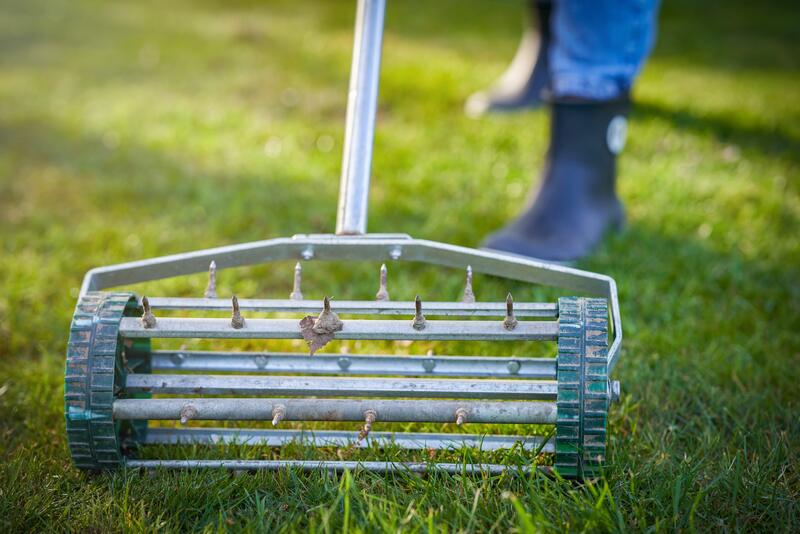
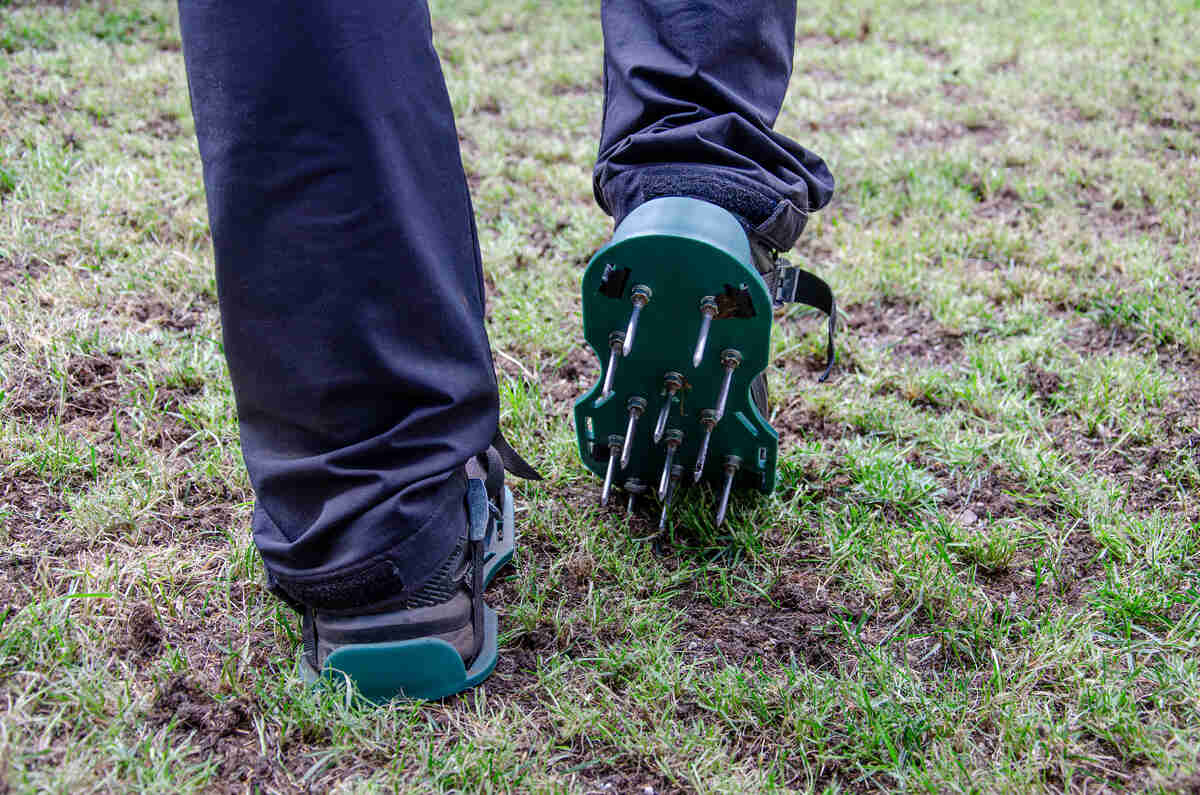
With spike aeration, there are no soil plugs to deal with. Solid tines push into the ground, creating holes without removing any soil.
It is a simpler process of piercing holes to let the roots breathe and allow more nutrients into the soil. However, many lawn care pros agree it is only a short-term solution.
Spike aeration pushes soil further down, which can make already compacted soil even worse. Since no soil is removed, watering can cause the holes to seal up quickly before roots grow deeper.
Despite those drawbacks, spike aeration may benefit homeowners who have:
Small patches of grass that need light aerating
Mild compaction
Thin thatch layers
No stones or debris to interfere with the tines
Types of Spike Aerators
Similar to core aerators, you have affordable options like pitchforks and costlier tow-behind models.
Rolling (Push) Aerator
These spike aerators work well for small lawns with mild soil compaction. Using them on medium or large lawns would be impractical and exhausting. Rolling aerators will also get damaged on rocky soil.
How it works: Rolling aerators work like manual lawn mowers. Go over the soil in one direction, then a second time perpendicularly. Choose a model with a steel tray for maximum piercing.
Tow-Behind Spike Aerator
This type pierces the ground rather than pulling out plugs. Tow-behind spike aerators contain 10 to 12 star-shaped blades that push the soil and thatch downward.
How it works: Attach the aerator to your lawn tractor and spike areas with moderate soil compaction. Maintain a perpendicular pattern for even coverage.
Pitchfork
Pitchforks can serve as useful spike aeration tools. They are budget-friendly and easy to use, but only practical for small lawns or specific spots prone to heavy foot traffic.
How to use it: Insert the pitchfork tines into the soil about 3 inches deep. Tilt the pitchfork forward and backward to loosen the soil.
Pros and Cons of Spike Aerators
Do the positives outweigh the negatives? Here is how they compare.
Pros
-
Efficient for small spots: Spike aeration is a quick fix for small areas that experience heavy foot traffic.
-
Less strain on the soil: Spike aeration does not remove soil plugs, so there is less stress on the turf than with core aeration.
-
Subtle results: Spike aeration will not leave obvious signs on your lawn surface, such as soil plugs.
-
Affordable equipment: Spike aeration is possible with pitchforks, which are inexpensive.
Cons
-
Short-term results: Spike aeration only pushes soil deeper, creating holes that fill up quickly and can worsen compaction.
-
Not suitable for large spaces: Rolling push aerators and pitchforks are impractical for medium to large lawns with moderate compaction.
-
Shallow holes: Spike aerator holes are not as deep as those from core aerators.
-
Potential environmental harm: Ineffective compaction relief could lead to increased fertilizer use and water runoff.
Core Aeration vs. Spike Aeration: Which Is Better?
Both methods create holes in your lawn, but core aeration comes out on top for most situations. Here is a side-by-side comparison.
| Feature | Core Aeration | Spike Aeration |
| Method | Removes soil plugs with hollow tines | Pushes holes into soil with solid tines |
| Soil removal | Yes, plugs are pulled out | No, soil is compressed downward |
| Best for | Moderate to severe compaction, all lawn sizes | Mild compaction, small lawns |
| Equipment cost | Higher (rental around $100 per day) | Lower (pitchforks start under $30) |
| Results duration | Long-term relief | Short-term fix, holes reseal quickly |
| Thatch reduction | Effective, removes cores and thatch | Minimal, pushes thatch downward |
For homeowners with small lawns and little compaction, spike aeration may be enough to maintain healthy turf. But after more than a year without proper aeration, even small lawns may struggle with thatch buildup.
Core aeration wins because it yields long-term results on lawns of all sizes. Removing soil plugs allows roots to absorb more water, oxygen, and nutrients, leading to denser, greener grass.
See Related: Does Liquid Lawn Aeration Work?
Signs Your Lawn Needs Aeration
Not sure whether your lawn needs aeration? Watch for these common warning signs.
Water pooling on the surface
Thin or patchy grass
Hard soil
Heavy foot traffic areas
Thatch buildup over 0.5 inch
Slow drainage
If you notice two or more of these signs, your lawn is likely ready for aeration. Chelsea Morris of High-Class Grass, in Virginia Beach, Virginia, says she tells all her clients, “I recommend aerating at least once a year.” Core aeration is the best option for most of these issues.
See Related: How to Test for Compacted Soil
When to Aerate Your Lawn
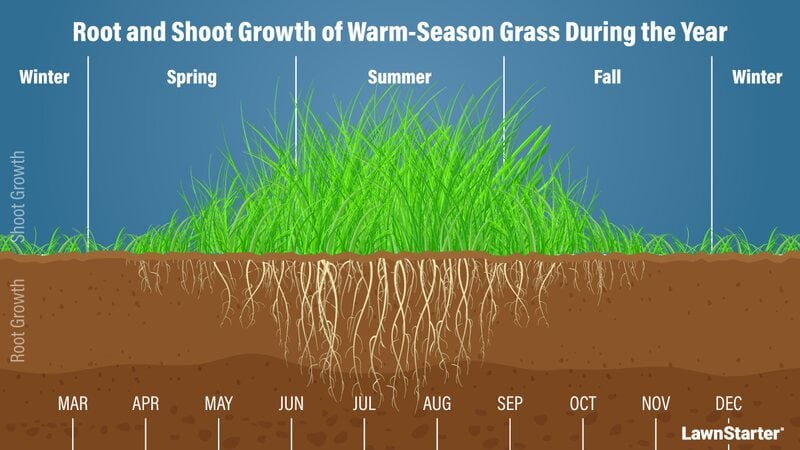
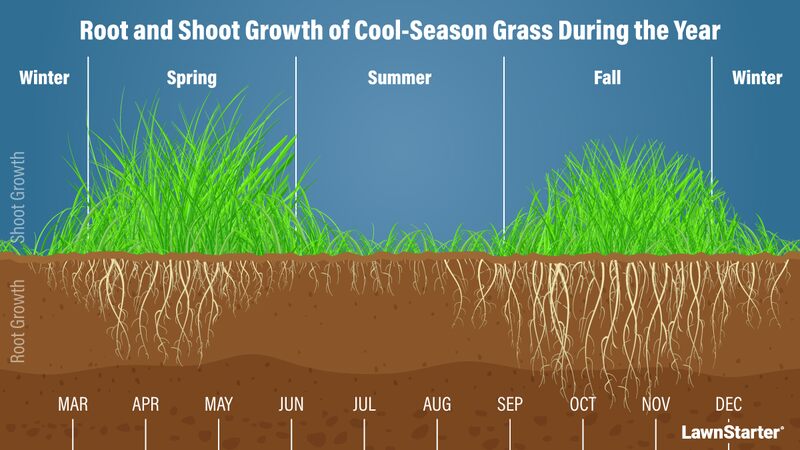
The best time to aerate is when your grass is actively growing and can recover quickly. Colorado State Extension recommends spring or fall aeration for the best results.
Warm-season grasses: Aerate in late spring through early summer. This is peak growth season, allowing faster recovery after aeration.
Cool-season grasses: If you live in the northern states, the best time to aerate is early fall. Aerating before winter encourages new root growth before the grass goes dormant.
See Related: Best Time to Aerate and Overseed Your Lawn
What to Do After Aerating Your Lawn
After aeration, your lawn is primed for treatments like topdressing and fertilization. Follow these steps in order for the best results.
Let the soil plugs decompose
Overseed your lawn
Topdress and water
Apply fertilizer
Limit foot traffic
Wait until the new grass reaches the same height as established grass before mowing
See Related:
FAQs
You can rent a core aerator from hardware stores like Lowe’s or Home Depot for around $100 per day, plus a refundable deposit of $75 to $150. For large lawns, renting is often cheaper than hiring a pro. See this guide on aeration costs for a full breakdown.
Yes, spike aeration is better than leaving compacted soil untreated because poking holes still allows some air, water, and nutrients to reach the roots. However, the results are temporary since the holes reseal quickly, so core aeration is the more effective long-term solution for moderate to severe compaction.
You can aerate your lawn yourself using a manual core aerator, a rolling spike aerator, or a pitchfork for small areas. For larger or heavily compacted yards, consider renting a gas-powered aerator or hiring an aeration professional for better results.
Read More:
• Benefits of Aerating Your Lawn
• How to Aerate Your Lawn: A Complete Guide
When to Hire a Lawn Care Pro
Core aeration is far more effective than spike aeration for breathing new life into compacted soil. It is a long-term fix that helps roots grow deeper and gives you a dense, green lawn.
Aeration can be easy if your lawn is well maintained and only small patches need attention. But the job gets complicated when your lawn is large and heavily compacted.
Let LawnStarter’s local lawn aeration professionals handle the work so you can enjoy your weekend instead.
Main Photo Credit: Close-up of lawn aerating shoes with metal spikes. Nadja Abele / Adobe Stock
Related Posts: