| Key Takeaways |
|---|
| • In fall, water once or twice a week early in the morning. In winter, water only once or twice a month and only when temperatures are above 40 degrees with no snow or ice. • Cool-season and warm-season grasses have different cold-weather water needs, so match your schedule to your grass type. • Overwatering in cool weather is riskier than underwatering, inviting root rot, fungal disease, and winter damage. |
Knowing how to water your lawn in fall and winter helps keep it healthy even when it’s cold. The key is to provide enough water to sustain it without overwatering, which can lead to disease and damage.
In the fall and winter, your lawn’s water needs decrease as growth slows down, but it still requires enough moisture to avoid drying out. In this article, we’ll tell you everything you need to know, with expert tips, so your lawn can bounce back strong in spring.
Watering isn’t the only fall and winter lawn care chore that keeps your yard in top shape. For a healthy fall lawn, hire a local LawnStarter pro to handle your fall mowing, aeration, and leaf removal.
Fall and Winter Lawn Watering Guide
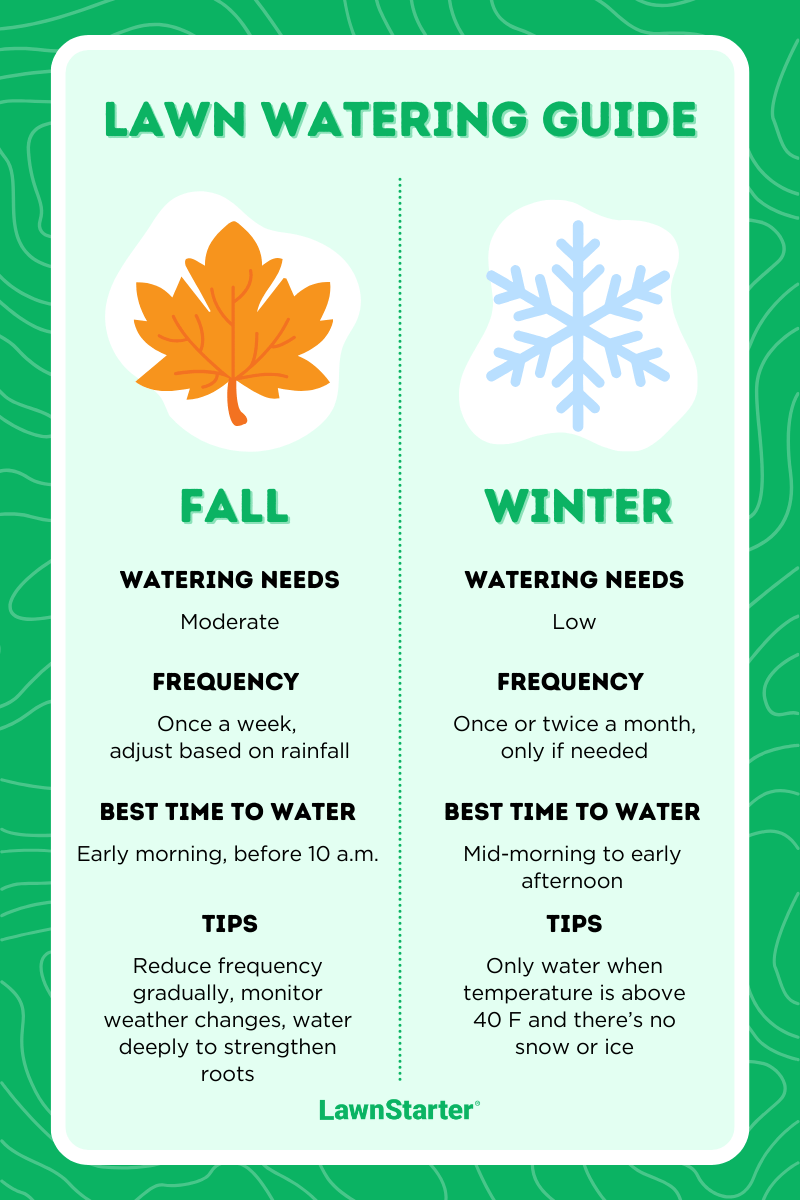
To water your lawn in fall and winter, water once or twice a week in fall (early morning) and only once or twice a month in winter. Water only when temperatures are above 40 with no snow or ice on the ground.
| Factor | Fall | Winter |
| Watering needs | Moderate | Low |
| Frequency | Once a week or every 10-14 days | Once or twice a month, only if needed |
| Best time to water | Early morning, before 10 a.m. | Mid-morning to early afternoon |
How and When to Water Your Lawn in Fall and Winter
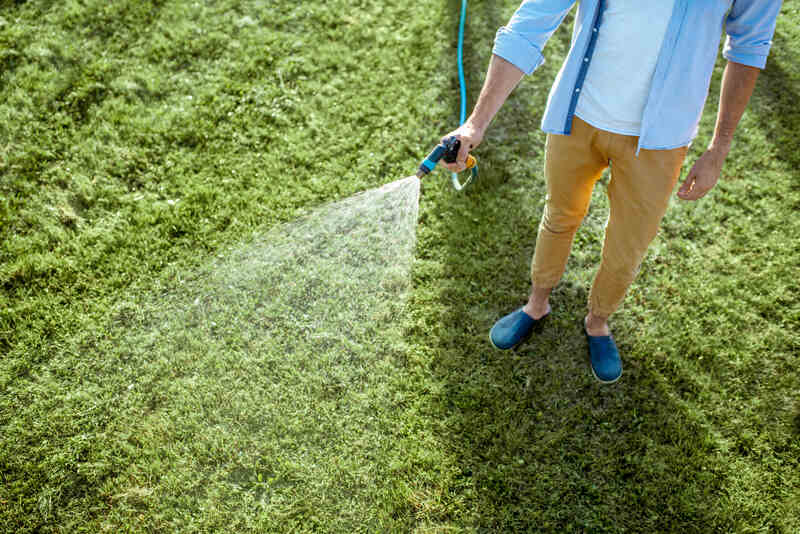
Even though your lawn slows down in late fall and winter, it still needs water to stay healthy. Here’s how to manage your lawn’s hydration during these cooler months:
Fall
You can water once or twice a week if you live in a region with a dry fall season, but do it preferably between 5 a.m. and 9 a.m. This allows the soil to absorb moisture without excessive evaporation. Let the soil dry out between waterings, and adjust based on rainfall. If it rains, skip the next watering.
For warm-season grasses, you might need to water even less than that. “In fall, begin ratcheting irrigation back as temperatures cool and daylight shortens,” says Eric DeBoer, assistant professor at Louisiana State University.
“Growth slows dramatically, so watering every 10–14 days, or turning the system off entirely when fronts bring regular rainfall, keeps the soil from staying too wet heading into winter,” he says.
Winter
Water only if there’s no snow or ice on the ground and the temperature is above 40. In mild climates, this may mean watering once or twice a month.
The best time for winter watering is from mid-morning to early afternoon to avoid freezing overnight.
Pro Tip: To see if your lawn needs water in fall, walk on it. If the grass doesn’t spring back, it’s time to water. In winter, a quick soil moisture test works: Dig a few inches into the soil, and if it feels dry, it’s time to water.
Does Your Grass Type Change How You Water?
Yes. The kind of grass you have decides how much water it wants once the weather cools. Knowing your grass type keeps you from watering too much or too little.
Cool-season grasses: Tall fescue, Kentucky bluegrass, and perennial ryegrass stay semi-active in fall and don’t fully shut down in mild winters. Give them a drink on mild, thawed days when there’s no rain in the forecast.
Warm-season grasses: Bermudagrass, Zoysiagrass, St. Augustinegrass, and centipedegrass go dormant and turn brown once it gets cold. They need very little water, so ease off and water only during long dry spells.
For warm-season grasses like centipedegrass, DeBoer recommends cutting back water with cooler nights. “Completely reduce once dormant,” he adds.
See Related:
When to Stop Watering Your Lawn for the Season
You don’t stop all at once. As fall cools down, water less often, then wind down for winter. The goal is to keep some moisture in the soil without soaking a lawn that no longer needs it.
Stop your regular watering once growth slows to a crawl and the ground starts to freeze, or when nighttime temperatures settle into the low 30s for several days in a row. Frozen ground can’t soak up water, so watering then just runs off and wastes it.
In warmer regions where the ground rarely freezes, your lawn may still sip a little water through dry winter stretches.
Amanda Marek, Extension agent at the University of Florida’s Institute of Food and Agricultural Sciences (UF/IFAS), says “UF/IFAS recommends that turfgrass only be watered once every 10-14 days when the grass is dormant from November – February to maintain a bit of green color.”
Check the soil first, and water only when it’s dry a few inches down.
See Related:
Tips for Watering Lawns in Fall and Winter
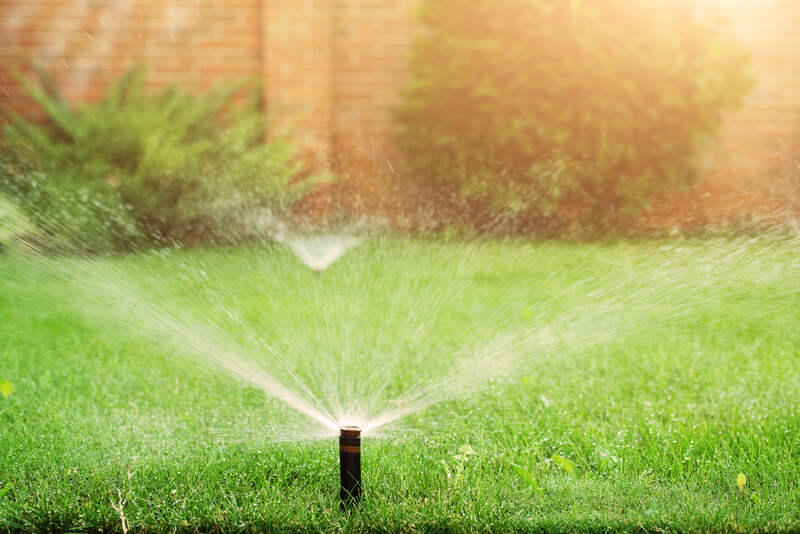
Here are some tips to make your fall and winter watering most effective:
Adjust your sprinkler system: In fall, reduce your watering frequency compared to summer, and in winter, shut off and winterize your sprinkler system if temps fall below freezing in your area.
Water wisely: Water deeply but less frequently to encourage strong root growth. In winter, water sparingly to avoid frozen soil and damage.
Mulch leaves in fall: Instead of raking, mulch leaves into your lawn with a mower. This provides extra nutrients as the leaves break down and helps reduce evaporation, keeping your lawn more hydrated. For tips on using mulch, read the guide below.
Avoid overwatering in winter: Too much water can freeze and damage your lawn. Water only when needed and when the temps are above 40. Avoid watering if the soil is already saturated from snow or excess rainfall.
See Related: How to Improve Your Lawn With Mulch
Risks of Overwatering in Fall and Winter
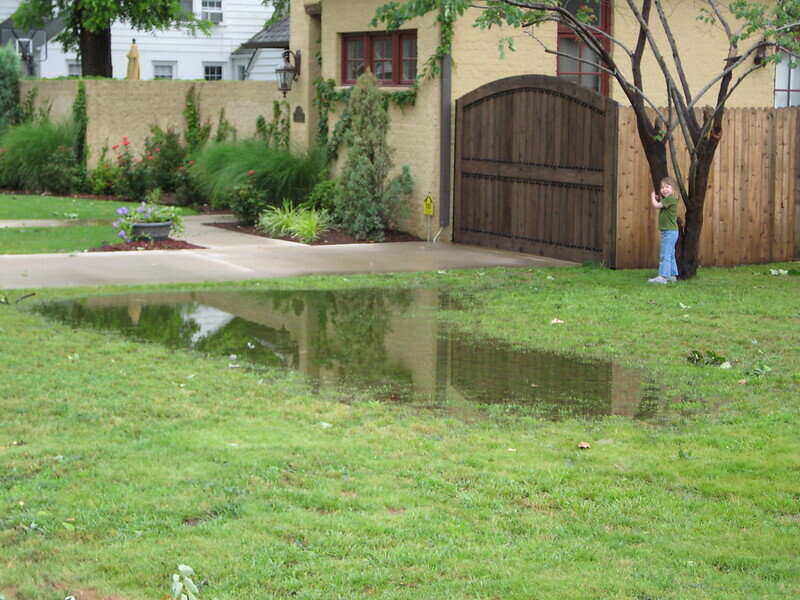
“Overwatering is the No. 1 mistake, especially in the winter months,” Marek says. It harm your grass and invite turfgrass diseases over time. Here are the top reasons why overwatering is risky during the cool seasons:
Root rot: Too much water can leave the soil waterlogged, depriving roots of oxygen and causing them to rot. Grass needs less water in cooler temps, so overwatering can suffocate the roots.
Fungal diseases: Cool, wet conditions create the perfect environment for fungal growth, leading to diseases like snow mold that can damage or kill your grass. For treatments and costs, check out our article on lawn fungus treatments.
Weakened grass: Waterlogged soil can freeze more solidly, leading to root damage. Such soil conditions make your lawn more vulnerable to winter freeze and lead to a more difficult recovery in spring.
Attracting pests: Wet conditions attract insects that thrive in damp environments and feed on weakened grass.
Wasting water: Overwatering wastes water, especially in drought-prone areas like California, Nevada, and Arizona, where conserving water is critical.
See Related: How to Prevent Snow Mold
FAQs
If it snows, there’s usually no need to water your lawn since the snow will naturally melt and hydrate the soil. However, avoid walking on your snowy or frozen lawn as much as possible, as this can damage the grass blades and compact the soil, making it harder for roots to breathe.
Preparing your lawn involves several steps:
• Aerate your lawn in early fall so oxygen, water, and nutrients can reach the root zone.
• Rake and remove leaves regularly to prevent them from forming a wet, suffocating blanket over the grass.
• Overseed in early fall, if needed, to thicken the lawn and reduce future weeds.
For more information, check out our guide: How to Winterize Your Lawn
While morning dew can help maintain moisture levels in the soil, it’s generally not enough to sustain your lawn, especially during dry spells. You should still monitor the soil moisture and water as needed to ensure your lawn remains healthy.
If you’re experiencing an unusually warm winter without much natural precipitation, it’s a good idea to water your lawn. However, always check the soil moisture first to ensure that watering is necessary. Remember, dormant grass doesn’t require as much water as actively growing grass.
Hire a LawnStarter Pro This Season
Managing your lawn’s health through fall and winter can be a complex task.
Don’t let the stress of seasonal lawn maintenance weigh you down. LawnStarter connects you with local pros for mowing, aerating, and leaf removal, so your lawn stays as healthy as it can be all year long.
Read More: How to Care For Your Lawn in Winter
Sources:
Eric DeBoer, assistant professor at Louisiana State University, Baton Rouge, LA. Personal interview.
Amanda Marek, Extension agent at the University of Florida’s Institute of Food and Agricultural Sciences, Marion County, FL. Personal interview.
Main Image: Lawn sprinkler. Photo Credit: maykal / Adobe Stock
Related Posts: