| Key Takeaways |
|---|
| • Most traditional pre-emergents require a 12-week to 16-week wait before overseeding, so a spring application usually pushes seeding to fall. • Tenacity (mesotrione) is the main exception: You can seed and apply it the same day, though it protects for only 21 to 30 days. • For a few small bare spots, you can rake through the treated soil and spot-seed instead of waiting months. |
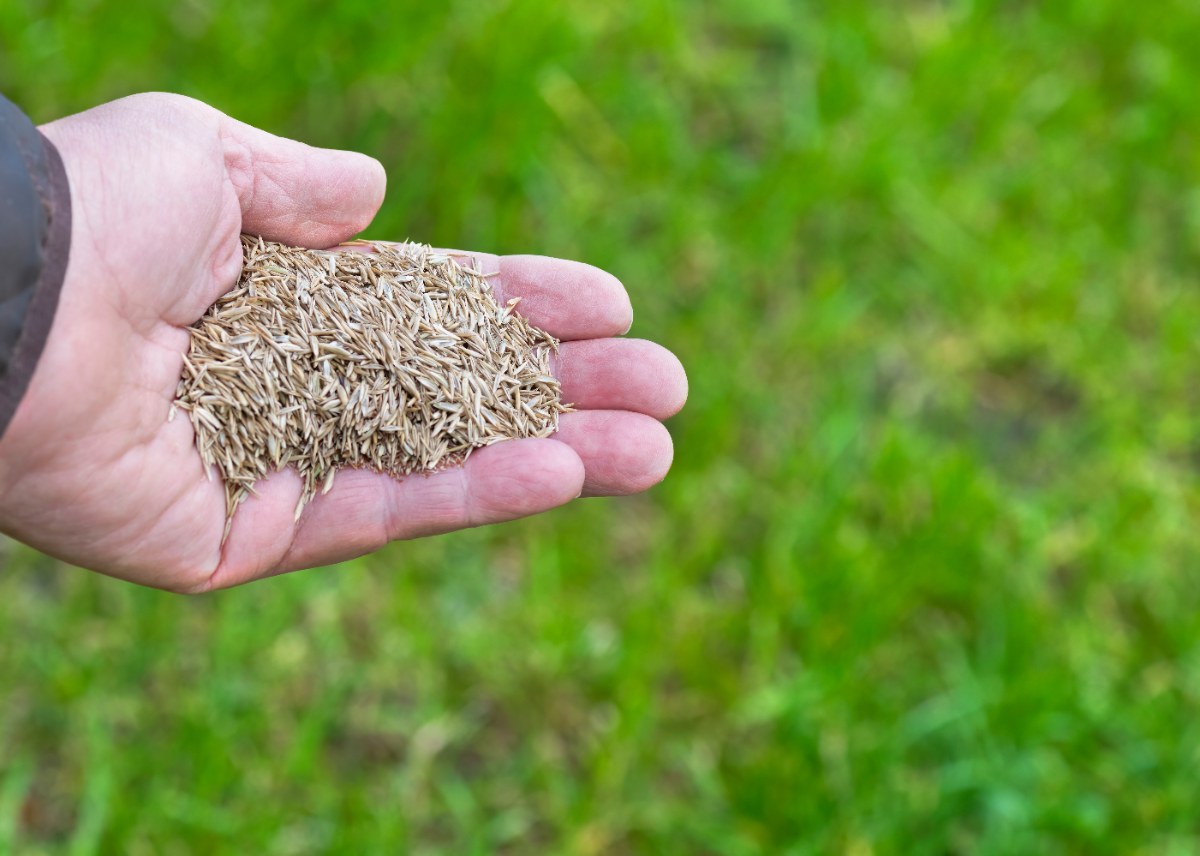
Applied pre-emergent this spring and now staring at bare spots? For most products, you need to wait at least 12 weeks before you can overseed after pre-emergent, which usually pushes seeding to fall if you applied in spring.
But there is one major exception that lets you seed right away, plus a quick-fix workaround for small problem areas.
Not interested in juggling herbicide schedules and seeding windows? LawnStarter’s lawn treatment pros can handle the planning for you, applying pre-emergents and overseeding at optimal times for your region.
Product Wait Times: How Long Before You Can Seed
In most cases, you must wait 12 to 16 weeks to overseed after a traditional pre-emergent, and the exact wait depends on the active ingredient. Here’s how long you need to wait after applying popular pre-emergent products:
| Product Name (Active Ingredient) | Minimum Wait Time | Moves Seeding Time To |
| Barricade or Quali-Pro Prodiamine (Prodiamine) | 16 weeks | August-September (Northern States) July-August (Transition Zone) June-July (Southern States) |
| Dimension or Hi-Yield (Dithiopyr) | 12 weeks | July-September (Northern States) June-August (Transition Zone) May-July (Southern States) |
| Scott’s Halts or Pendulum (Pendimethalin) | 12 weeks | July-August (Northern States) June-July (Transition Zone) May-June (Southern States) |
| Tenacity or Meso 4SC (Mesotrione) | 0 weeks | Can apply at seeding, but lasts only 21-30 days |
| The exception: Not ideal, but you can overseed Bermudagrass with ryegrass 8 weeks after the pre-emergent (Dimension) application if slight injury can be tolerated. | ||
Don’t rush it, and always follow the label, says Pawel Petelewicz, assistant professor of turfgrass weed science at the University of Florida. “If the label says to wait 3 to 4 months before overseeding, that is what I would recommend homeowners follow, and likely the longer of the specified range to stay in the safe.”
For warm-season grass owners, good news: You can apply pre-emergent in early spring, then wait 12 weeks and seed in May or June when the soil hits 65 to 70 degrees. The timing works because warm-season grasses (Bermudagrass, Zoysiagrass, and St. Augustinegrass) love the summer heat.
Cool-season grasses (tall fescue, Kentucky bluegrass, and ryegrass), on the other hand, are sensitive to heat. Their seedlings struggle to establish healthy roots in 80-degree-plus weather. Most cool-season species have an optimum germination window in cooler soil, so summer seeding rarely takes.
Once the pre-emergent is applied in spring, you cannot effectively seed cool-season grass until fall. The math just doesn’t work any other way.
Why Pre-Emergent Blocks Grass Seed Too
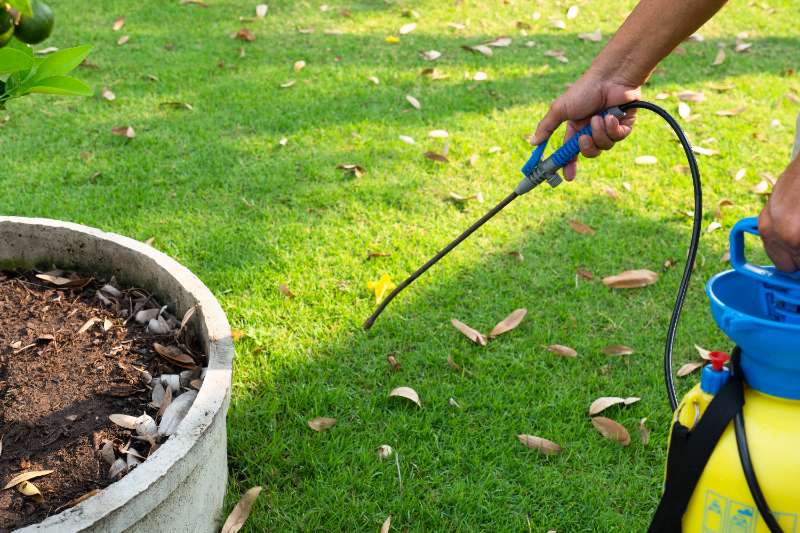
Think of traditional pre-emergents as a chemical barrier in the top 2 to 3 inches of soil. They can’t tell crabgrass from your premium Kentucky bluegrass. Any seedling that comes in contact with the barrier absorbs the herbicide through its tiny roots and stops growing.
Important: Products labeled “safe for lawns” are intended for established grass with mature roots. They are NOT safe for germinating grass seed.
See Related: What Are Pre-Emergent Herbicides?
The ONE Exception: Tenacity (Mesotrione)
Set on spring overseeding? Need weed protection during fall renovation? Use Tenacity or generics like MESO 4SC Select or Torocity. They let grass seed germinate while blocking weeds.
How Tenacity Works
Tenacity contains mesotrione, which kills broadleaf weeds and crabgrass without harming most cool-season grass seedlings (Kentucky bluegrass, tall fescue, and perennial ryegrass). It acts by blocking photosynthesis: Weed leaves turn a ghostly white, and the plant dies.
Why does the grass survive while weeds die? Established cool-season grasses can break down the herbicide before it causes damage, while common lawn weeds can’t, says Mark LaFleur, communications lead for Turf and Landscapes at Syngenta, the maker of Tenacity.
You can spray Tenacity at the same time you seed and get up to 21 to 30 days of pre-emergent activity without harming newly germinating grass.
What about warm-season grasses? Tenacity is safe to use when seeding centipedegrass. The product is not recommended for Zoysiagrass, Bermudagrass, seashore paspalum, or kikuyugrass.
Note: Double-check the product label to confirm you can use Tenacity on your grass type. Formulations can change over time.
| Tenacity Pros | Tenacity Cons |
| ✓ Apply at seeding with no wait time ✓ Controls 40+ common lawn weeds ✓ Works as a pre-emergent and post-emergent | ✗ Only 21 to 30 days of protection (vs. 3 to 6 months for traditional pre-emergents) ✗ You must reapply every 30 days ✗ Temporary grass whitening (normal, fades with mowing) ✗ Limited to seed blends with less than 20% fine fescue ✗ Can’t be used on Zoysiagrass, Bermudagrass, or seashore paspalum |
At $55 to $99 per 8-oz bottle, Tenacity is pricey, but it treats 1 to 2 acres, enough for up to 8 applications on a 1/4-acre lawn. MESO 4SC Select and Torocity start at $35 per bottle.
How to Use Tenacity for Overseeding

Tenacity is highly concentrated, so accurate application is essential. “Applying more than recommended is not better,” LaFleur says.
Make sure you use the correct application rate (follow the label recommendations), and your sprayer is properly calibrated.
Then, follow these steps:
Spray Tenacity the same day you seed (follow product instructions).
Water it in after application.
Wait for germination. Do NOT spray on newly emerged grass seedlings.
Apply the second treatment 4 weeks after germination or when the grass has been mowed two times (whichever is longer).
Switch to traditional pre-emergents after 60 days (once grass establishes strong roots, at least 2 inches deep).
Tip: Scotts makes a Turf Builder Starter Food with mesotrione built in. It’s a granular product that combines fertilizer and pre-emergent, so you’re feeding and protecting the grass in one pass.
See Related: When to Apply Weed and Feed to Your Lawn
Already Applied Pre-Emergent? Here’s a Quick Fix
You already spread pre-emergent, and now you have small bare spots you can’t ignore. What can you do? For small areas (under 2 square feet per spot), you can physically break the chemical barrier.
The 7-Step Spot Seeding Method
Rake through the bare spots and break up the top layer of soil. Use a rotary cultivator (like the Garden Weasel) or a hard rake and follow these steps:
Clear dead grass, rocks, and debris.
Rake hard to loosen the top 2 to 4 inches of soil.
Add 1 to 2 inches of topsoil to dilute the pre-emergent (optional).
Apply grass seed generously, about 50% more than usual.
Mix seeds lightly into the soil with the back of your rake.
Cover with straw to retain moisture.
Water 2 to 3 times daily for 2 weeks.
Does it work? Results vary; it’s not a magic reset button. Travis Gannon, professor of pesticide fate and behavior at North Carolina State University, says it largely depends on what pre-emergent was used and what grass species you’re growing.
It’s worth a shot on small patches to get your lawn in shape until fall, but expect crabgrass and other weeds to pop up where you break the barrier.
With small patches in warm-season lawns, there’s no need to reseed. Gannon says, “Thin areas will slowly fill back in from winter injury,” just slower than with no pre-emergent down.
See Related: How to Fix Patchy Grass
Seeded Too Soon After Pre-Emergent?
Here’s the frustrating part: Your seeds will still try to grow. You might even see some tiny green shoots. But those seedlings absorb the herbicide through their first roots and don’t survive more than a few days.
Your options:
Wait it out and try again (warm-season grasses): Check the pre-emergent label for waiting time.
Try barrier-breaking: If patches are small, try the 7-step process above.
Plan for fall: Mark your calendar for late August and do it right.
To test if it’s safe to overseed, Petelewicz says you can try seeding some annual turf or a sensitive plant, such as cucumber, into soil collected from the treated area and into untreated soil. Compare the emergence rate and root growth within 1 to 2 weeks.
See Related: How to Overseed a Lawn in 8 Simple Steps
Should You Skip Pre-Emergent or Skip Seeding?
Here’s how to decide which one your cool-season lawn needs more of this season.
| Skip Pre-Emergent This Spring If: | Skip Spring Overseeding If: |
| → Numerous or large dead patches → Visibly thin lawn (less than 70% covered with grass) → Significant winterkill or disease damage → Complete renovation or new lawn installation → Minimal crabgrass last summer | → Healthy, thick lawn (more than 70% covered with grass) → Few small scattered patches → Severe crabgrass infestations → Set on fall overseeding (the better option) |
If you skip the spring pre-emergent and overseed the lawn, hand-pick the weeds, or wait about 4 weeks, then spot-treat with post-emergents like Fiesta, Tenacity, or Quinclorac 75 DF.
Note: Always check whether the product is safe for your grass type and the waiting time after seeding.
See Related: Post-Emergent Herbicides: Which One for Which Weed?
Fall Overseeding: The Best Timing
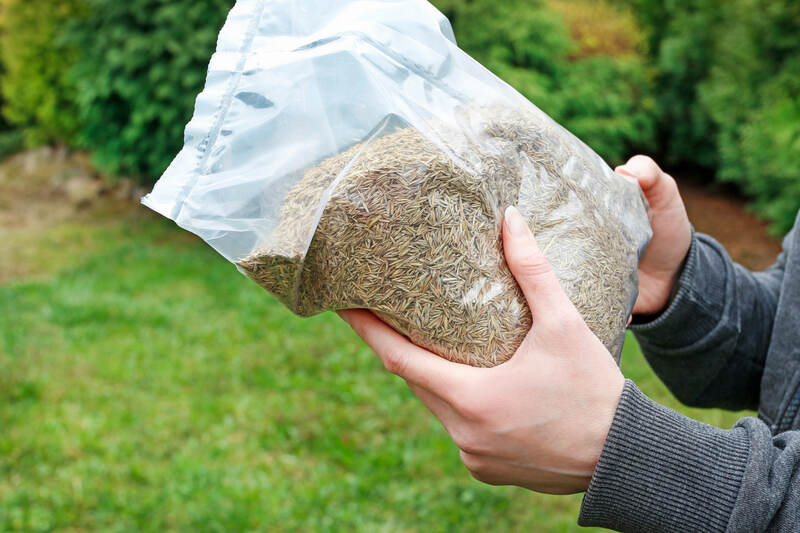
Want a weed-free season and a thick lawn? Here’s the annual schedule that works best for cool-season grasses:
Late summer (mid-August to mid-September, soil temps below 65 degrees): Overseed the lawn. The cool nights and warm soil are ideal for germination.
Fall (6 weeks after seeding, soil temps still above 55 degrees): Wait until you mow the grass twice, then apply fall pre-emergent for winter weeds. It’s optional. Most homeowners skip fall pre-emergent and focus on spring.
Early spring (March-April, soil temps 50 to 55 degrees): Apply traditional pre-emergent to get full-season crabgrass protection. Your grass is mature enough to handle it.
Why does fall seeding win for cool-season grass? No scorching heat to stress seedlings, but plenty of rainfall for consistent soil moisture, plus 8 months for grass to mature before summer.
Regional Timing
| Apply Pre-Emergent | Overseed | |
| Northern States | Mid-April to mid-May | Early September |
| Transition Zone | Mid-March to mid-April | Late August |
| Southern States | Mid-February to mid-March | Late spring, 12 weeks after spring pre-emergent |
See Related:
FAQs
You can usually fertilize right away. Pre-emergents and fertilizers work independently, and many products combine both in a single bag. Fertilizer feeds established grass, while the pre-emergent blocks weed seeds in the soil. Always follow the label rate so you don’t overapply either product.
In much of the country, early October can still work for cool-season grass if soil temperatures stay above 50 degrees and you seed well before the first hard frost. In northern states, mid-September is safer. Later than that, seed may not germinate and establish before winter.
Yes, but wait until your new grass is established, generally after you have mowed it twice. Applying a traditional pre-emergent too soon will stop your new seed from filling in. A fall pre-emergent for winter weeds is optional, and many homeowners skip it in favor of a spring application.
Stop Guessing the Seeding Timing
There’s a reason pre-emergents and overseeding timing trips up so many homeowners: It varies by grass type and climate. Bringing in expert help takes the guesswork out.
LawnStarter’s pros will aerate, seed, fertilize, and control weeds on a schedule that actually works, without wasting seed or missing your window. Get matched with a LawnStarter pro for aeration and overseeding and enjoy a thick, weed-free lawn.
Read More:
Main Image: Hand spreading grass seed on lawn soil. Image Credit: freila / Adobe Stock
Related Posts: