| Key Takeaways |
|---|
| • Rakes are task-specific tools, and using the wrong type makes yard work harder and can damage your lawn or garden. • The leaf rake and garden rake are the two most essential rakes for most homeowners, and they are not interchangeable. • Specialty rakes like the thatch rake, shrub rake, and roof rake solve problems standard rakes cannot. |
Have you ever attended a fancy dinner and not known which fork to use? That’s how it might feel when you’re shopping for a rake at the home supply store.
Like forks, rakes serve very different purposes, and grabbing the wrong one makes yard work harder than it needs to be. This guide covers 12 common types of rakes and their uses so you can pick the right tool.
Whether it’s a quick weekend tidy-up or a full fall cleanup, the right rake matters. If you’d rather skip the raking, book a LawnStarter cleanup service instead.
How to Choose the Right Rake
The right type of rake depends on three things: what you’re raking (leaves, soil, or weeds), what the rake is made of (plastic, metal, bamboo, or fiberglass), and whether the handle fits your height.
Which Rake for Which Job
Not sure which rake to grab? Match your task to the right tool:
| Task | Best Rake Type | Why |
| Gathering fall leaves | Leaf Rake | Flexible tines glide over grass without damaging the turf. |
| Leveling soil or mulch | Garden Rake | Rigid, short tines easily push and pull heavy materials. |
| Removing dead grass | Thatch Rake | Sharp blades cut into the turf to pull up thick thatch. |
| Cleaning tight flower beds | Shrub Rake | Narrow head fits between plants and along fence lines. |
Parts of a Rake
When you’re standing in the rake aisle or reading a product page, you’ll see terms like “tines,” “tang,” and “head.” Here’s what they mean:
Head: The entire bottom section of the rake, including the tines and the base they attach to.
Tines: The individual prongs or teeth that extend from the rake head and make contact with the ground. Flexible tines (like on a leaf rake) bend to glide over grass; rigid tines (like on a garden rake) push and pull heavy materials like soil or gravel.
Handle: The long pole you hold, typically made of wood, fiberglass, or metal.
Tang: The metal piece connecting the rake head to the handle. A socket tang (where the handle slides into a metal sleeve) is more durable than a strap tang (where a flat metal strip wraps around the handle).
Types of Rakes
So what kind of rake do you need? Here are the most common rake types available.
1. Leaf Rake
AKA: Lawn rake
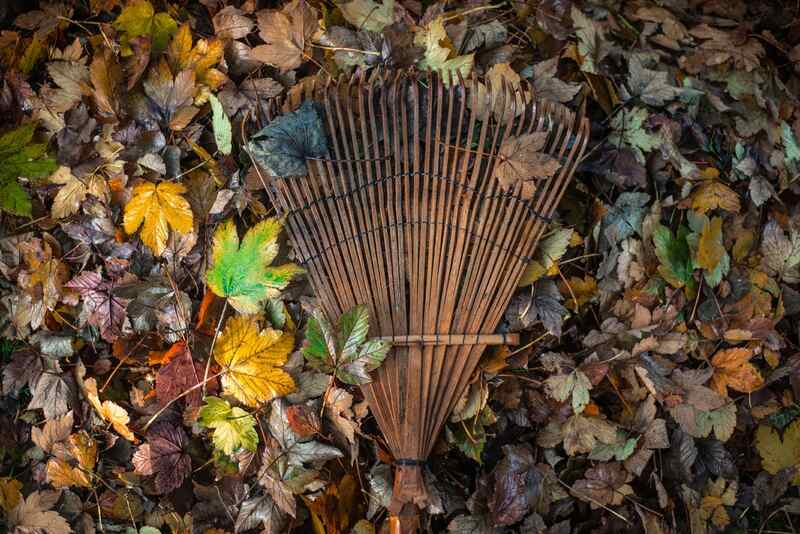
What it looks like: A long handle with metal, bamboo, or plastic tines spread out in a fan or triangular shape.
If you buy only one rake, make it this one. The leaf rake is the best tool for gathering fallen leaves because its flexible tines glide over grass without damage.
Durable fiberglass models often cost around $40. Your choice centers on materials and size:
Plastic rakes are lightweight, won’t rust, and are the least expensive but least durable. Polyresin rakes offer a good compromise of durability and flexibility.
Metal rakes are the most durable but can be heavy and hard to clean.
Bamboo rakes are lightweight and sustainable but not the most durable.
Size considerations:
Handle length: Choose a handle long enough to prevent stooping.
Fan width: Wide fans clear more leaves per pass but can be heavy. Smaller fans offer better control.
2. Garden Rake
AKA: Bow rake, level head rake
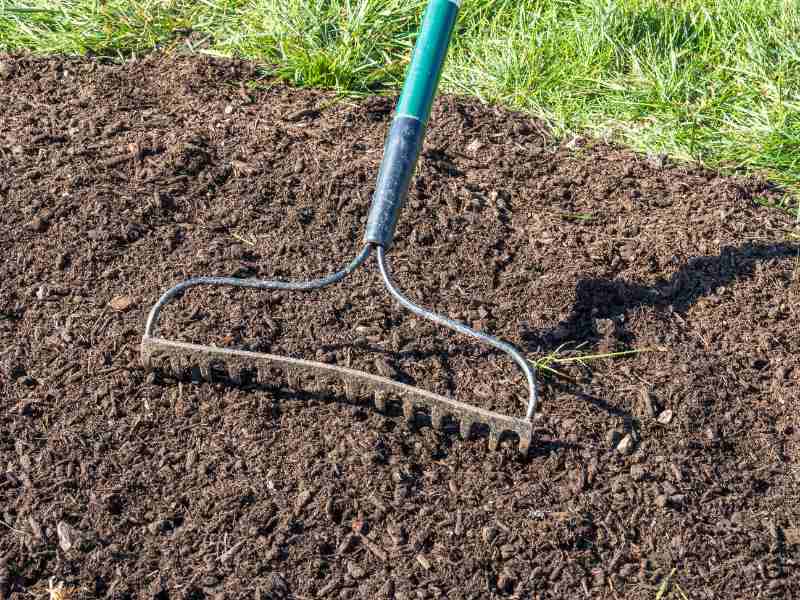
What it looks like: Short, thick, widely spaced metal tines extending straight from a flat metal bar, the opposite of a leaf rake’s fan shape.
The garden rake excels at leveling dirt and mulch thanks to its sturdy metal head and short, rigid tines. It’s also effective for preparing garden beds and breaking up compacted soil.
However, a garden rake is not suitable for raking leaves. The rigid tines can damage grass, and the heavy metal head strains your arms and back.
That’s why a lighter, flexible tool is usually the better call for turf cleanup.
3. Shrub Rake
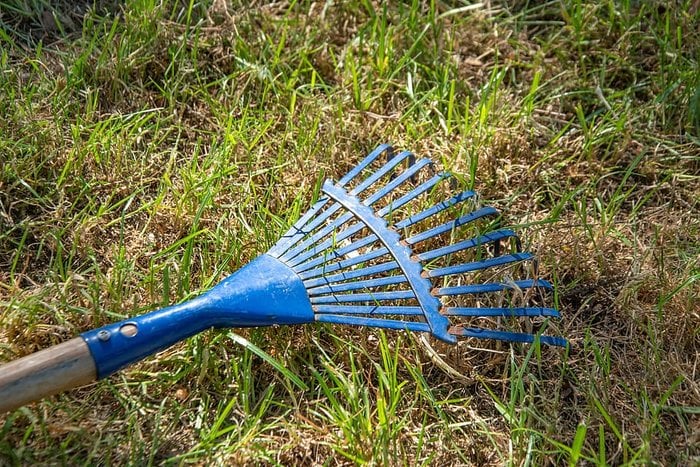
What it looks like: Tines are typically in a fan shape and have a shrub rake width of about 8 inches; some varieties are shaped like a house broom.
A shrub rake may look like a miniature leaf rake, but it’s made to work in tight spaces. It’s the right tool for removing leaves and debris from between shrubs, along fence lines, and from flower beds.
If your garden has a lot of debris, look for thicker tines for more effective removal.
4. Thatch Rake (Dethatching Rake)
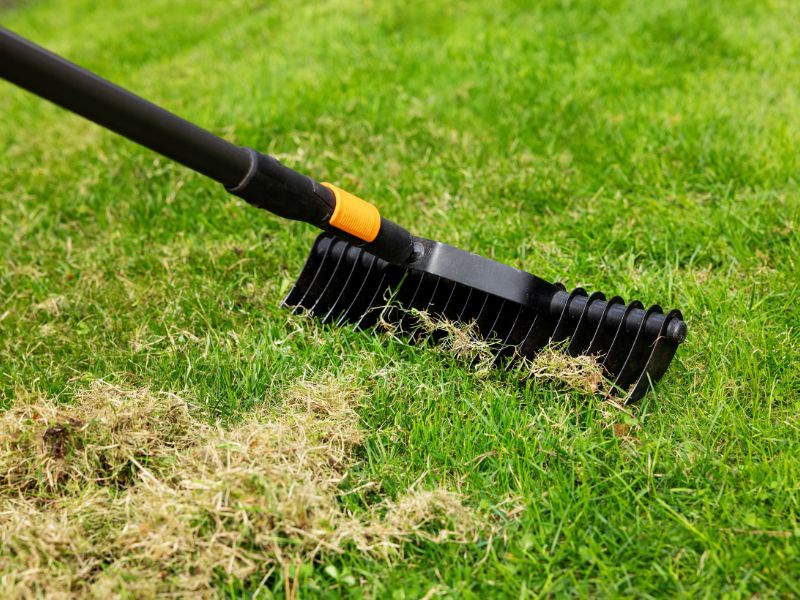
AKA: Scarifying rake
What it looks like: A long handle with sharp metal blades lining both sides of a wide metal head. The blades are designed to cut through packed turf rather than glide over it.
A thatch rake removes the buildup of dead grass and organic material between grass blades and soil. Dethatching is important because once thatch exceeds about half an inch thick, it blocks water and fertilizer from reaching roots.
Best for:
Small lawns: A manual thatch rake works well and has a cost of less than $40.
Large lawns or heavy thatch: Use a power rake or try verticutting with a vertical mower. Professional dethatching services typically cost between $65-$165.
How does a thatch rake work? Position the blades just under the grass surface, then pull toward you; one side breaks up thatch while the other removes it. The blades are sharp, so use caution.
See Related: How to Dethatch Your Lawn
5. Landscape Rake
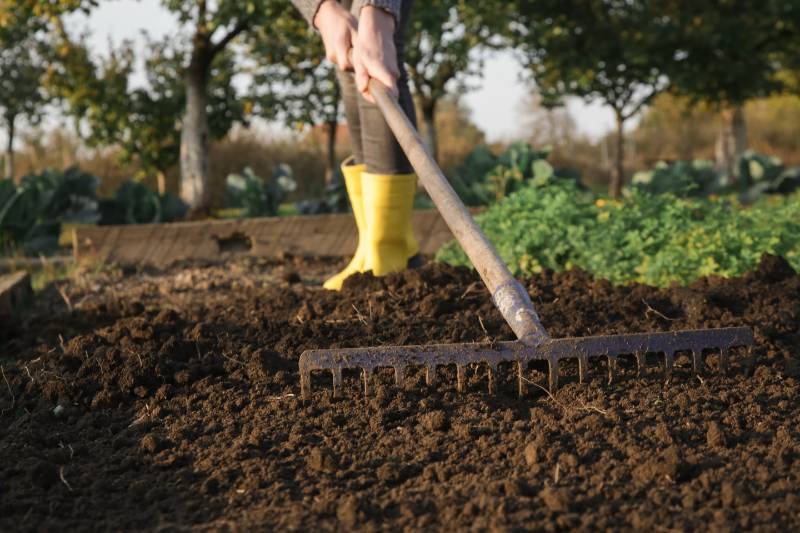
What it looks like: Similar in shape to a garden rake, a landscape rake has a wide head and lots of steel tines.
Landscape rakes often have a landscape rake width of about 36 inches. They’re ideal for leveling a yard, spreading gravel, or smoothing out a new lawn bed before seeding. Heads are usually aluminum but can be tough to maneuver.
6. Hand Rake
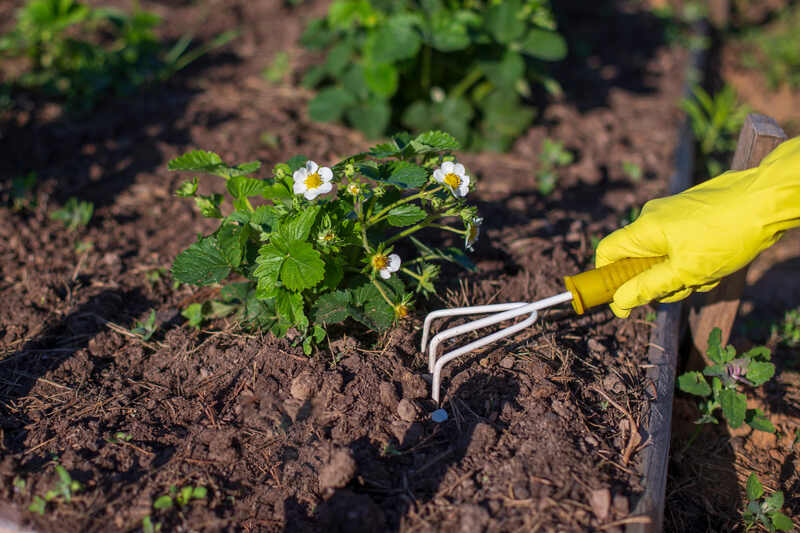
What it looks like: A scaled-down rake with a short handle and usually three tines with a pronounced bend.
A hand rake is best for precise, close-up work in small space gardens, such as flower beds, container gardens, and tight spots where a full-size rake won’t fit.
Use it to till soil, remove debris, and pull shallow-rooted weeds. It also works well to break up soil in pots before planting.
The following rakes are less common but worth knowing about.
7. Leaf Scoop Rake
A leaf scoop rake combines raking and pickup in a single motion. These come in a couple of configurations:
A rake with a clamshell head that operates with a lever
A set of plastic scoops that look like overgrown lobster claws
Both allow you to move and pick up leaves in one motion, making it easy to bag yard waste or fill a wheelbarrow.
8. Lake Rake
If you have a pond or water garden, you know that algae can cut off needed oxygen for plants and fish. A lake rake solves this problem.
Lake rakes typically have long telescoping handles and wide tined heads. Drag it along the water’s surface, or throw it like a grappling hook for deeper ponds, to pull up algae, weeds, and debris.
9. Roof Rake
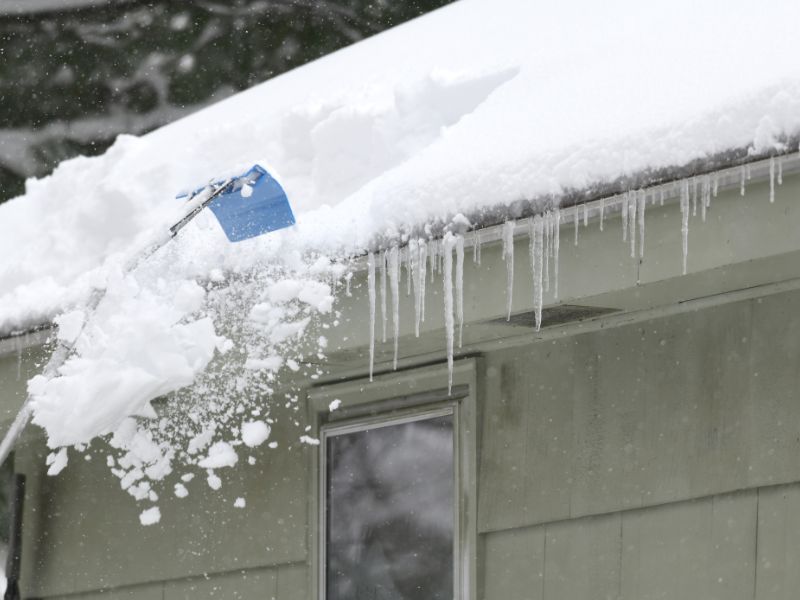
While snow on a roof looks picturesque, too much weight can damage your roof or cause it to cave in. In high-snow areas, a roof rake is essential.
This tool features a curved blade on a telescoping handle, and many models offer a reach of about 16 feet. It safely removes snow, leaves, and debris from your roof.
10. Berry Rake
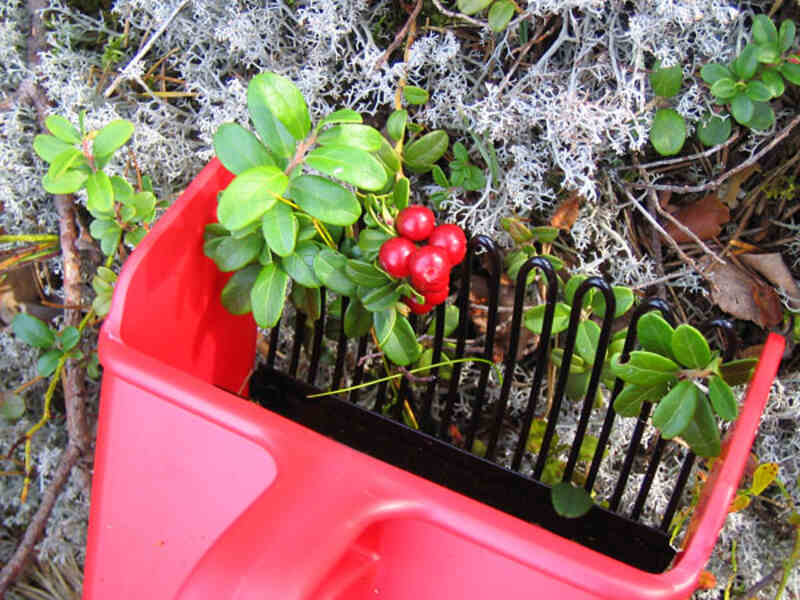
A berry rake makes the harvest easier.
Made of metal or plastic, this rake looks like a box with a comb on the end. Use it to gently pull berries, which fall into the box, saving you time and mess.
11. Tarmac Rake
Also known as an asphalt rake, stone rake, or gravel rake, tarmac rakes are sometimes confused with garden rakes. But these metal rakes are made for heavy-duty jobs, like moving and smoothing out asphalt and gravel.
If you plan to install a gravel or asphalt driveway, this is one of the tools you’ll need.
12. Artificial Turf Rake-Brush
Artificial turf requires no mowing, watering, fertilizers, or pesticides, making it a low-maintenance option increasingly chosen for water conservation. Artificial turf costs typically run $15-$19 per square foot.
Maintain it using an artificial grass rake-brush designed specifically for synthetic lawns.
FAQs
No. Leaf rakes are designed to glide over grass, while garden rakes are built to move soil, mulch, and gravel. Using the wrong rake can damage turf or make the job harder. If you want to own fewer tools, start with a leaf rake and add a garden rake as needed.
For tight spaces like flower beds and containers, a hand rake gives you the control you need. For larger garden beds, a garden rake breaks up soil and pulls up shallow-rooted weeds, but you’ll still need to remove the roots.
Most homeowners can cover common yard tasks with two rakes: a leaf rake for leaves and light debris, and a garden rake for soil and mulch work. Add specialty rakes only if you run into specific problems like heavy thatch, tight planting beds, or roof snow.
Let LawnStarter Handle Your Yard Work
Done picking your rake? If you’d rather skip the work entirely, LawnStarter’s leaf removal service makes it easy to hand off the job to a local pro before it turns into a weekend-long project.
Read More:
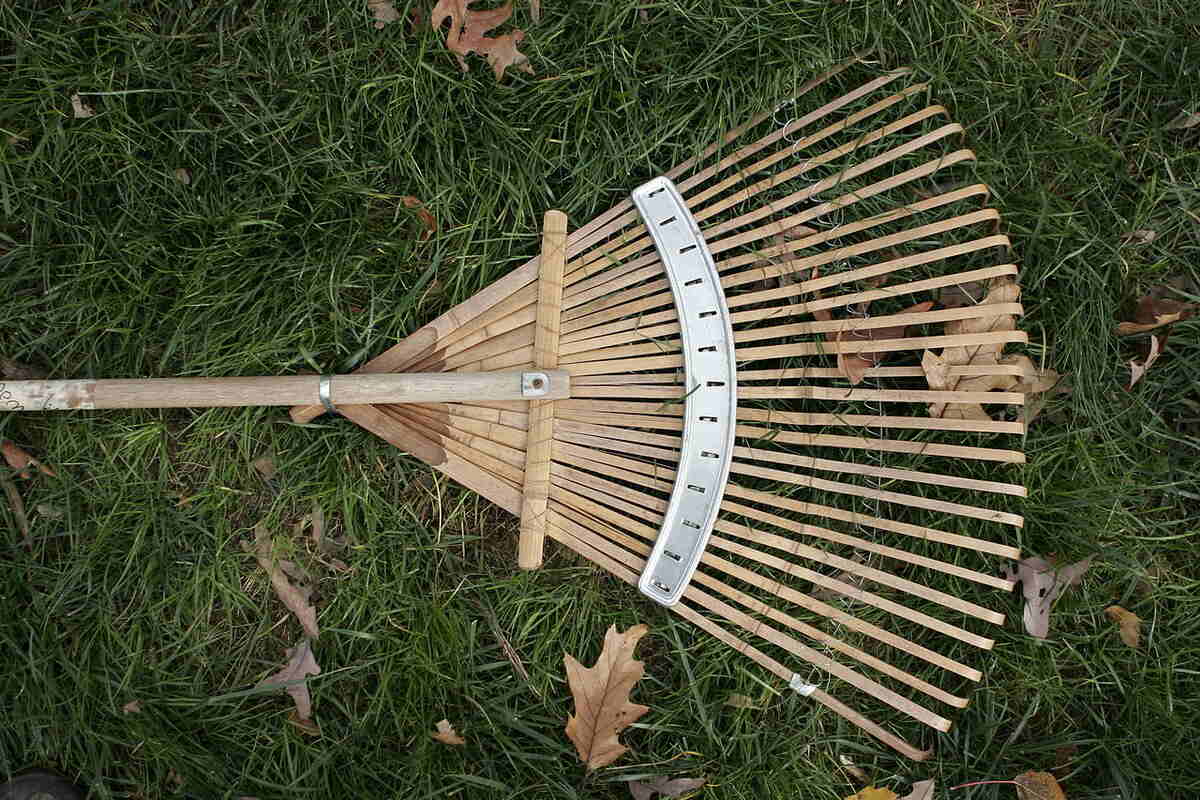
Main Image: Fan-shaped leaf rake. Photo Credit: Henry Tseng / Wikimedia Commons / CC BY-2.0