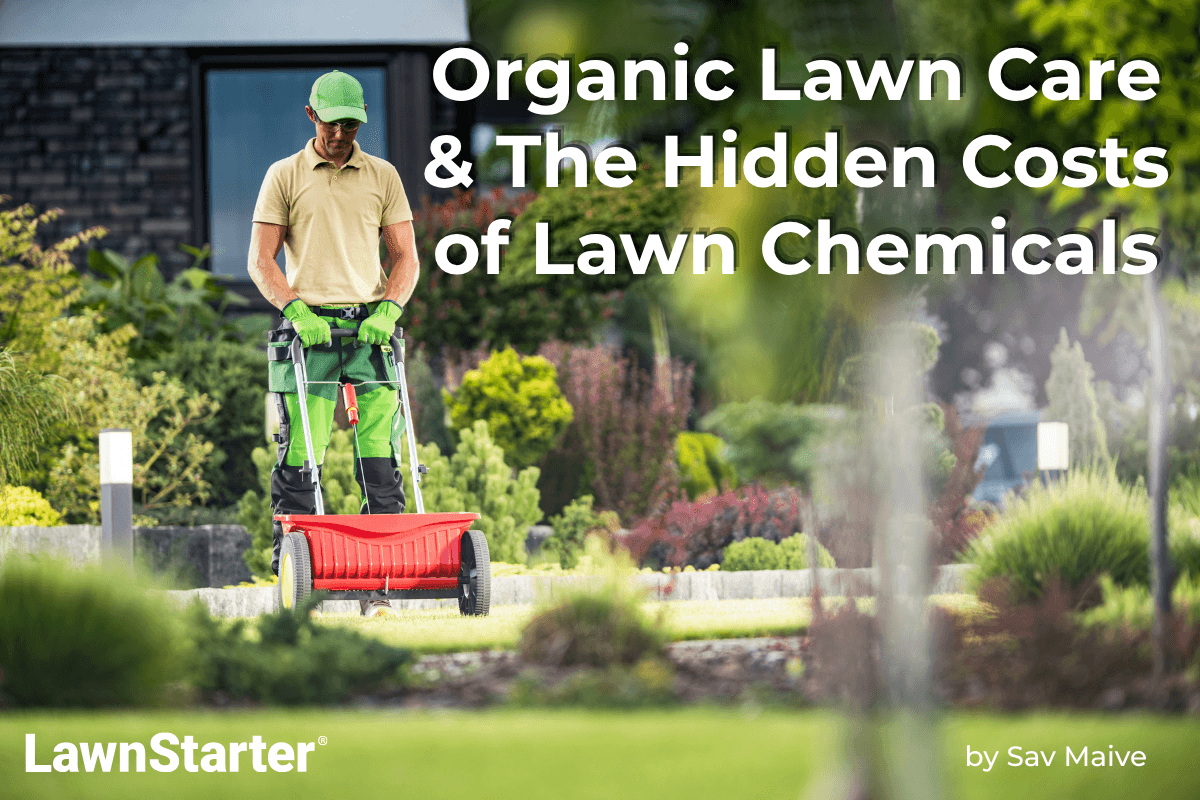
Americans use a combined 170 million pounds of lawn fertilizers and pesticides in their yards each year.
However, evolving local policies and issues with water supplies are reshaping consumer interests as “green industries” like landscaping go green with electric lawn care equipment and eco-friendly methods.
To map out where this movement stands ahead of Nitrate Pollution Awareness Week (July 26 to Aug. 1), LawnStarter looked at Organic Lawn Care and The Hidden Costs of Lawn Chemicals.
Organic lawn care is often misunderstood.
“One big misconception about organic lawn care is that it means ‘no chemicals,’ but really, it just means avoiding synthetic ones where possible,” says Heather Kirk-Ballard, an assistant professor and extension specialist at the University of Georgia.
“Organic practices, such as increasing soil organic matter, reduce chemical runoff into waterways and promote biodiversity compared to synthetic, high-chemical lawns,” says Kirk-Ballard.
From lawn care to health impacts to policies, learn more about the organic lawn care movement below, with insights from industry experts.
Table of Contents
- By the Numbers: Tracking the Turf Footprint of Lawn Chemicals
- What Goes on Your Lawn — and Why It Matters
- Their Impacts: What Lawn Chemicals Leave Behind
- Organic Turf Management: Demand, Access, and Cost
- Ask the Experts
- Shifting Toward Greener Pastures: Options for Homeowners
By the Numbers: Tracking the Turf Footprint of Lawn Chemicals
Before diving in, it’s important to understand the sheer impact lawn chemicals have — not just in our yard, but in our drinking water, bloodwork, and even air particles.
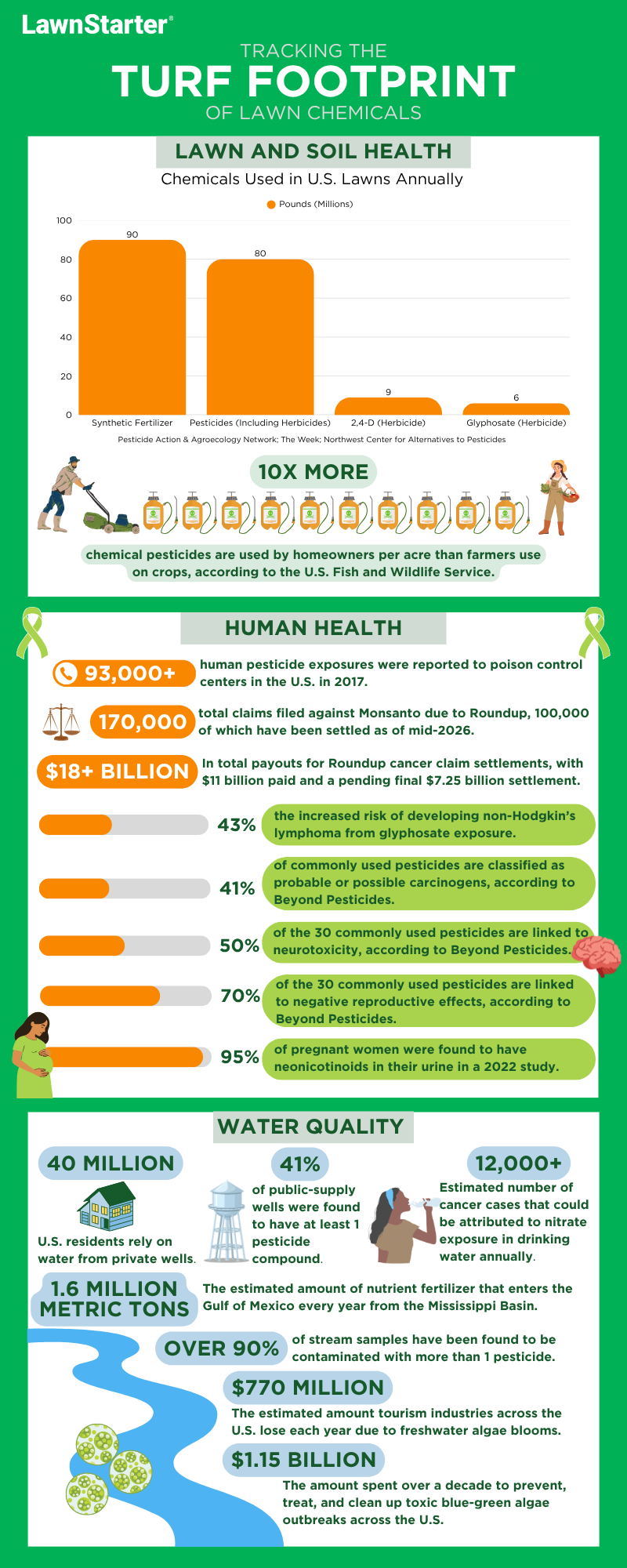
Sources: Pesticide Action & Agroecology Network, The Week, Northwest Center for Alternatives to Pesticides, National Wildlife Federation, National Environmental Public Health Tracking Network, Sokolove Law, Drugwatch, Mutation Research (Zhang et al.), Beyond Pesticides, Environmental Science & Technology (Buckley et al.), Southern California Well Service, U.S. Geological Survey, Environmental Science & Technology (Bexfield et al.), Environmental Research (Temkin et al.), American Scientist, Environmental Working Group, Resources, Conservation and Recycling (Sampat et al.).
What Goes on Your Lawn — and Why It Matters
Lawn Fertilizer: Organic vs. Synthetic
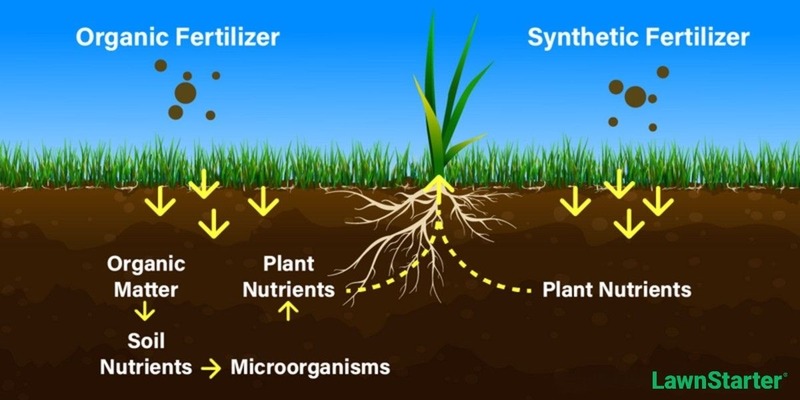
Fertilizer provides essential nutrients to your lawn, helping grass grow thick and green, while also preventing the growth of weeds, pests, and diseases.
Organic fertilizers are derived from natural materials like compost, manure, bone meal, blood meal, humic acid, fish emulsion, sea kelp, and seaweed. These materials work by feeding soil microbes and supporting long-term soil fertility, rather than delivering the fast-food equivalent of nutrients.
- For every 1% increase in soil organic matter, a single acre of soil can hold up to 20,000 additional gallons of water, according to LSU AgCenter.
- Agricultural research found that organic land management yielded a 32-84% increase in beneficial microbial biomass compared to conventional synthetic systems.
Synthetic fertilizers are typically a fast-acting blend of nitrogen (N), phosphorus (P), and potassium (K). A 20-10-10 fertilizer contains 20% nitrogen, 10% phosphorus, and 10% potassium.
While synthetic fertilizers offer an immediate, vibrant green-up for your grass, heavy reliance on synthetics can kill off beneficial microbes, leaving your soil quality worse off.
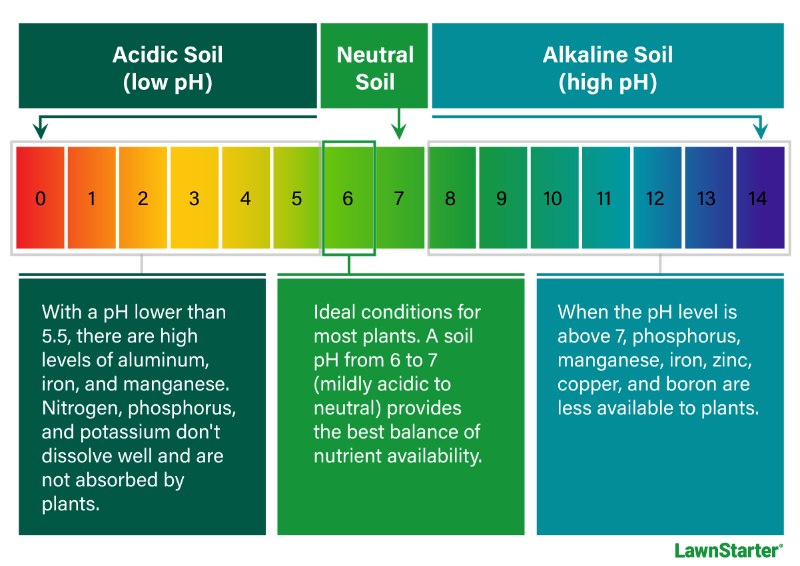
- A 2024 study found that long-term use of synthetic nitrogen fertilizers decreased average soil pH by 15.27%. Soil pH directly impacts how your grass absorbs nutrients from both soil and fertilizer applications. Acidic soil can lead to yellow or brown grass, moss, and increased weeds.
- The same study found that long-term use of synthetic nitrogen fertilizers decreases the diversity of the soil microbiome by 15.42% and reduces the presence of beneficial soil bacteria by up to 29.38%.
- Agricultural research from 2006 found that nitrate leaching was 4.4 to 5.6X higher in conventional (synthetic) plots compared to organically managed plots.
Many synthetic lawn products bundle fertilizer with herbicides in a single weed and feed product. While this is convenient for homeowners, it indiscriminately adds chemicals across the entire lawn, whether weeds are present or not.
Nitrates are a common concern for groundwater contamination. They are naturally occurring compounds, composed of both nitrogen and oxygen. Nitrate pollution can be caused by the misuse of synthetic fertilizer, but can also be due to animal manure, landfills, and sewage or discharge from septic systems.
Pesticides
“Pesticide” is an umbrella term encompassing substances like herbicides (targeting weeds), insecticides (insects), fungicides (fungal diseases), and rodenticides (rodents).
Organic pest control relies on a wide range of solutions depending on the pest problem. Some common options include neem oil, spinosad, diatomaceous earth, beneficial nematodes, sulfur, Bacillus thuringiensis (Bt), milky spore, exclusion, and habitat manipulation.
”Least-toxic” pesticides are derived from plants or natural minerals (like essential oils) and have low (but not 0) health hazards for humans and the environment.
Organic herbicides are commonly made with ingredients like herbicidal soaps, acetic acid, citric acid, d-limonene, essential oils, chelated iron, and corn gluten meal.
Keep in mind: There are numerous organic pesticides (including herbicides) that can be toxic to bees.
Integrated Pest Management (IPM) follows a structure led by lawn health and prevention. The goal is to make the lawn inhospitable to weeds and pests through proper mowing, watering, and soil fertility — with chemicals only being used as a last resort.
Synthetic pesticides — like glyphosate, carbaryl, and chlorothalonil — are designed to kill either weeds, insects, fungus, or rodents, but their effects rarely stop at the target.
- Broad-spectrum pesticides will harm beneficial insects, pollinators, and destroy soil microbes.
- Systemic pesticides, like imidacloprid, get absorbed by every part of the plant — including pollen and nectar — which will harm pollinators. Imidacloprid can be 7,000X more toxic than DDT for honeybees.
- 2,4-D, one of the most commonly used lawn herbicides, was one of 2 herbicides used as a component of Agent Orange. The other herbicide, 2,4,5-T, was banned in 1985, but trace amounts have still been detected in a few water utilities in the U.S. as of 2023.
Other Elements Impacting Your Lawn
- Inorganic mulch made from rubber, plastic, and film can impact the soil microbiome. Even “organic mulch” can be contaminated with microplastics or heavy metals.
- Chemical de-icers and road salt (sodium chloride) from the winter season can degrade the soil structure, leaching heavy metals, and potentially causing a physiological drought for your plants, even when the soil is wet. They can also impact water quality.
- Pet waste might seem like just any other neighborhood squabble, but it can make a cumulative environmental impact. Estimates say that just 2-3 days’ worth of feces from a population of 100 dogs can temporarily close a waterway from pollution.
- Accidental toxins can be present in the lawn, like fuel spillage. Americans spill an estimated 17 million gallons of fuel on their lawns while refueling equipment every year.
Their Impacts: What Lawn Chemicals Leave Behind
The products we put on our lawns don’t stay on our lawns.
Agricultural research suggests that only 30-50% of synthetic nitrogen is actually absorbed by the plants, with the remaining 50-70% lost to the environment. Wind, rain, and lawn irrigation spread these chemical residues, reducing soil quality and impacting local waterways.
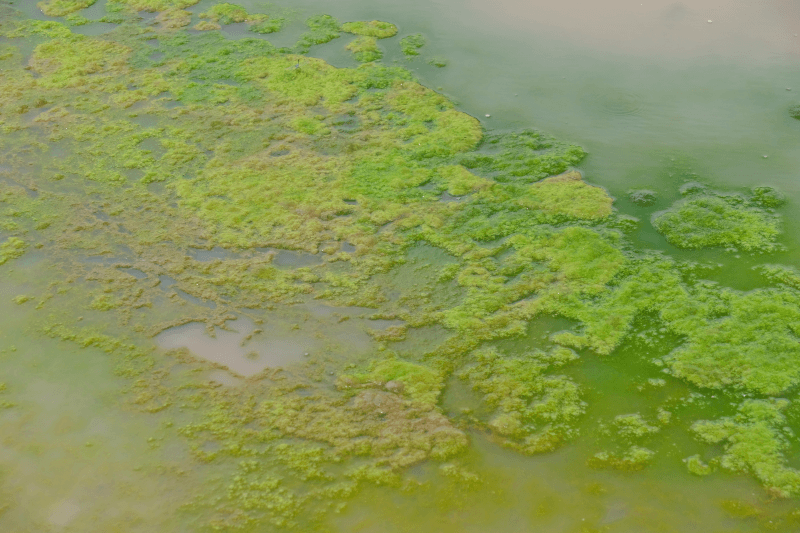
Photo Credit: Supratchai / Adobe Stock / License
Environmental Concerns
Water: Fertilizer runoff is a leading contributor to algae blooms (cyanobacteria), groundwater contamination, and hypoxic “dead” zones where aquatic life can’t survive. 16 pesticides have been identified by USGS for being detected at higher concentrations in urban streams compared to agricultural streams.
- A seasonal dead zone occurs in the Gulf of Mexico every summer from eutrophication, suffocating marine life and impacting local fishing industries. The 5-year average size was 4,755 square miles, but at its largest, the dead zone spanned up to over 8,700 square miles — larger than the state of New Jersey.
- Recurring dead zones have also impacted the Chesapeake Bay, all 5 Great Lakes, and coastal communities along the Pacific Northwest.
- Fertilizer spills impacting water sources like the Nishnabotna River and Sheboygan River have amplified these issues with nutrient pollution.
- Nitrate pollution is a budding financial issue for communities in the U.S. It cost Central Iowa Water Works $16,000 per day to run their nitrate removal system in 2025 when in operation. In Pratt, Kansas, the cost of a new water treatment facility was estimated at over $45 million, which is more expensive than the city’s proposed total annual budget.
- Research has shown that rural homeowners may feel the brunt of the water bills. The annual cost of water treatment and nitrate removal for rural homeowners in Iowa was $1,200 per person, compared to just $2 per person per year for urban residents in Iowa.
- A 2008 study provided early evidence that lawn fertilizer bans help improve water quality, finding that phosphorus fertilizer restrictions in Ann Arbor, Michigan, reduced phosphorus levels by an average of 28% in the nearby Huron River.
- Another study published in 2022 found that residential fertilizer bans in Florida positively improved local water quality. They specifically noted that bans during the winter — when turfgrass isn’t growing as much, i.e., absorbing nutrients — were most effective.
- Lakefront properties impacted by algae blooms have been found to have property values drop by 15.6% per meter of decreased water clarity.
Wildlife: Pesticide use has been linked to pollinator decline, bird mortality, and bioaccumulation — when toxins build up in organisms and magnify as they move up the food chain, among other health impacts. 200+ species are reportedly being pushed to extinction from the use of 3 insecticides: imidacloprid, clothianidin, and thiamethoxam.
Soil: Lawn chemicals can impact soil pH levels, disrupt microbial populations, reduce nutrient cycling, and impair water retention, making it even more difficult to build healthy turf.
Air: Pesticide drift and volatilization can lead to indoor air contamination. Unused fertilizer converts into nitrous oxide, which traps heat in the atmosphere nearly 300X more effectively than carbon dioxide. Several pesticides have been detected in fog and rain.
A lesser-known footprint occurs during the manufacturing process: Synthetic fertilizers are produced using a method that requires ammonia extracted from natural gas, which is typically sourced through hydraulic fracking.
Health Concerns
Research has shown pesticide exposure can lead to serious health risks, including:
Cancer: Non-Hodgkin’s lymphoma, renal cell carcinoma, thyroid cancer, childhood leukemia and brain tumors, bladder cancer, breast cancer, liver cancer, prostate cancer, and soft tissue sarcoma.
Neurological disorders: Alzheimer’s, Parkinson’s, and ALS.
Other systemic effects:
- Reproductive and developmental effects.
- Endocrine (hormone) disruption.
- Organ damage (especially kidney and liver damage).
- Immune system disorders.
- Asthma and respiratory effects.
- Diabetes.
For pet parents, pesticides have been connected with cancer (lymphoma and bladder cancer) in dogs and oral squamous cell carcinoma in cats exposed to flea control pesticides.
Explore the effects of hundreds of pesticides with Beyond Pesticides’ Gateway on Pesticide Hazards and Safe Pest Management.
High levels of nitrates from fertilizers can impact human health, leading to possible:
- Birth defects
- Blue baby syndrome
- Thyroid disease
- Colon cancer
Important: Homeowners with private wells should take action if the measured nitrate is above 10 mg/L: Immediately stop using the water for infants and pregnant individuals, install a water treatment system certified to NSF/ANSI standards (such as reverse osmosis systems, anion-exchange units, or high-capacity distillers), and cease all fertilizer applications within 100 feet of the wellhead.
Organic Turf Management: Demand, Access, and Cost
Where are organic alternatives gaining ground, and what is it costing homeowners to get there?
Consumer Interest and Demand
The projected value of the global organic lawn care market is anticipated to be $5.54 billion by 2033, with a projected compound annual growth rate of 12%.
Looking at population-adjusted Google search data, interest in organic lawn care is highest in the District of Columbia, followed by Vermont, Wyoming, and Hawaii. D.C. residents are about 4X more interested in this topic than Arizona residents, who demonstrate the lowest interest in organic lawn care, followed by Florida, Louisiana, and Mississippi.
Folks in New York, Pennsylvania, and Illinois have the most concern for their pets when it comes to lawn management, with the highest volume of searches for “pet safe lawn care” and “dog friendly lawn fertilizer.”
According to the 2026 National Gardening Report, there was a 35% increase in spending for insect control. However, they also reported that 38% of gardeners under the age of 35 are opting for natural or organic fertilizer, compared to 14% of gardeners aged 65 or older.
Access to Sustainable Lawn Care Services
While there isn’t one single comprehensive database of lawn care providers specializing in organic or sustainable lawn care services, we searched through 5 sites, including the National Association of Landscape Professionals, Ecological Landscape Alliance, Organic Landscape Association, Green Business Network, and NOFA Organic Land Care.
Across these networks, we found that Massachusetts has the best access to eco-friendly lawn care providers, followed by California, New York, and Pennsylvania.
California has the most pest management providers recommended by Beyond Pesticides, followed by Texas, New Jersey, and Illinois.
Factoring in Lawn Sizes
The size of your lawn is one of the primary factors that determines your overall maintenance needs. The bigger your lawn, the more weeds and pests you might be dealing with, and thus the more chemicals you have to use if using conventional lawn care methods.
States with the Largest Yards (on Average)
- New Hampshire — 0.7 acres or 30,290 square feet
- Vermont — 0.67 acres or 29,330 square feet
- Maine — 0.66 acres or 28,770 square feet
- Mississippi — 0.63 acres or 27,540 square feet
- Arkansas — 0.57 acres or 25,020 square feet
States with the Smallest Yards (on Average)
- Nevada — 0.18 acres or 7,940 square feet
- California — 0.19 acres or 8,300 square feet
- Hawaii — 0.23 acres or 9,810 square feet
- Arizona — 0.24 acres or 10,530 square feet
- Colorado — 0.24 acres or 10,630 square feet
Based on data from the U.S. Federal Housing and Finance Agency.
An estimated 40 million acres of grass currently covers the U.S., and an additional 21 million acres of low-density residential property is estimated to be developed by 2040.
Adding Up Costs: Conventional vs. Organic Lawn Care
But what are homeowners actually spending on lawn chemicals?
DIY weed control can cost between $15 and $90 for just the chemicals. Professional chemical weed control runs an average of $105 per visit. Lawn pesticides are often applied by spot treating targeted areas, aka where the weed or pest is appearing, not across the entire property.
Lawn fertilizer costs $20 to $90 per bag, while professional fertilization costs an average of $79 to $163 per visit. Bags of fertilizer are typically sold for either 5,000 or 10,000 square feet of turf, meaning homeowners in states like New Hampshire might need to buy 3 large bags for just one fertilizer application across the property.
Some homeowners who use fertilizer might only apply it once, while other homeowners might fertilize their lawn up to 4 times throughout the year — it all depends on grass type and health. So, for homeowners with large 1-acre yards who plan multiple applications of fertilizer each year, that can add up to over $1,000. That can be even more expensive if you’re hiring a professional.
Replacing your lawn fertilizer or pest control with organic methods can be cheaper or more expensive depending on the methods you’re considering, and whether you take a DIY approach or hire a pro.
- Compost can be a free fertilizer you make with your own food scraps, or it can be purchased in bulk for $15 to $100 per cubic yard, or about $20 for a 10-lb bag.
- Sanitation and exclusion are the free options for pest control. Sanitation can look like picking up leaf piles, stacked wood, or removing stagnant water. Exclusion means blocking pests with row covers or netting and fencing off vulnerable areas.
- Beneficial insects used for pest control, like praying mantises, ladybugs, and beneficial nematodes, typically cost less than $40 per case.
- “Organic fertilizers can potentially cost up to twice as much per application compared to synthetic options, but not always,” says Kirk-Ballard. “The long-term investment often balances out. Once the soil ecosystem is established and microbial activity is functioning effectively, the lawn typically requires fewer inputs — less water, fewer fertilizer applications, and reduced overall maintenance.”
- “The cost of the pre-emergence treatment (if needed) with corn gluten meal is still significantly higher compared to a synthetic weed and feed (approximately 5X more expensive),” says David Gardner, professor of Turfgrass Science at Ohio State University. However, the “cost can be significantly reduced either if the lawn is weed-free because the turf is in good condition, or if the product can be spot-sprayed rather than blanket-applied.”
Switching to organic may have higher up-front costs in some cases, but research has shown that organic programs can be about 25% cheaper once established.
Ask the Experts
To bridge the gap between greenwashing and true sustainability, we turned to a panel of turf management specialists to break down the realities of switching to organic lawn care methods.
- What are the biggest misconceptions homeowners have about what it takes to maintain a lawn without synthetic chemicals?
- How long does the transition period from conventional to organic lawn care typically take, and what should homeowners expect during that window?
- How does the long-term cost of organic lawn care compare to conventional programs once the soil ecosystem is established?
- There’s a perception that organic means “no chemicals.” What’s the reality of what organic certification does and doesn’t guarantee?
- If you could change one thing about how homeowners approach lawn and garden care, what would have the biggest positive impact?
- Some argue that lawns are an ecological dead zone regardless of how they’re maintained. Is organic lawn care a meaningful improvement, or a half-measure?
- For homeowners in preemption states who want to advocate for organic practices in public spaces, what options do they realistically have?
- When it comes to lawn care products labeled “organic” or “natural,” what should consumers look for to verify that those claims are meaningful? Are there certifications that actually matter?





Shifting Toward Greener Pastures: Options for Homeowners
Yards are only one piece of the puzzle when it comes to sustainable land management. Agriculture, golf courses, and the manufacturing side of this industry all carry massive environmental footprints, but organic residential landscaping offers a powerful, grassroots way to reduce chemical reliance.
The lawn care and landscaping industry is turning toward more eco-friendly solutions, including the adoption of electric lawn equipment (meaning less gas is accidentally spilled on lawns).
Organic-focused national brands like Sunday have made it easier for homeowners to make healthier choices for both the environment and their families. Sunday claims their customers have reduced fertilizer use by 2.9 million pounds and pesticide use by 58,000 pounds in the U.S. in 2024.
If you are ready to transition your yard into a truly “green” space, here are some of the most effective, actionable steps you can take:
- Conduct a soil test before doing anything else. This will tell you exactly what’s going on beneath your turf.
- Mulch your grass clippings. Research suggests that by doing this, the U.S. could store 16.7 million tons of carbon each year in the soil.
- Mow at a higher height (3-4 inches, depending on grass type) to shade out weeds, promote deep roots, and help your lawn retain moisture and nutrients.
- Skip the weed and feed and opt for an alternative, like corn gluten meal. Or, simply hand-pull weeds and add compost.
- Find the best native plants for your landscape, then shop for seeds and sprouts with the National Suppliers Directory from the Lady Bird Johnson Wildflower Center.
- Join the Mosquito Bucket Challenge to safely target mosquitoes without harming pollinators or the environment.
- Explore alternative pest control methods. Beyond Pesticides has a directory of pest control operators who offer non-toxic methods. Explore Beyond Pesticides’ list of products compatible with organic landscape management.
- Join nearly 50,000 participants helping to expand the Homegrown National Park by planting native plants and removing invasive species.
- Apply to register your home as a Certified Wildlife Habitat with the National Wildlife Federation.
- Put your home on the Honey Bee Haven map to share your support for pollinator-friendly landscaping.
- If you want to continue using products like synthetic fertilizer, consider planting buffer plants like deep-rooted native shrubs and ornamental grasses along property edges to catch and filter runoff.
- Make sure you stretch before pulling weeds out by hand, or better yet, hire a local LawnStarter pro to do it for you.
Main Photo Credit: Image by Tomasz Zajda via Adobe Stock (license), modified by Sav Maive (text added)
Related Posts: