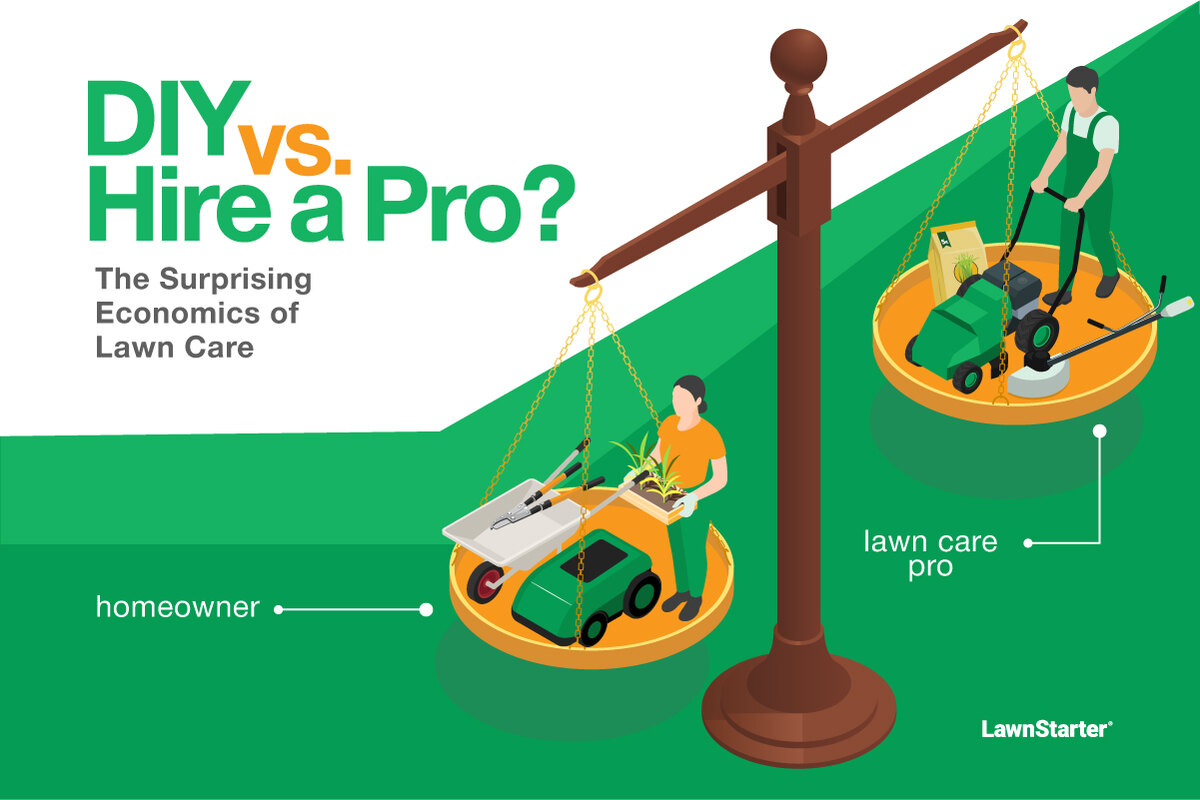
Whether you tackle lawn care completely DIY, pay crews to mow your grass and keep it green and healthy, or take a hybrid approach as I do, lawn care for homeowners is a huge $62 billion business across the U.S.
Someone has to cut your grass and keep it thriving and free of weeds. As a homeowner, you wonder: Am I really saving money doing my own lawn care?
Comparing the hidden costs of DIY lawn care vs. hiring LawnStarter pros involves much more than comparing mower price tags and bags of fertilizer. It also means considering the hidden costs of equipment, time, and expertise, all of which significantly impact long-term results.
These costs are important and are often overlooked until homeowners find themselves in the weeds.
The True Cost of Lawn Care
The total cost of DIY lawn care can be surprising, especially for those purchasing or renting their first home.
Buying the “big” equipment often comes with sticker shock, but you must also factor in all of the smaller costs, along with depreciation and replacement costs as equipment wears out over time.
DIY vs. Hiring a Pro
DIY: All told, purchasing necessary lawn care equipment can mean an investment of $1,000 to well over $5,000. If you don’t have room in your garage, you’ll need a storage shed, which will cost from $120 (prefabricated) to $3,375.
Hire a Pro: LawnStarter’s professional lawn care service costs $54 on average per weekly visit for basic mowing, and around $105 per lawn treatment, depending on what’s included.
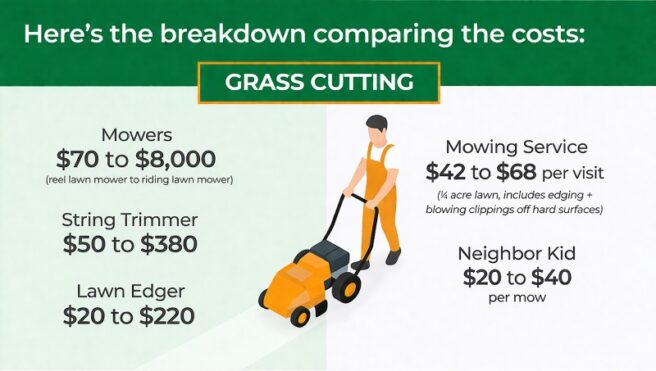
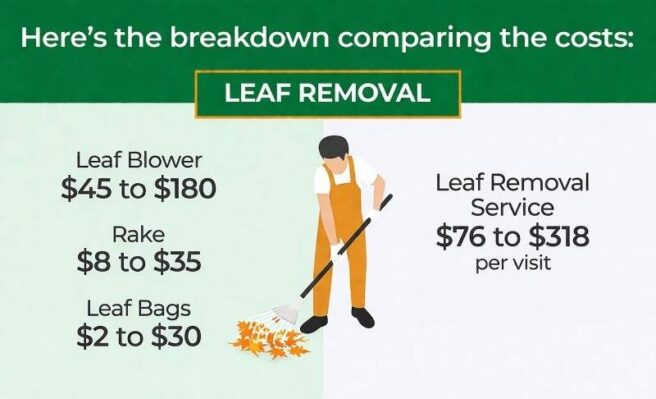
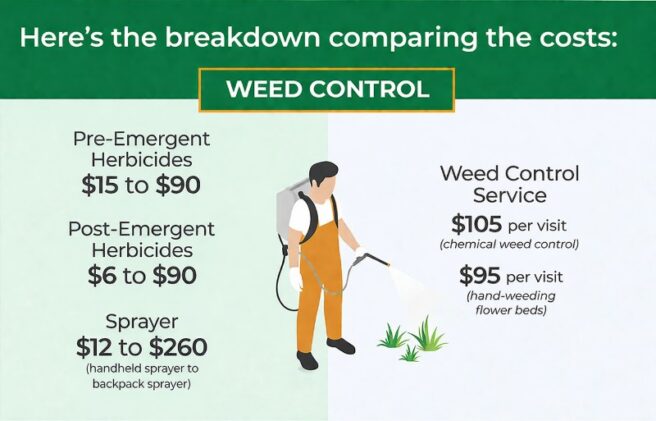
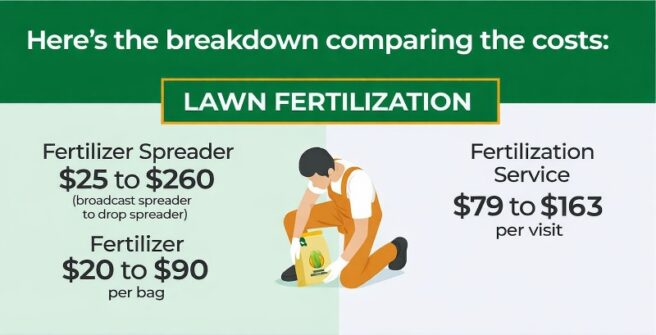
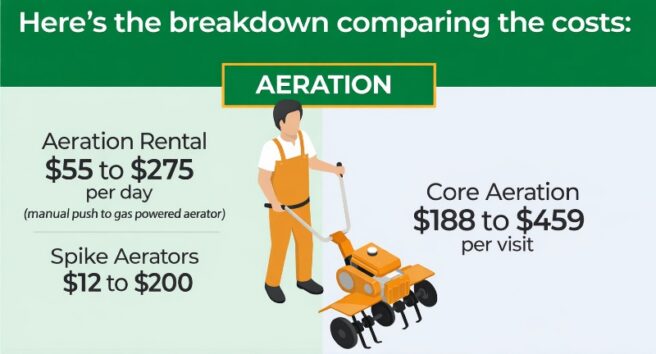
Here’s the breakdown comparing the costs:
Grass Cutting
Leaf Removal
Weed Control
Lawn Fertilization
Aeration
Dethatching
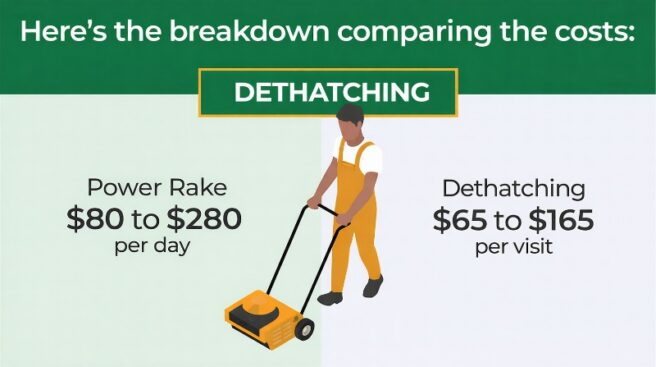
Note: Service costs will vary by region, depending on population size, local operating costs, and growing season length. Hiring a Pro prices are based on LawnStarter’s internal pricing data or, for dethatching costs, LawnStarter’s Lawn Care Pricing Guide.
What is Your Time Worth?
Now that we’ve discussed the monetary investment, let’s discuss your labor. A couple of hours each week from spring to fall spent on lawn maintenance adds up to a considerable commitment of personal time.
Using the national average hourly wage of $32 and 70 hours a season spent maintaining a quarter-acre lawn, the total labor value per mowing season is $2,240. Even with a more conservative salary of $15-20 per hour, homeowners still invest $1,050 to $1,400 in their time in lawn maintenance each year.
Those 70 hours represent missed family activities, foregone hobbies, or lost side income opportunities. Let’s not forget that lawn care is usually done during prime recreational hours in the best weather.
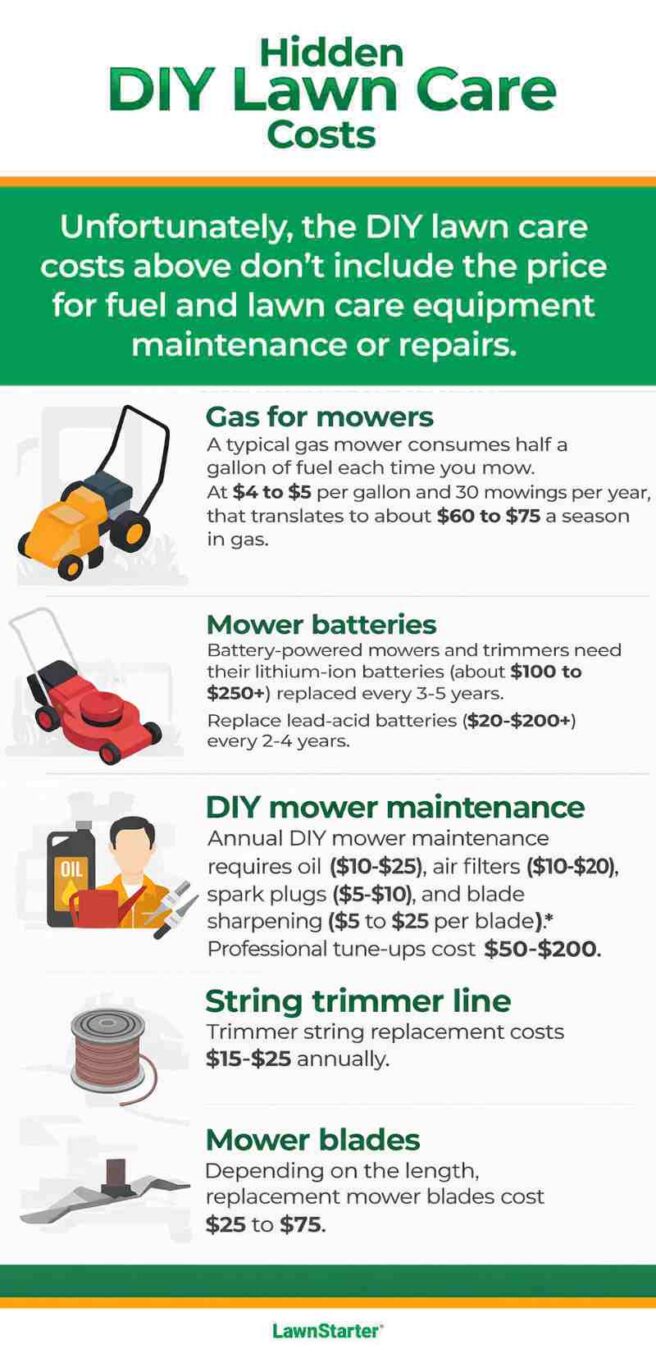
*My Tip: Have two blades sharpened so you always have a spare. You’ll find that in my LawnStarter article on How Often Should You Sharpen Your Lawn Mower Blades?
Let’s not forget about the learning curve. Most DIYers experience a season or two of trial and error before they dial in their routine. Improper fertilizing or mowing can result in expensive remediation. Seeding damaged areas will cost a dime or two per square foot, and nursing your lawn back to health may also require extra soil amendments and additional watering.
- Seeding damaged areas costs between $0.09 and $0.15 per square foot; this equates to $90 to $150 per 1,000 square feet.
You Can Get the Best of Both Worlds
Many homeowners, like myself, find the best value in a hybrid approach: We mow our own yards and hire out for fertilization, aeration, and pest control. This approach provides access to expert treatment at about half the cost.
I love mowing my Idaho lawn. It’s relaxing and helps me tune out the day-to-day stresses. Working from home, I can often take a long lunch break and knock out mowing mid-day. But I began using pros for aeration, fertilizing, and weed control a couple of years ago — I’ve found it’s well worth the investment.
Aeration is a no-brainer: It’s easier (and quicker) to hire someone than rent equipment.
As for fertilization? While my neighbors often poke fun at the girl with a degree in plant nutrition and soil fertility paying for pros, hiring someone to fertilize is one less thing I need to work into my chaotic schedule 4 times a year.
The biggest benefit for me, though, is weed control. I’ve battled a massive dandelion problem every year I’ve owned this house because of the field behind me.
I love yellow flowers, but don’t want them in my grass. Paying someone else to fight these weeds means I might see two dozen dandelions all season.
Some companies also offer lawn consulting services, in which they develop customized care plans with recommended timelines and products, and homeowners handle the application.
The Experience of Lawn Treatment Services
At first glance, professional lawn treatment services may seem expensive. However, part of this price covers equipment and lawn chemicals, significant DIY cost outlays.
Plus, you’re paying for their time, which is a convenience for you. And lawn crews can complete work in a fraction of the time, freeing up your yard much more quickly.
The unseen part, though, is the hefty advantages offered by professional lawn care companies that homeowners typically cannot access.
The service guarantee offered by professionals provides substantial value. Many lawn care companies will retreat for free if their results don’t meet customer expectations.
Perhaps the most valuable aspect is the lawn fertilization crew’s expert knowledge of turf science.
LawnStarter’s lawn treatment professionals are trained to identify your lawn’s needs and tailor practices. This expertise delivers superior results — a benefit that is difficult to put a price on but one that is immediately apparent in your lawn’s health and appearance.
Of course, you may run into issues with lawn care pros. They may need to reschedule due to weather or equipment issues. Or they may be overbooked. And quality can vary from one mowing crew to another.
When there are issues, a dedicated customer service team, like we have at LawnStarter, makes a world of difference. Check out our article on How to Choose a Lawn Care Company for more information.
Quality Comparison: DIY vs. Professional Results
Money aside, it’s important to consider the quality of the finished product between DIY and professional services. Professional lawn care often delivers more consistent results than DIY approaches.
Here’s why: Lawn care specialists can apply treatments at optimal times based on soil temperatures and growth patterns rather than on weekend availability.
The quality difference is also seen in problem resolution. Professionals typically identify issues before they become problematic and visible damage occurs; homeowners often react once significant damage is apparent.
And how can you find a quality lawn care service? Check reviews online and talk to your neighbors and friends who use professional services.
How to Make the Right Choice for Your Situation
With so many factors, it isn’t always easy to determine whether DIY or professional lawn care services make the most sense.
Property Size
The first thing to consider is property size. The economic equation shifts significantly as lawn size changes.
| DIY: | Hire a Pro: |
| For properties under 1/8 of an acre, DIY approaches are often the most cost-effective. | For properties over 1/2 acre, professional services generally offer a better value. |
DIY or Hire a Pro Toss-Up: For properties between 1/8 and 1/4 of an acre, you’re often at a threshold where basic professional services become competitive with DIY costs.
Other Factors
Beyond property size, time availability, physical capability, and interest in lawn care should heavily influence your decision.
| DIY: | Hire a Pro: |
| For hobby enthusiasts: DIY lawn care is an excellent choice for those who find satisfaction in the process and are willing to invest their time despite the economic disadvantages. | For busy homeowners: Professional services or hybrid approaches offer significant quality-of-life benefits that typically outweigh the premium costs. |
DIY AND Hire a Pro Option: For budget-focused homeowners, a strategic hybrid approach that relies on professional expertise where it matters most, while handling basic maintenance personally, often delivers the best value.
Beyond the Price Tag
Everything considered, the true economics of lawn care may surprise you. While at first glance DIY approaches appear less expensive, the hidden costs often push the true expense much closer to professional service pricing.
Ultimately, the most economical lawn care approach isn’t about the lowest sticker price. It’s identifying what delivers the right balance of quality, convenience, and cost.
For me, nothing beats mowing my own lawn and that almost instant (well, after about two hours) sense of gratification of having a beautiful yard. But even I turn to the pros to keep my grass green, healthy, and pest-free.
But if you’re time-pressed or physically can’t mow your lawn, treat weeds, or rake leaves, contact LawnStarter. We’ll connect you with local mowing, lawn treatment, and leaf removal pros who have the expertise and equipment to keep your lawn looking top-notch.
Read More: Lawn Care and Landscaping Industry Statistics
Main Image Credit: Infographic by Aris Berroya
Related Posts: