| Key Takeaways: |
|---|
| • Apply pre-emergent before weeds appear: It stops seeds from sprouting but won’t kill weeds you can already see. • In spring, apply when soil temperature reaches 50 to 55 degrees to stop summer weeds like crabgrass. • In fall, apply when soil temperature drops to about 70 degrees to stop winter weeds like annual bluegrass. |
Stop weeds before they start. Pre-emergent herbicide is your secret weapon for a weed-free lawn, but timing is everything. Apply too early or too late, and you’ve wasted your time and money.
The best time to apply pre-emergent depends on your local soil temperature and the season, since spring and fall each target different weeds. With tips from turfgrass experts, this guide shows you exactly when to apply pre-emergent based on your location and the weeds you’re fighting.
Too busy to time it perfectly? LawnStarter’s lawn treatment pros handle pre-emergent applications at exactly the right time for your lawn. We take weed prevention off your to-do list.
When to Apply Pre-Emergent Herbicide
Apply pre-emergent herbicide twice a year: in spring once soil temperature holds at 50 to 55 degrees, and in fall once it drops to about 70 degrees. Both windows land before your target weeds germinate.
| Soil Temperature | Timing | |
| Spring | 50 to 55 degrees | Late winter to early spring, before weeds sprout (targets crabgrass, foxtail, spurge) |
| Fall | 70 degrees | Late summer to early fall (targets common winter weeds like chickweed, henbit, annual bluegrass) |
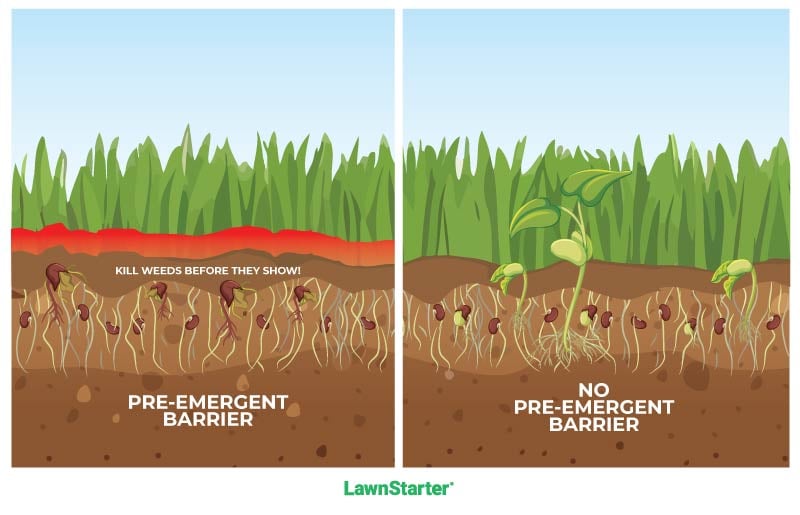
Apply pre-emergent herbicides before you see weeds. Pre-emergents create a barrier in the soil that stops weed seeds from sprouting. Once weeds are visible, you need a post-emergent herbicide instead.
What is Pre-Emergent Herbicide?
Pre-emergent herbicides prevent weeds from growing in your lawn by stopping seeds from germinating. Think of it as an invisible barrier just below the soil surface.
Pre-emergent weed preventers are best suited for grassy weeds and annual weeds that reproduce by seeds, says Rebecca Grubbs-Bowling, assistant professor and turfgrass Extension specialist at the University of Tennessee. “They don’t work as well on perennials.”
How it works:
Stops weed roots and shoots from developing
Must be applied before weeds appear
Lasts 8 to 12 weeks (varies by product)
Does not kill existing weeds
See Related: How to Apply Pre-Emergent Herbicide
Spring Pre-Emergent Application
When to apply in spring: “The soil temperature (not air temperature) should be in the 50 to 55 degree range,” says Grubbs-Bowling.
Many dormant seeds begin germinating once soil temperatures hit 55 degrees. This is when summer annual weed seeds start germinating.
LawnStarter pro Chuck Vogt of Metro Lawns in Atlanta, Georgia, puts pre-emergent down in late winter for this reason.
“During the first months of the year, January and February, we put down a pre-emergent that will limit and minimize those weeds that would otherwise grow up during the summer. You can’t wait until late spring to minimize weeds,” he says.
Here’s a guide for when to apply spring pre-emergents by region:
| Region | Best Application Window | What You’re Preventing |
| Florida | Early February | Crabgrass, spurge |
| Texas | Early to mid February | Crabgrass, annual bluegrass, sandbur, foxtail |
| Mid-Atlantic (Virginia, North Carolina) | Mid-February to mid-March | Crabgrass, foxtail, goosegrass |
| Midwest (Missouri, Illinois) | Mid-March to mid-April | Crabgrass, foxtail, goosegrass |
| Northeast (Pennsylvania, Massachusetts) | Late March to early April | Crabgrass, foxtail, goosegrass |
| Wisconsin, Minnesota | Mid-April to mid-May | Crabgrass, foxtail |
| Colorado, Mountain states | Mid-March to mid-April | Crabgrass, foxtail, goosegrass |
How to check soil temperature:
Don’t guess, measure.
Use online soil temperature maps from your county Extension office or a local weather station.
- Or use a soil thermometer. Push 3 inches into the soil. You can find inexpensive soil temperature gauges online or at local garden shops. You can also use a 3-inch meat thermometer.
Check for 3 consecutive days that the soil temperature is 50 to 55 degrees before applying.
Common spring weeds prevented
Crabgrass: The No. 1 grassy lawn weed; spreads rapidly in summer heat
Dandelions: Yellow flowers that turn into puffballs
Spurge: Mat-forming weed with reddish brown stems
Ragweed: Fern-like weed that produces a large amount of pollen
Sandbur: Painful, spiky seed heads
Yellow foxtail: Bushy spike seed heads
See Related:
Fall Pre-Emergent Application
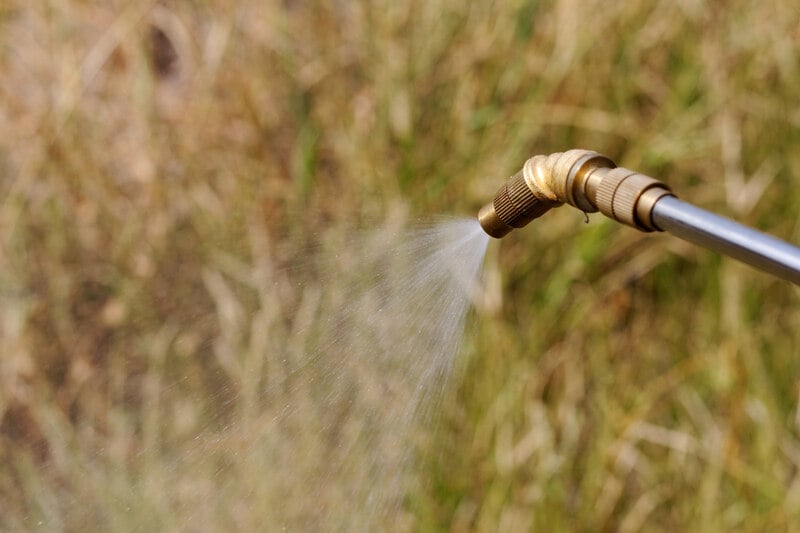
When to apply in fall: Apply when soil temperature drops to 70 degrees, which prevents winter annual weeds that germinate in fall.
Here’s a guide for when to apply fall pre-emergents by region:
| Region | Best Application Window | What You’re Preventing |
| Florida | Mid-October to mid-November | Annual bluegrass, chickweed, henbit |
| Texas | Late September to October | Annual bluegrass, chickweed, henbit, rescuegrass |
| Mid-Atlantic (Virginia, North Carolina) | August to September | Annual bluegrass, chickweed, henbit |
| Midwest (Missouri, Illinois) | September | Chickweed, henbit |
| Northeast | September | Chickweed, henbit |
Common fall and winter weeds prevented:
Annual bluegrass: Light green, grows in cool weather
Cheatgrass: Light green stems with feathery tips
Chickweed: Small white flowers, thrives in shade
Henbit: Purple tubular flowers, scalloped leaves
Persian speedwell: Delicate blue flowers
Why fall matters: Winter annuals usually germinate in the fall, overwinter as small plants, then proliferate as temperatures warm up in the spring.
See Related:
Weeds Needing Both Spring and Fall Applications
Some weeds are tricky, since they can germinate in either season:
Clover can be either a summer or winter annual. Apply pre-emergents in both spring and fall to treat this weed. Many homeowners now embrace clover for its benefits, as it is nitrogen-rich and pollinator-friendly. Learn about reasons to plant a clover lawn.
Spurge, a broadleaf weed, can be easily identified by its red hairy stem and dense mat of dark green leaves close to the ground. Various species germinate at different times. Treat in both seasons for full control.
See Related:
When Pre-Emergent Doesn’t Work
Pre-emergents fail when:
Applied too late: Weeds have already germinated.
Applied too early: The barrier breaks down before peak germination, leaving less protection when weeds sprout.
Soil is disturbed: Aeration, dethatching, or digging breaks the barrier.
Not watered in properly: Pre-emergents need water to activate.
The wrong product is applied: Some pre-emergents don’t target all weeds.
The barrier runs out: Most pre-emergent products last only 8 to 12 weeks, so you’ll need timely reapplication to protect your lawn for the whole season.
FAQs
Wait 1 to 2 days before mowing. If you need to mow, do it before applying pre-emergent so you don’t disturb the freshly laid barrier.
Watering activates the barrier, and the timing depends on the formula:
• Granular: Water immediately, within 24 hours.
• Liquid: Wait 12 to 24 hours, then water lightly.
No. Wait until the grass is at least 1 year old. Pre-emergents will prevent your new grass seed from germinating along with the weeds.
Let LawnStarter Handle Weed Prevention
Timing pre-emergent applications perfectly means monitoring soil temperatures, watching weather patterns, and applying at exactly the right moment. Miss the window by a few weeks, and weeds take over.
LawnStarter’s lawn treatment pros:
Apply pre-emergent at the optimal times of year
Use professional-grade products
Include weed control in comprehensive lawn care plans
Guarantee results
Get a free quote for lawn treatment. We’ll keep weeds out of your lawn so you can enjoy it instead of fighting it.
Read More: Guide to Weed Control in Your Yard
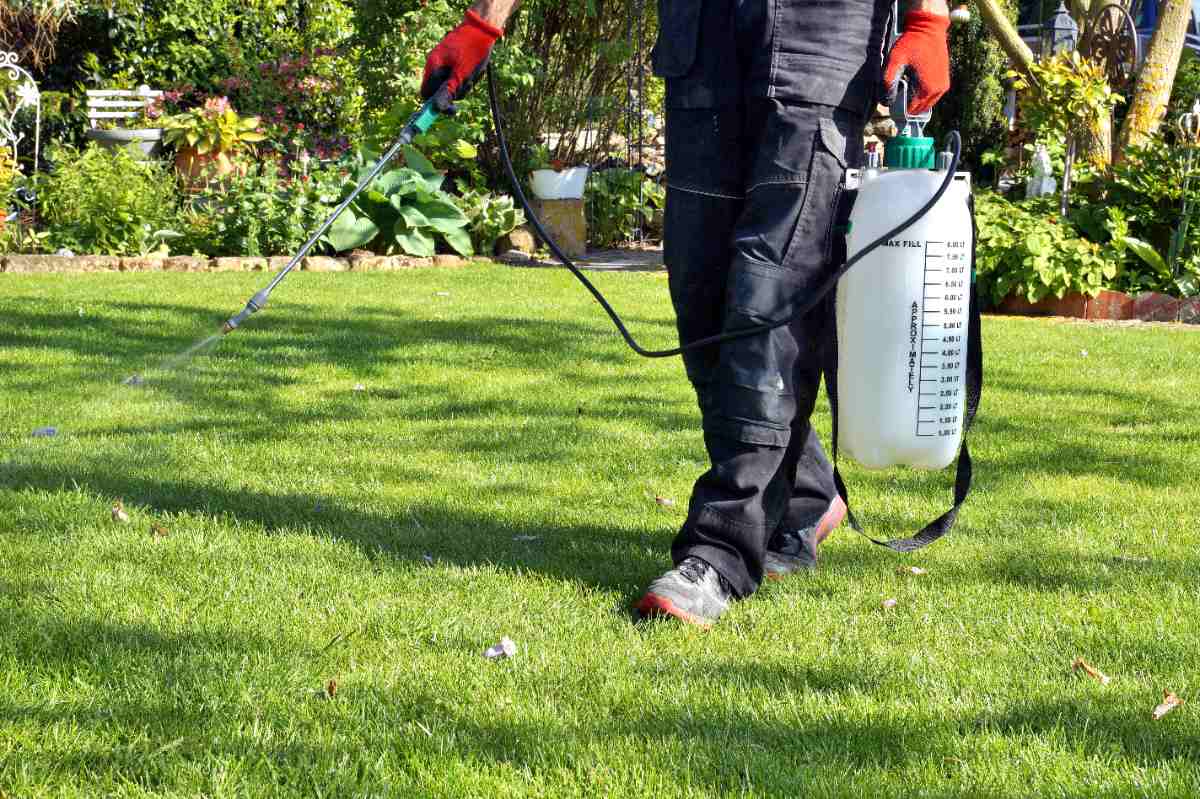
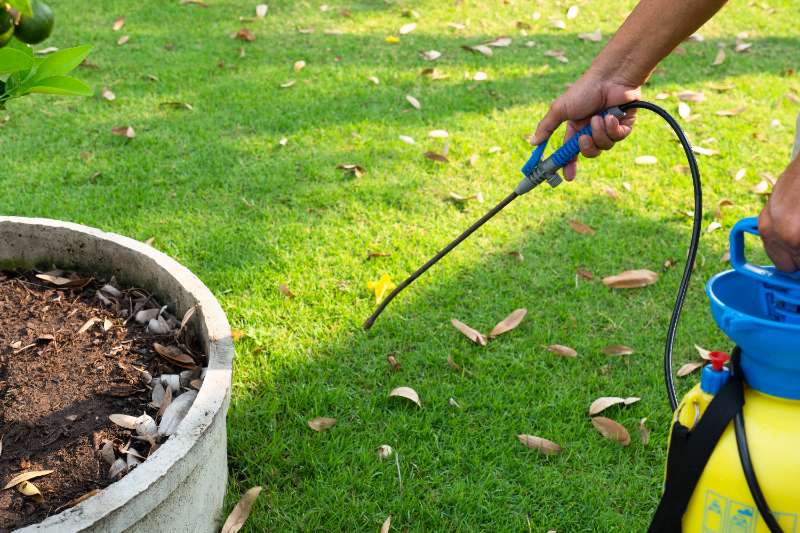
Main Image: A lawn care worker applies herbicide across a green lawn using a portable pump sprayer. Photo Credit: ImageSine / Adobe Stock
Related Posts: