| Key Takeaways |
|---|
| • Winter weeds are cool-season annuals that sprout in fall, grow through winter, and die off in summer after going to seed. • The most reliable defense is a fall pre-emergent application plus a thick, healthy lawn that crowds weeds out. • Correct identification matters: Grassy weeds like annual bluegrass need different products than broadleaf weeds like henbit and chickweed. |
With this guide to 9 common winter weeds in your lawn, you’ll learn how to identify common winter weeds, from annual bluegrass to henbit, as well as expert tips on how to prevent and kill them in your yard.
Knowing the most common ones will help you effectively manage the weeds sprouting in your yard this fall.
If herbicide application seems way above your pay grade, LawnStarter offers weed treatment services to get rid of your weed infestation.
What Are Winter Weeds?
Winter weeds are cool-season annuals that get their start in fall, once soil temperatures cool down and your lawn slows or goes dormant. They grow through the cold months, then flower and set seed in early spring.
This backwards schedule is exactly why they thrive. With your grass resting, winter weeds move into thin and bare spots without much competition, spreading seeds before dying off in summer heat. That is why timing your defense in fall pays off.
9 Common Winter Weeds to Watch For
Here are the 9 winter weeds you are most likely to spot in a home lawn, along with how to recognize each one and the best ways to send them packing.
1. Annual Bluegrass
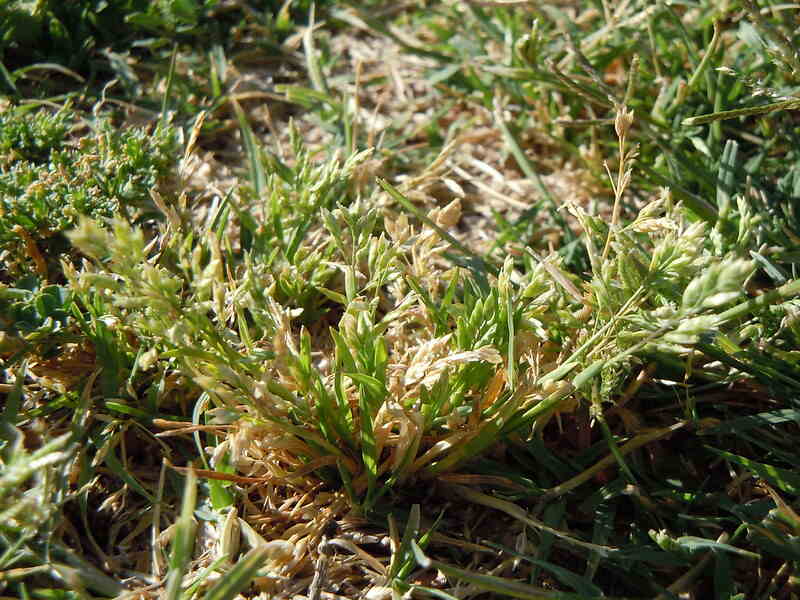
Annual bluegrass is a grassy winter annual weed with heavy seed production, says Erin Smith, horticulture Extension agent with Texas A&M in Denton. Mowing these weeds short helps prevent annual bluegrass seeds from spreading prolifically throughout your yard.
Growing in clumps of light green grass blades, this cool-season grass germinates in fall, grows throughout winter, and produces seeds in spring. Without mowing, this European native can reach heights of 6 to 8 inches.
Best ways to get rid of annual bluegrass:
Don’t overwater, since overwatering can be one reason weeds grow in your lawn.
Don’t apply excessive nitrogen fertilizer.
Smith recommends using products with active ingredients such as pendimethalin, oryzalin, benefin, trifluralin, and prodiamine.
Pro Tip: To prevent winter weeds, apply pre-emergent herbicides in late summer or early fall, usually between August and October, once soil temps fall to 70 degrees. For existing weeds, apply post-emergent herbicides in early fall when air temperatures are below 85 degrees.
2. Chickweed
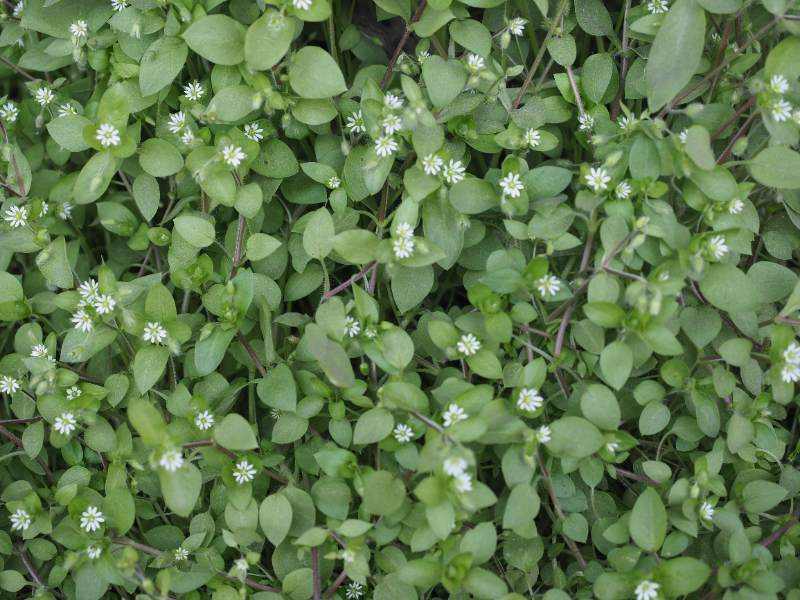
Chickweed’s shallow, fibrous root system makes it easy to weed by hand or with a hoe. Pointy oval leaves distinguish this low-growing winter weed, which grows densely in mats that creep along the ground.
Chickweed blooms with small white star-shaped flowers that grow at the tip of a slender stem. These flowers have deeply lobed petals that make it appear as if the flower has 10 separate petals instead of 5 petals.
This cool-season broadleaf weed is edible and can serve as a medicinal herb. Chickens and other birds love to snack on this winter weed, which is thought to be where its name comes from.
Best ways to get rid of common chickweed:
Hand-pull weeds.
Till the soil.
Apply selective post-emergent herbicides that include dicamba, fluroxypyr, or MCPP.
See Related: Post-Emergent Herbicides: Which One for Which Weed?
3. Dandelion

Dandelions are tenacious weeds recognizable both for their sunny yellow flowers that bloom from spring through fall and their characteristic puffball of seeds. These broadleaf perennials get their name from a French phrase that translates to “lion’s tooth.”
Fall is the best time to control dandelions. Here’s why: As the plant naturally moves nutrients into its root system, it will also carry herbicides deep into the taproot, killing it and preventing regrowth in spring. If you miss the fall window, apply a pre-emergent in spring or spot-treat when they’re young.
Best ways to get rid of dandelions:
Cover with mulch.
Hand-pull weeds.
Apply pre-emergent herbicides in spring.
Apply broadleaf post-emergent herbicides in spring or fall. Opt for products that contain triclopyr, 2,4-D, dicamba, or MCPP.
See Related: How Dandelions Benefit You and Your Yard
4. Hairy Bittercress
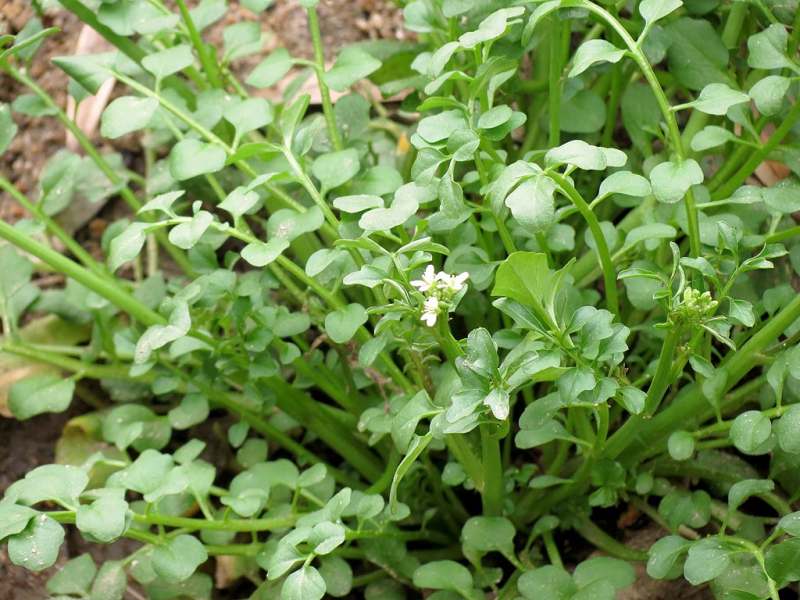
Hairy bittercress thrives in areas with moist soil and full sun. This edible weed is sometimes used as a substitute for parsley.
A member of the mustard family, hairy bittercress grows in a rosette formation. Its pinnate leaves (compound leaves that grow on both sides of the stalk) are small and round. This winter annual grows low on the ground and blossoms with small, white flowers. It has a shallow root system, which makes it easy to hand-pull.
Best ways to get rid of hairy bittercress:
Hand-pull.
Apply a pre-emergent herbicide in late summer or early fall.
Use a selective broadleaf post-emergent.
5. Henbit
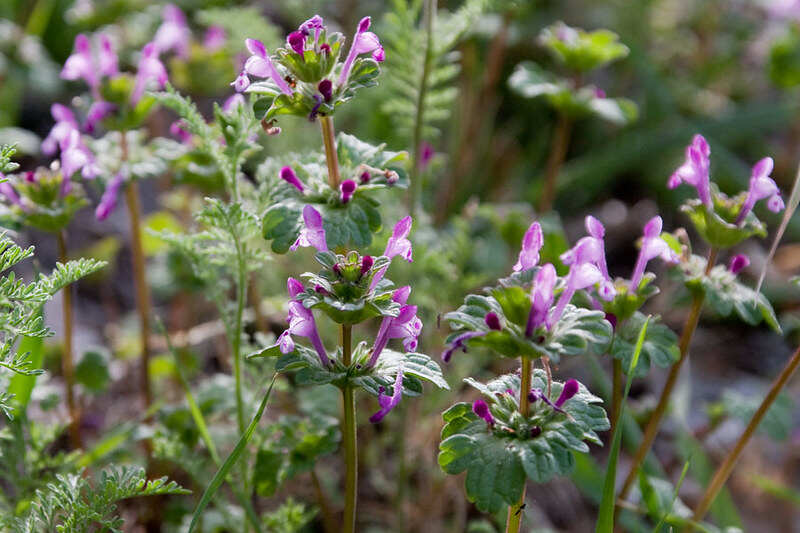
A member of the mint family, henbit is a winter annual broadleaf weed. You can recognize it by its purple tubular flowers and the rounded, scalloped leaves growing in intermittent bunches along a long purple stem. Look for “whorled leaves around the square stem,” Smith says.
This winter weed loves cool, moist climates and is common in annual ryegrass. Henbit has a fibrous root system and grows 4 to 16 inches tall.
Best ways to get rid of henbit:
Hand-pull weeds for small infestations.
Apply a pre-emergent herbicide in September.
Apply a broadleaf post-emergent with the ingredient 2,4-D during the winter months. Smith recommends using atrazine, dicamba, or triclopyr to treat henbit.
6. Persian Speedwell
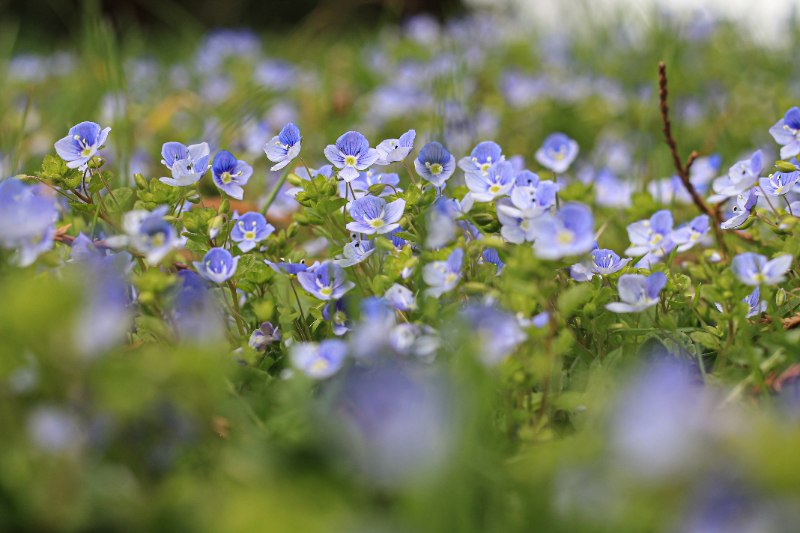
Persian speedwell is a low-growing winter annual weed that spreads along the ground. Its leaves have toothed edges. Persian speedwell blooms with tiny pale blue flowers colored with dark blue stripes and a white center. These flowers have four petals and grow on long stalks.
Best ways to get rid of Persian speedwell:
Hand-pull weeds.
Apply a pre-emergent herbicide.
7. Prickly Lettuce
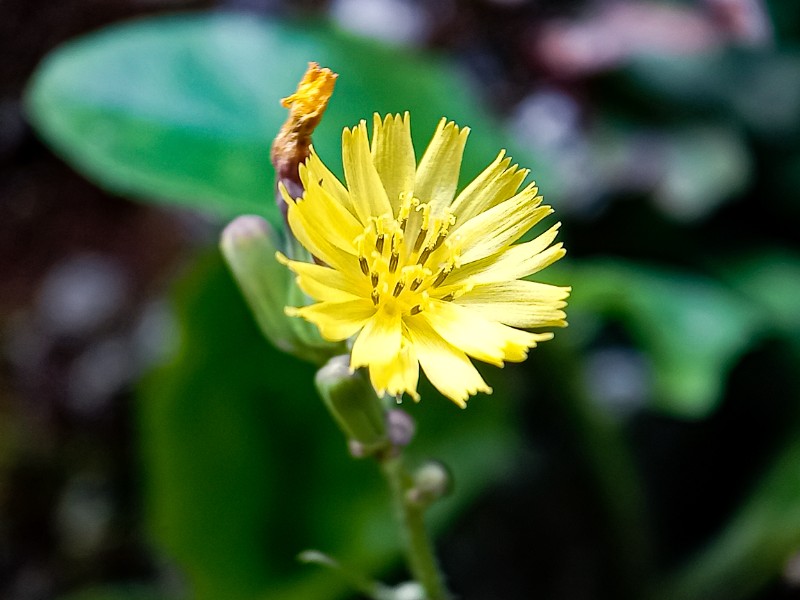
Prickly lettuce grows in a basal rosette and has long, spiny leaves. When in bloom, prickly lettuce produces pale yellow flowers.
Depending on the timing of seed germination and other conditions, prickly lettuce can be either a winter annual or a biennial. It has a long taproot that grows deeply into the soil. When damaged, its leaves and stems produce milky sap.
Best ways to get rid of prickly lettuce:
Maintain dense turf that outcompetes prickly lettuce.
Mow prickly lettuce before it flowers.
Hand-pull weeds.
8. Purple Deadnettle
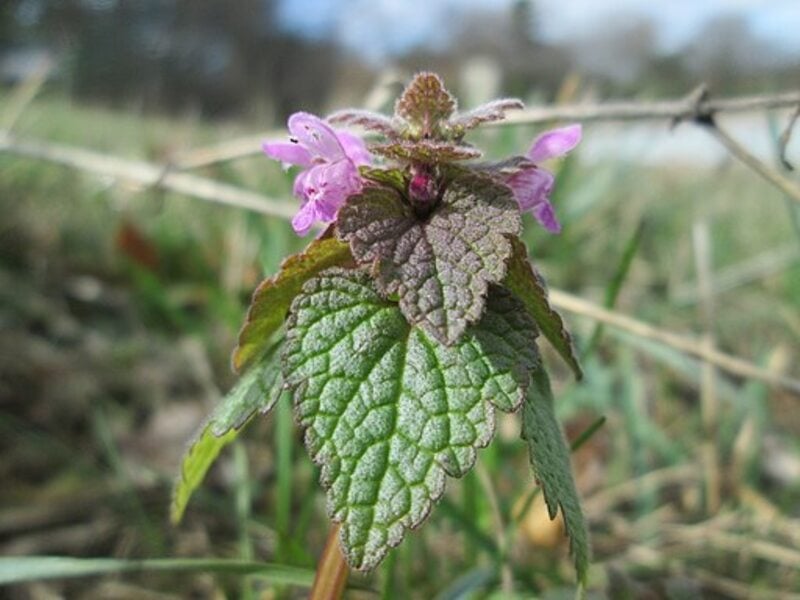
You might notice purple deadnettle springing up in your lawn in the fall. Frequently confused with henbit, purple deadnettle has similar purple or pink tubular flowers. Despite its name, purple deadnettle is actually a member of the mint family, not the nettle family.
This winter annual can be distinguished by arrow-shaped leaves with toothed edges and a veined surface. Its leaves are reddish-green at the top, but those lower down the stem are a deep green. Purple deadnettle has a shallow root system and commonly grows in moist soil.
Best ways to get rid of purple deadnettle:
Hand-pull weeds.
Apply post-emergent herbicides.
9. Shepherd’s Purse
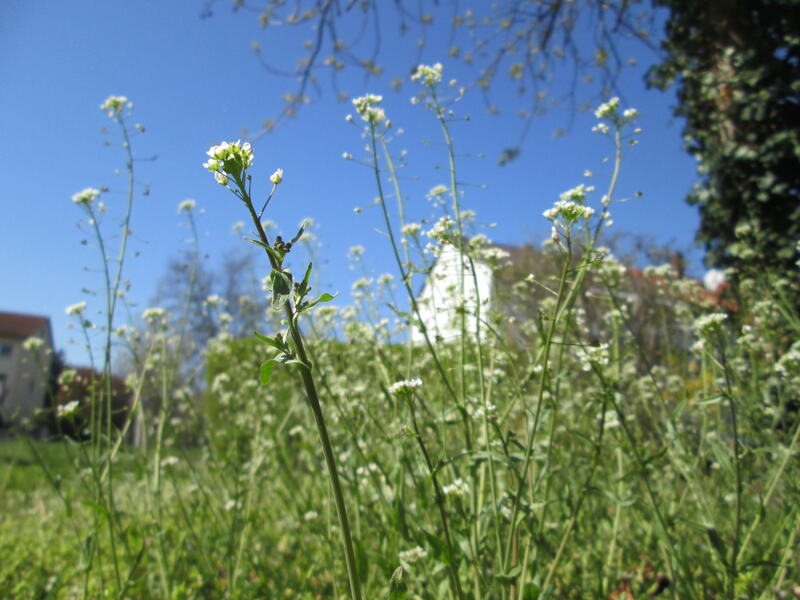
Shepherd’s purse grows in a basal rosette of deeply lobed leaves that resemble dandelion leaves. Tiny white flowers and heart-shaped seed pods grow atop its long stem.
Left unmowed, shepherd’s purse can grow as tall as 1½ feet. You’ll find this winter annual broadleaf weed growing in disturbed areas.
Best ways to get rid of shepherd’s purse:
Cultivate dense grass that outcompetes shepherd’s purse.
Hand-pull.
Apply a broadleaf post-emergent with one or more of these ingredients: MCPP, dicamba, triclopyr, or 2,4-D.
How to Prevent and Control Winter Weeds
The single best move is stopping winter weeds before they sprout. Apply a pre-emergent herbicide in late summer or early fall, once soil temperatures drop to around 70 degrees but before weed seeds germinate.
For weeds already growing, reach for a post-emergent herbicide. Match the product to the weed: grassy weeds like annual bluegrass need different active ingredients than broadleaf weeds such as henbit, chickweed, and dandelion.
| Approach | When to Apply | Best For |
| Pre-emergent | Late summer or early fall, before seeds germinate | Preventing weeds you do not see yet |
| Post-emergent | During active growth in fall and winter | Weeds already sprouted in your lawn |
Cultural practices that keep winter weeds out:
Grow dense turf: A thick, healthy lawn crowds out weed seedlings before they establish.
Mow at the right height: Regular mowing stops many weeds from flowering and spreading seed.
Water deeply but less often: Overwatering invites shallow-rooted weeds like annual bluegrass.
Go easy on nitrogen: Excess fertilizer can feed weeds as much as it feeds your grass.
Hand-pull small patches: Many winter weeds have shallow roots and pull easily when young.
See Related:
FAQs
“Winter weeds can certainly weaken a lawn,” Smith says, but dense, healthy grass will outcompete most weeds. Any bare spots in your yard can be overseeded in the spring.
Severe infestations may require intense treatment that could endanger your grass, and in extreme cases, you may have to use a nonselective herbicide and start over by reseeding.
There are several eco-friendly ways to get rid of winter weeds without chemical herbicides:
• Apply a vinegar or citrus (d-limonene) solution.
• Use mulch to suffocate weeds.
• Mow weeds to prevent further spread.
• Hand-pull weeds.
• Spread corn gluten meal around your yard.
• Cultivate dense grass that can outcompete weeds.
Say Hello to a Weed-Free Lawn
Dandelions, annual bluegrass, or shepherd’s purse are just a few of the weeds you might find invading your lawn this winter. Put a stop to your weed problems right now by hiring a LawnStarter pro to treat weeds in your lawn. It’s easy to book a lawn care service, and it saves you the headache of having to deal with wintertime weeds.
Read More:
Sources:
- Erin Smith, horticulture Extension agent with Texas A&M, Denton, TX. Personal interview.
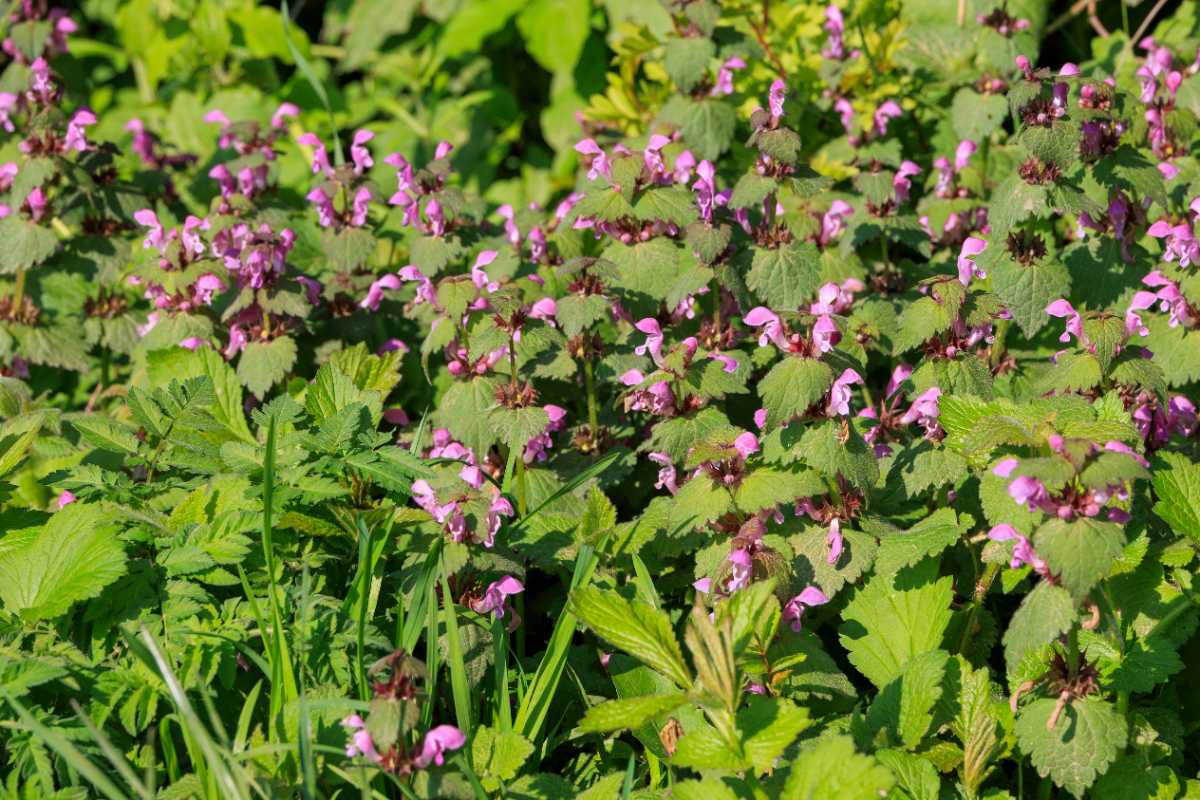
Main Image: Purple deadnettle flowers clustered among dense green foliage. Photo Credit: were / Adobe Stock
Related Posts: