| Key Takeaways: |
|---|
| ● New homeowners often have no lawn equipment and less free time, which often makes hiring a provider the better option, at least for the first season. ● A hybrid approach of handling routine work yourself while leaving the specialized jobs to a professional is usually the best plan after the first year. ● Serious issues, such as a grub infestation, need immediate action. Issues like dormant weed seeds can be addressed before or after they sprout. |

Just moved in? Painting the walls can wait. Mowing the grass? Not so much. Now comes the real question: Do you tackle lawn care yourself or hand it off to a pro?
The right answer usually comes down to 4 things: How much time you actually have this season, your own physical ability and interest in yard work, how urgent your lawn’s problems are, and whether you already own basic lawn equipment.
Most new homeowners land somewhere between “all DIY” and “hire everything,” and that’s normal.
To get your lawn off to the best start, begin with a professional mow to create a healthy starting point for your new lawn.
How to Decide: DIY or Hire a Pro?
There are 4 key factors that decide this for most new homeowners:
- Time: Between unpacking, work, and everything else that comes with a move, how many hours a week can you realistically allocate to yard care for the next month?
- Physical ability and interest: Regularly mowing an average-sized yard weekly is manageable for most people.
- Urgency: This depends on how urgent your lawn’s problems are. A lawn with dormant weed seeds can wait a few weeks. Grub or chinch bug infestations require immediate attention.
- What lawn equipment you own: If you just moved, there’s a good chance you don’t own the lawn equipment you need yet, such as a mower, trimmer, or spreader. Buying new lawn equipment adds real upfront costs that you might not be ready for yet.
Pro Tip: To make an informed decision, know your grass type and take a soil test. This helps you plan what needs doing and when. For example, an under-fertilized cool-season lawn can’t be fed in summer, but for a warm-season lawn, that’s the perfect time.
When DIY Makes Sense

DIY is the right call for most new homeowners when the lawn’s overall condition is decent. It’s easy to handle lawn care yourself if:
- Your grass type matches your growing zone.
- Your soil test came back close to the 6.0–7.0 pH range.
- You haven’t seen any signs of grubs or other insects, heavy thatch, or drainage problems.
If your new lawn is in good shape and doesn’t reveal many issues, you’re mostly maintaining, not fixing. Maintenance is the most DIY-friendly part of lawn care.
It helps to have at least 2 hours a week free and to not mind a bit of a learning curve. DIY maintenance usually requires simple lawn care tasks, including:
- Fertilizing at the right time (your soil test results tell you when to fertilize).
- Mowing on schedule.
- Watering appropriately for your grass type.
- Staying ahead of weeds before they establish.
When Hiring a Provider Makes Sense
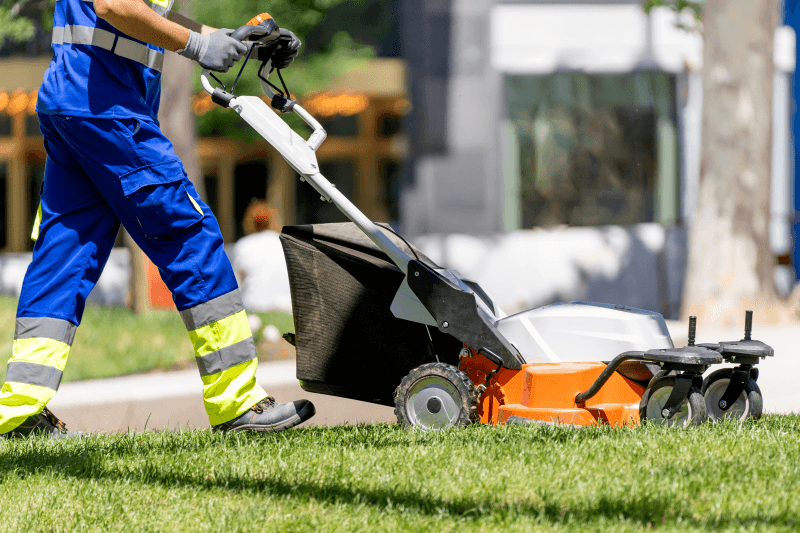
Hiring out your yard work makes more sense the more your situation looks like this:
- You moved recently.
- You don’t own lawn equipment yet.
- Your week is already full.
- You found something that needs fast, expert treatment, such as a grub infestation, soil compaction from construction, heavy thatch, or drainage problems.
New homeowners, in particular, tend to underestimate how much moving itself eats into free time. Even a lawn in decent shape can get away from you if you don’t touch it for a month during a move.
Hiring a lawn mowing provider for the first season buys you time to settle into the house without losing ground on the yard, and a provider can usually diagnose and treat an active problem more quickly and reliably than a new homeowner’s first attempt at DIY treatment.
For the full dollar-by-dollar comparison, including equipment costs and considerations about what your time is actually worth, see Hidden Costs of DIY Lawn Care vs. Hiring LawnStarter.
The Hybrid Approach
After the first growing season, most experienced homeowners take a strategic hybrid approach. They DIY the routine weekly tasks but hire out the specialized work:
- Mowing and basic weeding are easy to keep in-house.
- Aeration, pre-emergent herbicide application, dethatching, and pest treatment are easier to get right the first time with a pro, especially if you’ve flagged a real issue on your lawn.
This is the best approach for established homeowners who want to save money where they can (mowing) but hire out jobs they don’t have equipment to do themselves (dethatching, aeration, pest treatment).
Quick Decision Checklist
Still not sure what’s the right call for your yard? Try answering these questions to help you finalize the decision. Mostly “no” points toward hiring; mostly “yes” points toward DIY.
- Did an inspection of your lawn show that your lawn is free of major issues (such as grubs, heavy thatch, drainage problems, or a soil test outside the 6.0-7.0 pH range)?
- Do you have 2–3 hours a week free for the next month?
- Do you currently own a mower and basic yard tools?
- Does saving money matter more to you right now than getting your lawn issues handled quickly?
Interpret your results:
- If you had 3 or more “no” answers: Hiring a provider for at least this first season is probably the easiest call.
- If you had 3 or more “yes” answers: You’re a good DIY candidate.
- If your answers were split down the middle: A hybrid approach of hiring a provider combined with doing some tasks yourself is likely your best fit.
FAQ
Owning a mower removes one of the biggest arguments for hiring (upfront equipment cost), but it doesn’t change any issues you may have found. A mower doesn’t fix compacted soil or a grub infestation, so hiring an experienced lawn care provider may still be the best way to deal with these issues.
New homeowners will probably want to opt for hiring a landscaping provider, at least for that specific fix. Certain jobs such as grub treatment and aeration service are easy to get wrong on a first try, and timing matters more than effort.
Usually, yes. You avoid buying equipment for tasks you’ll only do 1-2 times a year, but you can still save on the routine work that is easy to DIY.
Hire a Local Lawn Care Pro
Getting your new lawn on track takes practice, the right equipment, and time you may not have, especially if you are already swamped with the move to your new home.
If you’d rather leave it to someone who does this type of work every day, LawnStarter makes it simple: Get an instant quote, choose a time, and a background-checked local provider will handle the rest. LawnStarter offers about 30 lawn care services, including mowing, flower bed weeding, tree care, and much more.
Get a free estimate near you →
Read More:
- How Much Does Lawn Care Cost? A New Homeowner’s Budgeting Guide
- When You Move: How to Transfer LawnStarter Service to Your New Address
Main Image: A couple carries cardboard boxes into their new home. Photo Credit: Svitlana / Adobe Stock
Related Posts: