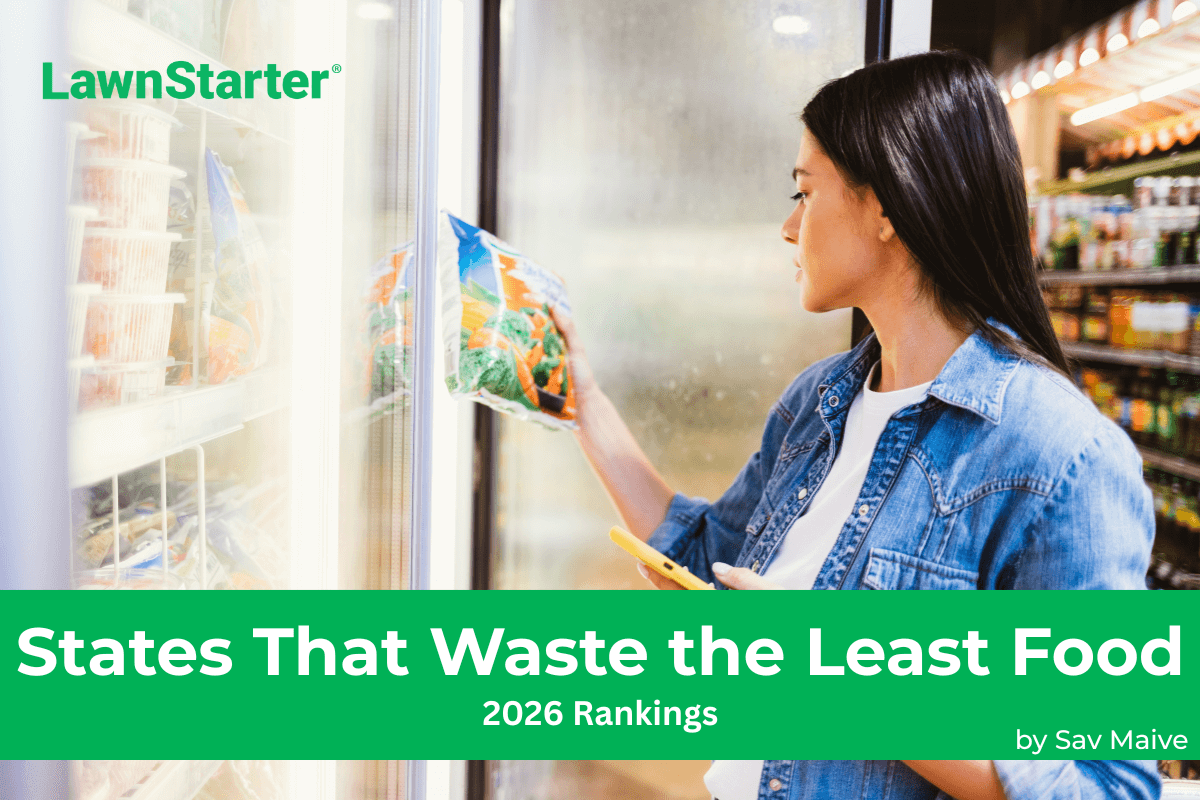
Pulling wilted produce from the fridge to dump in the trash a week after an ambitious shopping trip adds up. With grocery prices up by nearly 30% since 2020, food waste poses an enormous cost for both your household and the environment.
“Nearly 40% of food waste happens in the home, so it’s important to be mindful,” says Adam Lowy, founder and executive director of Move For Hunger. “Use what’s in your fridge, embrace the ‘ugly’ produce, and get creative with leftovers.”
Ahead of Food Waste Action Week (March 9 to 15), LawnStarter ranked the States That Waste the Least Food.
How did we rank the States That Waste the Least Food? We compared the 50 states based on 37 total metrics. We considered each state’s most recent food waste data by sector from ReFED (a national food waste nonprofit) — specifically, residential, farm, foodservice, retail, and manufacturing. We also considered rates of food waste recycling and mitigation efforts like food waste disposal bans, food sharing programs, and composting facilities. Want to see the full breakdown? Check out our methodology.
Why does LawnStarter care about food waste? Your food scraps can easily turn into compost, an organic fertilizer to nourish your lawn and garden. Explore more food waste and composting insights in Beyond the Bin: U.S. Composting Stats, Policies, and Roadblocks.
Contents
- Rankings: States That Waste the Least Food
- Clean(er) Plate Club: Top 5 States Tackling Food Waste
- 5 States With the Most Food Waste
- Diving Into the Data
- Ask the Experts: How to Lower Your Food Waste
- Methodology: How We Ranked the States
- Close the Loop: Grow It, Eat It, Compost It
Rankings: States That Waste the Least Food
See how each state scored in our ranking below (1 = Least Wasteful; 50 = Most Wasteful):
Note: While ranking the states, we used the most recent data available. It should be noted that the most recent data released from ReFED captures food waste totals from 2024.
Clean(er) Plate Club: Top 5 States Tackling Food Waste
Check out the slideshow below for highlights on each of our top 5 states.
Key Definitions:
- Food Discarded: Food ending up in landfills, sewers, incinerators, and — for the farm sector — land application, where food waste is spread onto agricultural fields.
- Food Recycled: Food surplus that is diverted through recycling pathways like composting, anaerobic digestion, and animal feed.
- Surplus Food: The total amount of food that is either wasted/discarded or recovered/recycled. Consider this the amount of food with the potential to be recovered for human consumption.
- Food Waste Solution Providers: Companies and organizations operating in a state that offer products or services specifically designed to reduce, prevent, rescue, or recycle food waste. This includes food recovery organizations, composting companies, anaerobic digestion operators, technology platforms, and consultants.
Overall Score: 78.25
• Connecticut is 1 of only 5 states with a food waste disposal ban — and it shows: Its foodservice discard rate is the 3rd lowest in the country at 58.81% in 2024.
• Connecticut’s food recycling rate reached 39.53% between 2023 and 2024 — the 8th largest gain nationally — showing its infrastructure is actively producing results.
• Connecticut claims 23 composting facilities per 1,000 square miles — the 3rd best access in the country, backing up the policy with real infrastructure.
Local tips: Connecticut was the first U.S. state to mandate commercial food scrap recycling in 2011 with the Commercial Organics Recycling Law, targeting wasteful businesses like supermarkets, manufacturers, resorts, and universities.
Food Rescue US was founded in Connecticut in 2011, creating a volunteer-driven model for rescuing potential food waste.
The Food Rescue US network saved over 42 million pounds of food in 2025 across 24 states.
Photo Credit: Dannel Malloy / Wikimedia Commons / CC BY 2.0
Overall Score: 75.25
• Rhode Island boasts the lowest foodservice discard rate in the entire dataset, at 58.08% in 2024.
• The state’s manufacturing discard rate fell by -7.61% to a rate of 11.28% between 2023 and 2024 — the biggest year-over-year improvement of any state.
• Little Rhody has the 2nd highest composting facility density in the country, with 31.93 per 1,000 square miles.
Local tips: Rhode Island’s Commercial Food Waste Recycling Law, passed in 2014 and effective January 2016, requires businesses that generate over 104 tons of food waste annually to divert it from landfills. The law was expanded in 2018 to cover educational institutions generating over 52 tons per year, and again in 2023 to include K-12 schools generating over 30 tons per year.
Photo Credit: jjandames / Flickr / CC BY-ND 2.0
Overall Score: 73.02
• Massachusetts has the best access to composting facilities, with 38.08 per 1,000 square miles.
• The Baked Bean State has the 2nd lowest residential discard rate in the country at 63.89%, with a disposal ban and food sharing program reinforcing household behavior.
• Massachusetts’ foodservice sector reduced its discard rate by -9.18% to a rate of 59.17% between 2023 and 2024.
Local tips: Massachusetts’ Commercial Food Material Disposal Ban took effect on October 1, 2014, initially requiring businesses and institutions generating 1 ton or more of food waste per week to divert it from disposal. On November 1, 2022, the threshold was lowered to a half-ton per week, roughly doubling the number of affected businesses from about 2,000 to 4,000.
Since its implementation, the ban has generated nearly 1,700 jobs and $390 million in industry activity, according to a 2025 MassDEP economic impact analysis.
Photo Credit: Daderot / Wikimedia Commons / CC0 1.0
Overall Score: 71.28
• Vermont claims the 4th lowest manufacturing discard rate at 3.05%.
• Vermont boasts the least foodservice food discarded (10,820 tons) and the least retail food discarded of any state (3,040 tons).
• The Green Mountain State’s food waste disposal ban covers residential, commercial, and institutional sources, making it one of the most comprehensive food waste policies in the country.
Local tips: Vermont’s Universal Recycling Law (Act 148) was unanimously passed by the legislature in 2012 and phased in over seven years, with the full food scrap ban taking effect July 1, 2020, covering residential, commercial, and institutional sources.
Photo Credit: Pat Yeaman / Flickr / CC BY 2.0
Overall Score: 68.92
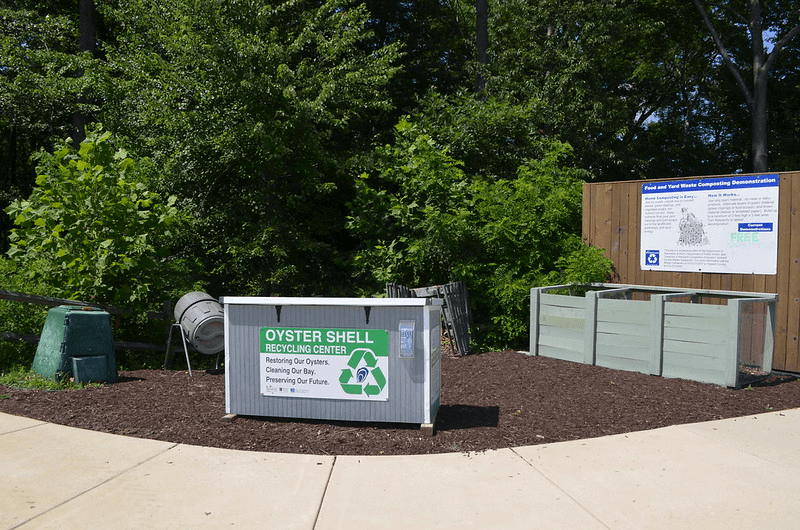
• Maryland claims the biggest household food waste improvement of any state in the country, -6.87% (reducing over 19,000 tons) of waste between 2023 and 2024.
• The state’s food recycling rate jumped by +5.75% to a rate of 38.06% year-over-year — experiencing the 2nd largest gain nationally.
Local tips: When I was an undergrad, I did an Alternative Spring Break in Annapolis, where we helped the Chesapeake Bay Foundation recycle oyster shells to help with local reef restoration.
Photo Credit: ssfaulkn / Flickr / Public Domain
5 States With the Most Food Waste
Check out the slideshow below for a snapshot of each of our bottom 5 states.
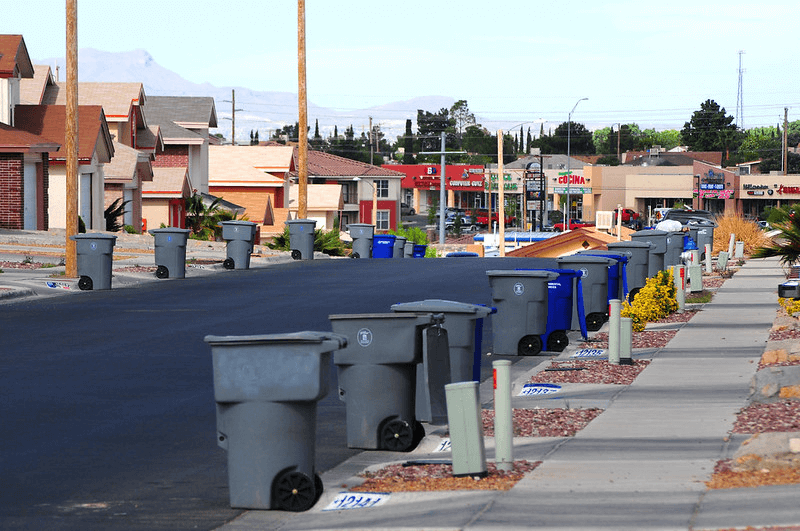
• 1.3 million tons of food were discarded by the foodservice sector in Texas in 2024 — the most of any state — at a 100% discard rate, meaning not a single ton is diverted through measured channels.
Local tips: Apps like TooGoodToGo are expanding across U.S. markets. I’ve been keeping an eye on the options available in San Antonio over the past few years. Listings are typically for donuts or baked goods, but I recently saw some local restaurants start to offer lunch bags and more substantial meals.
A Dallas app, EETZ Rescue, helps get food and other items to be discarded to area food pantries, soup kitchens, and some school lunch programs.
Photo Credit: Hadley Paul Garland / Flickr / CC BY-SA 2.0
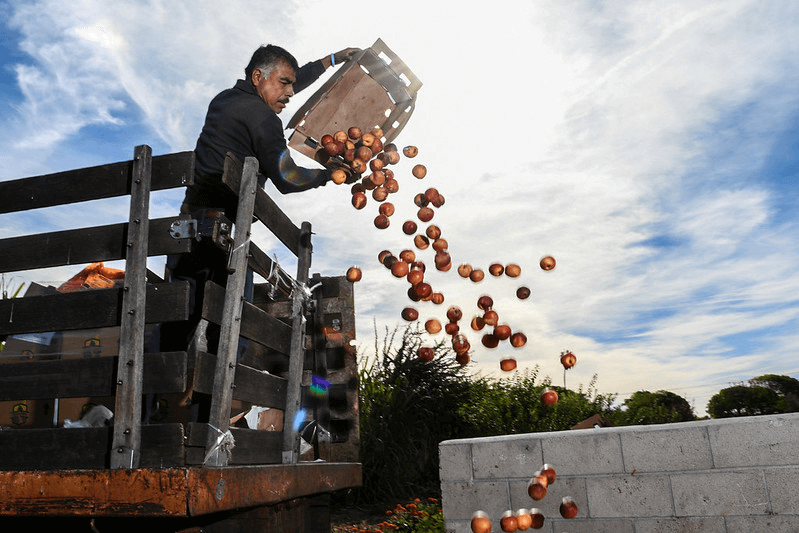
• In 2024, farms across the Golden State discarded nearly 6.7 million tons of food — over 3X more than the next largest state’s farm waste.
Local tips: SB 1383 passed in 2016, implemented in 2022, mandated 20% of edible food currently trashed be recovered for human consumption.
As of 2024, many municipalities were still working toward full implementation of composting compliance, so their trajectory may be upward in the coming years.
Photo Credit: U.S. Department of Agriculture / Flickr / Public Domain

• Florida’s food recycling rate improved by just +1.05% to a rate of 28.77% year-over-year — a below-average gain.
Local tips: Florida’s lack of a statewide food waste disposal ban or mandatory recycling law for organics leaves diversion largely to voluntary efforts. Organizations like Feeding Florida work to redirect surplus food, but without a policy mandate, scaling remains a challenge.
Photo Credit: Christina Welsh / Flickr / CC BY-ND 2.0
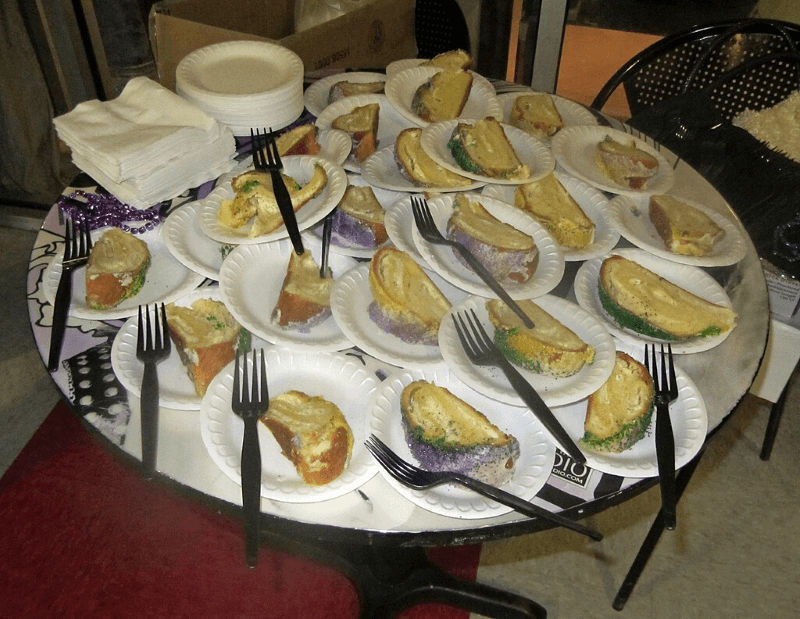
• Mississippi has no food waste disposal ban, no food sharing program, and only 8 food waste solution providers — one of the thinnest food waste ecosystems in the country.
Local tips: The Society of St. Andrew’s Mississippi Gleaning Network leads more than 2,000 volunteers annually into fields to rescue excess crops — particularly sweet potatoes from Vardaman, the sweet potato capital of the world — and has recovered over 15 million pounds of food since 2009.
Photo Credit: NatalieMaynor / Wikimedia Commons / CC BY 2.0

• West Virginia claims the highest residential food discard rate in the country at 67.14%, according to ReFED’s state-level analysis.
Local tips: The West Virginia Food and Farm Coalition works to connect surplus farm produce with food assistance programs, though the state’s rural geography creates significant logistical challenges for food recovery.
Photo Credit: tribbles1971 / Flickr / CC BY 2.0
Diving Into the Data
New England Policies Drive Food Recovery
All 6 New England states rank among the top 20 least wasteful states. The 4 with organics recycling laws — Connecticut (No. 1), Rhode Island (No. 2), Massachusetts (No. 3), and Vermont (No. 4) — each showed foodservice waste improvements of -9% or more between 2023 and 2024.
Food waste policies in Connecticut, Rhode Island, and Massachusetts target only businesses, while those in Vermont and California (No. 49) apply to both residents and commercial generators. Connecticut gets an edge over its New England neighbors due to its combination of a food sharing program, strong composting access, and the best anaerobic digestion density among New England states.
What separates New England from the rest of the country is that these states didn’t just pass laws — they built the infrastructure to make those laws work.
Big States, Big Waste
It’s no surprise that our most populous states, California (No. 49), Texas (No. 50), and Florida (No. 48), generate the highest amounts of food waste.
California generates nearly 6.7 million tons of farm waste — more than 21X the national average across states with farm sector data. California also discards the highest volume of food in retail and manufacturing.
Implementation of SB 1383 — the state’s organic waste reduction strategy — is still rolling out across the state. The trajectory is pointing upward — California’s year-over-year numbers are among the most improved in the country. It posted the 4th-largest recycling improvement nationally, climbing by +5.21% to a rate of 21.02% in 2024.
The Golden State is a leader in waste reduction infrastructure, with great access to composting facilities, anaerobic digestion facilities, and the highest number of food waste solution providers.
Texas (No. 50) is home to 30 million residents and boasts one of the largest hospitality economies in the country, but has no food waste disposal ban. The Lone Star State generates enormous volumes of food waste without the policy infrastructure or diversion capacity to offset them. On the bright side, Texans reduced household waste by -3.79% from 2023 to 2024.
Farm Recycling But No Policy
North Dakota (No. 8) is the most counterintuitive result in the ranking, with no disposal ban, no statewide food sharing program, and minimal composting infrastructure. Yet it leads in food recycling, with 61.12% of its food surplus being recycled. Livestock feed diversions and composting account for this performance, and the state’s farming-intensive economy generates and diverts enormous volumes through these agricultural channels.
Louisiana (No. 18) holds the 2nd-best food recycling rate at 60.71%. Like North Dakota, this performance is driven by agricultural-scale diversion: Louisiana’s sugarcane, rice, and livestock industries systematically redirect enormous volumes of organic byproducts to animal feed and other uses.
North Dakota and Louisiana both demonstrate that food recycling can happen at scale without any policy framework, though this is a structural advantage tied to agriculture.
Mid Atlantic Meals
Maryland (No. 5) reduced household food waste at a faster rate than any other state — down by -6.87%, to 262,435 tons between 2023 and 2024. It also improved its food recycling rate by +5.75% to a rate of 38.06% in 2024, the 2nd-largest gain nationally.
New Jersey (No. 6) showed the 3rd-largest recycling improvement in the country, climbing +5.4% to a rate of 39.71% between 2023 and 2024, and has the highest anaerobic digestion facility density in the dataset.
Natural Disasters Impacting Food Waste
South Carolina (No. 42) recorded the highest year-over-year increase in farm waste of any state in the country — a 41%+ jump in farm waste tonnage and a 103.9%+ surge in the value of farm surplus generated.
The driver: the 2024 hurricane season. Tropical Storm Debby and Hurricane Helene both struck the Carolinas in 2024, causing severe crop damage across the state’s agricultural sector. Crops that couldn’t be harvested or sold were recorded as farm waste.
However, that’s not the only element pushing South Carolina down in our ranking. The state’s food recycling rate actually declined from 2023 to 2024, dropping -1.15% to a rate of 29.03%. Retail food waste increased by +4.17% year-over-year, and residential waste improved by only -2.59% from 2023 to 2024 — the smallest household waste reduction in the country.
Other Notable Data
- Wisconsin (No. 19) claims the highest food manufacturing surplus value at $5.41 billion — driven largely by its dairy industry, which produces 25% of all cheese in the U.S.
- Hawaii (No. 12) ranks 1st in the country for least household food waste — residents discard just 62.19% of their food, the lowest rate nationally — likely driven by the state’s high food costs from importing an estimated 85-90% of its groceries. Yet Hawaii has limited composting infrastructure and no disposal ban, meaning food that does go to waste largely stays wasted.
Percentage of Food Waste Discarded by Sector
The percentage of food waste that went to landfills, incineration, and sewers, by sector, out of the total tons of food wasted:
Ask the Experts: How to Lower Your Food Waste
If all surplus food in the U.S. was grown on one farm, it would span around 80 million acres, aka over 75% of California’s land area.
Food waste is a huge economic and environmental problem, and preventing it is a challenge for both individuals and local governments leading the way.
That’s why we turned to food recovery experts and professors across the U.S. to demystify food waste and effective strategies for limiting food waste.
- What are the pros and cons of using a garbage disposal for food waste compared to composting or trashing it?
- What are the most misunderstood food date labels (e.g., “Sell By,” “Best By,” “Use By”), and what simple guidelines should consumers follow to reduce perfectly good food from being wasted?
- What are your top three non-negotiable tips for meal planning and grocery shopping that directly prevent food from spoiling in the fridge or pantry?
- What often-wasted ingredients (like herb stems, broccoli stalks, or wilting greens) can be easily transformed into something edible (and tasty)?
- What are the keys to effective long-term freezer storage to prevent freezer burn (packaging, temperature, etc.), and what foods are commonly frozen incorrectly?
- How did you get involved in food rescue and food waste solutions?
- What advice would you give someone looking to start a food recovery organization in their neighborhood?









Background: Move For Hunger is a non-profit organization that mobilizes transportation resources to deliver surplus food to communities in need. In addition to recovering food for our nation’s food banks, Move For Hunger organizes hundreds of educational and impactful team-building events each year. To date, they have delivered more than 50 million meals to communities in need. For more information, or to find out how you can get involved, visit www.MoveForHunger.org.
What are the pros and cons of using a garbage disposal for food waste compared to composting or trashing it?
If you’ve got the option, composting wins — it keeps food out of landfills where it can generate methane and turns scraps into something useful.
A garbage disposal can feel convenient, but it sends food into the wastewater system — so it’s not “disappearing,” it’s just taking a different (often less ideal) route than composting. Trashing it is the worst-case scenario for both waste and emissions.
What are the most misunderstood food date labels (e.g., “Sell By,” “Best By,” “Use By”), and what simple guidelines should consumers follow to reduce perfectly good food from being wasted?
“Sell By” is mainly for stores (inventory), “Best if Used By” is about peak quality (not safety), and that confusion drives a lot of perfectly good food into the trash bin.
None of these dates are regulated by the FDA, so they’re basically meaningless. My rule of thumb: Trust your senses and storage. If it looks and/or smells fine and was handled safely, it’s often still good after a “best” date. Of course, when you have food you know you won’t use quickly, freeze it.
What are your top three non-negotiable tips for meal planning and grocery shopping that directly prevent food from spoiling in the fridge or pantry?
- Shop your fridge/pantry first and plan meals around what you already have.
- Buy with a purpose, by which I mean a short list beats “aspirational groceries” and impulse buying every time.
- Freeze the extras early; don’t wait until leftovers look sad. And remember that nearly 40% of food waste happens in the home, so it’s important to be mindful. Use what’s in your fridge, embrace the “ugly” produce, and get creative with leftovers.
What often-wasted ingredients (like herb stems, broccoli stalks, or wilting greens) can be easily transformed into something edible (and tasty)?
Herb stems, broccoli stalks, and wilting greens are basically future soup/stocks, slaws, or pesto; they just need a better PR team. And yes, I’m still not over carrot-top pesto being a real thing that’s actually pretty delicious.
What are the keys to effective long-term freezer storage to prevent freezer burn (packaging, temperature, etc.), and what foods are commonly frozen incorrectly?
Keep your freezer at 0°F and treat air like the enemy.
When packing food to freeze, make sure to wrap tightly, press out air (or vacuum-seal), use freezer-safe containers, and label/date everything.
The most common mistakes, regardless of food type, comes down to freezing food in flimsy packaging, leaving too much headspace, and “saving” leftovers too long (even though they’ll stay safe, the quality drops). So, eat most frozen meals within a few months for the best taste.
What are the pros and cons of using a garbage disposal for food waste compared to composting or trashing it?
While the garbage disposal is convenient, foods discarded in this way often end up in the landfill, but this varies by city or county. Composting food provides an opportunity to put nutrients back into the soil.
What are the most misunderstood food date labels (e.g., “Sell By,” “Best By,” “Use By”), and what simple guidelines should consumers follow to reduce perfectly good food from being wasted?
Many people assume date labels are the same as expiration dates. With the exception of infant formula, date labels signal potential changes to food quality, not safety.
The way food is stored can play a big role in preventing waste.
Put non-shelf-stable, high-protein foods in cold storage as quickly as possible. Spoilage and harmful bacteria grow extremely fast at room temperature and in warm outdoor weather. Use clear containers to help you remember what you have stored and move foods that need to be eaten quickly so that they are easy to see — not pushed to the back.
Don’t let leftovers go to waste. Freeze them immediately, so you have a ready-made meal for a busy day, or upcycle them into a new dish so you don’t have to eat the same meal twice.
What are your top three non-negotiable tips for meal planning and grocery shopping that directly prevent food from spoiling in the fridge or pantry?
- Shop your pantry and fridge before heading to the store. Plan your purchases so that they help you use up your existing food before it goes bad.
- Shop for food like you would clothes: Buy versatile items that go well in a variety of dishes. Pasta and frozen vegetables, for example, can be incorporated into lots of different meals.
- Don’t be afraid to make recipe substitutions or other swaps that will let you use overly ripe produce or other aging food in place of other ingredients that will hold up for another day or two.
What often-wasted ingredients (like herb stems, broccoli stalks, or wilting greens) can be easily transformed into something edible (and tasty)?
Herb stems and broccoli stalks are all edible and have lots of flavor! Both can be chopped up and used the same way that you use the premium parts of these items. You can use them in soups, salads, casseroles, and stir fries, or you can puree them to make delicious sauces or dips.
What are the keys to effective long-term freezer storage to prevent freezer burn (packaging, temperature, etc.), and what foods are commonly frozen incorrectly?
Make sure you freeze food in closed, air-tight containers. Ideally, freeze items in the same form that you’ll use them in later.
For example, remove bananas from their peel so they’re ready for a smoothie or pancakes. Chop onions before freezing so they’re ready to go when you need them. It is also ideal to store food in convenient portions. For example, portion your big batch of pasta sauce into multiple 2-cup bags instead of putting it all in one large container.
What are the most misunderstood food date labels (“Sell By,” “Best By,” “Use By”), and what simple guidelines should consumers follow to avoid wasting perfectly good food?
Date labels are generally misunderstood and can create confusion for consumers. However, industry groups like The Food Industry Association (FMI) are encouraging food manufacturers to voluntarily adopt a two-label system, where “Best if Used by” serves as an indication of product quality and “Use by” is more of an indication of safety.
- So, if you saw “Best if Used by” on a box of cereal, that would mean you could eat it after the listed date, but it might not be as crunchy, for example.
- If you saw “USE by” on a perishable product like fresh meat, this would indicate that you need to eat or freeze the product by that date to avoid food safety concerns.
A bipartisan bill, the Food Date Labeling Act, has been introduced in Congress that would also adopt the “Best if Used by” and “Use by” labeling terminology.
What are your top three non-negotiable tips for meal planning and grocery shopping that directly prevent food from spoiling in the fridge or pantry?
- For me, personally, one of my biggest tips is to have a realistic plan for the week. By that, I mean that if you know you are someone who will want to get take-out two nights a week after work, plan for that rather than telling yourself that you’ll cook 5 nights per week. Or, if you have activities or events that will prevent you from cooking at home, plan accordingly.
- Shop your kitchen before you go grocery shopping. You may have ingredients in your pantry already available that you don’t need to purchase. You might also find foods in your refrigerator or freezer that need to be eaten soon that you can build into your meal plan for the week.
- Plan meals with cross-functional ingredients. For example, if you bought a pound of carrots, maybe you can do roasted carrots one night as a side dish and use the rest of the carrots in a vegetable soup or in your morning smoothies.
What often-wasted ingredients (like herb stems, broccoli stalks, or wilting greens) can be easily transformed into something edible (and tasty)?
There are many resources that can help people with this, including some below:
What are the keys to effective long-term freezer storage to prevent freezer burn (packaging, temperature, etc.), and what foods are commonly frozen incorrectly?
- This FDA guide has great tips on freezer (and refrigerator) storage that could be helpful to consumers.
- Virginia Cooperative Extension also has some guidance on this.
Explore more guides through our Center’s resource library.
What are the pros and cons of using a garbage disposal for food waste compared to composting or trashing it?
I’ve never thought about this. If you use the disposal, the waste goes into the water treatment plant, which filters out the solids and gets rid of them somehow. Composting is great for soil, but it produces greenhouse gases. Trashing it means landfills, or however it’s treated.
No easy choice, but I prefer — and do — compost.
What are the most misunderstood food date labels (e.g., “Sell By,” “Best By,” “Use By”), and what simple guidelines should consumers follow to reduce perfectly good food from being wasted?
The labels refer to the amount of time the manufacturer thinks the product is OK to eat.
Dry packaged foods are safe long beyond that date. Wet foods like milk deteriorate quickly (they are great food for bacteria), and I pay close attention to the date.
What are your top three non-negotiable tips for meal planning and grocery shopping that directly prevent food from spoiling in the fridge or pantry?
I follow the clean, cook, separate, chill rules for safe food handling.
- Keep surfaces, towels, and sponges clean
- Separate vegetables from meats
- Keep hot food hot and refrigerate leftovers.
What often-wasted ingredients (like herb stems, broccoli stalks, or wilting greens) can be easily transformed into something edible (and tasty)?
In a word, soup!
What are the pros and cons of using a garbage disposal for food waste compared to composting or trashing it?
Composting helps return the nutrients to the soil.
What are the most misunderstood food date labels (e.g., “Sell By,” “Best By,” “Use By”), and what simple guidelines should consumers follow to reduce perfectly good food from being wasted?
All of these labels listed are often misunderstood. I think “Sell by” in particular, people may see that as the date they should discard the food, when actually it is a date that is geared to help the store know how long that product has been in stock.
Consumers should be sure to store food at the proper temperature, keep things clean, and pay more attention to how long you have had your food, rather than only looking at the date on the label.
Here are some publications on safe storage times:
What are your top three non-negotiable tips for meal planning and grocery shopping that directly prevent food from spoiling in the fridge or pantry?
- Plan ahead when shopping. Buying something just because it is on sale and then throwing it away because you didn’t use it loses money.
- Don’t shop hungry, or you may buy more than you need and then not end up using it all safely
- Be sure to keep track of how long you have had food in your fridge and cupboard, and use the oldest food first as much as possible.
What often-wasted ingredients (like herb stems, broccoli stalks, or wilting greens) can be easily transformed into something edible (and tasty)?
Many of these products listed would go really well in a cooked soup, stew, or something similar that is cooked. From my perspective, cooking the food will make it safer, and things like greens would be wilted when cooked anyway, so it is fine if they are wilted.
What are the keys to effective long-term freezer storage to prevent freezer burn (packaging, temperature, etc.), and what foods are commonly frozen incorrectly?
Be sure to use packaging intended for freezer storage. Things like used plastic containers for whipped topping are not intended for reuse and may allow freezer burn.
Ensure that the freezer temperature does not fluctuate. As much as possible, keep the temperature the same and keep it below 0°F.
What are the pros and cons of using a garbage disposal for food waste compared to composting or trashing it?
Always choose composting over trash or garbage disposal. When you compost food scraps, you are left with a rich soil amendment that will grow healthy foods and plants.
When you trash food scraps, you send methane into the atmosphere, which is a big reason our planet is getting hotter. Sending food down the garbage disposal is just like trashing it. When the ground-up food is separated from the water at the treatment plant, it’s typically sent to a landfill.
What are the most misunderstood food date labels (e.g., “Sell By,” “Best By,” “Use By”), and what simple guidelines should consumers follow to reduce perfectly good food from being wasted?
The most common misconception around date labels is that it’s the expiration date of the food. Unless the date says “use by,” which is typically found on baby formula, the date on the food item is not the final day you can eat or drink the item.
A “sell by” date is used for manufacturers and retailers to manage inventory.
“Best by” is the manufacturers’ estimate of when the food will taste the best. Most food items are perfectly safe to consume after the “best by” or “sell by” date, as long as they’ve been stored properly.
You can keep good food from going to waste after the date by using your senses to tell you if it’s gone bad. If it smells, tastes, and looks ok, then go for it!
What are your top three non-negotiable tips for meal planning and grocery shopping that directly prevent food from spoiling in the fridge or pantry?
Before I head out to do my grocery shopping, I first look at the calendar for the week to get a sense of our family’s comings and goings for the week — who’ll be home for dinner, and whether there are any events or activities happening.
Then, I look in the fridge to see what’s already in there and needs to be used up. After making the menu for the week, I check the pantry to see if I have anything already. No sense in buying more cans of beans if they’re already there!
And I always go to the store with a list so I don’t have to guess what we need.
What often-wasted ingredients (like herb stems, broccoli stalks, or wilting greens) can be easily transformed into something edible (and tasty)?
I remember seeing the shock on someone’s face when she learned that broccoli stalks are edible! There are a lot of foods that we may not consider usable but actually are — carrot tops, stale bread, and even banana peels. There’s something pretty satisfying about turning a random peel into a sauce, dip, or topping.
What are the keys to effective long-term freezer storage to prevent freezer burn (packaging, temperature, etc.), and what foods are commonly frozen incorrectly?
First, you want to be sure your freezer is at the right temperature. After that, make sure the food has been cooled down.
Next, do whatever you can to remove as much air as possible from the food you are freezing. Vacuum sealers are great for this!
Freezers are a great tool for keeping food from going to waste, but only if you eventually eat it. Beware of using the freezer to just delay throwing the food away!
Note: Food waste has become a compound challenge with its intricacies extending from the production of food, through the food supply chain, and even lingering after the final consumers.
The economic, environmental, social, and health impact of food waste in most countries is staggering. In the United States, the extent of food waste is greatest at the end of the supply chain — at the consumers’ tables, in their fridges, cupboards, and trash.
What are the pros and cons of using a garbage disposal for food waste compared to composting or trashing it?
PROS
- Garbage disposal prevents the build-up of micro-organisms that would otherwise exist in our immediate environment when wasted food is trashed or composted. Since there are reduced microorganisms, the spread of contaminants is also reduced. These ensure a healthy environment. Also, garbage disposal reduces the foul smell experienced when unwanted food is otherwise trashed. The possible positive impacts of garbage disposal also extend to the prevention of an eyesore that would have been experienced, especially when trashed food begins to decay.
- Furthermore, garbage disposal allows for centralized and more organized processing of food waste. Waste disposed of through this means reduces the negative effect associated with the inexperienced handling of wasted food that would have occurred through trashing or composting. Instead, wasted food is channeled to a centralized sewage system where it can be collectively managed either by conversion to biogas or used as fertilizers.
CONS
- One of the consequences of using garbage disposal as a means of reducing food waste is that it is more costly to install and operate locally when compared to composting and trashing.
What are the most misunderstood food date labels (e.g., “Sell By,” “Best By,” “Use By”), and what simple guidelines should consumers follow to reduce perfectly good food from being wasted?
Date labels that are put on food packaging, like “sell by,” “best by,” and “use by,” have been in existence for about a century in the United States. A growing body of research suggests that the different perceptions of food date labels by consumers may lead to food waste. The decision of most consumers regarding the timing to discard labeled packaged food materials is mostly based on the perception of food quality and food safety.
In the United States, rules about date labels differ by state, but are generally unregulated. There is an exception for infant formula, which is regulated under the 1980 Infant Formula Act. Otherwise, the U.S. Food and Drug Administration (FDA) does not require food products to display specific open (visible) date labels.
However, some poultry, meat, and egg products under USDA jurisdiction necessitate date documentation, but phrases including “sell by” and “use before” can be used interchangeably. The USDA does not set out strict guidelines for terminology commonly used on food products.
The use of the following date label phrases have been summarized as such:
- “Sell by” conveys to the retailer the last date the product can be displayed for sale. It is not an indication of a product’s safety or quality.
- “Best if used by,” “best before,” or “best by” are used to suggest the date after which the food’s quality or flavor may deteriorate.
- “Use by” recommends the last date by which the product should be consumed, but does not necessarily convey safety information.
What are your top three non-negotiable tips for meal planning and grocery shopping that directly prevent food from spoiling in the fridge or pantry?
Planning meals is very essential to the prevention of food waste. Elements like how much to buy, when to buy, and what do I have currently in stock most times determine how much of food goes to waste. There has to be some form of monitoring of these elements before going grocery shopping in order to prevent wasting food. Some tips that could help reduce food waste in our houses are as follows:
- Check what you already have at home while planning for meals, especially before going grocery shopping. The core of this tip is borrowed from inventory management in supply chain, where managers of inventory must determine when and how much to buy to prevent overstocking or understocking. In this instance, most inventory managers use the FIFO (First In First Out) or LIFO (Last In First Out) style of managing inventory.Without getting too technical, it is important to check the food materials in our houses, and ensure we use or consume those that are near expiration first. And in instances where there are no expiration dates on the packages of food materials, we should use up or consume the oldest purchased food available in our pantry. Having stated this, it is important to find a way to be aware of the batches of food supply as we get them.
- In purchasing perishable food when the need arises, it is advisable to purchase food materials we need for the next few days (say about 1-5 days), depending on the perishability of the food. This will reduce overstocking of food.
- Finally, have a plan or purpose for every perishable food you buy. Know the meal you want to use them to prepare and when.
References
Awotoye’s responses draw on peer-reviewed research in food science and consumer behavior.
Newsome, R., Balestrini, C., Baum, M., Corby, J., Fisher, W., Goodburn, K., . . . Yiannas, F. (2014). Applications and perceptions of date labeling of food. Comprehensive Reviews in Food Science and Food Safety, 13(4), 745–769.
Link: https://ift.onlinelibrary.wiley.com/doi/10.1111/1541-4337.12086
Wilson, N. L., Miao, R., & Weis, C. (2018). Seeing Is Not Believing: Perceptions of Date Labels over Food and Attributes. Journal of Food Products Marketing, 24(5), 611–631.
Link: https://doi.org/10.1080/10454446.2018.1472700
Tsiros, M., & Heilman, C. M. (2005). The effect of expiration dates and perceived risk on purchasing behavior in grocery store perishable categories. Journal of Marketing, 69(2), 114–129.
Link: https://doi.org/10.1509/jmkg.69.2.114.60762
Lieb, E. B., Rice, C., Neff, R., Spiker, M., Schklair, A., & Greenberg, S. (2016). Consumer perceptions of date labels: National survey. Harvard Food Law and Policy Clinic & National Resources Defense Council.
Link: https://chlpi.org/wp-content/uploads/2013/12/consumer-perceptions-on-date-labels_May-2016.pdf
Wilson, N. L., Rickard, B. J., Saputo, R., & Ho, S.-T. (2017). Food waste: The role of date labels, package size, and product category. Food Quality and Preference, 55, 35–44.
What are your top three non-negotiable tips for meal planning and grocery shopping that directly prevent food from spoiling in the fridge or pantry?
Buy less than what you will use and buy it more often. Don’t buy big bulk items, unless you realize that you’ll have to separate them and freeze or store them so they stay fresh.
There is an excess of people who will buy a big container of salad. And then they go home, and their friends call, “Hey, we’re going to have dinner,” and they go to dinner. Then 2–3 days later, there’s that salad, and it’s not as fresh-looking, and they’re like, “blech.”
So just be conscious of what you consume and try to buy as fresh and as local as you can. Support farmers markets and just be aware of how things are stored and maintain proper temperatures. So don’t buy your groceries and leave them in the hot car while you go shopping in other stores.
What are the keys to effective long-term freezer storage to prevent freezer burn (packaging, temperature, etc.), and what foods are commonly frozen incorrectly?
Invest in a vacuum sealer. Get the air out of those packages so that you’re not going to trap extra air in there that could cause it to freezer burn faster. Then, date the packages as you put them in there, so that you know how to keep an eye on rotating your inventory.
When we grew up, we would raise cattle, and once a year, we would butcher a calf. And my mom would have a huge freezer that we would use. She would keep the hamburger in one section, the roasts in another, and the steaks in another, but everything was dated. So we knew what needed to be cooked. Back then, there weren’t as many restaurants where we grew up, either.
What are the most misunderstood food date labels (e.g., “Sell By,” “Best By,” “Use By”), and what simple guidelines should consumers follow to reduce perfectly good food from being wasted?
There is a big difference between a “sell by” date, a “best by” date, and a “use by” date. A sell by date is a date that the manufacturer wants the product sold by, and they usually date that about a week prior to the actual expiration date. And the thinking on that is that they’re trying to get people to buy more.
A best by date is also set by a manufacturer. That’s when it’s at its peak quality and best taste. Not saying that, you know, 3 days later it isn’t still edible. But it’s best by.
Then there’s the use by date, and that is also applied by the manufacturer, but after that date, you start running into quality issues, so what I do like to see instead is a use or freeze by date. That way, you know, either you’re using it while it’s fresh, or freeze it before that date, and that maintains your freshness longer.
What often-wasted ingredients (like herb stems, broccoli stalks, or wilting greens) can be easily transformed into something edible (and tasty)?
Take the wilting produce and make it into a casserole. On Monday mornings, I do a lot of the cooking for the homeless. A meatloaf is what we made yesterday, and I had diced peppers, and stovetop stuffing mix. We use the breadcrumbs and the seasoning in it. We had diced onions, I had some carrots that had been shaved, just little slivers of carrots, and put that in there with them, the eggs, and made 180 meals that they really liked.
This can help with sneaking more vegetables in. Kids can be really picky eaters. But if you can incorporate a variety early on, it’s much easier for them to be experimental with their food. So, I’ve got a Vitamix, and I’ll use blueberries, bananas, some carrots, and make smoothies with it.
I make a lot of casseroles. Last night for dinner, I did a chicken stir fry with some diced chicken, some frozen vegetables, some soy sauce and some sweet and sour sauce, and had a handful of cashews on it. And it was really good. So, yeah, I would say be experimental with your recipes and be mindful of what you are looking for when you’re at the grocery store.
How did you get involved in food rescue and food waste solutions?
Growing up, I was one of five kids, and we lived 28 miles from town. We raised cattle, chickens, and hogs, and we grew our own food in a huge garden, so wasting it was a big no-no. Food waste has always been something that I just really couldn’t stand.
About 10 years ago, I moved to Dallas and got involved with a church program at Cathedral of Hope, helping to feed the homeless. On Saturdays, they serve breakfast, and on Mondays, they’ll serve lunch. So then we started a program that would serve an afternoon meal on Tuesdays, but we would take it to the street. A friend at Costco told me they donate food through the Feeding America network. They gave us one day a week to show up at this Costco, and the agreement is, we had to take everything they offer us — so we had bicycles, mattresses, lawnmowers, and barbecue grills. We can’t sell them, but we can donate them. So we started picking up from them one day a week, and it really helped our program. Because we were so responsive, they gave us more days and more locations.
A friend let me borrow his refrigeration space in his walk-in cooler in his catering business. Then, another friend of mine worked at Oracle and saw what we were trying to do, and he said, I think I can make this easier for you, so he developed an app: EETZ Rescue. It’s a free app — anybody can download it. I take a picture of what I picked up, post the weight, and give it away — so we don’t need as much cold storage because the food moves faster.
They gave us an additional location, and they’ve given us additional days. So now our program runs 7 days a week. I’ve got a little over 50 volunteers. And we rescue food from 4 Costcos, 3 Trader Joe’s, and Sam’s. Last year, in 2025, we rescued 1.6 million pounds of food.
We started documenting how much food we picked up in 2019. That year, we rescued 100,000 pounds of food in our private vehicles. We got excited about being able to do it. It was saving our church money, and then when we got more food the next year, I started devoting more time to it, and we rescued 200,000 pounds of food. Then we got a cargo van donated, and that’s when I quit my job and started doing this full-time. We rescued 400,000 pounds the next year because I devoted more time to it, then we did 800,000 pounds, then we did 1.3 million in 2024, and last year we did 1.6 million. We share with 35 smaller food banks and nonprofits across three counties up here around the Dallas-Fort Worth area.
What advice would you give someone looking to start a food recovery organization in their neighborhood?
Be open to networking. Go to events, and just visit with people. With our app, anybody can download it, but anybody can also post to it. So some restaurants will have a meal at the end of the day, and they’ll post it on there. People who have a family reunion and have leftover food can give it away that way. It’s a really great thing to do, that’s how I’ve gotten a lot of the non-profits. People will tell them what I do, and they’ll say, hey, I know so and so, and they need food.
The latest groups I’m dealing with now is in an unincorporated town around Dallas, where they don’t have running water. They don’t have any city services, but they’re in Dallas County. So we, we get a lot of bottled water donated.
Before you get into this space, the more you realize 40% of the food grown in the United States is wasted. Between harvesting it, processing it, transportation, retail, and then the final consumer buys it, brings it home, puts it in the refrigerator, then they go out to eat instead, and 2 weeks later, they throw it out.
What are the most misunderstood food date labels (e.g., “Sell By,” “Best By,” “Use By”), and what simple guidelines should consumers follow to reduce perfectly good food from being wasted?
We have a webpage on food date labeling, and we also conducted a study earlier in 2025 on consumer confusion around food date labels.
What are your top three non-negotiable tips for meal planning and grocery shopping that directly prevent food from spoiling in the fridge or pantry?
Our go-to tips for consumers to waste less are called our “Food Waste Five,” which you can find at the bottom of this page.
When it comes to grocery shopping and meal planning, a few key tips:
- Check your fridge before you go shopping so you know what you have and what you need more of. (To make this easier, organize your fridge by food type and put foods that should be eaten first at the front.)
- Always make a list before you go shopping. And don’t go to the grocery store hungry.
- Think about what food items can be repurposed for multiple meals. For example, if you get a rotisserie chicken, think about what meals you can make (e.g., tacos, dip) to use up all of that food.
What often-wasted ingredients (like herb stems, broccoli stalks, or wilting greens) can be easily transformed into something edible (and tasty)?
Here are a bunch of recipes for how to use often-wasted food items, and here are a bunch of tips on how to properly store a range of food items.
Methodology: How We Ranked the States
To rank the States That Waste the Least Food, we compared all 50 states across 37 metrics.
Our metrics were organized into 4 main categories:
- Least Commercial & Industrial Food Waste (~59%): We considered the total amount of food discarded, value of surplus food generated, percentage of food discarded, and year-over-year changes for manufacturing, foodservice, and retail sectors. For the farm sector, we considered the total amount of food discarded, the value of surplus food generated, and year-over-year changes.
- Least Household Food Waste (~17%): We looked at the total amount of food discarded, percentage of food discarded, value of food discarded, and year-over-year changes for the residential sector.
- Most Food Recycled (~13%): We examined the total amount of food and the percentage of food recycled through composting, anaerobic digestion, and animal feed, in addition to year-over-year changes.
- Most Food Waste Reduction Efforts (~11%): We factored in the presence of food waste disposal bans, food sharing programs, access to composting facilities and anaerobic digestion facilities per 1,000 sq. mi., and the number of food waste solution providers.
Finally, we calculated scores (out of 100 points) for each state to determine its rank in each factor, each category, and overall. A state’s Overall Score is the average of its scores across all factors and categories. The highest Overall Score ranked “Least Wasteful” (No. 1) and the lowest “Most Wasteful” (No. 50).
Notes:
- Data collection for this story occurred between October 7, 2025, and February 27, 2026. This is the latest data as of the time of publication.
- Some metrics and their weights are different compared to analyses from previous years.
- The “Most Wasteful” among individual factors may not be No. 50 due to ties.
- We factored in food waste data (food discarded to landfill, incineration, and sewer) rather than total surplus food, which also includes food that was recycled or donated.
- We did not include the percentage of food discarded by the farm sector since they were calculated from Food Waste Tons, and all states would have 100%. For the other sectors, we included discarded food sent to landfill, incineration, and sewer, and excluded composting and anaerobic digestion, which we considered recycling.
- For the foodservice sector, ReFED applies measured diversion data to 6 states with active organics recycling laws or regional food waste separation requirements — California, Connecticut, Massachusetts, Oregon, Vermont, and Washington. Of these, only California, Connecticut, Massachusetts, Rhode Island, and Vermont have statewide disposal bans captured in our study’s binary metric. All other states reflect national survey benchmarks scaled to state food volumes.
- Farm sector data is unavailable for Kentucky, South Dakota, and Wyoming, as those states fall below USDA commodity survey thresholds, and we gave them N/As.
- ReFED’s residential discard rates may underestimate actual disposal rates due to limitations in the underlying consumer survey data, though the relative differences between states remain meaningful.
Sources: BioCycle, Environmental Protection Agency, Food Rescue US, ReFED, and U.S. Composting Council
Close the Loop: Grow It, Eat It, Compost It
Grow It
One commitment to reduce food waste can start in your own backyard, with a veggie garden.
The time and energy required to grow produce will likely inspire you to make the most of your fresh fruits and vegetables before they go bad.
- Digging In: 11 Steps to Start a Vegetable Garden
- How to Water a Vegetable Garden From Seedling to Harvest
- 15 Inspiring Ideas for Your Backyard Vegetable Garden
Eat It
If you don’t have the time, space, or energy to maintain a garden, live like a locavore — or someone who opts for locally grown food — to support your local economy and lessen your fridge’s environmental impact.
Shop local — think farmers markets, co-op groceries, community supported agriculture (CSA) programs, and family-owned grocery stores that stock regional produce.
Learn more about the impacts of food waste with this Food Loss and Waste Calculator.
By making the most of your purchases, your grocery budget and local landfill will thank you.
Compost It
When scraps are inevitable, composting turns banana peels, eggshells, and wilted greens into nutrient-rich soil for your lawn and garden. This keeps waste out of landfills while feeding next season’s growth.
- Composting 101: How to Start Composting
- What Can You Put in a Compost Bin?
- How to Keep Pests out of Your Compost Bin
- How to Use Compost in Your Yard
Need help creating space for your new veggie garden or compost pile? Hire a local LawnStarter crew to help prep your backyard so you can get growing.
Media Resources
Main Photo Credit: Image by progressman via Adobe Stock (license), modified by Sav Maive (text added)
Related Posts: