| Key Takeaways |
|---|
| • Core aeration is scientifically proven to relieve soil compaction, but it costs more and leaves temporary soil plugs. • Liquid aeration costs less upfront but has no proof that it reduces soil compaction. • Choose core aeration for compacted or clay soil; liquid aeration may only help minor surface issues. |
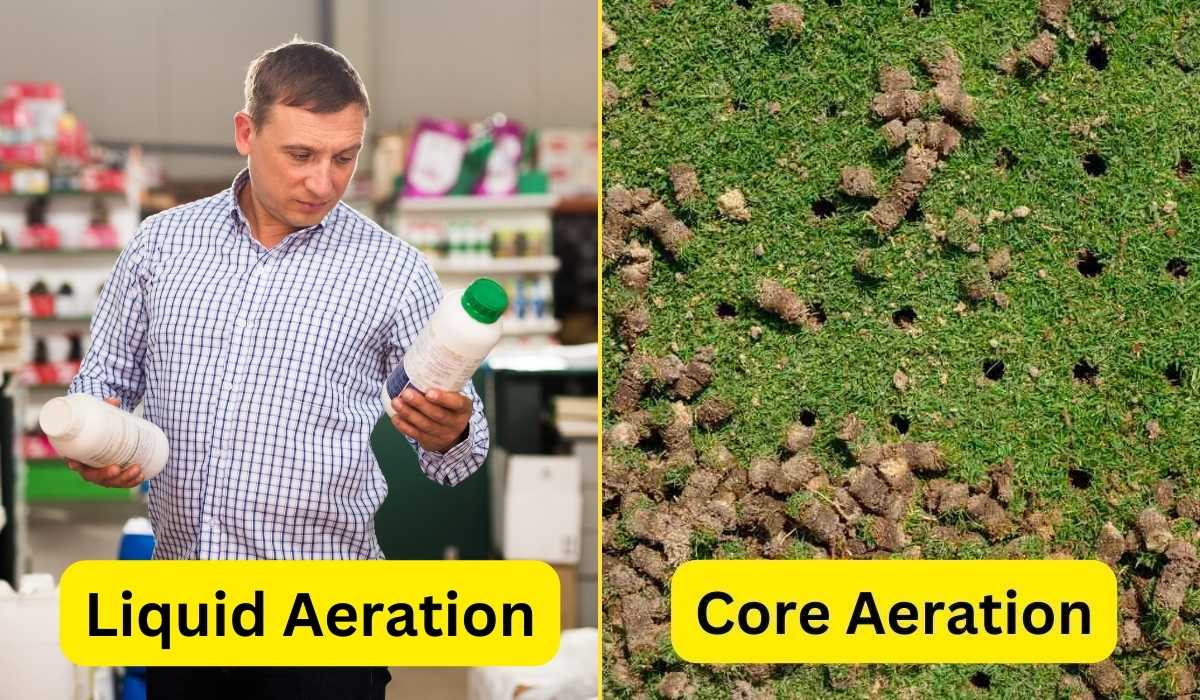
Liquid aeration uses chemical solutions designed to loosen compacted soil, while core aeration physically removes plugs of soil. Core aeration is far more common and preferred by pros because it delivers consistent, proven results.
Picking the right method means weighing cost, effort, and how compacted your soil really is. This article will tell you everything you need to know, including expert insights, so you can make the best decision for your lawn.
If you would rather skip the guesswork, LawnStarter connects you with local aeration pros to give your lawn the best treatment possible.
Liquid Aeration vs. Core Aeration: Head-to-Head Comparison
Core aeration is the more effective method. It physically removes soil plugs to relieve compaction with immediate, research-backed results, while liquid aeration is a spray with no peer-reviewed proof it reduces compaction. The table below compares the two side by side:
| Feature | Liquid Aeration | Core Aeration |
| Method | Chemical spray | Mechanical plug removal |
| Scientific Proof | None | Extensively validated |
| Results Timeline | 2 to 4 weeks (if any) | Immediate |
| Application Time | 15 to 30 minutes | 1 to 2 hours |
| Cost | $30 to $40 per bottle | $107 to $202 professional, $100 rental |
| Best For | Small lawns, minor compaction | Any size, moderate-severe compaction |
| Lawn Appearance | No visible change | Soil plugs for 1 to 2 weeks |
| Expert Advice | Do not recommend | Highly recommend |
What Is Liquid Aeration?
Liquid aeration products claim to break down compacted soil through increased microbial activity. You spray a chemical solution (sometimes called soil conditioner or surfactant) across your lawn using a garden pump sprayer or hose-end attachment, mixing water with the product as you apply it.
The main ingredient in these products is liquid organic matter, along with surfactants to help water penetrate the soil. Manufacturers claim these ingredients loosen compacted soil and allow nutrients and water to reach grass roots more effectively.
Some people also apply gypsum, a mineral usually used to repair salt damage on the lawn, with the goal of improving soil structure and relieving compaction in a similar way.
The major selling points: No expensive equipment needed, no soil plugs littering your lawn, and faster application time. You can cover 1,000 square feet with about 1 ounce of product.
Does Liquid Aeration Actually Work?
Here is the uncomfortable truth: There isn’t enough evidence to support that liquid aeration actually works. While wetting agents may improve moisture absorption in some soils, there’s no peer-reviewed research confirming that liquid products reduce soil compaction.
“Gypsum (and liquid aerators) will work on the uppermost soil layer but do not really provide much depth, as has been shown in research,” says Chuck Schuster, senior agent emeritus at the University of Maryland Extension.
So, most lawn care experts and university Extension programs don’t recommend liquid aeration products. You might have luck with minor compaction issues, or you might waste your time and money.
What Is Core Aeration?
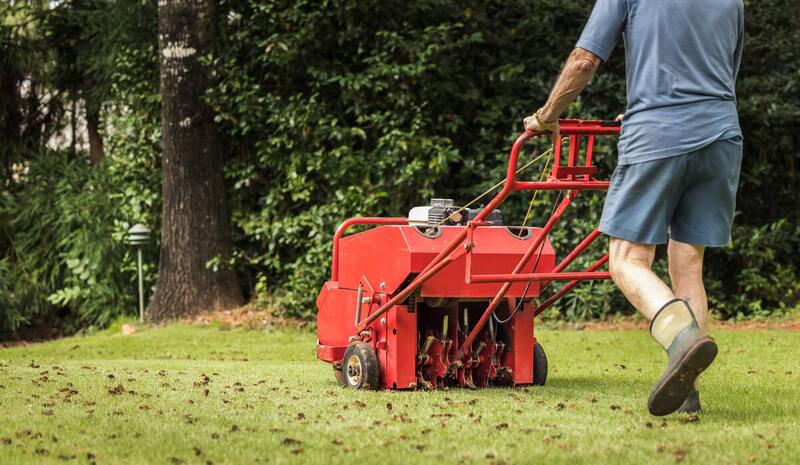
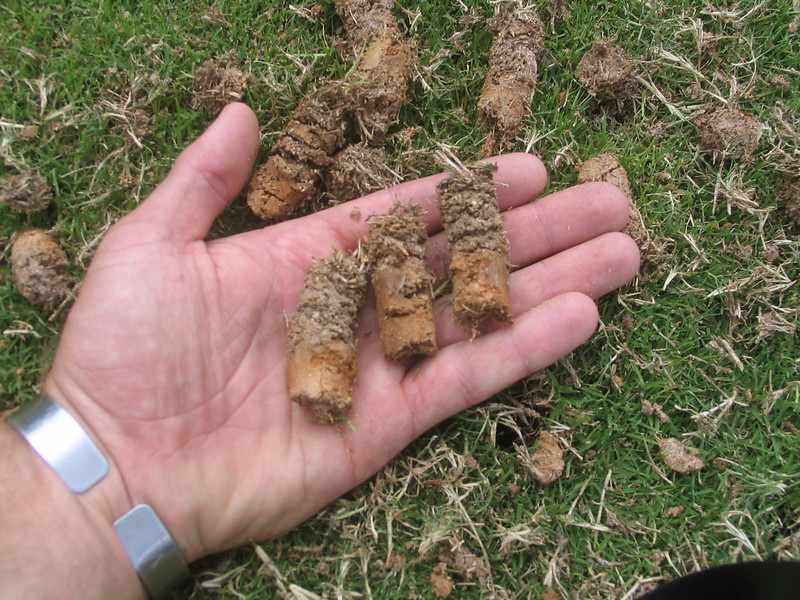
Core aeration (also called plug aeration or hollow tine aeration) uses a machine with hollow tines to physically remove soil plugs from your lawn. As the aerator rolls across your turf, it pulls out cylindrical soil cores, typically 2 to 3 inches deep and 1/2 to 3/4 inches in diameter.
Core aeration differs from spike aeration (or solid tine), which creates holes but does not remove soil plugs. “Using either hollow tine or solid tine will provide a depth of several inches in proper conditions,” Schuster says.
These holes create direct pathways for oxygen, water, and nutrients to reach the root zone. The process stimulates new root growth in the spaces created by plug removal.
Core aeration relieves two major lawn problems:
Soil compaction from foot traffic, equipment, or heavy clay soils, which restricts root growth and limits water and air flow.
Poor drainage that leads to standing water and shallow root systems, as well as runoff and turf stress.
See Related: How to Aerate Your Lawn
Does Core Aeration Work?
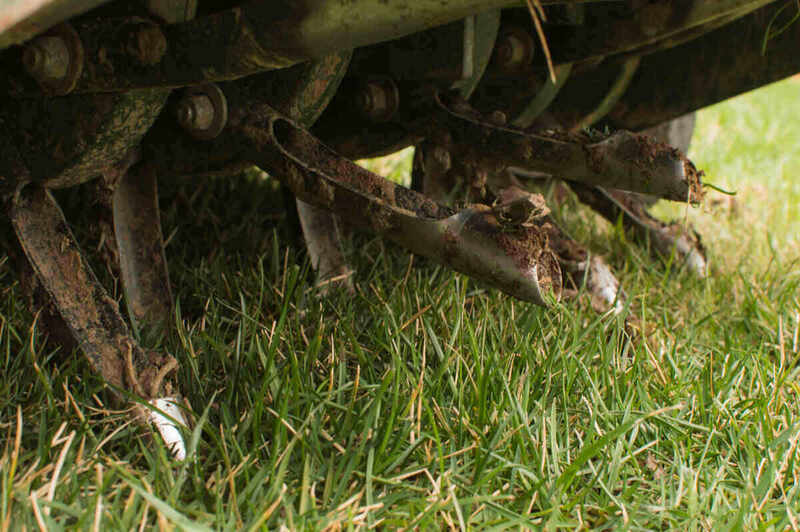
Yes. Core aeration is endorsed by lawn care professionals, Extension programs, and turf management experts nationwide. Physically removing soil plugs unquestionably increases air, water, and nutrient availability in the soil.
When performed correctly, core aeration transforms struggling lawns by addressing the root cause of many grass problems: Compacted soil that suffocates roots and blocks essential resources.
See Related:
Liquid Aeration vs. Core Aeration: Key Differences
Liquid and core aeration both aim to improve soil health, but they deliver very different results. Schuster breaks down what homeowners should take into account:
“The first thing to consider: What is one applying to the turf/soil to get the end result? Are there side effects to applying these materials to the microbes in the soil? The second thought is, how are we getting to any depth in the soil? Yes, surfactants can be used, but do they really provide any long-term changes in the way that mechanical aeration will?”
Let’s explore the factors that might impact your decision below:
Treatment Method
Liquid aeration is a chemical approach. You spray a solution across your grass blades and soil surface, hoping microbial activity will gradually loosen compacted soil over time.
Core aeration is mechanical. An aerator physically removes soil, creating immediate openings for air, water, and nutrients. It requires more physical effort but delivers predictable results.
Time to See Results
Liquid aeration: 2 to 4 weeks (if it works at all). The chemical reaction needs time to stimulate soil microbes, and visible improvements may never materialize.
Core aeration: Immediate. Your lawn benefits the moment plugs are removed. You’ll notice improved drainage during the next rainfall, and grass typically responds with new growth within 1 to 2 weeks.
Application Time Required
Liquid aeration wins here: Spraying a chemical solution takes 15 to 30 minutes for most residential lawns. No heavy equipment to maneuver, and no physical strain.
Core aeration typically takes 1 to 2 hours for an average-sized lawn, including setup and breakdown. The aerator is also heavy and requires more physical effort to operate, though professional-grade machines make the job much easier.
Best Lawn Size
Liquid aeration: Small to medium lawns (under 5,000 square feet) with minor compaction. The products are marketed for convenience on smaller properties where mechanical aeration seems like overkill.
Core aeration: Any lawn size, but especially large properties (5,000-plus square feet) with moderate to severe compaction. The upfront time investment pays off with reliable results across any acreage.
Visual Impact and Lawn Stress
Liquid aeration causes zero visible change. Your lawn looks exactly the same after application because you’re just spraying the surface. No stress to the turf.
Core aeration leaves soil plugs scattered across your lawn for 1 to 2 weeks. While the plugs look messy initially, they break down naturally and return nutrients to the soil. You can speed breakdown by mowing over plugs or breaking them up with the back of a rake, but it’s not necessary.
The holes created by aeration may also make your lawn look temporarily spotty, but this is a sign that the treatment is working. It is also a great way to prepare your lawn for overseeding by improving seed-to-soil contact.
Cost Comparison
Liquid aeration products: $30 to $40 per bottle, covering 3,000 to 10,000 square feet depending on the brand. Lower upfront cost but uncertain value.
Core aeration equipment rental: $100 per day for DIY projects. Professional core aeration costs $107 to $202, depending on lawn size.
Hiring an aeration pro is often the better value when you factor in guaranteed results and no physical labor.
The Expert Verdict
Core aeration is the preferred method among industry professionals because it’s backed by decades of research and real-world success.
“Liquid aeration does not have the ‘ugly’ period, for sure. Yes, it is easier, but in comparison with deep tine aeration, the results are not as good,” Schuster says.
Liquid aeration products simply haven’t earned the same trust because they lack scientific validation. When your lawn’s health is at stake, professionals choose the method with a proven track record.
Core Aeration Alternatives: What About Spike Aeration?
Spike aeration uses solid tines to poke holes in your lawn without removing soil plugs. While it’s lighter and easier to use than a heavy core aeration machine, spike aeration can actually worsen soil compaction by pushing soil particles together around each hole.
Learn the key differences in our guide: Core Aeration vs. Spike Aeration: What’s the Difference?
FAQs
Fertilize after core aeration, not before. Aerating first opens pathways so fertilizer reaches the root zone more effectively instead of sitting on compacted soil. For the best nutrient absorption, apply fertilizer within 24 to 48 hours after aeration while the holes are still open and the soil is ready to take it in.
Aerate during your grass’s peak growing season so it can recover quickly. For cool-season grasses, early fall is ideal. For warm-season grasses, late spring through early summer works best. Aerating during active growth lets the lawn fill in the holes and take full advantage of the improved air, water, and nutrient flow.
You can, but core aeration is the better partner for overseeding. New seed germinates best with direct seed-to-soil contact, and core aeration creates open holes that hold seed and moisture. Liquid aeration leaves no openings, so seed mostly stays on the surface where germination is less reliable.
Yes. Most lawns only need annual aeration, with heavily compacted lawns benefiting from twice-yearly treatments in spring and fall. Over-aerating stresses turf and disrupts root systems unnecessarily.
See Related: Best Time to Aerate and Overseed Your Lawn
Hire an Aeration Lawn Care Pro
Liquid aeration might seem appealing for its convenience and lower upfront cost, but the lack of scientific validation makes it a risky gamble. Core aeration is the clear winner for homeowners seeking proven results.
Ready to transform your lawn with professional core aeration? Connect with LawnStarter’s local aeration experts who deliver guaranteed results. Get free quotes from top-rated pros in minutes and schedule service at your convenience.
Read Next: Dethatching vs. Aeration: What’s the Difference?
Main Image: Side-by-side liquid aeration product choice and holes after core aeration.
Image Credits: BearFotos / Shutterstock; Oldboys / Shutterstock, created using Canva Pro
Related Posts: