| Key Takeaways |
|---|
| • Electric mowers cost more up front but save money on fuel and maintenance over time. • Gas mowers are better for large lawns (1/2+ acre), hilly terrain, and thick, overgrown grass. • With gas now at $4+/gallon nationally, the long-term cost gap in favor of electric is widening. |
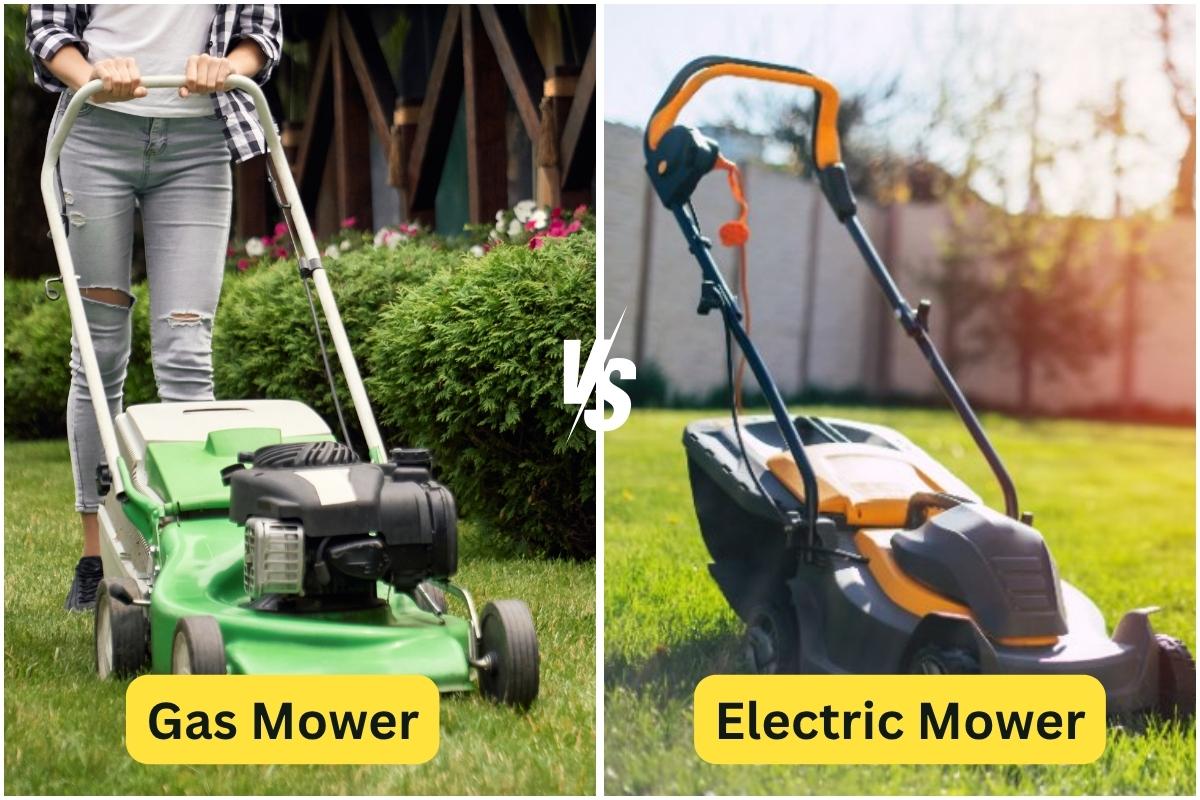
With national gas prices over $4 a gallon — up nearly 30% from a year ago — the lawn mower in your garage is now more expensive to run.
Meanwhile, electric mowers have caught up. Most can now handle a typical American yard on a single charge, making the case for switching harder to ignore.
Still, electric isn’t right for everyone. If you have a large, hilly, or overgrown lawn, a gas mower may still be your best tool. The right choice comes down to your yard size, terrain, budget, and how much maintenance headache you’re willing to accept.
Here’s a practical breakdown of how gas and electric mowers compare, so you can pick the one that fits your lawn (and your wallet) in 2026.
Gas vs. Electric Lawn Mowers: Side-by-Side Comparison
| Feature | Gas | Battery-Electric |
| Best for | Large lawns, rough terrain | Small to medium lawns |
| Runtime | Hours (until tank is empty) | 30–80 min per charge |
| Up-front cost | $260–$6,700 | $370–$7,000 |
| Maintenance | High (oil, spark plugs, fuel) | Low (blade sharpening, changing battery) |
| Noise level | Up to 90–100 decibels | 75–88 decibels |
| Weight | 55–150 lbs | 35–90 lbs |
| Emissions | Yes (CO2, VOCs) | None during use |
| Start method | Pull cord (push button on premium models) | Push button |
Corded electric at a glance: Best for small, flat yards under 1/4 acre. They’re plugged in, so you have unlimited runtime. You get the lightest weight (30–60 lbs), quietest, and cheapest option, with models starting at $108. But the cord limits the range to about 100 feet from the outlet.
Rather skip the decision entirely? Hire a lawn care pro through LawnStarter and have someone else take care of the mowing and maintenance for you.
See Related: When is the Best Time to Buy a Lawn Mower?
Why Gas Prices Matter Right Now
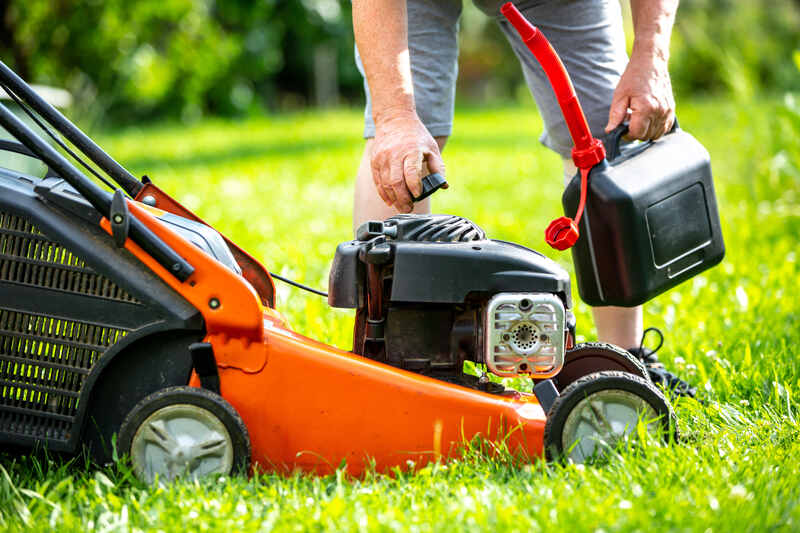
The national average for regular gasoline hit $4.09 per gallon as of April 6, 2026, a steep rise from $2.98 just 5 weeks earlier in late February.
Many states have already seen a 33% year-over-year increase in the cost of a gallon of regular gas, with California topping out at $5.92 per gallon. Unlike electricity rates, gas prices move with oil markets, geopolitical disruptions, and refinery capacity, factors entirely outside a homeowner’s control.
Lawn care pros are feeling it more directly than most. “I went from $30 to $40 a tank to $65 right now for my truck,” says Carlos Garza, owner of NC Dip and Clip in San Antonio.
Justin Stultz, owner of Wildflower Lawn Care in Hutto, Texas, worries it may get worse. “It’s going to be rough if this gets out of hand. I’ve been hearing talk of $200 a barrel on the news. I think that comes out to over $7 a gallon. Definitely getting battery equipment then.”
Homeowners are affected too. A typical 21-inch gas push mower burns roughly 1 gallon per acre. Run 30 mowing sessions from April through October on a ½-acre lot, and you’re burning 15 gallons, spending $60 at $4 a gallon before a single oil change, spark plug, or air filter.
Electric mowers cost just a few cents per charge to run, and it doesn’t spike when a pipeline goes offline.
See Related:
— Rising Gas Prices Have Lawn Care Pros Scrambling
— Signs It’s Time to Replace Your Lawn Mower
Gas Lawn Mowers: Pros and Cons
Gas mowers aren’t going anywhere, except, as of January 1, 2024, from California retail shelves. The state banned the sale of new gas-powered lawn mowers in retail stores, the first such restriction in the country.
Outside California, gas mowers remain the tool of choice for large, sloped, or rough terrain. Their power and runtime advantages are real, but so is the cost of ownership, which looks different at $4+ per gallon than it did 2 years ago.
| Pros and Cons of Gas Lawn Mowers | |
| ✓ Superior cutting power. More torque powers through thick, tall, or wet grass. | ✗ High maintenance: annual oil changes, spark plugs, air filter, winter fuel drain. |
| ✓ Long runtime. Mow for hours until the tank runs dry (holds 0.25–5 gal.). | ✗ Loud: Riding mowers can reach 90-100 decibels (hearing protection is recommended above 85 dB). |
| ✓ Wide cutting paths: Up to 60+ inches for zero-turn. Fewer passes on big lawns. | ✗ Ongoing fuel costs: At $4+/gallon nationally, costs add up fast. |
| ✓ Built for rough terrain. More horsepower handles slopes and uneven ground. | ✗ Emissions: Produces CO and VOCs, contributing to air pollution and respiratory issues. |
| ✓ Long lifespan: Up to 10 years with proper care. | ✗ New gas mowers have been banned from sale in California since January 2024. |
See Related: Best Gas Lawn Mowers [Reviews]
Electric Lawn Mowers: Pros and Cons
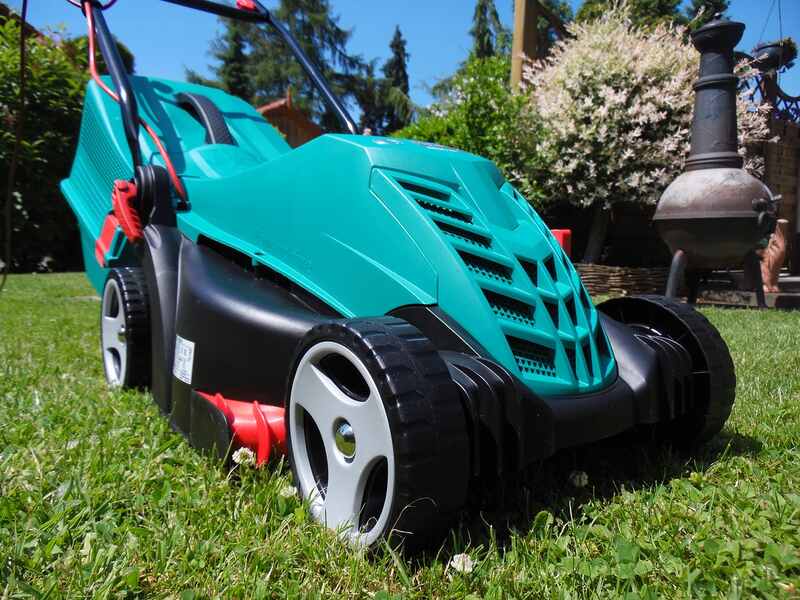
For years, the knock on electrical mowers was simple: not powerful enough, doesn’t last long enough. That argument is getting harder to sustain.
“I already use electric mowers, and that saves me a bunch in gas and maintenance, with the tradeoff being battery quantity/reliability,” Garza says.
The data back him up. Consumer Reports’ testing found that 2 in 3 battery walk-behind mowers can now handle 1/4 acre on a single charge.
| Pros and Cons of Electric Lawn Mowers | |
| ✓ Low maintenance: Blade sharpening and basic battery care. | ✗ Limited runtime: Expect 30-80 minutes per charge, depending on mower, battery size, and terrain. |
| ✓ Quiet: Up to 75–88 decibels. | ✗ Battery replacement: Lithium-ion batteries last 3–5 years and cost $100–$250+ to replace. |
| ✓ Easy to start: Push a button. No pull cord or priming required. | ✗ Less raw power for budget models: May struggle with thick, tall, or wet grass. |
| ✓ Lightweight and maneuverable: 35–90 lbs. for most models, lighter than comparable gas mowers. | ✗ Restricted range (corded): Most manufacturers recommend a maximum extension cord of 100 feet. |
| ✓ No emissions: Better for air quality and respiratory health. | ✗ Not ideal for rough terrain. Performs best on flat to gently sloped lawns. |
| ✓ Lower long-term cost: Especially as gas prices rise and battery tech improves. | — |
Battery-powered models run on rechargeable lithium-ion batteries and offer the most flexibility. Corded models plug into an outlet and work best for very small, simply shaped yards.
See Related:
— Best Electric Lawn Mowers [Reviews]
— How to Charge and Maintain Lawn Mower Batteries
How to Choose: Gas or Electric?
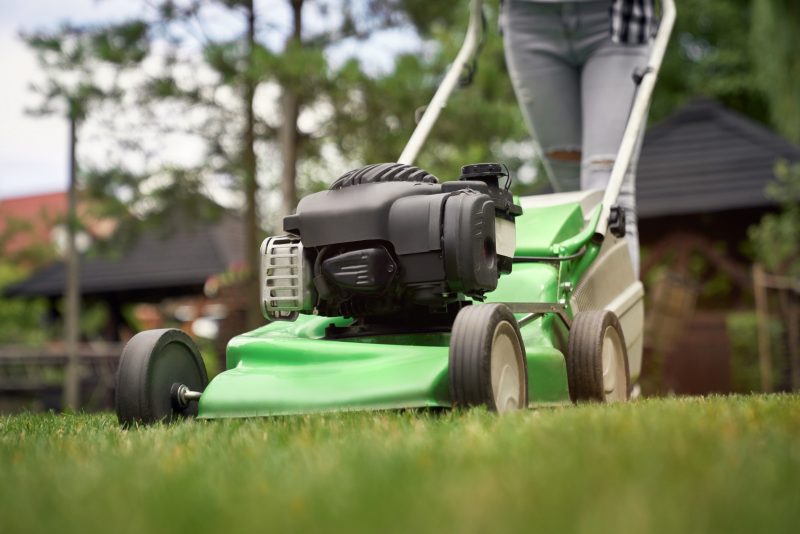
Yard size and terrain settle it for most people, but grass type, noise concerns, budget, and whether you’re already in the battery tool ecosystem all matter too. Here’s how to match your situation to the right mower.
Choose a gas mower if:
- Your lawn is larger than 1/2 acre
- You have steep slopes or uneven terrain
- You regularly mow thick, overgrown, or wet grass
- You want the longest possible runtime without stopping
Choose a battery-electric mower if:
- Your lawn is 1/4 acre or less
- You want to cut your fuel and maintenance costs
- Noise is a concern — for you, your neighbors, or local ordinances
- You’re in California or another region phasing out gas-powered outdoor equipment
- You’re already in a battery tool ecosystem (many mower batteries are interchangeable with other outdoor tools)
Choose a corded electric mower if:
- Your yard is very small (under 1/4 acre) and simply shaped
- Budget is your top priority — corded models start as low as $108
- You don’t want to deal with batteries at all
Cost Breakdown
| Mower Type | Push/Walk | Self-Propelled | Riding |
| Gas | $190-$430 | $260-$2,070 | $2,200 – $6,700 |
| Battery-electric | $110-$840 | $370-$1,700 | $3,500 – $7,000 |
Gas mowers typically cost less up front, though the gap is getting smaller. Factor in fuel, oil changes, spark plugs, and air filter replacements annually, and the electric advantage becomes clear over time, especially in today’s price environment.
See Related: How Much Does a Lawn Mower Cost?
Not Sure Which to Choose? Let a Pro Handle It
If you’re still on the fence, or just don’t want to deal with any of it, LawnStarter can connect you with our local lawn care professionals who bring the right equipment for your yard. Get a free quote for mowing services near you.
Read More:
— DIY Lawn Mower Maintenance Guide
— Hidden Costs of DIY Lawn Care vs. Hiring LawnStarter
FAQs
Modern battery mowers handle normal grass growth well. Where they fall short is overgrown, very thick, or wet grass, where gas engines’ higher torque gives a real advantage. If your grass regularly gets tall between mowings, a gas mower is safer. For regular maintenance of average-density grass, a quality battery mower will do the job.
They can, but with limitations. Corded models are more restricted by the cord on slopes. Battery mowers handle mild inclines reasonably well, but gas mowers are better suited for steep or uneven terrain because of their higher horsepower and heavier build.
Gas mowers cost about $60 in gas alone for 30 mows on 1/2 acre, not including costs for oil, air filter replacement, spark plugs, and a tune-up. An electric mower costs just a few cents per full charge in electricity. Over a 30-session mowing season, you could easily save $60–$120 per year in operating costs by going electric — a gap that grows wider as gas prices rise.
Main Image: Gas mower versus electric mower comparison image. Image Credits:
Gas Mower: serhiibobyk / Adobe Stock
Electric Mower: My Ocean studio / Adobe Stock, created using Canva Pro