| Key Takeaways |
|---|
| • Dethatch when thatch exceeds 1/2-inch thick • Dethatch in late spring/early summer (warm-season grass) or late summer/early fall (cool-season grass) • $25-$200 for tools or $65-$90/day to rent equipment; $65-$165 to hire a professional |
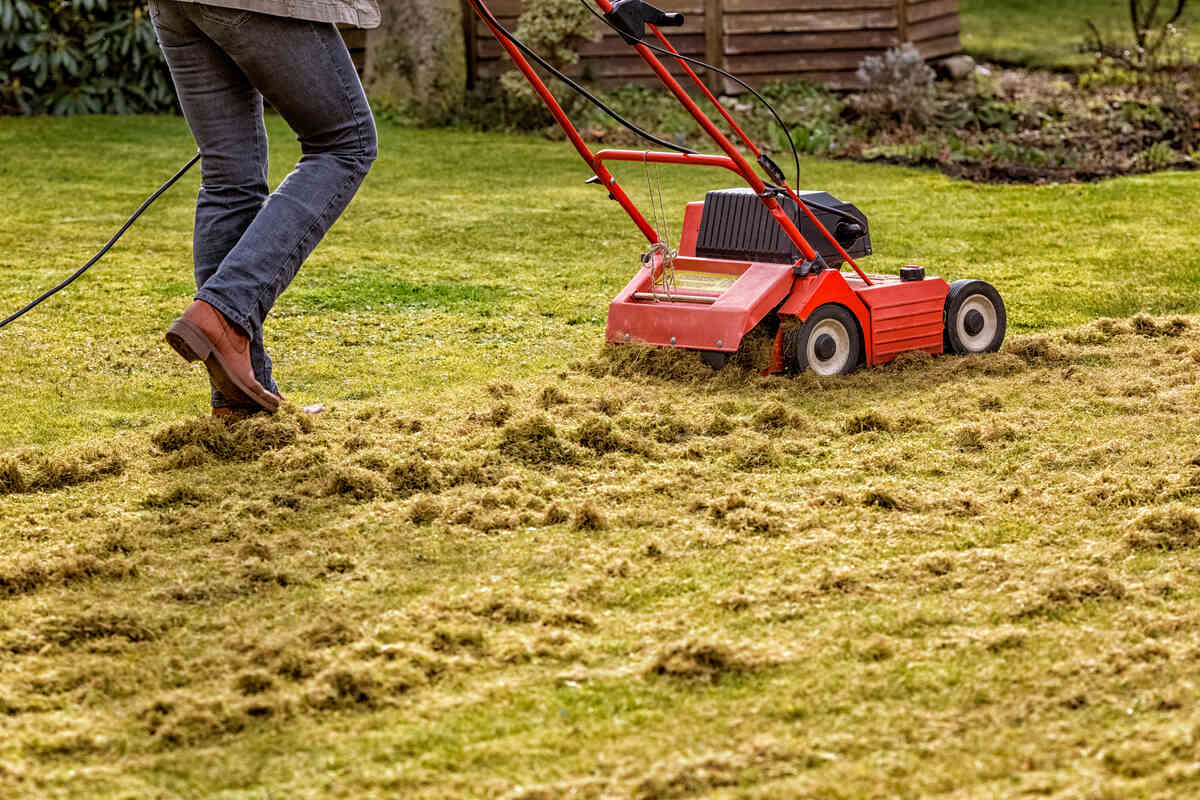
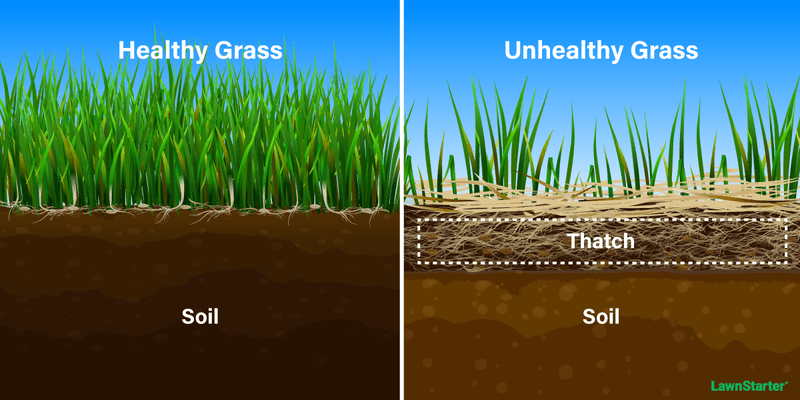
Dethatching removes the layer of dead grass, roots, and debris that builds up between your soil and healthy grass. When this thatch layer exceeds 1/2 inch, it blocks water, air, and nutrients from reaching grass roots, leaving your lawn thin and struggling.
Dethatch when your grass is actively growing (late spring for warm-season grasses; late summer to early fall for cool-season grasses). The process is straightforward: Mow your lawn shorter than usual, then use a dethatching rake, powered dethatcher, or verticutter to break up and remove the thatch layer.
It can take under 30 minutes to a full day, depending on the method and lawn size.
| Need professional help? LawnStarter connects you with experienced lawn care pros who can dethatch your yard and restore its health. Get a free quote in seconds. |
- When to Dethatch Your Lawn
- Dethatching Methods Comparison
- Prep Steps for Dethatching
- Manual Dethatching: Best for Small Areas
- Powered Dethatching: Best for Most Lawns
- Verticutting: Best for Thick Layers of Thatch
- Liquid Dethatching: Best for Thin Layers of Thatch
- Help Your Lawn Recover After Dethatching
- DIY vs. Hiring a Professional
- Common Dethatching Mistakes
- FAQs About Dethatching
When to Dethatch Your Lawn
The best time to dethatch depends on your grass type:
- Warm-season grasses (Bermuda, Zoysia, St. Augustine): Late spring to early summer
- Cool-season grasses (fescue, bluegrass, ryegrass): Late summer to early fall
Dethatching during active growth allows the turfgrass to recover quickly and fill in bare spots left by the process.
For detailed timing by region and seasonal considerations, see our complete guide on When to Dethatch Your Lawn.
Not sure if you need to dethatch? 5 Signs Your Lawn Has Too Much Thatch
Dethatching Methods Comparison
Choose your dethatching method based on lawn size, thatch thickness, and cost.
| Method | Best For | Cost |
| Manual rake | Areas under 500 sq. ft. | $25-$40 |
| Power rake | Most residential lawns | $65 rental; $120-$200 buy |
| Verticutter | Thick thatch (1″+ layer); dense grasses | $90 rental; $120-$160 buy |
| Liquid | Thin thatch, supplement to other methods | $30-$45 |
| Professional | Any size | $65-$165 |
For most homeowners: Power rakes offer the best balance of effectiveness and effort for residential lawns under 1/2 acre.
For small problem areas: Manual raking works well and costs less than $40.
For thick thatch (1-inch+ layer): Verticutting is the most aggressive option and works best on dense grasses like Bermuda during peak growing season.
Prep Steps for Dethatching
Proper preparation prevents equipment damage and protects your grass:
- Clear sticks, rocks, toys, and pet waste.
- Flag sprinkler heads, irrigation lines, and shallow utilities.
- Cut grass to about half its recommended mowing height, but not below the minimum.
- Bag the clippings instead of mulching.
- If your soil is very dry, or you’re verticutting, give your lawn 1/2 inch of water 2 days before. The soil should be slightly moist but not soggy.
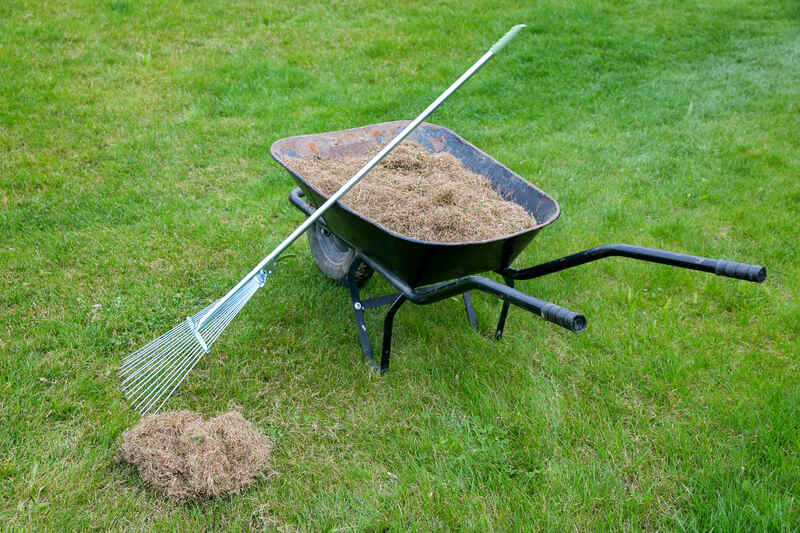
Manual Dethatching: Best for Small Areas
| Project Difficulty: Moderate to hard Estimated Time to Complete: 1 hour per 250 square feet Cost: $25-$40 |
This method works well for lawns under 500 square feet or isolated problem areas.
What you need:
- Dethatching rake (or heavy-duty garden rake)
- Work gloves and safety goggles
- Lawn waste bags
How to do it:
- Divide large areas into 10×10-foot sections.
- Use a push-pull raking motion — pull to lift thatch, push to clear the tines.
- Pile debris at section edges.
- Rake in one direction, then switch to a perpendicular direction.
- Use a bagging mower or manually bag all debris.
Important: If you’re pulling up soil or grass roots, you’re raking too deeply. You should primarily see brown, dead material.
Powered Dethatching: Best for Most Lawns
| Project Difficulty: Moderate Estimated Time to Complete: 40-45 minutes per 2,000 square feet Cost: $120-$200 (buy) or $65 (4-hour rental) |
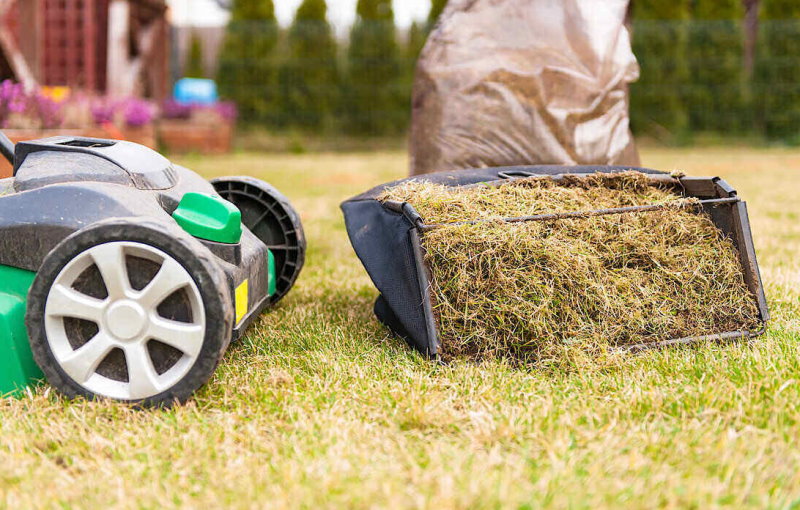
This method works well for most residential lawns up to 1/2 acre. Power rakes use rotating tines or springs to lift thatch efficiently — faster than manual raking and gentle enough for most grass types.
What you need:
- Electric or gas-powered dethatcher (power rake)
- Garden rake for cleanup
- Safety goggles and ear protection
How to do it:
- Adjust blade depth to penetrate no more than 1/2 inch into soil.
- Make straight passes across the lawn, similar to mowing.
- Overlap passes 2-3 inches for complete coverage.
- Make a second pass perpendicular to the first.
- Rake debris into piles and bag or haul away.
Important: Don’t set tines too deep to avoid damaging roots and creating bare spots. Test on an inconspicuous area before you start.
My Experience: I bought a relatively inexpensive power rake a couple of years ago, and it is surprisingly easy to use. Be warned, though, it is a dirty, dusty project, and the cleanup takes as much time, if not more, than the power raking itself. I set my push mower at the highest height and used it to pick up and bag the debris.
Verticutting: Best for Thick Layers of Thatch
| Project Difficulty: Moderate to hard Estimated Time to Complete: 1-3 hours Cost: $120-$160 (combo unit) or $90/day rental |
This method works best for lawns with thatch over 1 inch thick and dense grasses like Bermudagrass. Verticutters use vertical blades to slice through thick thatch and cut into the soil surface — an aggressive approach that stimulates new shoot production.
What you need:
- Verticutter (or dethatcher with blade attachment)
- Garden rake
- Safety goggles and ear protection
How to do it:
- Set blade spacing:
- Fine fescues/sensitive grasses: 3 inches apart
- Bermudagrass/vigorous grasses: 1-2 inches apart
- Test on a small section first to confirm depth.
- Make passes one direction (north-south), then perpendicular (east-west).
- Rake and remove all debris immediately.
Important: Only verticut during peak growing season. This method is stressful. Your grass needs warm temperatures and active growth to recover quickly.
Liquid Dethatching: Best for Thin Layers of Thatch
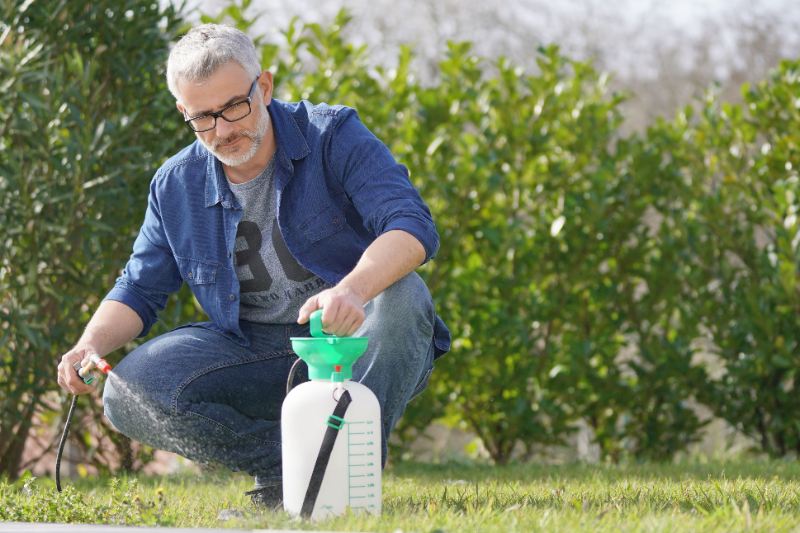
| Project Difficulty: Easy Estimated Time to Complete: 15-30 minutes Cost: $30-$45 per treatment |
This method works well for thin thatch layers (under 1/2 inch) and preventive maintenance. Liquid dethatchers contain enzymes and microorganisms that accelerate thatch decomposition.
What you need:
- Liquid dethatcher product
- Hose-end, backpack, or pump sprayer
- Safety goggles and face mask
How to do it:
- Mix product with water per label directions.
- Apply evenly across the lawn.
- Water immediately with 1/2 inch of water.
- Repeat every 2-4 weeks as directed.
Important: This method is convenient but takes several weeks to work. Consider it a supplement to mechanical dethatching for heavily thatched lawns, not a replacement.
Help Your Lawn Recover After Dethatching
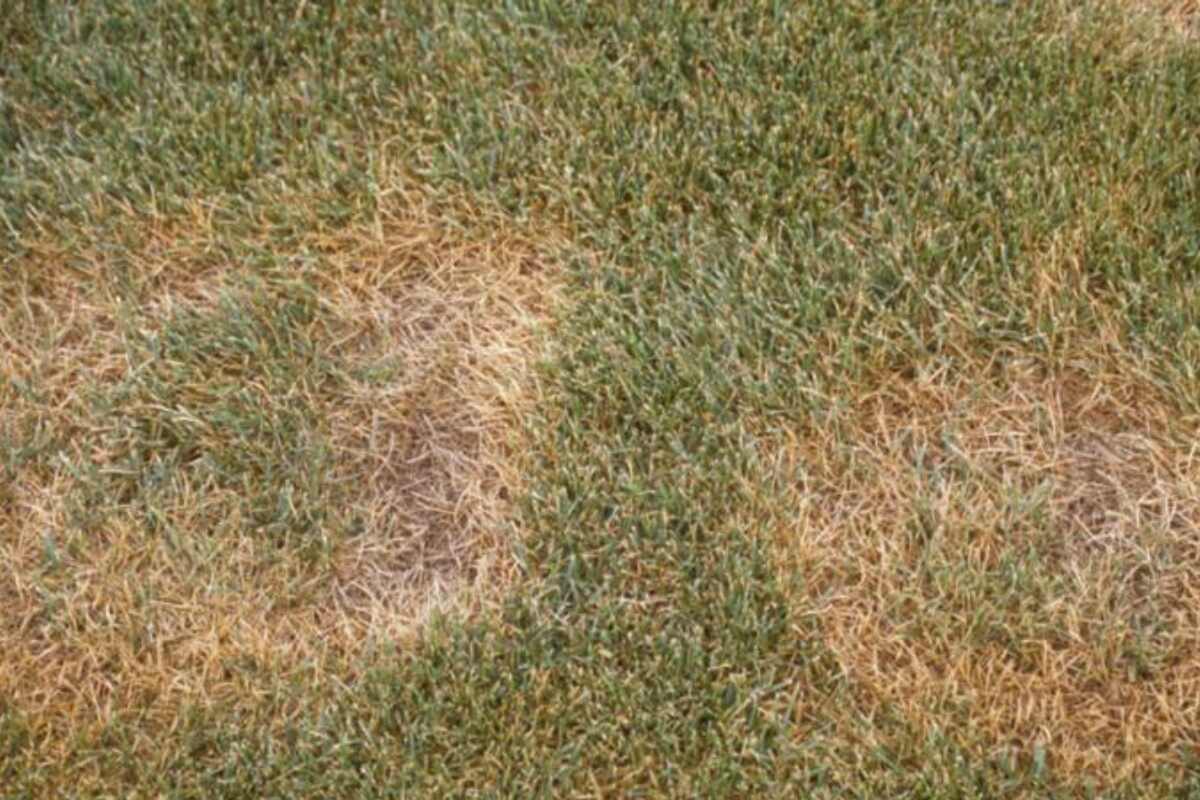
Your lawn will look rough immediately after — brown patches and thin spots are typical signs that you successfully removed thatch.
Most lawns show visible recovery within 2-3 weeks. Full recovery typically takes 4-6 weeks, depending on grass type and growing conditions.
Recovery Timeline:
- Week 1: Water lightly (1/4 inch) every other day.
- After 1-2 weeks: Fertilize with balanced fertilizer and overseed bare spots if needed.
- Weeks 2-4: Resume regular watering schedule (1-1.5 inches per week). Avoid heavy foot traffic until the grass reaches 3 inches tall. Spot-treat weeds with a post-emergent herbicide.
- Mowing: Wait until the grass reaches 3+ inches before mowing.
See Related:
DIY vs. Hiring a Professional
Most homeowners with small to medium lawns can successfully dethatch themselves, but professional help makes sense for larger properties or thick thatch buildup.
Choose DIY If: | Hire a Pro If: |
• Lawn under 5,000 square feet • Thatch layer under 1 inch • You have time and physical ability • You want to save $100-$300 | • Lawn over 5,000 square feet • Thatch over 1 inch (needs verticutting) • You lack equipment or storage space • You want bundled services (aeration, overseeding, fertilization) |
What it costs: Professional dethatching costs $65-$165 for most lawns, or $50-$85/hour.
What pros offer that DIY doesn’t:
- Commercial-grade equipment
- Experience adjusting technique for different grass types
- Bundled services completed in one visit
- Liability insurance for equipment damage
- Debris removal included
| Find professional lawn dethatching services near you with LawnStarter. Compare quotes from top-rated pros in minutes. |
Common Dethatching Mistakes
1. Wrong timing: Dethatching when grass is dormant or stressed delays recovery for months. Always dethatch during peak growing season.
2. Equipment set too deep: Dethatchers should only penetrate 1/2 inch. Deeper settings damage roots and create bare spots.
3. Skipping obstacle marking: Hitting sprinkler heads with a verticutter causes expensive damage. Always mark and flag obstacles.
4. No follow-up care: Dethatching stresses the grass. Without proper watering and fertilization afterward, lawns thin out instead of thickening.
5. Dethatching too often: Most lawns only need dethatching every 1-3 years. Over-dethatching damages grass crowns.
See Related:
FAQs About Dethatching
Check for excessive thatch at least once a year and dethatch whenever the thatch layer is over 1/2 inch. Grasses that spread horizontally through rhizomes or stolons (Bermudagrass, Zoysia, St. Augustine, Kentucky bluegrass) are more prone to thatch and might need to be dethatched more often.
Yes, and many pros recommend it. Dethatch first to remove surface debris, then aerate to address deeper soil compaction. The ideal sequence is: dethatch → remove debris → aerate → fertilize → overseed (if needed).
See Related:
• Can You Dethatch and Aerate at the Same Time?
• How to Aerate Your Lawn
• How to Overseed a Lawn in 8 Simple Steps
Dethatching removes some shallow-rooted annual weeds caught in the thatch layer, but it’s not an effective weed control method. Established perennial weeds with deep roots will remain. You can spot-treat with a post-emergent herbicide or remove by hand. Wait 6-8 weeks after overseeding to apply a pre-emergent.
Get Your Lawn Breathing Again
When thatch gets too thick, no amount of watering or fertilizing reaches your grass roots effectively. Dethatching breaks that barrier and gives your lawn access to the air, water, and nutrients it needs to thrive.
Whether you rent equipment for a weekend DIY project or hire a professional with commercial gear, the results are worth it — thicker, healthier grass that grows strong all season.
Ready to transform your lawn? LawnStarter connects you with local lawn care pros who can dethatch, aerate, fertilize, and restore your grass. Get a free quote in 60 seconds.
Read Next:
Main Image: Dethatching lawn using a dethatcher. Image Credit: Ingo Bartussek / Adobe Stock
Related Posts: