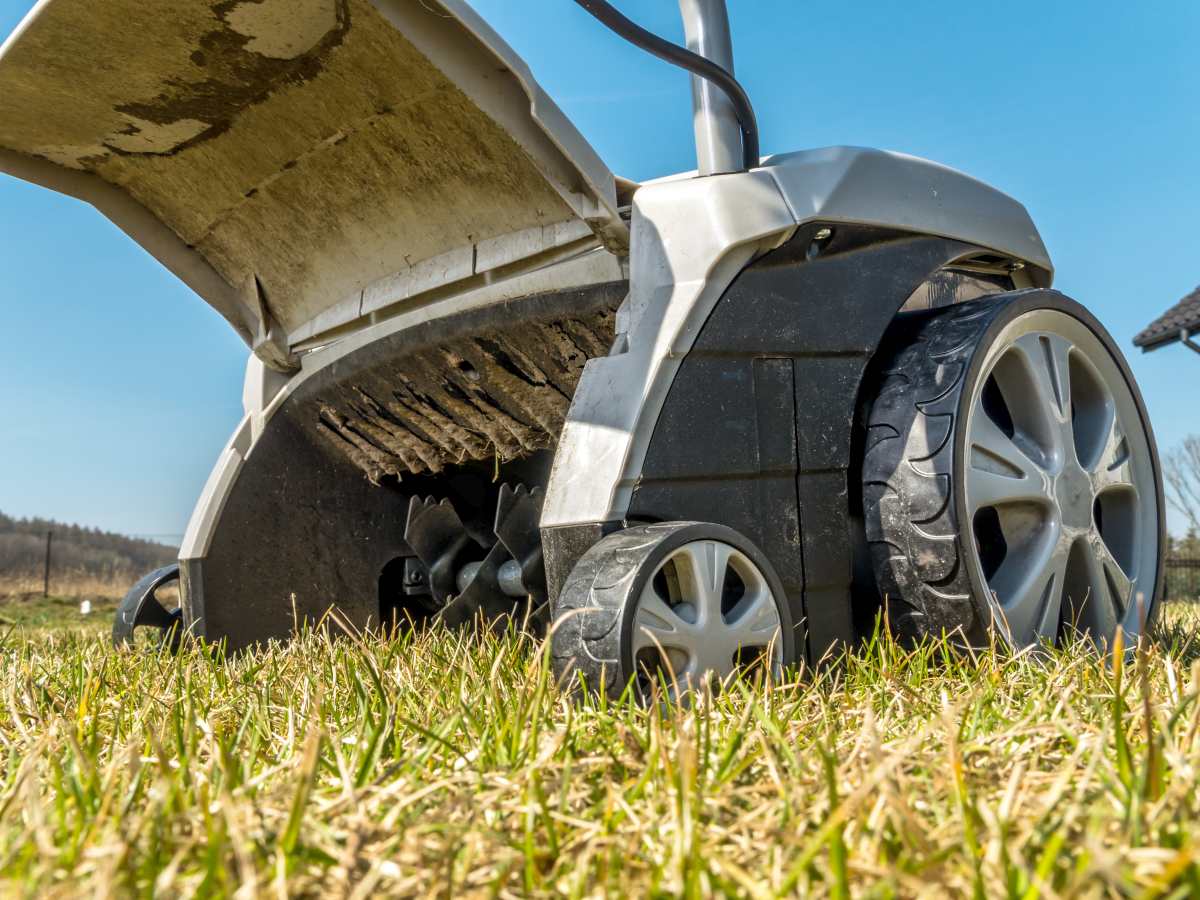
Your lawn looks tired, the soil feels hard, and thatch is piling up. So can you dethatch and aerate at the same time? Yes, and doing both together gives your grass a real reset.
Timing and order matter, though. Do these tasks in the wrong season or the wrong sequence, and you can stress your grass instead of helping it. Below, we cover which task comes first, when to do both, and how to pull it off.
Prefer to skip the heavy lifting? LawnStarter’s aeration pros can handle it for you.
| Key Takeaways |
|---|
| • Yes, you can dethatch and aerate at the same time, but always dethatch first so the aerator can reach the soil. • Do both during your grass’s active growing season: fall for cool-season grasses, late spring to early summer for warm-season grasses. • You can aerate the same day after raking up the thatch, or wait a few days for the grass to recover. |
Understanding Dethatching and Aeration
Dethatching clears away the layer of thatch. So what is thatch? Thatch is a mix of dead grass, leaves, roots, and debris that accumulates just above the soil.
A thin amount of thatch is healthy and normal, but a thatch layer more than 1/2 to 3/4 inch thick can prevent water, air, and nutrients from reaching the soil, hindering your lawn’s growth and health.
Meanwhile, aeration relieves soil compaction. Compacted soil limits nutrient absorption. Aerating creates small holes in the soil that let the roots breathe and grow deeper, improving the overall health of your lawn.
| Treatment | What it fixes | Common tool |
| Dethatching | Removes the thatch layer blocking water, air, and nutrients | Dethatching rake or power dethatcher |
| Aeration | Relieves compacted soil so roots can breathe and grow deeper | Spike aerator or core aerator |
See Related:
Why Dethatch and Aerate at the Same Time?
When you dethatch and aerate at the same time, you remove barriers to growth (thatch) while improving the soil’s condition (through aeration). This dual action gives your lawn the best possible environment to thrive, making it greener and stronger.
It’s crucial to dethatch first before aerating. Here’s why this powerful combo works:
Cleared pathways: Dethatching first removes the layer of thatch that blocks water, nutrients, and air, so these essentials can penetrate deeply after aeration.
Enhanced efficiency: With the thatch layer removed, the aerator reaches the soil more easily, creating better air pockets and improving soil structure.
Damage prevention: Dethatching first minimizes the risk of pulling up healthy grass, as the aerator is less likely to snag and tear the turf.
Boosted recovery: By clearing thatch before aerating, the lawn is better prepared to heal and fill in open spaces, leading to thicker, stronger growth.
Which Comes First: Dethatching or Aerating?
Always dethatch first, then aerate. Removing the thatch layer clears the way so the aerator reaches bare soil instead of dragging dead grass into the fresh holes and clogging them.
You can do both on the same day as long as you rake up the loosened thatch before aerating. If your lawn needs a breather, dethatch first and aerate a few days later once the grass starts to recover.
Best Time to Dethatch and Aerate Your Lawn
Timing is everything when it comes to lawn maintenance. Here’s when to plan your dethatching and aeration:
The best time to dethatch and aerate cool-season grass is fall. The second-best time is early spring.
Dethatch and aerate warm-season grass between late spring and early summer, when it’s actively growing and can recover quickly.
See Related:
How to Dethatch Your Lawn
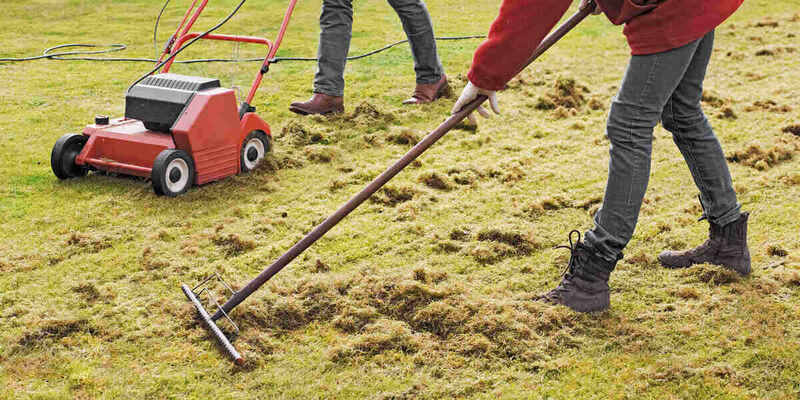
Dethatching your lawn is a straightforward process, but it requires the right tools and techniques. Here’s a quick overview:
Choose the right tool: Use a dethatching rake for small areas or a power dethatcher for larger lawns.
Do not dethatch when the soil is bone dry: It should be moist, but not sopping wet, to avoid turf damage.
Rake or operate the dethatcher across your lawn in overlapping patterns to ensure thorough coverage.
Dethatch only as needed rather than on a regular schedule to prevent stress on the grass.
For comprehensive instructions, visit our guide When and How to Dethatch Your Lawn.
How to Aerate Your Lawn
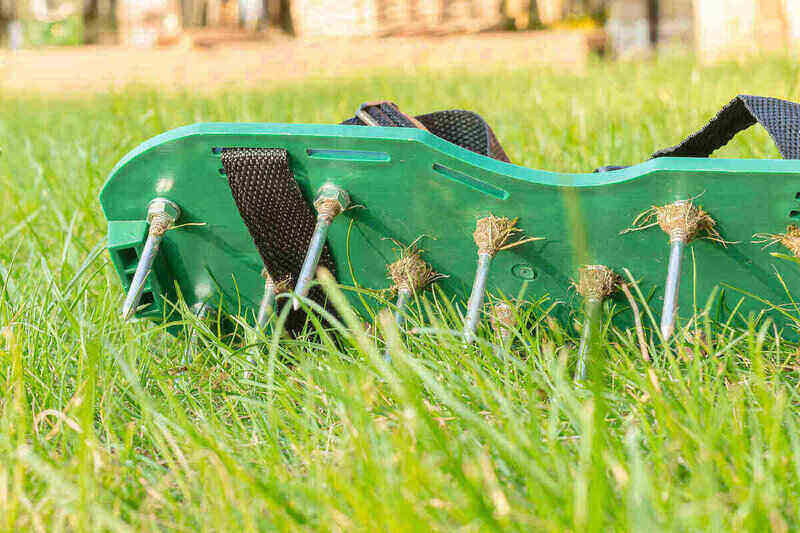
Aerating your lawn helps air, water, and nutrients penetrate the soil effectively, promoting healthier, stronger turf. Chelsea Morris of High-Class Grass, in Virginia Beach, Virginia, sees it often: “A lot of properties have compacted soil, so I recommend aerating.” Here’s how to do it:
Choose the right aerator: Choose between a spike aerator that punches holes into the ground or a core aerator that removes small plugs of soil. Learn more in our article Core Aeration vs. Spike Aeration: What’s the Difference?
Aerate at the right time: Aim for a period during your lawn’s growing season when the soil is moist but not saturated.
Cover all areas: Move systematically across your lawn to ensure even coverage, overlapping as needed to avoid missed spots.
For an in-depth look at the tools, techniques, and timing for lawn aeration, check out our article How to Aerate a Lawn.
Should You Overseed After Dethatching and Aerating?
Overseeding right after dethatching and aerating is one of the best moves you can make. The fresh holes and cleared soil give new seed direct contact with the ground, which helps it sprout and root faster.
Spread seed across the whole lawn, keep the soil consistently moist, and hold off on mowing until the new grass is tall enough to cut. This trio of tasks fills in thin spots and thickens your turf for the next season.
LawnStarter’s aeration and overseeding service bundles both jobs if you would rather not rent the gear.
See Related: When to Mow After Overseeding Your Lawn
FAQs
Not all lawns need dethatching. It depends on the amount of thatch accumulation. Lawns with less than one-half inch of thatch generally do not require dethatching, and dethatching a thin layer can do more harm than good.
Aeration pulls small cores that contain some thatch, but it will not clear a thick thatch layer on its own. If your thatch is over one-half inch, dethatch first, then aerate for the best results.
It is best to wait until your lawn is well established before dethatching or aerating. For new lawns, this typically means waiting at least one full growing season so the roots can anchor.
Leave Lawn Care to the Experts
Dethatching and aerating are crucial steps that, done correctly, can dramatically improve your lawn’s health and appearance. Both take timing, the right tools, and a bit of muscle.
If you would rather hire out, LawnStarter pros can handle aeration and overseeding. They can also handle mowing, so your lawn stays healthy through the seasons.
Read More:
Main Image: Electric lawn dethatcher on grass. Photo Credit: Roman Milert / Adobe Stock Free / License
