Centipedegrass earns its “lazy man’s grass” reputation. This warm-season turfgrass thrives in acidic, low-fertility soils where Bermudagrass and Zoysiagrass struggle, and gets by on less mowing and fertilizer than most southern lawns.
But “low-maintenance” isn’t “no-maintenance.” The wrong fertilizer schedule, mowing height, or soil pH can quickly push your centipedegrass lawn into decline.
This centipedegrass maintenance guide covers mowing, watering, fertilization, and how to spot and prevent common problems.
| Key Takeaways |
|---|
| • Centipedegrass has strict sensitivities to nitrogen, phosphorus, and foot traffic that differ from most other grass types. • Mow centipedegrass to 1 to 2 inches and fertilize lightly. Over-fertilizing is one of the leading causes of centipedegrass decline. • Water centipedegrass about 1 inch per week during active growth, and scale back watering entirely once it goes dormant in winter. |
What Is Centipedegrass?
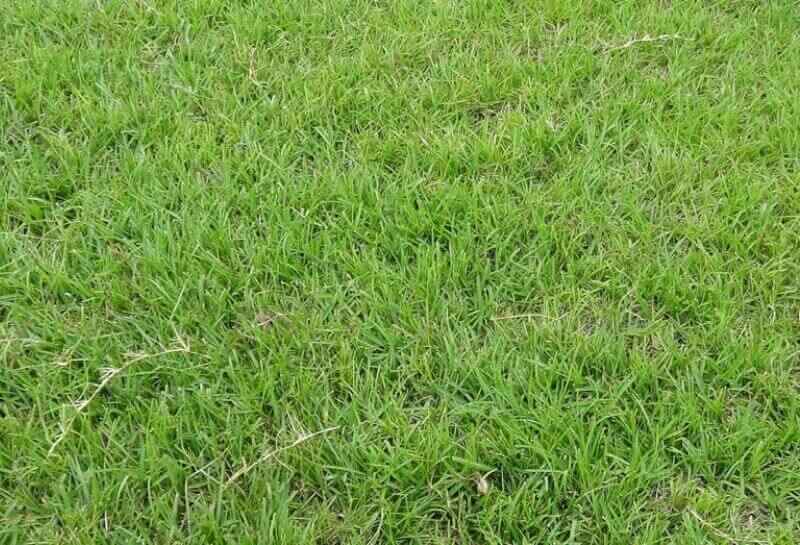
Centipedegrass is a low-maintenance, warm-season turfgrass with apple-green color and a coarse leaf texture. It’s one of the few turfgrasses that actively prefers poor, acidic soil (pH 5.0 to 6.0), which means it genuinely thrives where other grasses struggle.
Since it’s a warm-season grass, centipedegrass thrives in the southern half of the United States. It actively grows in summer and turns brown and dormant in winter.
Centipedegrass may also work as a transition zone grass, but it could suffer in harsh winters. The most cold-tolerant seeded variety is TifBlair.
Here’s a quick overview of centipedegrass characteristics:
| Characteristic | Details |
| Classification | Warm-season grass |
| Spreads by | Stems (stolons) |
| Shade tolerance | Moderate (needs at least 6 hours of full sun) |
| Drought tolerance | Low |
| Traffic tolerance | Low |
| Mowing height | 1 to 2 inches |
| Fertilizer needs | 1 to 2 lbs of nitrogen per 1,000 sq. ft. yearly |
See Related: Guide to Growing Warm-Season Grasses
Centipedegrass Monthly Maintenance Calendar
Centipedegrass care needs to happen at specific times throughout the year. Use this calendar to track when to perform each lawn chore.
The green check marks represent the best time to complete a task. The dashes represent a possible time to complete a task. This calendar is based on meteorological seasons, meaning each season begins on the first day of the month rather than on equinoxes and solstices.
| Treatment | Mar | Apr | May | Jun | Jul | Aug | Sep | Oct | Nov | Dec | Jan | Feb |
| Mow |  |  | | | | | | |||||
| Weekly watering | | | | | | | | |||||
| Fertilizing | | | | | ||||||||
| Soil amendments | | | | | | | | |||||
| Aerating | | | | | | |||||||
| Dethatching | | | | | | |||||||
| Seeding | | | | |||||||||
| Sod installation | | | | | | | | | | | | |
| Pre-emergent weed control | | | | | | |||||||
| Post-emergent weed control | | | | | | | | | | | | |
| Grub and pest control | | | | | | | | | | | | |
| Disease control | | | | | | | | | | | | |
How to Care for Centipedegrass
Centipedegrass has a few quirks that trip up even experienced lawn owners, especially around fertilization and mowing height. Here’s a quick-reference summary followed by step-by-step guidance for each task.
| Task | Frequency | Key Details |
| Mowing | 5 to 7 days during peak growth | Keep at 1 to 2 inches tall |
| Watering | Weekly during growth | 1 inch per week |
| Fertilizing | Once yearly | 1 to 2 lbs nitrogen per 1,000 sq. ft. |
| Aerating | Once yearly | Spring or summer when grass grows strong |
| Dethatching | As needed | When thatch layer exceeds 0.5 inch |
How to Mow Centipedegrass
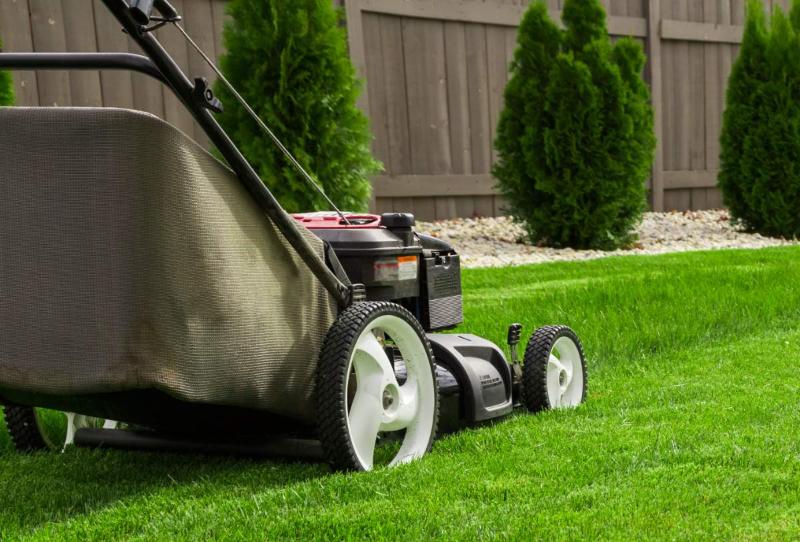
Mow centipedegrass every 5 to 7 days during peak growth, keeping it between 1 and 2 inches tall.
Start mowing after it greens up in spring. A common guideline is to wait until at least 50% of the lawn has greened up before beginning regular mowing. Cutting too early or too low is especially damaging to centipedegrass which spreads by aboveground stolons.
Start at 2 inches, then gradually lower until you reach your preferred height (never below 1 inch).
When drought-stressed, mow less often and raise the height by ½ to 1 inch temporarily, but never exceed 2½ inches.
Keep mowing at this preferred height up until fall.
When night temperatures drop below 70 degrees, raise the mowing height to 2 inches to help the grass adjust before the first frost.
You don’t need to mow during winter dormancy. If it stops growing and turns brown, you can put away the mower for the year.
You don’t need to remove grass clippings unless they’re clumping or diseased. A mulching lawn mower can turn them into natural fertilizer.
How to Water Centipedegrass
Actively growing centipedegrass requires about 1 inch of water a week, including rainfall. “In most of the Southeast, [summer] rainfall can meet 60%–80% of centipedegrass’s water demand over the course of a normal summer,” says Eric DeBoer, assistant professor of environmental and soil sciences at Louisiana State University in Baton Rouge.
Water when you see early signs of drought stress, DeBoer says, such as footprints lingering, dark bluish-gray color, or wilted, curled leaves.
Your soil type affects your watering schedule:
Sandy soils: Drain quickly; split watering into 2 sessions of ½-inch each
Clay soils: Absorb slowly; water until runoff, wait 30 minutes, then resume
Water in the early morning. Nighttime irrigation makes grass prone to disease, and daytime watering can evaporate before it’s absorbed.
Always keep newly sodded or seeded grass moist for germination and root formation.
Once your centipedegrass goes dormant in winter, water only enough to prevent the soil from becoming powder-dry. A good rule is to water if no rain falls within 3 to 4 weeks.
Pro Tip: Don’t water when air temperatures are below 40 degrees; otherwise, the grass may freeze.
See Related: How Much Water Does Centipedegrass Need?
How to Fertilize Centipedegrass
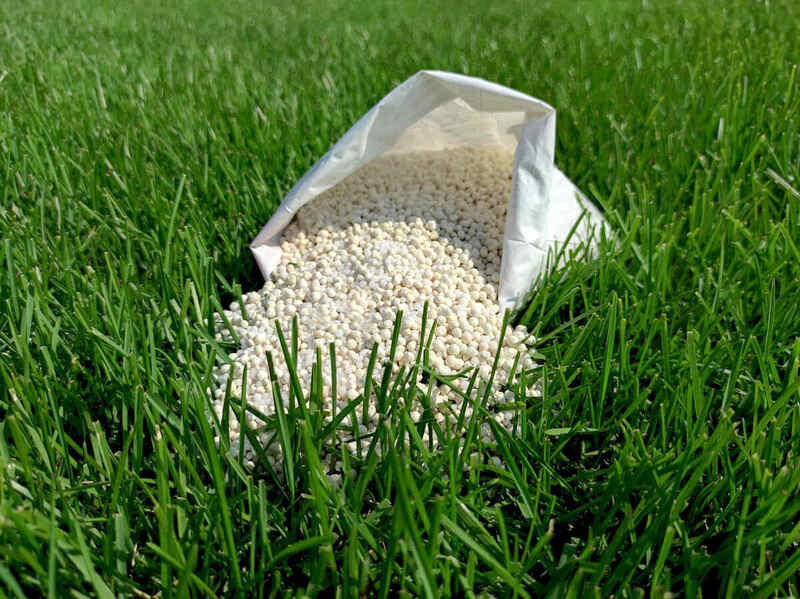
Centipedegrass requires about 1 to 2 pounds of nitrogen per 1,000 square feet yearly, depending on your soil type and climate. Sandy soils typically need more nitrogen than clay.
That’s significantly less than Bermudagrass, which typically requires 2 to 6 pounds of nitrogen per 1,000 square feet per year. It’s so easy to over-fertilize and trigger centipedegrass decline if you forget it needs less fertilizer than other warm-season grasses.
Fertilize with these timing guidelines:
Frequency: Fertilize 1 or 2 times per year, with 1/2 to 1 pound of nitrogen per application, but no more than 2 pounds of nitrogen per year.
Best timing: Late spring through summer, after the last frost and once grass has greened up.
Stress caution: Avoid fertilizing when your lawn shows signs of heat or drought stress. Wilted, curled, or bluish-gray blades mean the grass can’t absorb nutrients and fertilizer will do more harm than good.
Always get a soil test before choosing a fertilizer so you know which nutrients your soil needs.
Centipedegrass can’t tolerate high-phosphorus soils or low-potassium soils. Don’t apply phosphorus unless a soil test recommends it. High phosphorus levels block iron absorption, causing the lawn to yellow (iron chlorosis).
See Related: How and When to Fertilize Centipedegrass
Does Centipedegrass Need Lime or Sulfur?

For centipedegrass, soil amendment almost always means correcting pH. Most grasses prefer a pH of 6.0 to 7.0, but centipedegrass needs acidic conditions between 5.0 and 6.0. Outside that window, the grass can’t absorb nutrients effectively.
Use lime to raise low pH: Apply in summer or fall only if a soil test shows pH below 5.0, and follow the lab’s recommended amount carefully. Centipedegrass is sensitive to overliming — pushing pH above 6.5 causes iron chlorosis.
Use sulfur to lower high pH: Recommended when pH is over 6.5 as indicated by a soil test. Use the amount of sulfur indicated by the lab results. Apply when air temperatures are consistently below 75 degrees and water in immediately after.
Recheck soil pH 3 months after treatment. Retest every 2 to 3 years.
Pro Tip: Specify you grow centipede when sending soil for testing so they adjust recommendations for a desirable pH range of 5.0 to 6.0.
See Related:
How to Aerate Centipedegrass
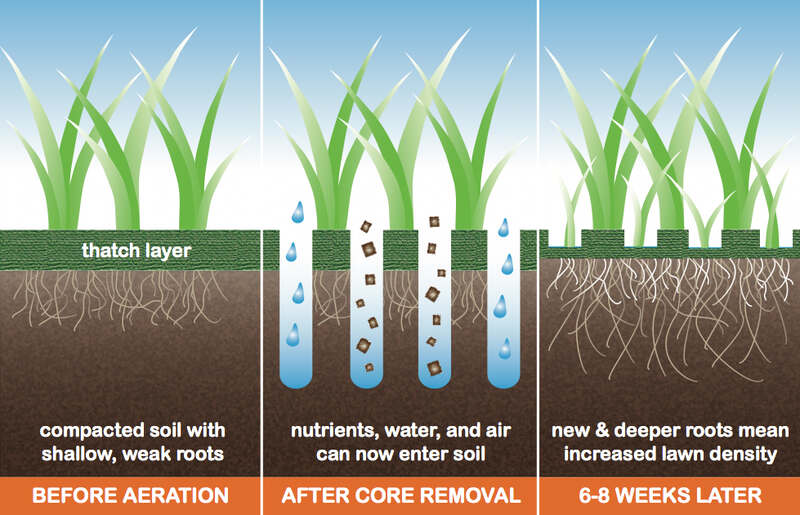
Centipedegrass doesn’t tolerate compacted soil or lots of foot traffic. Signs of soil compaction include:
Physical test: Difficult to insert a screwdriver into the soil
Drainage issues: Water runs off and forms puddles
Poor growth: Grass looks thin and yellow
Health problems: Frequent pest and disease issues
Core aerate your centipede lawn once a year. Wait until the last frost has passed and the turf has greened up. Ideally aerate in summer when the grass grows strongest, allowing it to bounce back quickly.
See Related: How to Aerate Your Lawn: A Complete Guide
How to Dethatch Centipedegrass
Centipede’s high-lignin stolons are slow to decompose, making it one of the most thatch-prone warm-season grasses. If the thatch (the layer of dead and living stems between your soil and grass blades) exceeds ½ inch, air, water, and nutrients can’t reach the roots.
Dethatching your lawn loosens the soil and clears the way. Use a dethatcher or power rake with 3-inch blade spacing set ¼ inch deep. Late spring or summer is the best time to dethatch a centipede lawn.
Pro Tip: If thatch constantly builds up, you’re likely over-fertilizing.
See Related: How to Dethatch Your Lawn (Plus When to Hire a Pro)
How to Seed and Establish Centipedegrass
You can establish centipedegrass from seed or sod. Seed is slow: It takes about 28 days to germinate and up to 3 years to fill in. Plant in late spring or early summer. For faster results, install centipede as sod.
Does your existing centipedegrass lawn look patchy? Overseeding may be the solution. Spread seeds over your lawn after aeration for the best seed-to-soil contact.
Some homeowners overseed warm-season lawns with a cool-season grass for winter color; however, centipedegrass doesn’t handle this well, and it could damage your existing lawn.
How to Control Weeds in Centipedegrass
Common weeds to watch for include:
Annual bluegrass
Chickweed
Crabgrass
Foxtails
Goosegrass
Henbit
Spurge
Good lawn care minimizes weed risk, but they may still appear. Use these herbicide types when manual removal isn’t practical:
- Pre-emergent herbicides: Stop weeds from growing; apply in spring for summer weeds and fall for winter weeds
- Post-emergent herbicides: Kill existing weeds; apply after the lawn greens up whenever you spot weeds
Herbicide warning: Some broadleaf herbicides, including those containing atrazine or 2,4-D, can trigger centipedegrass decline if applied incorrectly. Always verify that any herbicide label specifically lists centipedegrass as safe, including crabgrass preventers and weed and feed products.
Never apply when soil temperatures are above 90 degrees.
How to Control Pests in Centipedegrass
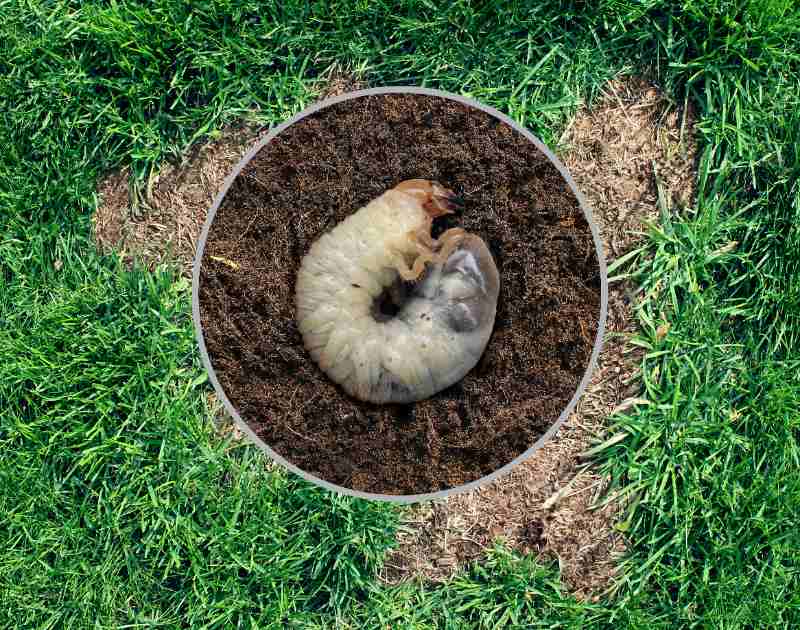
This grass is vulnerable to several insect pests, including:
Ground pearls (a scale insect)
Grubs
Mole crickets
Nematodes (parasitic roundworms)
Spittlebugs
Ground pearls are the trickiest. They’re a soil-dwelling scale insect with no effective chemical treatment, so prevention through healthy soil and good drainage is your best defense.
See Related: 15 Common Insect Pests Damaging Your Lawn
How to Control Diseases in Centipedegrass
The most common disease is large patch, a fungal disease that develops in warm, humid spring and fall weather. It appears as circular yellow and brown areas, most visible in the spring.
Treat with fungicide in the fall to prevent further spread. To reduce your risk:
Improve drainage
Remove thatch
Reduce nitrogen fertilizer
Very important: Don’t overwater. “Centipedegrass naturally prefers the ‘lean’ side,” DeBoer says, “too much water pushes out oxygen, weakens the root system, and invites disease like large patch.”
See Related: Large Patch Lawn Disease: How to Identify, Treat, and Prevent
Why Is My Centipedegrass Dying?
Yellowing, bare patches, or failure to green up in spring usually point to centipedegrass decline, a deterioration pattern almost always caused by a fixable care mistake. The most common causes:
Over-fertilizing: Too much nitrogen weakens centipedegrass and encourages thatch, eventually triggering a condition called centipedegrass decline. Apply 1 to 2 pounds of nitrogen per 1,000 square feet per year at most, from late spring through summer.
Wrong soil pH: Centipedegrass needs acidic soil (between 5.0 and 6.0). If your soil is too alkaline, the grass can’t absorb nutrients. A soil test is the only way to know.
Poor drainage: This grass dislikes soggy roots. If your yard has low spots where water collects, roots can rot. Aeration helps improve drainage.
Herbicide damage: Some common broadleaf weed killers are too harsh for centipedegrass. Always read the label to confirm a product is safe for your lawn type.
See Related: 9 Reasons Why Soil Testing Is Important for the Lawn
Pros and Cons of Centipedegrass
| Pros | Cons |
| ✔ Lowest nitrogen needs of common turfgrasses | ✘ Prone to centipedegrass decline |
| ✔ Less mowing required (slower growth) | ✘ Sensitive to foot traffic and compaction |
| ✔ Grows in moderate shade and full sun | ✘ Struggles in high phosphorus, high pH, or low potassium soils |
| ✔ Handles low-fertility, acidic soils | ✘ Prone to excessive thatch |
| ✘ Not tolerant of heavy shade or drought |
If centipedegrass isn’t working out, consider Zoysiagrass, Bermudagrass, or St. Augustinegrass for southern lawns, or tall fescue for the transition zone.
FAQs
To thicken your lawn, aerate and overseed bare spots in late spring. For color, reach for iron, not nitrogen. Centipedegrass is naturally apple-green, and chelated iron or ferrous sulfate restores its color without pushing the excess growth that causes thatch and decline.
No. Centipedegrass needs at least 6 hours of direct sunlight daily. It handles light to moderate shade better than Bermudagrass, but in heavy shade it thins out, grows leggy, and becomes more vulnerable to disease.
No, it’s one of the lowest-maintenance warm-season grasses. Avoid over-fertilizing, mow at 1 to 2 inches, and keep soil acidic.
Even “Lazy Man’s Grass” Has Its Limits
Centipedegrass earns its low-maintenance reputation, but “low” isn’t “none.” Skip the seasonal care (the spring green-up watch, the summer mowing, the fall thatch check) and small problems compound: thin patches, yellowing blades, the slow drift toward centipedegrass decline.
You don’t have to do it all yourself. LawnStarter’s mowing service handles the weekly work, so your lawn stays on schedule even when you can’t.
Main Image: Closeup of Centipedegrass. Image Credit: James Becwar / Wikimedia Commons / CC0 1.0