| Key Takeaways |
|---|
| • Straw is one of the most effective and affordable mulches for new grass seed because it retains moisture, prevents erosion, and deters birds. • Apply about 1 bale of straw per 1,000 square feet, spread thin enough that you can still see some seeds through the layer. • Always use straw, not hay, because hay contains far more weed seeds and can do more harm than good to a new lawn. |
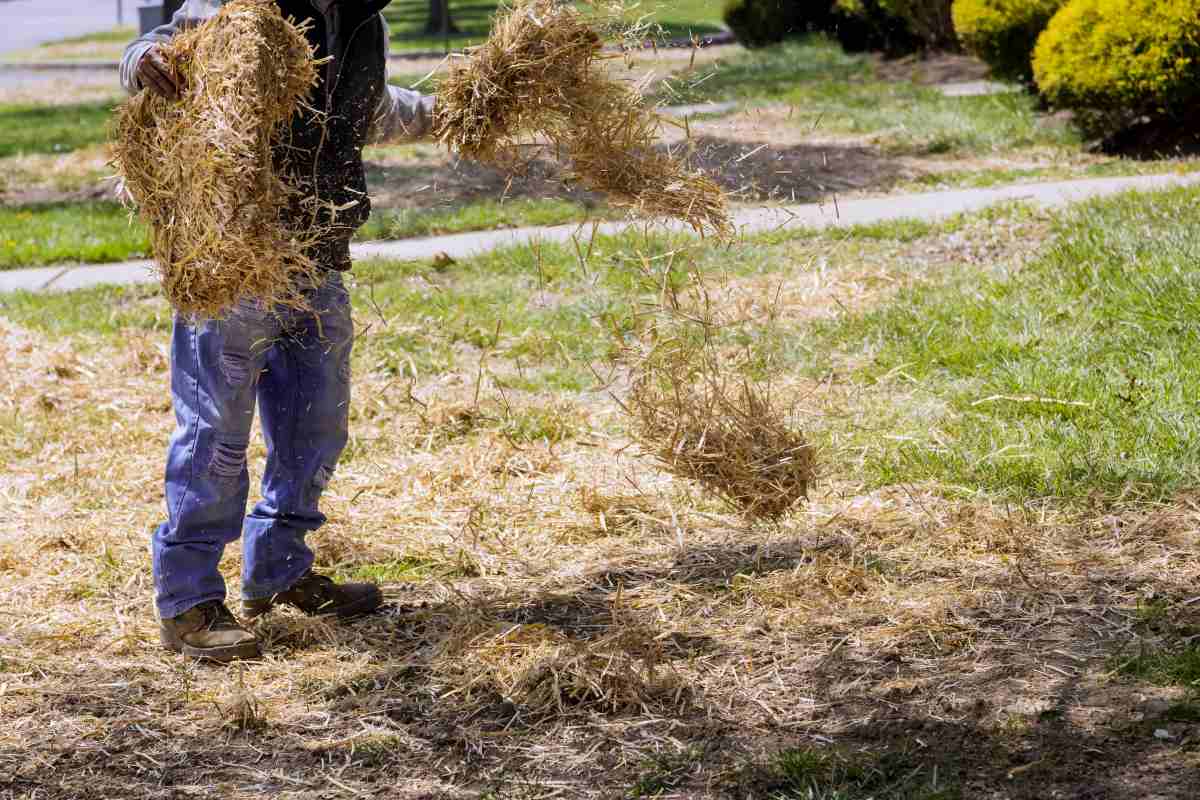
Straw is a popular, cost-effective mulch option for new lawns. Putting straw over grass seed keeps seeds moist, prevents erosion, deters birds, and provides nutrients as your lawn takes root.
Seeding a lawn takes the right timing, proper watering, and the right cover material. Get all three right and you’ll have a lush lawn without patchy results.
If you’d rather skip the guesswork, LawnStarter connects you with local lawn care pros who handle seeding, mulching services, and everything after.
Does Straw Help Grass Seed Grow? (Yes, Here’s Why)
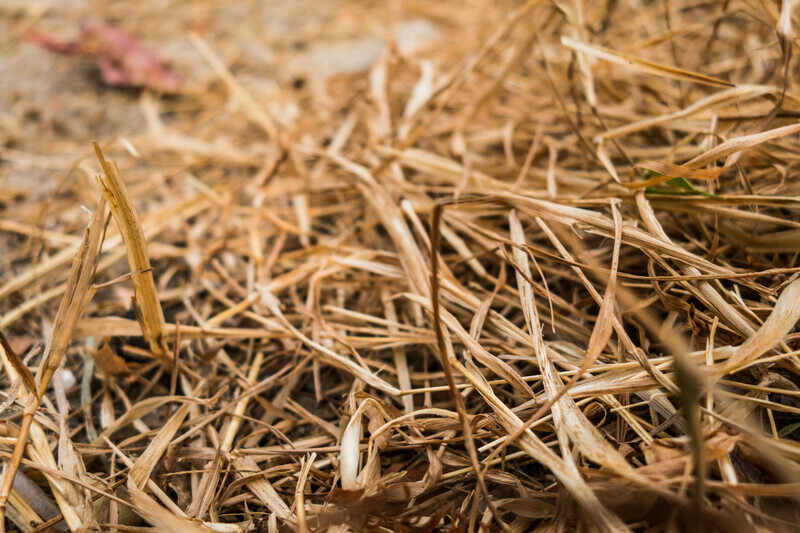
Yes, you should put straw over grass seed. Straw is an effective temporary mulch that protects seeds from erosion, discourages birds, and retains moisture during germination.
Retains moisture: Straw holds moisture after watering and keeps seeds from drying out before they germinate. Clemson Cooperative Extension notes that straw mulch “will slightly shade the seed and hold moisture to prevent the seed from drying out”, reducing how often you need to water during germination.
Provides nutrients: As organic mulch decomposes, it releases nutrients back into the soil while improving soil structure and supporting beneficial soil organisms.
Discourages birds: A thin layer deters birds from eating your grass seed.
Prevents erosion: Straw provides a protective layer that holds seeds in place during heavy rainfall. According to Finn Corporation, applying about 1 ton of straw per acre can result in virtually no erosion.
Types of Straw for Grass Seed
When you head to the garden center, you will likely see a few different options. Choosing the right type makes a big difference in how well your new grass grows.
| Straw Type | Best For | Key Consideration |
| Wheat straw | Grass seed coverage | Most recommended option |
| Pine straw | Trees and flower beds | Increases soil acidity over time |
| Erosion control blankets | Slopes and hillsides | Pre-made straw mats; no blowing away |
| Hay | Never use on lawns | Packed with weed seeds |
Wheat Straw
Wheat straw is the best choice for covering grass seed, and it’s what you’ll find at most hardware and garden centers. At the standard coverage rate, a single bale covers roughly 1,000 square feet and holds moisture without completely blocking sunlight from reaching your seeds.
Pine Straw
Pine straw is popular in the South because the needles interlock and stay put on steep slopes. People love to claim that pine straw will ruin your yard by making the soil acidic, but that is a total myth. Research from Oregon State University proves the low pH neutralizes as the needles decompose.
The real reason you should skip it for grass seeding is the physical shape. Pine straw does not break down into the dirt like wheat straw. Instead, it forms a tangled barrier that stops your seeds from making direct contact with the soil. Keep the pine straw where it belongs: in your garden beds and around your tree rings.
Erosion Control Blankets
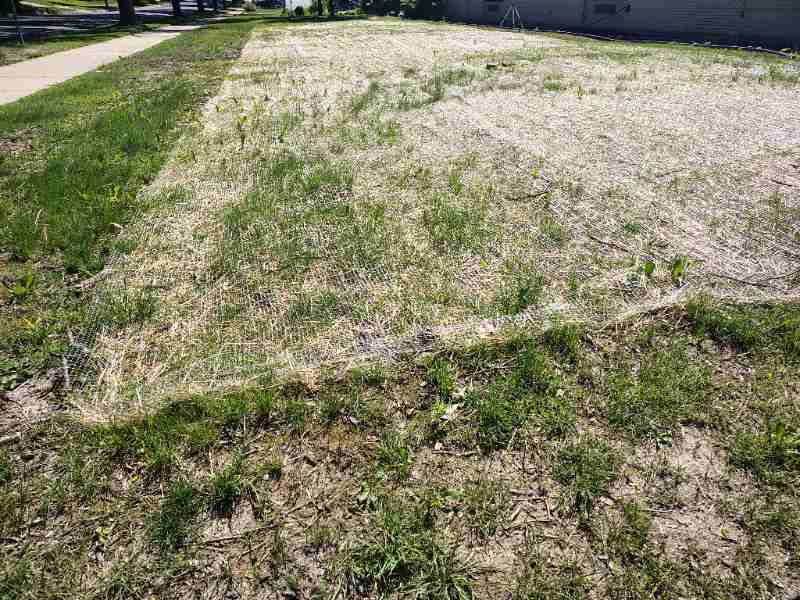
Erosion control blankets (sometimes called straw mats or biodegradable jute mesh) are pre-made panels of straw stitched into netting. They are ideal if your seeded area is on a slope where loose straw would easily wash away.
Reed Santee, vice president at Central Home Supply in Scotts Valley, California, regularly advises clients on this issue. “For slopes, straw alone becomes a problem the moment you get any real grade,” Santee says.
“You lay the straw first, then pin the jute netting directly over it. The netting locks everything in place, biodegrades naturally as the grass establishes, and adds erosion protection underneath. It’s a much more forgiving system than straw alone, especially in the kinds of clay-heavy soils we see commonly across the Santa Cruz area,” he says.
Straw vs. Hay: Why It Matters
Straw and hay look nearly identical on the shelf, but they are completely different products. Hay is grown as animal feed and is packed with plant seeds. Spread it on your lawn and you are essentially planting a weed farm.
To guarantee you are buying the right product, Santee advises being highly specific with your supplier.
“Ask the supplier specifically whether it’s wheat straw processed for seed removal, not just ‘straw,'” Santee says. “At our yard, we can tell the difference by feel and smell. Hay retains more moisture and has a heavier, grassier scent. If the bale smells like a barn, walk away.”
See Related: Mulch vs. Pine Straw
Cons of Covering Grass With Straw
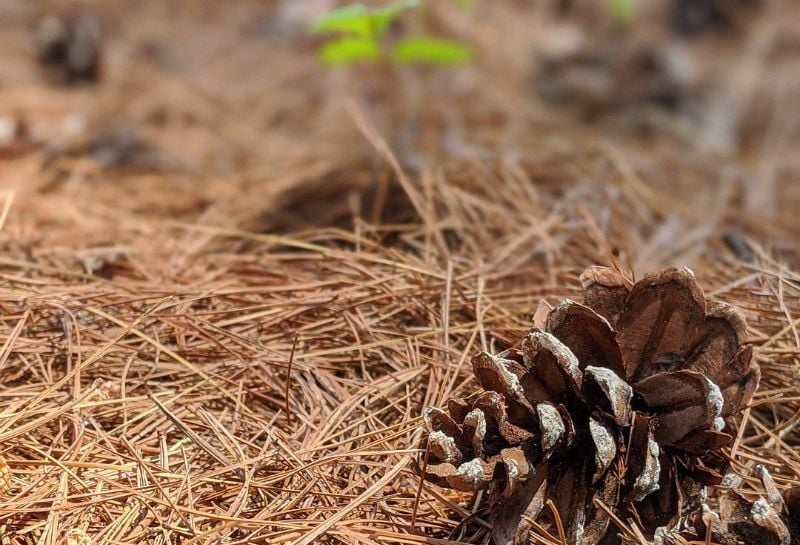
May attract pests: All organic mulches can attract pests such as insects and rodents. Practicing integrated pest management can help. Pine straw attracts millipedes, beetles, moths, and earwigs. Rodents may enjoy eating or building nests in yellow grain straw.
May have weed seeds: Straw may contain seeds that lead to weed growth. To prevent this, inspect the straw for seeds or purchase higher quality straw with minimal seeds.
Blows away easily: Straw is lightweight and can be blown away by heavy winds. Regular watering will weigh down the straw, preventing it from blowing away.
Over-applying can smother seeds: If the layer is too thick, it blocks sunlight, air, and water from reaching the seeds and soil. Keep your application even across the entire area to avoid smothering new growth.
May be treated with pesticides or herbicides: Trace amounts of chemicals used during farming may concern some homeowners and organic gardeners, though levels are typically minimal by the time straw reaches hardware stores.
How to Put Straw Over Grass Seed: Step-by-Step
Before you even touch a bale of straw, you must ensure the ground beneath is ready.
“The No. 1 failure I see locally is poor soil preparation before the straw even goes down. Homeowners focus on the straw and skip building the right seed bed underneath,” says Santee. “Straw is just the cover; germination lives or dies in what’s beneath it.”
Measure your area. Grab 1 bale of straw per 1,000 square feet. That’s the right amount for a typical seeding project.
Scatter loosely. Toss straw by the handful across the seeded area in a thin, even layer. Don’t dump clumps straight from the bale.
Break up any clumps. Use your hands or a rake to spread any thick spots so the layer stays consistent across the whole area.
Check seed visibility. Santee shares a foolproof visual trick for this step: “You should be able to read a newspaper headline through the straw layer. If you can’t, you’ve gone too thick and you’re suffocating germination. I tell customers to think ‘veil,’ not ‘blanket.'” As a rule of thumb, aim for a layer about 1/4- to 1/2-inch thick.
Water immediately. Soak the area lightly right after applying straw, then water daily until you see sprouts. Different soil types affect how much you water. Mike Marlow, co-founder at Heroes Lawn Care in Omaha, Nebraska, explains exactly how to water different soil types:
“Before putting down grass seed, you need to water the soil so it is wet a few inches deep, but not drown it,” Marlow says. “Clay soil holds water for a long time, so wait longer between watering to keep the roots from getting too wet. Sandy soil dries out quickly because water runs straight through it, so you may need to water it more often.”
When to Remove Straw From Grass Seed
Leave the straw on until your grass reaches the recommended removal height of 1 to 1.5 inches tall. That is your cue to start pulling back any thick clumps.
The germination timeline for warm-season grasses is generally 7 to 30 days after planting, while cool-season varieties like Kentucky bluegrass can take up to 30 days.
Soil temperature matters more than the calendar. Warm-season turf needs soil temperatures of about 65 degrees for significant growth. For most homeowners, that means straw stays on for roughly 2 to 4 weeks.
Once the grass is growing strong, you don’t need to rake it all up. A thin layer will naturally decompose and feed your soil. If you see large clumps blocking sunlight, gently rake those sections away so your new grass can breathe.
Some homeowners wonder if they can save time by running a mulching mower over the remaining straw once the grass reaches 3 inches tall. Santee says that this is a risky move depending on the thickness of your straw.
“I’ve seen customers come back frustrated because they scalped young grass by mowing before the roots were anchored,” he says. “At 3 inches of grass height, the roots are still shallow. A heavy mower pass can pull seedlings right out of loose soil if your straw layer was thick,” says Santee.
Straw Alternatives
Straw is the easiest and most affordable mulching your lawn option, but if you can’t find it locally, these alternatives work:
Compost: A great all-around option. It retains moisture and feeds the soil as it breaks down. Bonus: If you start composting at home, it’s free.
Peat moss: Holds moisture exceptionally well and is easy to spread. Marlow highly recommends it for moisture control. “Spread peat moss over your yard, and it will absorb and hold water like a sponge. This means you may not need to water as often. It also gets lighter when it dries out, helping you know when the soil needs more water,” Marlow says.
Paper mulch: Lightweight, biodegradable, and seed-free. A reliable stand-in for straw. Look for it at garden centers labeled as “erosion control mulch.”
Leaf mulch: Works in a pinch if you have shredded dry leaves on hand, but avoid whole leaves, which can mat together and smother seeds.
Sawdust: Least recommended of the group. It decomposes slowly, can compact, and may rob nitrogen from the soil as it breaks down.
Hydroseeding: A sprayed slurry of seed, mulch, fertilizer, and water that forms its own protective, moisture-holding layer in one application. It’s pricier than straw for small yards but shines on large or steep areas where spreading loose straw evenly is impractical.
Lawn seed mats: Pre-seeded, biodegradable rolls that hold seed in place and retain moisture, often with starter fertilizer built in. A tidier, if more expensive, option for small or oddly shaped patches.
FAQs
A thin, properly applied layer typically breaks down within 1 to 2 growing seasons, feeding organic matter back into the soil as it goes. Thicker or clumped areas take longer and may need occasional raking if they mat down and start blocking new growth.
Yes, but apply it extra lightly so you do not shade the existing grass. Focus on bare or thin spots, and keep the layer thin enough to see some seed through it. Too much straw can block sunlight and slow recovery in the existing turf.
Yes. Straw helps hold moisture, so it is incredibly easy to overwater and keep the seedbed soggy.
Skip the Dusty Yard Work
You know the rules of seeding. You understand the science of soil, water, and straw. You also know the crushing feeling of spending your entire weekend hauling itchy bales across your yard while sweating in the sun.
If you want to skip the trial and error, LawnStarter connects you with vetted local mulching pros who know your exact climate. Get an instant quote today and let the experts build your lawn from the ground up while you take your weekends back.
Main Image: Straw mulch covering a lawn during landscaping work. Photo Credit: ungvar / Adobe Stock Free
Related Posts: