| Key Takeaways |
|---|
| • Water new grass seed 2 to 4 times daily for 5 to 10 minutes until seeds germinate, keeping the top 1.5 inches of soil consistently moist. • After germination, gradually reduce watering frequency and increase session length to encourage deep root growth. • Soil type, weather, sun exposure, and lawn slope all affect how often you need to water. |
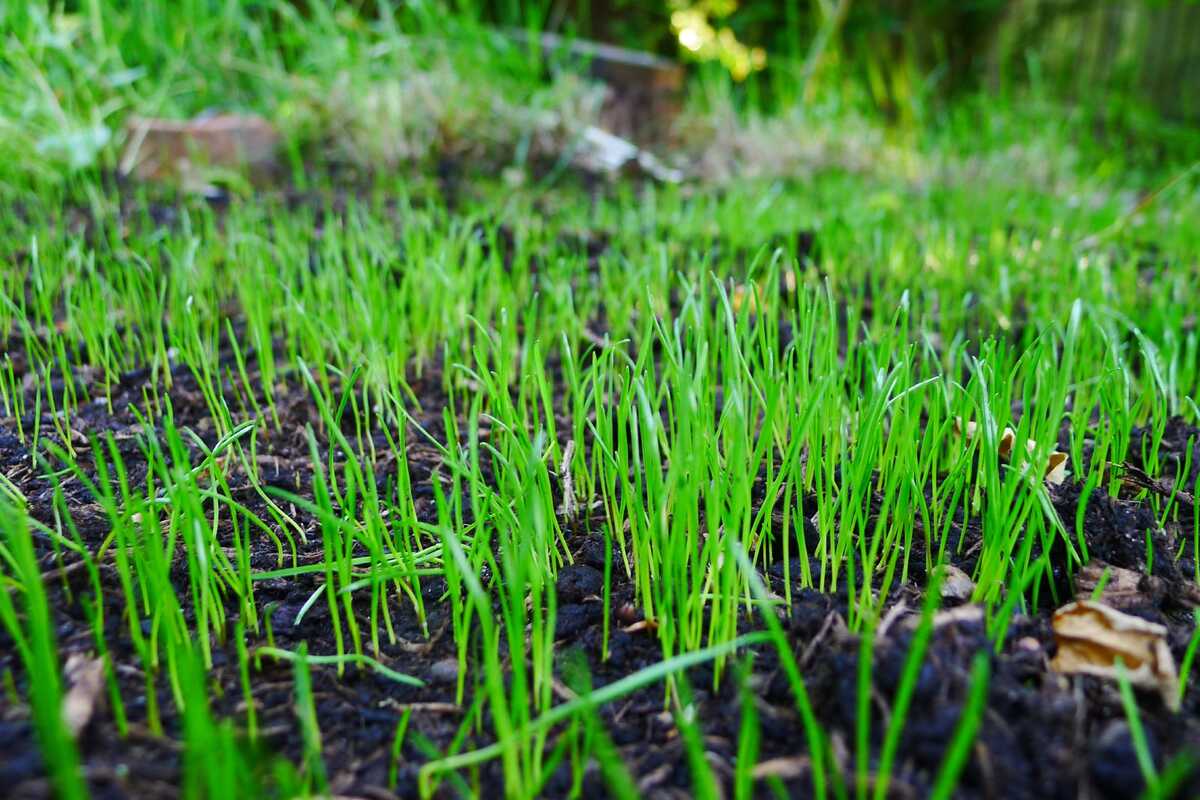
Knowing how often to water grass seed is essential for growing a healthy lawn, as new grass seed needs frequent, light watering to keep the soil consistently moist. In most climates, keep this up for 1 to 2 weeks until all seeds have sprouted.
Watering new grass seed requires precise timing, consistent follow-through, and adjustments for weather and soil. If you’d rather leave the guesswork to the pros, LawnStarter’s aeration and overseeding service takes care of everything.
Water the Soil Before Planting New Grass Seed
Mike Marlow, co-founder at Heroes Lawn Care in Omaha, Nebraska, says prep work is non-negotiable.
“Before putting down grass seed, you need to water the soil so it is wet a few inches deep, but not drown it,” Marlow says.
To ensure the soil has received enough water, push a screwdriver into the ground. It should easily penetrate 6 to 8 inches deep. If the soil resists, it probably needs more water before you plant any seeds. Pre-planting soil testing also helps you identify drainage issues that affect your watering schedule.
How Often and How Long to Water Grass Seed
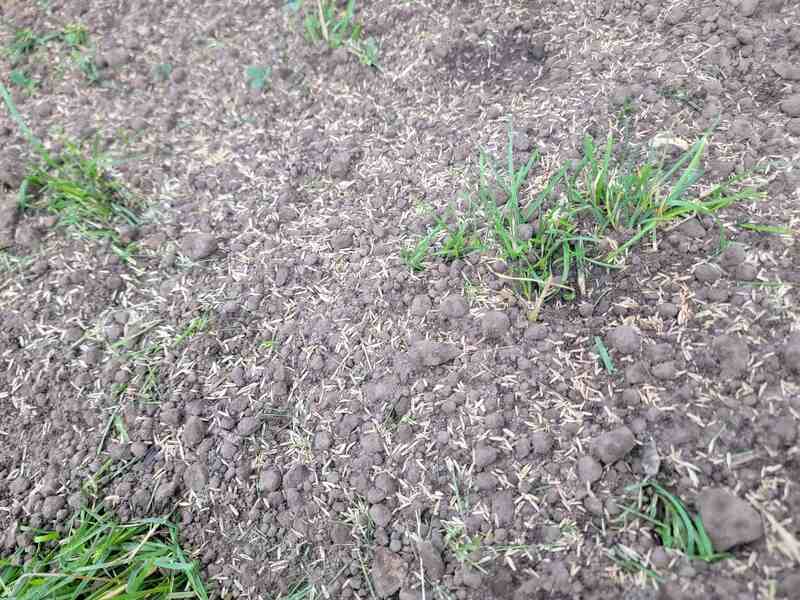
Water new grass seed 2 to 4 times daily for 5 to 10 minutes to keep the top 1.5 inches of soil moist until all seeds have sprouted.
Should You Water New Grass Seed Every Day?
Yes, and then some. During germination, “every day” actually means 2 to 4 short sessions per day. Once seeds have sprouted, dial back to 1 daily session. After several more weeks, you’ll shift to deep, infrequent watering a few times a week.
First Watering After Planting
Right after you spread and lightly rake the seeds into the topsoil, water immediately but gently.
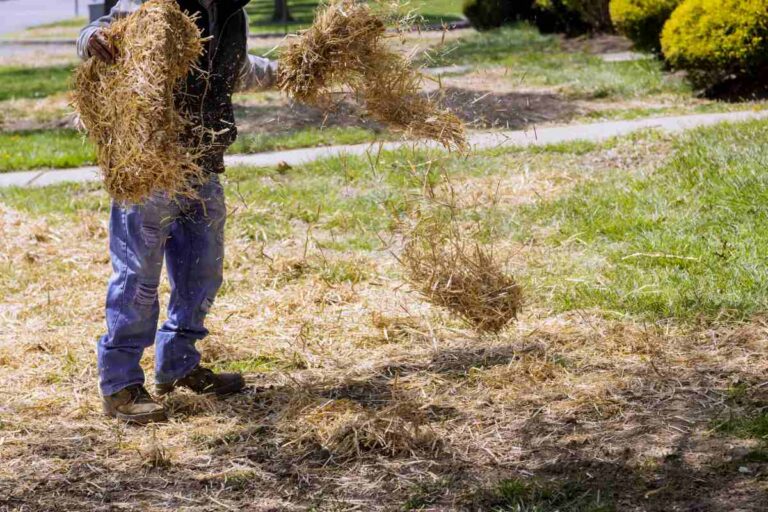
Cover the newly seeded area with a thin layer of straw mulch or peat moss to trap the moisture. Marlow relies on this exact trick.
“Spread peat moss over your yard, and it will absorb and hold water like a sponge,” Marlow says. “This means you may not need to water as often. It also gets lighter when it dries out, helping you know when the soil needs more water.”
Water for 5 to 10 minutes to moisten the top 2 inches.
Use a gentle mist setting or an oscillating sprinkler to avoid dislodging seeds and causing runoff.
When to water new grass seed: The best time is early morning, allowing moisture to penetrate before evaporating. Water again in the late afternoon. During hot and windy days, add sessions to keep every seed moist enough to germinate.
Watering Seeds During Germination
The goal during germination: Keep the top 1.5 inches of soil consistently moist, never soggy, never dry. Short, frequent sessions (2 to 4 times a day) replenish moisture without waterlogging seeds.
The lawn should receive a daily watering amount of 1/8 to 1/4 inch. Place a shallow tuna can on the lawn while the sprinkler runs. When it’s about a quarter full, you’ve hit your daily target.
Watering a Sprouted Lawn
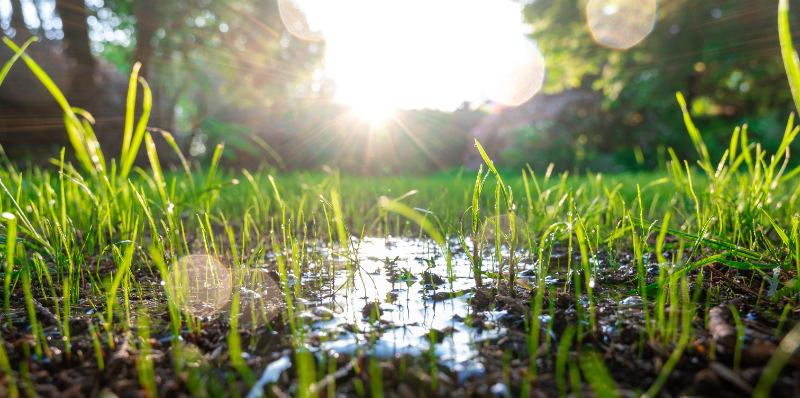
Once you see green sprouts, water less often but for longer. This encourages roots to grow deeper, building the drought-resistant lawn you’re after:
Weeks 3 and 4: Reduce to 1 session daily, adding a second during hot, dry days. Grass has shallow roots and is vulnerable to drought stress.
Weeks 5 and 6: Start transitioning to deeper, less frequent watering. Adjust sprinkler runtime to reach a watering depth of about 6 inches.
Weeks 6 to 8: Roots are established. Apply a watering your lawn amount of 1 to 1.5 inches in 1 or 2 sessions on a regular watering schedule.
Cool-season grasses like tall fescue and Kentucky bluegrass generally need more water during hot summer weather, though fine fescue is a notable exception with above-average drought tolerance. Warm-season grasses such as bahiagrass and Zoysiagrass need less water overall once established.
When to water sprouted grass: Avoid evening watering. Prolonged leaf moisture invites fungal disease. The best watering time is between 5 a.m. and 9 a.m.
Does rain count as watering? Yes. Count rainfall toward your daily total. A heavy rain means you can skip the day; a light shower may still require an afternoon session. Always factor in rainfall before watering, as unrooted seeds can wash away if overwatered.
See Related: How Often Should I Water My Lawn?
How Long Does It Take for Grass Seed to Grow
Homeowners who keep the soil and seeds moist should see sprouting grass in about 10 to 14 days under ideal conditions. Kentucky bluegrass may take longer, with grass germination times often stretching to 14 to 30 days.
If your grass hasn’t appeared after this window, try watering more frequently to see if growth picks up.
Grass plants do not germinate all at once, even if you planted a single variety. Turf sprouts in patches depending on sun exposure and seed depth. Keep watering to get that thick, healthy lawn you planned.
See Related: Guide to Growing Grass in the Transition Zone
What Can Change the Grass Seed Watering Schedule
Several factors can change the way you water grass seed:
Weather conditions (rain): Heavy rain: Skip watering that day. Light showers: Still water in the afternoon.
Weather conditions (heat): Hot, dry, or windy days: Add extra sessions since these conditions dry out soil faster, particularly in arid Western regions where, according to EPA WaterSense data, outdoor watering can account for up to 60 percent of household water use, compared to a national average of about 30 percent.
Type of soil: Different soil types change your approach. “Clay soil holds water for a long time, so wait longer between watering to keep the roots from getting too wet. Sandy soil dries out quickly because water runs straight through it, so you may need to water it more often,” Marlow says.
Lawn slope: Water runs off toward the bottom of a sloped lawn. If you are planting seed on a slope, monitor the high part and water more often if necessary.
Sun exposure: Areas in direct sunlight lose water faster and require more frequent irrigation. Shady areas evaporate more slowly and can be watered less often.
That’s also why you don’t want to “set it and forget it” with your timer. Seasonal needs shift fast. As Charles Swanson of Texas A&M AgriLife Extension Service in College Station says, “Water requirements vary throughout the year.”
Watering for Overseeding, Bare Patches, and New Lawns
How you water new seeds varies with the project:
| Project type | Watering schedule |
| Overseeding existing lawn | 2x daily for new seed, plus 1x weekly deep watering for existing grass |
| Bare spot repair | Normal lawn schedule, plus 2 to 4x daily spot watering with hose |
| New lawn from scratch | 2 to 4x daily, 5 to 10 minutes per session |
How to Water When Overseeding an Existing Lawn
Overseeding mixes new seed with established turf. Watering incorrectly is among the most common overseeding mistakes, so keep topsoil moist for germination while also watering deeply for existing roots:
Irrigate twice a day for 5 to 10 minutes to keep new seeds moist.
Once a week, give the lawn a deep watering for existing grass health.
How to Water When Reseeding Bare Spots
With bare spots, new seeds sit inside a defined area surrounded by established grass:
Irrigate the entire lawn as usual, once or twice a week with 1 to 1.5 inches of water.
Water seeded patches 2 to 4 times daily with a garden hose or watering can. Apply 1/8 to 1/4 inches of water until seeds germinate, then reduce frequency.
How to Water a Newly Seeded Lawn
Irrigate 2 to 4 times daily when planting grass seed across the entire lawn. Apply 1/8 to 1/4 inches of water a day in short sessions of 5 to 10 minutes.
Tips for Proper Lawn Irrigation
Overwatering your lawn or underwatering can hinder growth. Keep these tips in mind:
Choose the right sprinkler: Use oscillating sprinklers or automatic watering systems that distribute water evenly.
Maintain your system: Run a lawn sprinkler audit periodically for even coverage. Adjust heads, repair broken sprinklers, and clean clogged nozzles.
Fix irrigation issues promptly: A single irrigation leak the width of a dime (about 1/32 inch) can waste up to 6,300 gallons per month, or roughly 25,000 gallons per irrigation season, according to EPA WaterSense. Inspect for broken heads or misaligned zones regularly.
Keep soil moist, not soggy: Aim for consistent moisture without waterlogging.
Water more in extreme conditions: Irrigate at least 3 times daily when hot, sunny, and windy.
Reduce frequency at mowing height: Decrease watering days when grass approaches its first mowing.
Watch areas near trees: Trees absorb gallons of water daily. Seeded areas nearby may need extra water, while shady areas should dry between irrigations to reduce disease risk.
FAQs
A sprinkler is usually better for large areas because it applies water evenly and consistently. Hand watering works well for small patches, but it is easy to miss spots or create puddles. If you water by hand, use a gentle shower setting and move continuously.
Water early in the morning so the leaf blades dry quickly. Avoid evening watering and keep the soil moist without leaving puddles. Good airflow also helps, so do not apply mulch too thickly and avoid overwatering shaded areas.
During active germination, missing 1 day in hot or dry conditions can dry out shallow roots and stall or kill sprouting seeds. Once sprouts are visible and a few inches tall, a single missed day is far less risky. Resume your normal schedule immediately and water slightly longer in the next session. Do not try to make up for lost time by flooding the area.
Pre-planted seed may remain inactive until conditions are right, as explained in the dormant seeding guide. Once germination begins, keep the seedbed consistently moist and do not let it dry out. Clay soil gives you a slightly longer buffer than sandy soil.
Skip the Sprinkler Babysitting
Getting grass seed to grow requires a militant schedule. You have to drag hoses, set timers, and adjust for the weather multiple times a day. If you mess up the math, you wash your expensive seeds straight down the driveway.
The average lawn seeding project costs between $427 and $1,514. Do not flush that investment down the drain. LawnStarter connects you with local aeration and overseeding pros who bundle seeding with aeration to give your grass the best start. Get an instant quote today and get back to enjoying your weekends.
Main Image: Newly planted grass in lawn. Photo Credit: Timo Newton-Syms / Flickr / CC BY-SA 2.0
Related Posts: