| Key Takeaways |
|---|
| • Zoysia grass is a warm-season grass that grows best in full sun across Southern and transition zone states. • Sod is the fastest way to establish a Zoysia lawn, though seed and plugs work at a lower cost. • Once established, Zoysia requires moderate care (including periodic dethatching), but crowds out most weeds on its own. |
You’ve heard Zoysiagrass makes a stunning lawn, but you’ve also heard it’s slow, expensive, and tricky to establish. Both are true. The difference comes down to how you start.
This guide walks you through every Zoysia lawn care decision: choosing between sod, plugs, or seed, timing your planting, and keeping your lawn healthy once it’s in. Done right, Zoysia becomes one of the most low-maintenance Southern lawns you can grow.
Prefer to leave it to someone else? LawnStarter connects you with vetted local landscaping pros who handle installation, dethatching, and seasonal upkeep.
Zoysiagrass at a Glance
- Classification: Warm-season grass
- Spreads by: Rhizomes and stolons
- Shade tolerance: Tolerates light to moderate shade
- Soil type: Well-draining, some cultivars more tolerant of a wide range of soils than others
- Soil pH: 6 to 6.5
- Mowing height: 1 to 2.5 inches
- Drought resistance: High
- Foot traffic tolerance: High (typically used on fairways at golf courses)
- Maintenance needs: Moderate
- Potential for disease: Good disease tolerance overall
- Insect pest tolerance: Not typically prone to problems but is susceptible to some
Other notes: Moderately to highly salt tolerant, depending on the cultivar; mow at a taller height if the grass is growing in partial shade
What Is Zoysiagrass?

Zoysiagrass is a warm-season grass, meaning it grows vigorously in summer heat and goes dormant (turns brown) in winter cold. It thrives across the Southern U.S. and transition zone states such as Virginia, Tennessee, and the Carolinas.
Some warm-season grasses, such as Bermudagrass, fail in the transition zone because they lack cold tolerance. And cool-season grasses like Kentucky bluegrass cannot handle the heat of transition zone summers. Zoysia fills that gap, with newer cultivars offering good cold tolerance and summer heat resistance.
Zoysiagrass’s emerald-green blades grow vigorously during summer to produce a dense, attractive lawn. It prefers full sun but can also grow in some shade.
One disadvantage is that Zoysia develops a thatch layer that must be reduced every year or two. Dethatching the lawn regularly minimizes disease and insect problems and keeps water, air, and nutrients moving into the soil.
Important note: Individual traits may vary from one cultivar to another, so research to find the best Zoysiagrass variety for your lawn.
See Related: Guide to Growing Warm-Season Grasses
What Does Zoysia Grass Look Like?
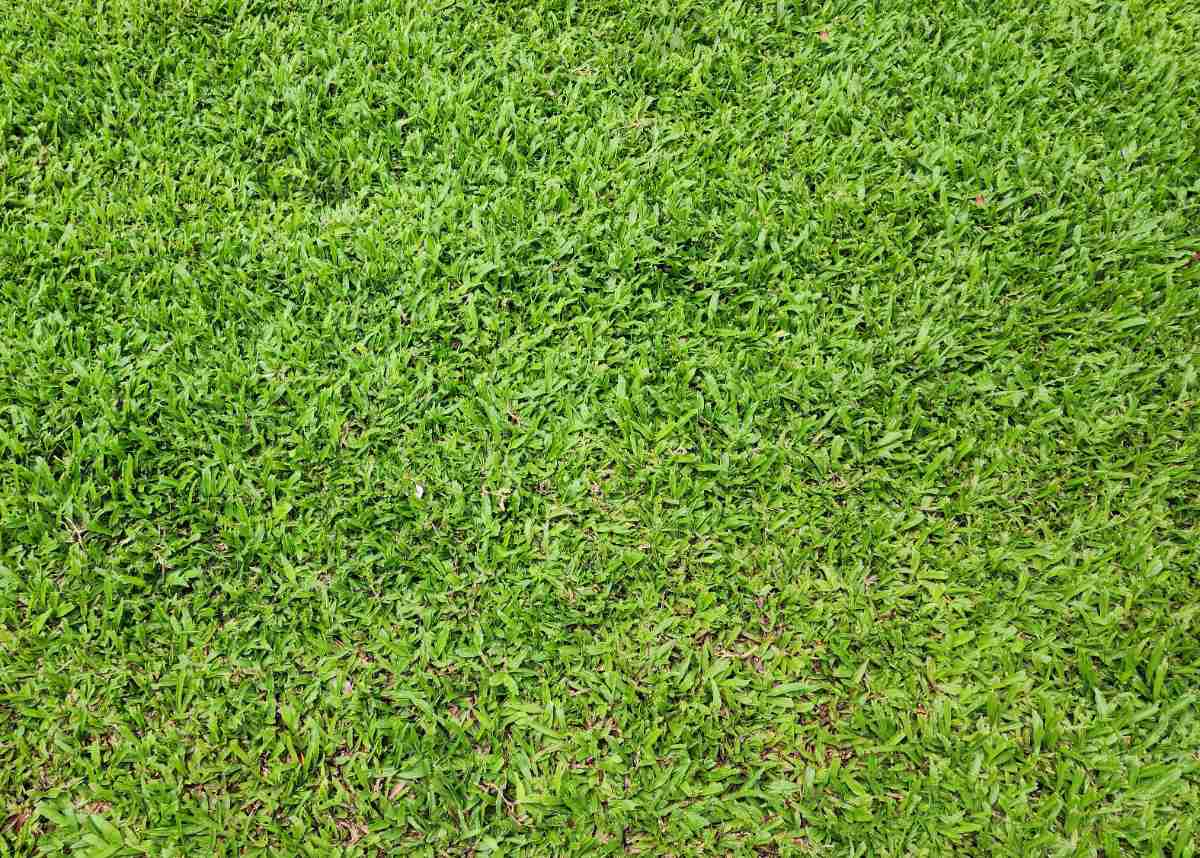
Zoysiagrass forms a dense, thick carpet that feels great under bare feet. Its blades range from fine (Zoysia matrella, like Emerald) to coarse (Zoysia japonica, like Meyer).
During its peak growing season in summer, Zoysia displays a deep green to emerald color. The stiff, upright blades give the lawn a manicured look even between mowings.
Zoysiagrass Species Commonly Grown in the United States
| Feature | Zoysia japonica | Zoysia matrella |
| Texture | Coarse blades | Fine blades |
| Mowing height | Higher (1.5 to 2.5 inches) | Lower (1 to 1.5 inches) |
| Cold tolerance | Best cold tolerance | Less cold hardy |
| Shade tolerance | Moderate | Better shade tolerance |
Zoysia japonica:
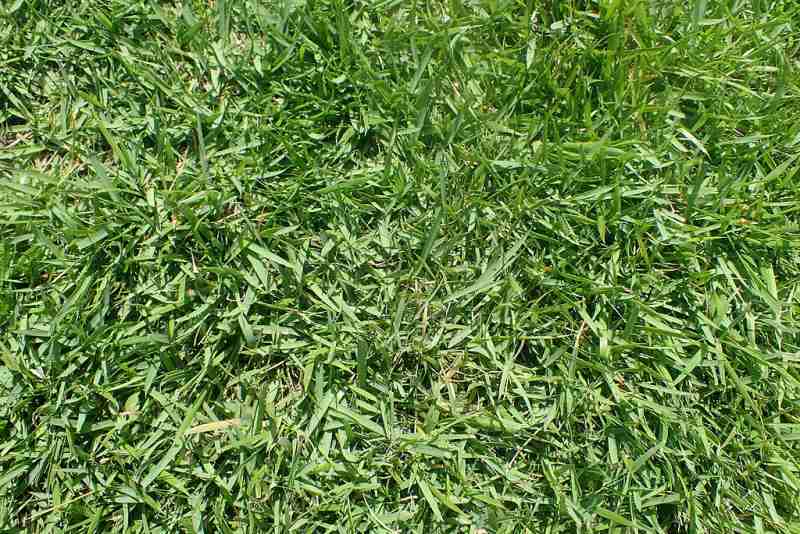
Also known as Korean or Japanese lawngrass
Coarse-textured blades
Performs better at higher mowing heights
Best cold tolerance among the turf types
Popular cultivars include ‘Meyer,’ ‘Zenith,’ and ‘El Toro’
Zoysia matrella:
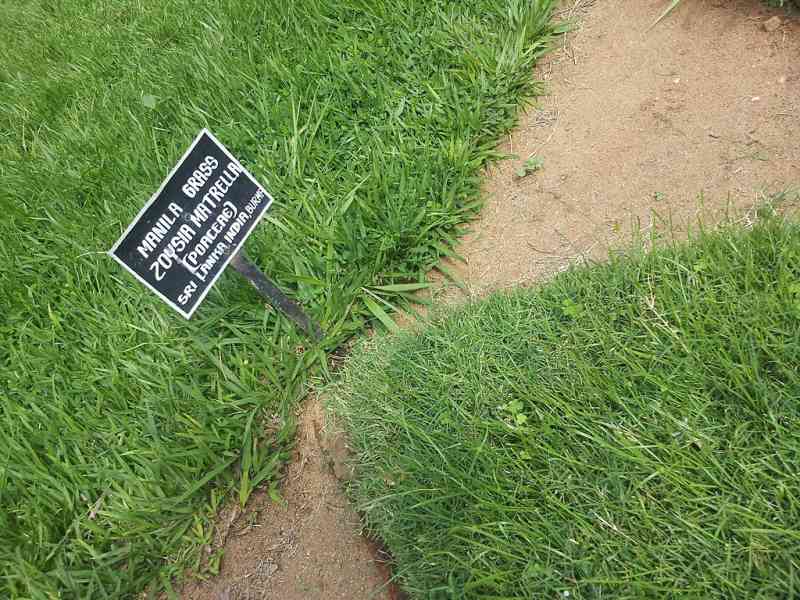
Also called Manilagrass
Fine-textured blades
Performs better at lower mowing heights
Less cold hardy
Better shade tolerance
Popular cultivars include ‘Emerald’ and ‘Leisure Time’
Pros and Cons of Growing a Zoysia Lawn
Pros of Zoysiagrass
✓ Feels great underfoot: Dense, soft texture makes it excellent “barefoot grass”
✓ Natural weed control: Crowds out most weeds once established
✓ Variety options: Available in fine-bladed and coarse-bladed varieties
✓ Soil adaptability: Grows well in sand, loam, and clay soils
✓ Shade tolerance: Tolerates light shade
✓ Salt tolerance: Moderately to highly salt-tolerant; some cultivars are even suited for coastal yards
✓ High traffic: Ideal for high-traffic lawns
✓ Cold hardy: Survives transition zone winters
✓ Drought resistant: Needs only about 1 inch of water per week once established
✓ Flexible maintenance: Can be grown as low-maintenance or high-maintenance turf
Cons of Zoysiagrass
✗ Slow growth: Takes time to spread and fill in bare spots
✗ Long establishment: Slow to establish from grass plugs or seed
✗ High sod cost: Sod installation can be expensive upfront
✗ Dormancy browning: Turns brown during drought or winter dormancy
✗ Thatch buildup: Requires regular dethatching if overfertilized with nitrogen
See Related:
How to Plant Zoysiagrass
Sod is the fastest establishment method. It gives you an instant lawn that establishes roots in 2 to 3 weeks and can handle light traffic shortly after.
Seed is the cheapest option and easiest to install, making it attractive for budget-conscious homeowners. However, Zoysia’s slow growth means constant weed battles during the long establishment period (up to 2 seasons).
Sprigs and grass plugs (individual clumps of grass planted in a grid pattern across bare soil) are a middle-ground option. They cost less than sod but establish faster than seed, with a maintenance calendar timeline of 2 to 4 years for full coverage.
See Related: How Long Does Grass Seed Take to Grow? (3-30 days)
Prepare Your Soil Before Planting Zoysiagrass
Before planting, test your soil first. The results will tell you exactly what amendments you need and if you need to adjust soil pH (Zoysiagrass prefers 6 to 6.5).
Kill existing grass and weeds with a non-selective herbicide. Wait at least 5 to 7 days before disturbing the soil.
Apply any lime, fertilizer, or compost your soil test recommends, then till everything in to a depth of 4 to 6 inches.
Finish by grading the surface so it slopes slightly away from your home to prevent water pooling.
Zoysiagrass Planting Methods: Seed, Sod, and Plugs
| Method | Time to Establish | Cost per 1,000 sq ft |
| Seed | 2 seasons or more | $8 to $40 per pound of seed |
| Sod | 2 to 3 weeks | $0.47 to $0.72 per square foot of sod |
| Sprigs and plugs | 1 to 4 seasons | $1 to $2 per square foot |
Whatever method you choose, it requires work and time, so many homeowners decide to leave the lawn installation to a professional. The cost of seeding ranges from $0.09 to $0.15 per square foot, while the cost of installing sod ranges between $1.04 and $1.65.
When to Plant Zoysiagrass
Zoysiagrass seed: Plant in late spring to early summer, once soil temperatures consistently reach 65 to 70 degrees. Planting too early, when soils are still cool, delays germination and reduces establishment.
Zoysiagrass plugs: Plant between late April and June, when soil is reliably warm. This gives plugs, which are slow to establish, the longest possible growing window before fall dormancy. Avoid planting plugs after mid-summer in the transition zone. They need more runway than sod.
Zoysiagrass sod: More forgiving than plugs, sod can be installed from late spring through early September, as long as soil temperatures are still warm enough for rooting. Spring remains the most reliable window for all methods.
See Related:
How Long Does Zoysiagrass Take to Establish?
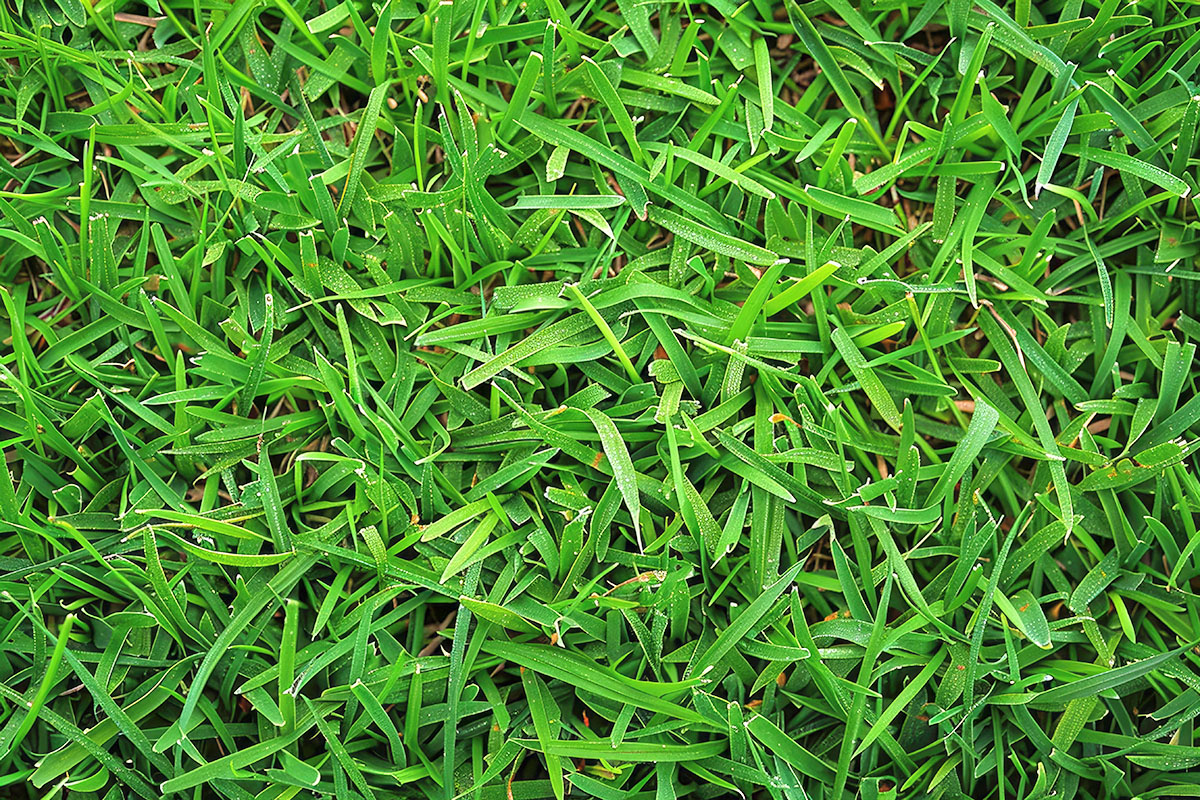
Patience is key with Zoysia. Seed can take 2 or more years for a fully dense lawn and that’s 2 years of active weed management.
Plugs fill in over 1 to 4 growing seasons, depending on spacing. Plant 6 inches apart for full coverage within 1 season; 12 inches apart cuts your upfront cost but can take 2 to 4 years to fully cover. Closer spacing always means faster fill-in.
For the fastest results, sod wins: instant cover at installation with rooting in about 10 to 14 days when cared for properly. Avoid heavy foot traffic for at least 2 to 3 weeks after installation, and longer if possible.
How to Care for a Zoysiagrass Lawn
While Zoysia takes less maintenance than Bermuda and St. Augustine, you still need to stay on top of a few key tasks to keep your lawn healthy.
Adjust Watering to the Season
How much to water: Ensure 1 to 1.5 inch of water per week, including rainfall. Water deeply and less frequently. Adjust to the growing speed and season.
The most common watering mistake isn’t how much you water, it’s failing to adjust your system as conditions change.
“The problem is often unfamiliarity with their irrigation system. They cannot just set it and forget it. It needs to be changed as the season changes and as evapotranspiration changes.” says Ralph Mitchell, director, University of Florida Institute of Food and Agricultural Sciences (UF/IFAS), Extension Charlotte County, Florida.
| Season | Water Amount | Frequency |
| Spring (March – May) | 1 inch per week | 1-2 times weekly |
| Summer (June – August) | 1 to 1.5 inches per week | 1-2 times weekly |
| Fall (September – October) | 1 inch per week | Once weekly |
| Winter (November – February) | 0.5 inch per week | Every 3 to 4 weeks |
“Watering should be applied only as needed rather than on a fixed daily schedule,” says Jack LeCroy, extension agent, Alabama Cooperative Extension System.
Signs your Zoysia needs water: Watch for wilted leaves, footprinting, or a gray-blue color.
Best time to water: Early morning is the best time to water. Finish by 9 a.m. to minimize evaporation and reduce disease risk.
See Related: How Much Water Does Zoysiagrass Need?
Fertilize Zoysia Less in Shade
Apply 2 to 4 pounds of nitrogen per 1,000 square feet each year, adjusting based on your soil test and region. Stay toward the lower end if your soil has adequate organic matter or if you’re growing in shade.
Plan for 3 fertilizer applications per year: late spring, mid-summer, and late summer.
In year-round growing areas like South Florida, you can fertilize throughout the year.
See Related: How and When to Fertilize Zoysiagrass
Adapt Mowing Height to Your Zoysiagrass Variety
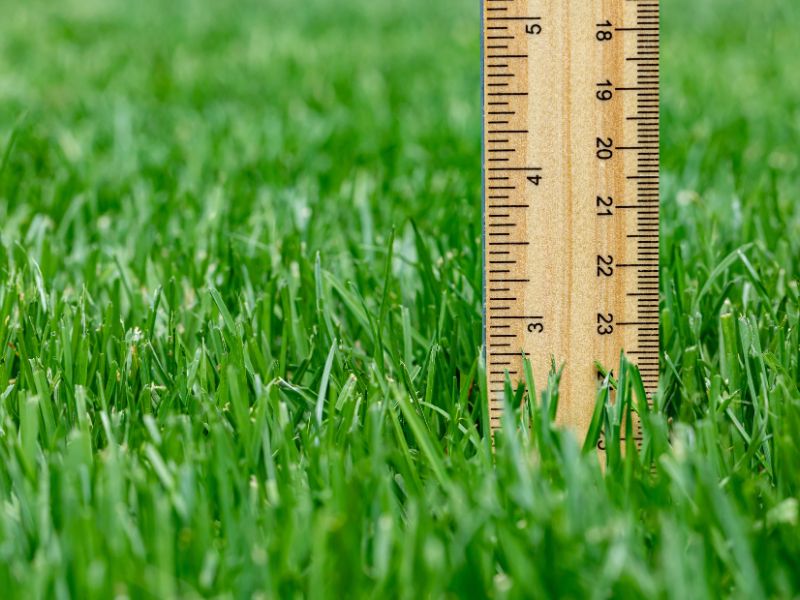
Ideal height: Mow Zoysia between 1 and 2.5 inches. Zoysia japonica prefers 2 to 2.5 inches, depending on cultivar, while Zoysia matrella prefers 1 to 1.5 inches.
One-third rule: Never remove more than 1/3 of the grass height in a single mowing to avoid stressing the lawn.
See Related: How to Mow Your Lawn: A No-Nonsense Guide
Does Zoysiagrass Need Dethatching and Aeration?
Yes, but not as often as you might think. Unlike easy-going Bahiagrass, Zoysia does require periodic dethatching and aeration, but most lawns follow a lawn care guide of about every 2 to 3 years.
Some states go back and forth on whether to dethatch Zoysia as it recovers slowly due to its growth rate. Call your local Cooperative Extension Office for advice, or perform several light dethatching sessions instead of one severe, deep pass.
Perform dethatching and aeration in late spring or early summer, just as your Zoysia grass enters its most active growth period.
Keep the Weeds at Bay During Establishment
Weed management matters most during Zoysia’s slow establishment period. Once the turf fills in, its thick carpet naturally crowds out most weeds.
If weeds do appear, hand-pulling and targeted herbicides both work well. Zoysia tolerates a wider range of herbicides than St. Augustine or centipedegrass, giving you more options for weed removal.
Scout Your Zoysiagrass for Insects and Diseases
Insect and disease pressure is usually low with Zoysia, but it is not immune. Regularly scout your lawn and treat when you spot anything concerning.
Common insects that affect Zoysia grass include:
Zoysiagrass mites
Lawn grubs
Mole crickets
Hunting billbugs
Armyworms
Chinch bugs
Sod webworms
Nematodes
Zoysia grass can also be susceptible to these diseases:
Large patch
Root decline
Spring dead spot
Rust
Curvularia blight
Leaf spot
See Related:
FAQs
Yes, some homeowners in the transition zone overseed dormant Zoysia with perennial ryegrass for winter color. However, this adds extra maintenance and can compete with Zoysia during spring green-up. If you try it, use a low seeding rate and stop mowing the ryegrass once Zoysia resumes growth.
No. Zoysia tolerates light to moderate shade but needs 4 to 6 hours of direct sunlight daily (ideally 6+ hours) for healthy, dense growth. In heavily shaded areas, Zoysia thins out and becomes susceptible to disease. Consider shade-tolerant ground covers for areas that receive less than 4 hours of direct sun.
Yes, Zoysiagrass is safe for dogs and cats. Its dense, cushion-like growth makes it a comfortable surface for pets to play on. Zoysia also recovers well from pet urine damage compared to many other grass types, though you should still water spots promptly to prevent brown patches.
Let LawnStarter Handle Your Zoysia Lawn
Zoysia is one of the best investments you can make in a Southern lawn, but getting it established right makes all the difference.
LawnStarter connects you with vetted local pros who know Zoysia inside and out, from sod installation to annual dethatching. Skip the trial-and-error and enjoy your yard.
Get an instant price from LawnStarter for sod installation services and let the pros handle the seasonal touch-ups Zoysia tends to need.
Main Image: Dense Zoysia matrella grass in a lawn. Image Credit: Vanchuree / Adobe Stock
Related Posts: