| Key Takeaways: |
|---|
| • 7 tools cover most routine lawn care: A mower, trimmer, edger, blower, spreader, hose/sprinkler, and safety gear. • Expect to pay $359–$7,872 for one of each item on our list. • If your new lawn is already established or overgrown, get a soil test (or hire a pro for the first cut) before buying anything. |

If you just bought a house, there are 7 lawn care tools you need before your first mow: A lawn mower, string trimmer, edger, leaf blower, spreader, hose or sprinkler system, and basic safety gear.
Most new homeowners spend $359–$7,872 building this starter kit, though you can start smaller and add tools as you need them.
This guide breaks down what each tool does, what to buy first, and where you can skip a purchase entirely.
If you’d rather skip the shopping trip, a local lawn mowing provider from LawnStarter can handle the first few cuts while you get the rest of your new home in order.
1. Lawn Mower
A lawn mower is the one tool every new homeowner needs immediately, as a typical mowing schedule includes cutting the grass weekly during the growing season.
Here are some considerations to help you determine which mower fits your new yard:
- How big is your lawn? Large yards (1/2 acre or larger) often need a ride-on mower; small to medium-sized lawns (up to 1/2 acre) work fine with a self-propelled push mower or riding mower once you get closer to 1/2 acre. Reel mowers work well for flat, postage-stamp-sized lawns.
- What’s your budget? Mowers range from about $129 for a manual reel mower to a couple thousand dollars for a zero-turn riding mower.
- What power source do you want? Choose gas, corded electric, or battery. Battery-powered mowers often share a charger and batteries with other tools from the same brand. This means you’ll purchase fewer chargers and batteries by using the same brand for all of your battery-powered lawn equipment.
Before you buy, gas mowers come with a tradeoff worth knowing.
According to the California Air Resources Board, running a gas mower for 1 hour can put out roughly as much air pollution as driving a passenger car for about 300 miles. It’s an environmental cost worth weighing if you’re deciding between gas and electric.
See Related:
- 8 Best Lawn Mowers
- How to Mow Your Lawn: A No-Nonsense Guide
- 9 Best Electric Lawn Mowers
- 7 Best Gas Lawn Mowers
2. String Trimmer
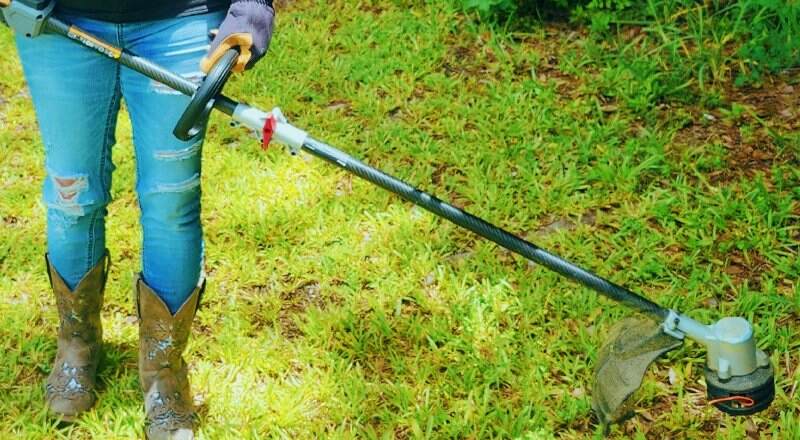
A string trimmer (aka weed whacker or weed eater) cuts grass and weeds your mower can’t reach, such as along fences, around trees, and under decks.
String trimmers come in 3 power types:
- Gas
- Corded electric
- Battery
Battery models trade a power cord for battery life, so while they are perfect for small to medium yards, they may not be efficient on large properties.
See Related: 8 Best String Trimmers
3. Edger
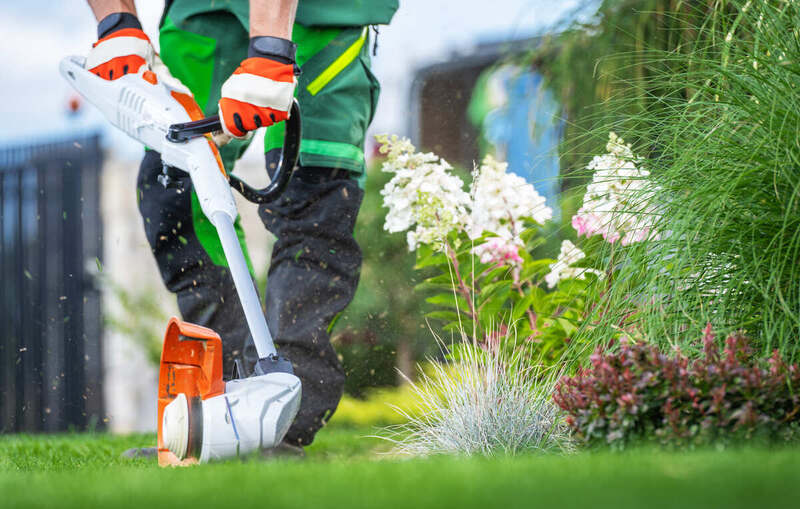
An edger cuts a clean line between your grass and driveway, walkways, or garden beds. It makes a new lawn look neat and tidy instead of overgrown.
- Manual edgers (spade, roller, or hand shears) take more effort but cost less.
- Motorized edgers run on gas, a cord, or battery; some string trimmers can double as edgers. Read our guide on How to Edge a Lawn With a String Trimmer.
See Related: How to Edge a Lawn in 8 Simple Steps
4. Leaf Blower
After you mow or edge your grass, a leaf blower clears leaves, grass clippings, and other debris off driveways and sidewalks.
There are a few types of leaf blowers:
- Backpack leaf blowers are the fastest way to cover the most ground.
- Handheld gas leaf blowers and electric leaf blowers work fine for smaller yards and cost less.
See Related:
- How to Choose a Leaf Blower (with a decision calculator to help you decide)
- 8 Best Backpack Leaf Blowers
- 10 Best Electric Leaf Blowers
- 10 Best Gas Leaf Blowers
5. Spreader
A spreader applies fertilizer or grass seed evenly across your lawn. Without a spreader, it is very difficult to achieve an even application across your lawn, which can lead to patchy grass growth.
There are multiple types of spreaders to choose from. Use this chart to find which spreader is best for your lawn:
| Type of Spreader | Yard Size |
| Handheld spreader | Small (under 1,500 sq. ft.) |
| Broadcast spreader or drop spreader | Medium (1,500 – 5,000 sq. ft.) |
| Broadcast/Tow-behind spreader | Large (over 5,000 sq. ft.) |
Bonus: The same spreader works for winter ice melt if you live somewhere that snows. Take care not to spread the ice melt on your lawn, as it can damage your grass.
See Related: 6 Best Fertilizer Spreaders
6. Hose or Sprinkler System
Your new lawn needs consistent water, and a hose or sprinkler system is the most convenient way to irrigate so you aren’t left standing outside with a watering can.
A basic hose-end sprinkler works for most small yards. An in-ground irrigation system costs more upfront but can be programmed to water early in the morning, the best time of day to water, to reduce evaporation.
7. Safety Gear
Gloves, safety glasses, and ear protection round out your lawn care equipment list, especially when you’re handling fertilizer, herbicides, or gas-powered tools.
Here are some tools to ensure you stay safe while you work in the yard:
- Gloves protect your hands from chemicals and blisters.
- Safety glasses or goggles protect your eyes from debris kicked up by mowers or trimmers.
- Ear protection matters most with gas mowers, trimmers, and blowers, which are loud enough to cause hearing damage with repeated use and exposure.
What a Starter Lawn Care Tool Kit Costs
Plan to spend $359–$7,872 for a full set of lawn maintenance equipment.
Here’s a rough breakdown by tool:
| Tool | Typical Price Range | Buy Now or Later? |
| Lawn Mower | $129-$800 (push/reel)$330-$6,000 (self-propelled) | Buy first |
| String Trimmer | $55-$355 | Buy first |
| Edger | $99-$329 | Buy first or use trimmer attachment |
| Leaf Blower | $20-$400 | Buy first |
| Spreader | $10-$500 | Buy before your first fertilizer application |
| Garden Hose | $20-$80 | Buy first |
| Sprinkler Head Attachment | $10-$33 | Buy if needed |
| Safety Gear | $5-$23 (gloves)$6-$32 (safety goggles)$5-$120 (ear protection) | Buy first |
When to Hire a Pro Instead
Buying tools makes sense if you plan to maintain your lawn yourself going forward. It makes less sense if you’re still unpacking boxes, don’t know your yard’s needs yet, or don’t have storage space for a lawn mower plus 5 other tools.
A local LawnStarter lawn care pro can handle mowing, trimming, and fertilizing while you decide what (if anything) you want to buy yourself. Many new homeowners hire a pro for the first year, then take over specific tasks once they know their lawn.
Read Next:
- Just Moved In? A New Homeowner’s Guide to Lawn Care Decisions
- When You Move: How to Transfer LawnStarter Service to Your New Address
FAQ
No. Most new homeowners overbuy right after they move in. Start with a mower, trimmer, and a basic hose sprinkler, then add an edger, leaf blower, and spreader as you need them.
If your new yard already has mature grass, the first purchase you need isn’t a tool, but a soil test.
An established lawn’s grass type, soil health, and existing problems determine which tools you actually need. Before you buy anything, consider having your soil tested so you can get an accurate assessment of your yard.
See Related: Inherited a Lawn? How to Assess Your New Yard’s Grass Type, Soil, and Health
Yes. A mower can’t reach fence lines, tree trunks, or garden bed edges the way a trimmer can.
It primarily depends on how long the growing season lasts in your area and the size of your lawn. In warmer climates with average-size lawns, a set of inexpensive mowing equipment may save you money even in the first season.
If you have a shorter growing season and a large lawn, it may be cheaper to hire someone to mow your lawn for you. Not buying a large riding mower saves you thousands of dollars and the time and hassle of doing it yourself.
Hire a Local Lawn Care Pro to Maintain Your New Lawn
Getting a new lawn mowed and maintained right takes practice, the right equipment, and time you may not have after a move.
Instead of adding one more thing to this busy season of life, find a local LawnStarter pro to take yard work off your plate. A quote takes less than 2 minutes, and a background-checked pro will handle all your lawn maintenance for you.
Get a free estimate near you →
Main Image: nicely manicured home. Photo Credit: Pexels
Related Posts: