
Apply spring fertilizer too early, and you’ll weaken your lawn’s root system. Miss your pre-emergent window by two weeks, and crabgrass takes over.
Timing is everything in spring lawn care — but the right schedule depends on whether you have cool-season or warm-season grass, and where you live. These regional calendars eliminate the guesswork, so you know exactly when to fertilize, apply herbicides, and mow for your grass type.
If lawn care tasks have overwhelmed your schedule this spring, consider hiring a local lawn care pro for timely lawn mowing and maintenance no matter your grass type or location.
| Key Takeaways: |
|---|
• Start springtime care by raking up winter debris • Apply pre-emergents when soil temperatures hit 55 degrees F • Mow and overseed when the turf begins to green up and grow • Apply post-emergents after weeds pop up |
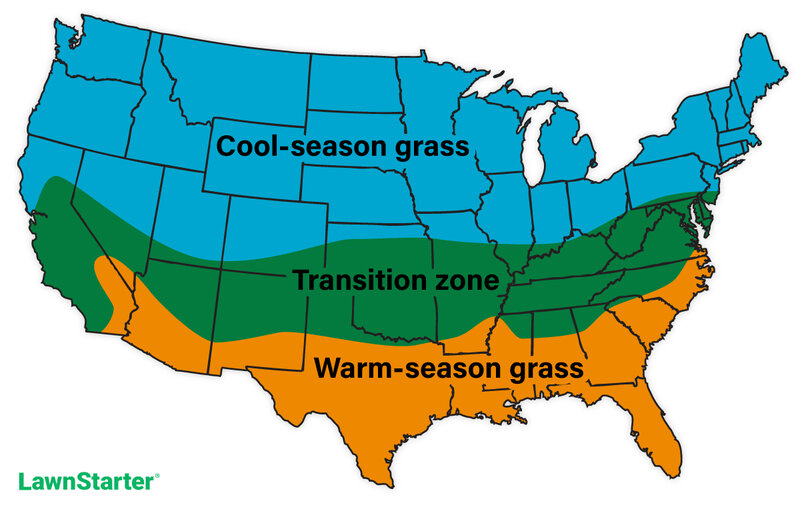
Spring Lawn Care Calendar by Region
| Cool-Season Grass (Northern U.S.) | Cool-Season Grass (Transition Zone) | |
| March | • Inspect lawn for winter damage | • Soil test • Rake • Apply pre-emergent |
| April | • Soil test • Rake to remove debris • Apply pre-emergent • Start mowing • Overseed • Dethatch / aerate • Fertilize • Apply post-emergent • Control pests | • Overseed • Dethatch / aerate • Fertilize •Apply post-emergent • Start mowing |
| May | • Overseed • Apply post-emergent | • Control pests • Fertilize • Apply post-emergent |
| Warm-Season Grass (Transition Zone) | Warm-Season Grass (Southern U.S.) | |
| March | • Test soil • Rake • Mow • Apply pre- or post-emergents | • Test soil • Apply pre-or post-emergents • Start mowing |
| April | • Lay sod • Fertilize | • Control pests |
| May | • Dethatch / aerate • Overseed • Fertilize | • Dethatch / aerate • Fertilize • Overseed |
Differences Between Cool-Season and Warm-Season Grass
The differences between cool-season and warm-season grasses are the temperature and time of year when they are actively growing:
| Cool-Season Grasses | Warm-Season Grasses | |
| Region | Northern states | Southern states |
| Growing Season | Spring and fall | Summer |
| Optimal Growing Temperature (Air Temps) | 60 F to 75 F | 80 F to 95 F |
Cool-season grasses thrive in the milder seasons of spring and fall. This grass type fares best in the cooler climates of the northern states.
Here are the most popular cool-season turfgrasses:
- Annual ryegrass
- Bentgrass
- Fine fescue
- Kentucky bluegrass
- Perennial ryegrass
- Tall fescue
Warm-season grasses green up in the spring and grow throughout the hot summer season. They go dormant in the fall when temperatures cool down. You’ll find warm-season grasses in southern states.
Here are the most popular warm-season turfgrasses:
- Bahiagrass
- Bermudagrass
- Buffalograss
- Centipedegrass
- St. Augustinegrass
- Zoysiagrass
Cool-Season Grass Lawn Care Schedule
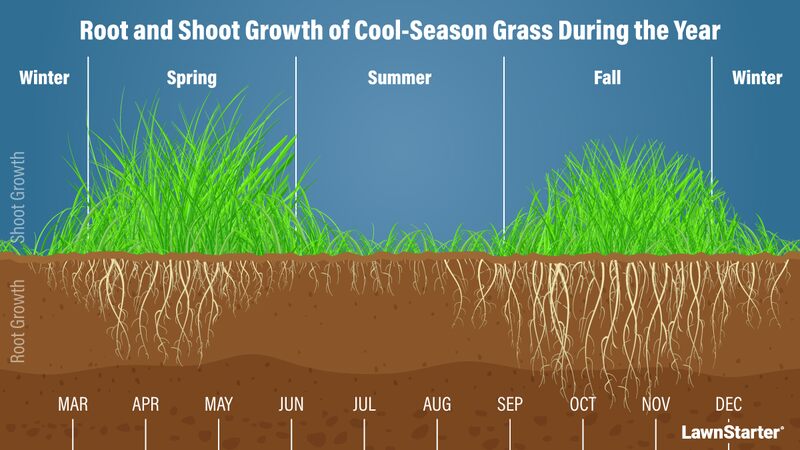
Follow this month-by-month spring checklist for lawns in the cool-season and transition zones:
Northern U.S.
March
When March arrives, many northern lawns are still buried in snow. Here are preparatory tasks you can do while you are waiting for spring green-up to arrive:
- Inspect for winter lawn damage and snow mold: “First, assess winter injury and soil conditions,” says Kelly Kopp, turfgrass specialist at Utah State University. She advises homeowners to check for snow mold, vole damage, crown hydration injury, ice damage, or bare areas that need overseeding. Homeowners will also need to check for salt damage.
April

As the snow begins to melt, your lawn will emerge from dormancy. This is the time when you will need to take care of several springtime lawn chores:
- Conduct a soil test.
- Rake lightly: Once the snow melts, rake your yard and remove debris.
- Apply pre-emergent herbicides: Once temperatures reach 55 degrees F, it’s time to apply pre-emergents to your yard to prevent weeds.
- Start mowing as soon as the lawn greens up.
- Overseed: “You can start overseeding cool-season grasses if you have some spots that need a little bit of thickening up or…maybe you’ve had to get rid of some weeds, or there are some areas that aren’t coming back in,” says Steven Price, Extension associate professor at Utah State University.
- Dethatch and aerate, if needed.
- Fertilize: “Avoid heavy spring nitrogen applications, which drive excessive top growth and increase summer water needs,” says Kopp. “A light fertilization may include 0.5 to 0.75 of a pound of nitrogen per 1,000 square feet in mid- to late spring (April-May), ideally from a slow-release source.”
- Apply post-emergent herbicides in late April or early May.
- Treat pests such as lawn grubs.
See Related:
May
As the spring season takes hold, start mowing consistently and implement timely weed control to take care of any pesky weeds in your yard. Here’s what you need to take care of in May:
- Overseed if grass was dormant in April
- Apply post-emergent herbicides for any new weeds that pop up.
Transition Zone
March
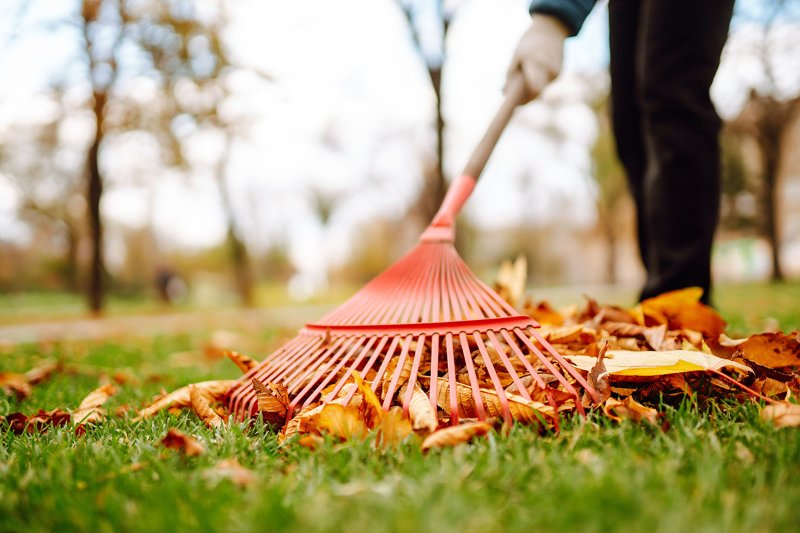
Take care of these tasks in March to prepare your transition zone cool-season yard for spring growth:
- Conduct a soil test: “Test every 2-3 years,” says Kopp. Knowing your soil’s nutrient levels and pH helps you promote grass health by indicating what soil amendments your lawn needs.
- Rake lightly: “Clear leaves, dead grass, and other winter debris,” says Kopp. “Light raking ‘fluffs up’ matted turf, improving airflow and spring green-up.”
- Apply pre-emergent herbicides: When temperatures reach 55 degrees F, apply a pre-emergent to prevent common summer weeds.
| Advice from an expert in Utah: “If you’re dealing with a lot of annual weeds in your cool-season turf…pre-emergents are a great way to help get that under control,” says Price. “Those typically do need to be done before mid-March in our area, especially if you have a lot of crabgrass.” |
April
In April, your lawn turns green as it emerges from dormancy. Here’s how to care for it:
- Overseed to repair winter damage in mid-April, or as soon as your lawn greens up. “Early spring is acceptable for patch repairs, but full lawn overseeding is better done in late summer/early fall to avoid annual weed pressure,” says Kopp.
- Dethatch and aerate in mid-April, if needed.
- Fertilize in mid-April once your lawn greens up and is actively growing. Apply 0.5 to 1 pound of nitrogen per 1,000 square feet.
- Apply post-emergent herbicides to spot-treat weeds.
- Start mowing: “Mow as soon as turf begins growing, and keep mowing heights high to encourage deeper rooting,” says Kopp.
See Related:
May
Here’s how to care for your cool-season lawn in May:
- Control pests: Look out for sod webworms and apply grub treatments as needed.
- Fertilize: Use a slow-release nitrogen fertilizer that will last through the summer months.
- Apply post-emergent herbicides as you see weeds.
Warm-Season Grass Lawn Care Schedule
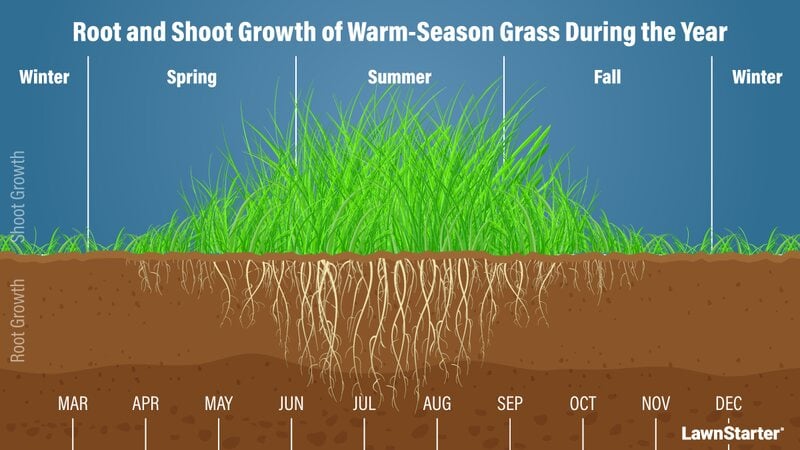
If you live in the South, you likely have a warm-season lawn. Here’s a checklist, by month, for how to care for warm-season grass as things start to heat up in the spring:
Transition Zone
March
Here’s what you should do to take care of warm-season grass in March:
- Test your soil: Determine your soil’s pH, organic matter content, and nitrogen, phosphorous, and potassium levels. “If you can get a soil test from a good lab, that can help guide your fertilization, both amounts and what you need to get in,” says Price.
- Rake lightly: “Light raking helps stand up dormant stolons and rhizomes,” says Kopp.
- Overseed. Fill in bare patches with new grass seed. You can start overseeding basically as soon as the ground is unfrozen, says Price.
- Mow: As grass greens up with the start of spring, start mowing your yard. “Begin by mowing low and then raising mowing height gradually,” says Kopp.
- Apply pre-emergent herbicides to prevent crabgrass if soil temps are still in the 50-55 degree F range.
- Apply post-emergent herbicides if your soil has already passed the 55-degree mark for several days. “They should be applied after the turf has greened up,” says Kopp. “Certain active ingredients should be avoided during early transition or heat spells, so follow labels carefully.”
April
Here’s an April lawn care checklist for your warm-season transition zone lawn:
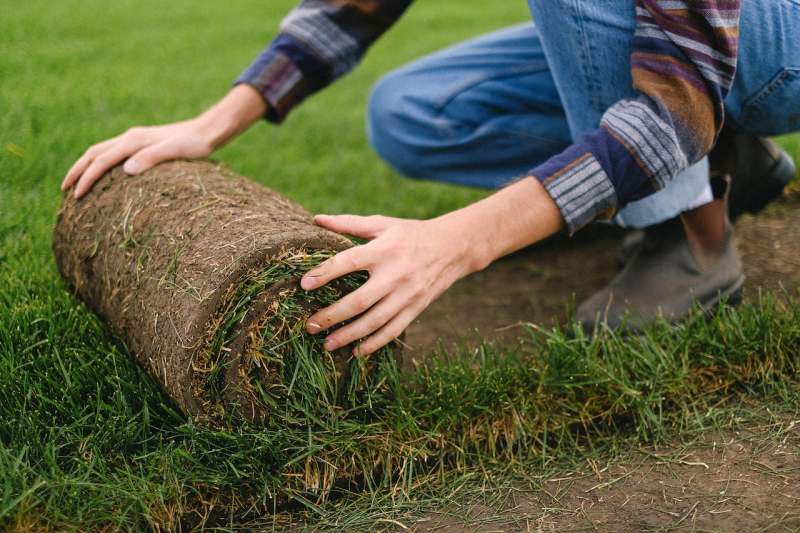
- Lay sod in mid-April. If you don’t want to grow seed from the ground up, sod is another way to repair bare patches and lawn damage.
- Fertilize: “Fertilize after approximately 50% of the grass has greened up because warm-season grasses should not be fertilized when they are still mostly dormant,” says Kopp. “Typical spring rates are 0.5 to 1 pound nitrogen per 1,000 square feet, depending on the species and desired amount of growth.”
Pro Tip: “You don’t want to fertilize [warm-season grasses] too early; otherwise, you’re helping weeds rather than the grass,” says Price.
May
By May, the warm season kicks into high gear. Here’s what you can do to give your lawn the care it needs to survive the hot summer:
- Dethatch or aerate: “If soils are compacted, aerate in late spring or early summer,” says Kopp. “Avoid aeration when turf is still partially dormant.”
- Overseed: Mid-May to early June is the best time to overseed warm-season grass.
- Put down a second application of fertilizer: If you fertilized earlier this spring, you can apply a second application 4-6 weeks later in May to prep your lawn for summer. If you haven’t fertilized yet, now’s the time to apply.
See Related:
Southern U.S.
March
Spring is when the mowing season starts, so here’s how to care for your yard at the start of spring:
- Test the soil now to know how much fertilizer to apply in May.
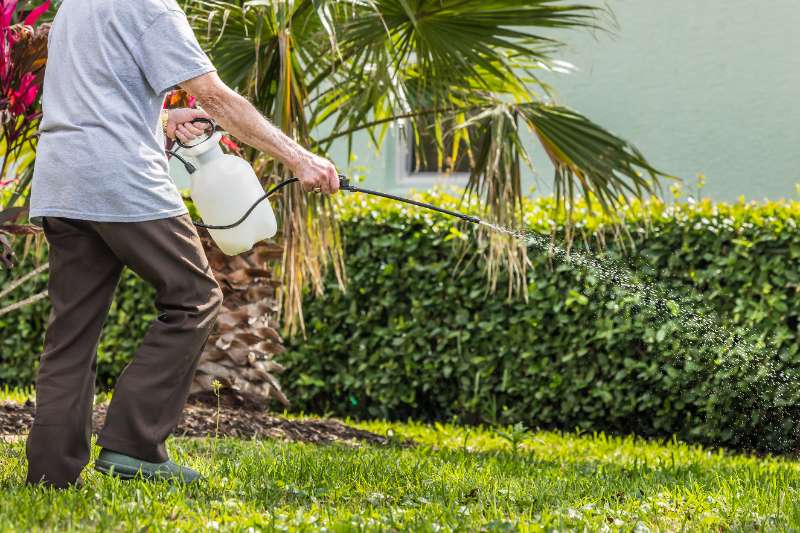
- Apply pre-emergent herbicides: Treat for crabgrass, goosegrass, and other summer annuals. “As a rule of thumb, pre-emergent herbicides should be applied before soil temperatures reach over 55 degrees F for several days,” says Kopp.
- Apply post-emergents if you already see weeds in the lawn.
- Start mowing as the grass starts to grow.
See Related:
- When to Apply Crabgrass Preventer (Plus How to Do It Right)
- How to Get Rid of Crabgrass in Your Yard
April
Take care of these lawn care tasks in April:
- Treat pests: Get rid of fire ants by spreading granular bait across the lawn, then targeting mounds with a liquid drench.
May
- Repair the lawn: Spring is the season to repair warm-season lawns. Now is the time to dethatch or aerate, fertilize, and overseed to fill in your lawn as it enters its main growing season. Once the grass greens up, apply up to 1 pound of nitrogen per 1,000 square feet.
FAQ About Cool-Season and Warm-Season Lawns in Spring
Early spring fertilization does not speed up spring green-up and can actually weaken your grass. Fall fertilizer applications are better for improving green-up in spring.
Yes. “Cool-season grasses come out of dormancy more quickly than warm-season grasses and grow actively in spring. But they can easily be overstimulated by spring fertilization,” says Kopp.
Cool-season grasses: “A low to moderate nitrogen rate is recommended, preferably in a slow-release formulation,” says Kopp.
Warm-season grasses: “Warm-season grasses stay dormant well into spring and should not be fertilized until they are more than 50% green, and soil temperatures at 4 inches reach 65 degrees F,” says Kopp. “Once warm-season grass green-up begins, they benefit from moderate nitrogen rates.”
Leave Your Lawn to LawnStarter
Timing is key when it comes to maintaining a healthy lawn. It’s important to know the right time to apply herbicides and fertilizer for your grass type.
LawnStarter’s lawn treatment pros:
- Apply herbicides and fertilizer at the optimal time
- Use professional-grade products
- Guarantee results
If you don’t want to deal with managing a lawn care calendar, a LawnStarter pro can handle your lawn care tasks for you, including mowing, aeration, fertilization, weed control, and more.
Read More: 13 Spring Lawn Care Tips
Sources:
- “Avoid Fertilizing Your Lawn Too Early.” By Jessica Strickland, Extension agent. North Carolina Cooperative Extension.
- “Bermudagrass Home Lawn Management Calendar.” By Casey Reynolds, assistant professor and Extension turfgrass specialist, and Matt Elmore, turfgrass specialist. Texas A&M AgriLife Extension.
- “Chapter 10 – Turfgrass Management in Tennessee.” By Tom Samples, retired professor and Extension specialist, et al. University of Tennessee.
- “Cool-Season Grasses: Lawn Maintenance Calendar.” By Peng Tian, plant diagnostic clinic director and assistant Extension professor. University of Missouri.
- “Home Lawn Fertilization.” Cornell University.
- “Homeowner Do-It-Yourself Lawn Calendar for Warm-Season Grass.” Jared Hoyle, turfgrass research and Extension agent. Kansas State University.
- “Importance of Soil Temps.” Walter Reeves: The Georgia Gardener.
- Kelly Kopp, Extension turfgrass specialist at Utah State University, Logan, UT. Personal interview.
- “Landscape Maintenance Schedule.” By Extension experts David Hillock, Tom Royer, Jennifer Olson, Dennis Martin, Mike Schnelle, Nathan Walker, and Eric Rebek. Oklahoma State University.
- “Lawn Care Calendar.” University of Minnesota Extension.
- “Lawn Fertilization for Warm Season Grasses.” By M. Goatley, turf Extension specialist, E.H. Ervin, turf associate professor, and S.E. Heckendorn, laboratory manager. Virginia Cooperative Extension.
- “Managing Lawns and Turfgrass.” By Brad Fresenburg, Division of Plant Science, and Lee Miller, Division of Plant Science. University of Missouri Extension.
- “Patience is a Virtue in Spring.” By Kelly Feehan, Extension educator. University of Nebraska Extension.
- “Seasonal Growth Pattern of Grasses.” University of California Agriculture and Natural Resources.
- Steven Price, Extension associate professor at Utah State University, Logan, UT. Personal interview.
Main Image: Green lawn and flowers in front of a house. Image Credit: fotomine / Adobe Stock with Text Overlay using Canva Pro