| Key Takeaways |
|---|
| • Zoysiagrass needs 1-1.5 inches of water weekly during the growing season (June-August). • Water deeply, and as infrequently as possible. Wait for the soil to dry out, or the grass to show drought stress. • Sandy soils require more frequent watering; clay and loam may need watering only once per week. |
Watching your Zoysia turn brown and wondering if you’re watering enough or too much? Zoysiagrass needs 1 to 1.5 inches of water per week during its growing season, typically delivered in 1-2 watering sessions.
With tips from 3 experts, we’ll explain how to adjust this baseline for the season first, then adapt watering amounts and frequency based on your soil type and specific circumstances.
| Need help keeping your Zoysia lawn perfectly watered? Get matched with LawnStarter’s local irrigation pros who can design an irrigation schedule tailored to your yard’s specific needs. |
Zoysiagrass Water Requirements at a Glance
| Season | Water Amount | Frequency |
| Spring (Mar-May) | 1 inch/week | 1-2 times weekly |
| Summer (Jun-Aug) | 1-1.5 inches/week | 1-2 times weekly |
| Fall (Sep-Oct) | 1 inch/week | Once weekly |
| Winter (Nov-Feb) | 0.5 inches | Every 3-4 weeks |
Watering Zoysiagrass by Season
Spring: Waking Up from Winter (March-May)
Spring is when Zoysiagrass transitions out of dormancy and begins greening up. Consistent watering establishes strong growth for the summer ahead.
Watering guidelines:
- Established grass needs 1 inch of water per week, including rainfall.
- Water once per week for clay and loam soils; twice per week for sandy soils.
- Water between 4 a.m. and 9 a.m. to discourage fungal diseases like large patch.
A rain gauge is “a simple and effective way to determine whether irrigation is needed,” says Jack LeCroy, Extension agent with the Alabama Cooperative Extension in Mobile County.
“Setting a weekly reminder during the growing season (to check and empty your gauge) can help ensure consistent monitoring…and avoid unnecessary applications.”
If the gauge shows less than 1 inch at week’s end and you see signs of stress (wilted blades in the morning), it’s time to water.
Important: New sod and freshly planted seed have different watering requirements.
Summer: Peak Growing Season (June-August)
As a warm-season grass, Zoysiagrass experiences its peak growth during summer. Deep, infrequent watering builds drought-resistant roots.
Going on vacation? “I usually recommend they set their irrigation systems to run once a week and to make sure their rain shut-off devices are working,” says Amanda Marek, University of Florida IFAS Extension agent in Ocala, Florida.
This ensures your lawn gets just the right amount and is green and healthy when you return.
Watering guidelines:
- Grass needs 1 to 1.5 inches per week (adjust based on rainfall).
- Water once or twice per week for clay and loam soils; two or three times per week for sandy soils.
- Water between 4 a.m. and 8 a.m. to reduce evaporation.
“Apply 0.5 to 0.75 inch of water per application,” as a general rule, says Ralph Mitchell, director for UF/IFAS Extension in Charlotte County. Watering this amount “will get the water down up to 8 inches,” he says.
During extreme heat or drought: Zoysia can enter dormancy as a survival mechanism. You have 3 options:
Option 1 – Let It Go Dormant (Most Water-Efficient): Grass turns brown but survives until rainfall returns.
- Apply 0.25-0.5 inches weekly to keep roots alive.
How do you know whether your Zoysia is dormant vs. dying? “Irrigate a small area and observe the response over time,” LeCroy says. “If the grass begins to green up, it is likely dormant rather than dead.”
Another clue your turf is dormant, not dead? Look for uniform browning across the lawn, he says. Patchy areas of browning often indicate other issues.
Option 2 – Keep It Semi-Green: Grass maintains some color without excessive water use.
- Apply 0.5-0.75 inches weekly when you notice signs your grass needs watering, like wilting or blue-gray color.
Pro Tip: Don’t check for signs of drought midday, Marek says.
“In the middle of the day, the grass will naturally fold-up and look dry,” she says. “That is a normal, healthy plant response to conserve water when the sun is at its highest and hottest. This kind of stress is like exercise and encourages deep, resilient roots.”
Check grass for signs of drought first thing in the morning or in the evening instead. “If it’s open, green, and perky, it doesn’t need irrigation, but if it is still folded and looking off-color, that is the grass telling you it could use a drink,” she says.
Option 3 – Maintain Active Growth: Grass stays fully green and actively growing.
- Apply 1.5-2 inches per week.
- Water in 1-3 deep applications (depending on soil type) rather than daily sprinkles.
- Water between 4 a.m. and 8 a.m. to reduce evaporation.
Important: If your area has summer watering restrictions, follow local regulations. In Ocala, for example, watering is allowed only 1-2X per week, Marek says, depending on the time of year and current water advisory. Dormant Zoysia will green up when rainfall returns or restrictions are lifted.
See Related: Guide to Growing Warm-Season Grasses
| Need help managing your summer lawn? LawnStarter’s professional lawn care services can maintain proper mowing height (1-2.5 inches) to reduce water stress. |
Fall: Preparing for Dormancy (September-October)
Zoysiagrass prepares for winter dormancy as temperatures cool and growth slows. It enters dormancy when soil temperatures drop below 50-55 degrees.
Watering guidelines:
- Grass needs 1 inch of water per week (including rainfall).
- Water once per week; twice weekly in sandy soil.
- Water between 4 a.m. and 9 a.m. to discourage fungal diseases.
- Reduce frequency as temperatures drop.
Winter: Dormant but Not Dead (November-February)
Zoysiagrass lies dormant and brown during winter but still needs occasional moisture to prevent desiccation (drying out).
“Overwatering is the no. one mistake, especially in the winter months,” Marek says, so don’t be tempted to apply too much. Zoysia “is quite prone to fungal diseases, especially when it is overwatered,” she says.
Watering guidelines:
- Apply 0.5 inches of water every 3-4 weeks if no rainfall occurs.
Important: Avoid watering when temperatures drop below 40 degrees or soil is frozen. Ice formation damages crowns and makes grass more susceptible to winter diseases and spring pest issues.
Watering Zoysiagrass by Soil Type
Your soil type significantly affects how often and how much you should water because it dictates how long water stays in the root zone.
The key for all soils is to water deeply each time, wetting the top 6 to 8 inches, and then wait as long as possible before the next irrigation. This approach encourages Zoysiagrass to extend roots 6 to 12 inches into the soil, improving its drought tolerance.
Not sure what soil type you have? Squeeze moist soil: Sandy soil falls apart immediately, clay forms a tight ball, and loam holds its shape but crumbles with light pressure.
Sandy Soil
| Soil Type | Watering Adjustments |
| Sandy soils drain quickly like a colander — water runs right through. Apply smaller amounts more frequently to prevent water from draining below the root zone before your grass can absorb it. | • Water 2-3 times per week during summer. • Apply 0.5 inches per session for a 1-1.5 inch weekly total. • Wet the soil 6 to 8 inches down. |
See Related: How to Amend Sandy Soil
Clay Soil
| Soil Type | Watering Adjustments |
| Clay soils retain moisture much longer than sand but absorb water slowly. Water strategically to minimize puddling and runoff. | • Water once every 5-7 days during summer. • Apply 1 inch per session. • Use the cycle-and-soak method: Water slowly until runoff starts, wait 30 minutes, then resume until water penetrates 6 inches deep. |
Loamy Soil
| Soil Type | Watering Adjustments |
| Loamy soil offers ideal drainage and moisture retention for deep, infrequent watering. This encourages Zoysiagrass to develop strong roots without requiring special watering adjustments. | • Water once per week during summer. • Apply 1-1.5 inches per session. • Wet the soil 6 to 8 inches down. |
How to check soil moisture: Push a screwdriver 6 inches into your lawn. If it goes in easily, the soil has adequate moisture. If it’s difficult to push, it’s time to water.
| Need help adjusting your irrigation system? LawnStarter’s professional irrigation services can ensure even coverage and water efficiency across your entire lawn. |
Best Practices for Watering Zoysiagrass
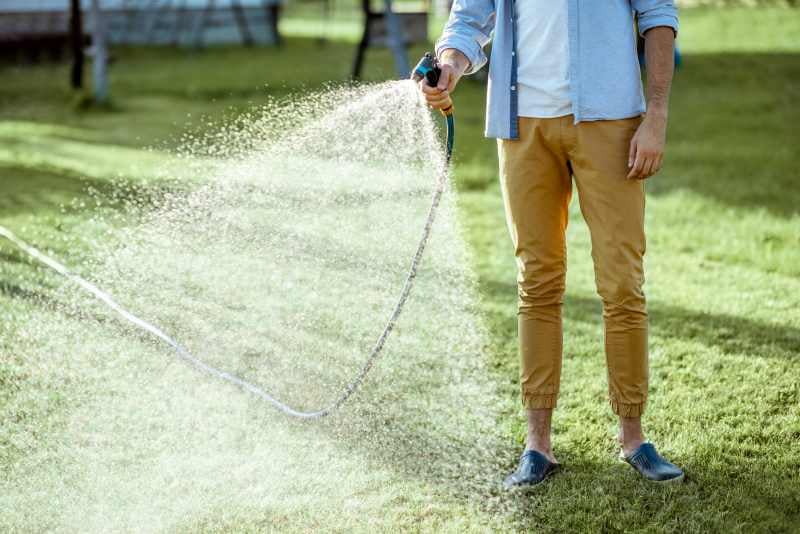
- Water between 4 a.m.-8 a.m. (9 a.m. in spring and fall) when winds are calm, and evaporation is minimal. Morning watering allows grass blades to dry before nightfall, reducing the risk of fungal diseases.
- Watch for signs of drought stress and water accordingly. A bluish-gray color, folded leaf blades, or footprints that don’t bounce back indicate your grass needs water.
- Test your sprinkler coverage by placing tuna cans throughout your lawn. Run sprinklers for 15 minutes and measure water collected to ensure even distribution.
- Consider smart irrigation controllers that adjust watering based on local weather and soil moisture. They can reduce water use by 15%-40% while keeping your lawn healthier.
Many homeowners are “unfamiliar with their irrigation system,” Mitchell says, which often leads to overwatering.
It’s important to adjust your watering schedule by season, as evaporation levels and watering needs change; know how long to run each zone; and check that your rain shut-off device is functioning properly, he says.
It’s the responsibility of the homeowner to “take care of their investment — either themselves or a professional company — that often makes the difference,” he says.
Special Watering Situations
New Sod
Water new Zoysiagrass sod immediately after installation, soaking the soil 3-4 inches deep. Follow this schedule for establishment:
Watering schedule:
- Week 1: Water twice daily (morning and late afternoon) to keep sod and soil moist.
- Week 2: Reduce to once daily watering as roots begin to anchor.
- Week 3+: Transition to the normal watering schedule based on season and soil type once roots are firmly established.
For complete sod installation and care guidance, see our new sod care guide.
New Seed
Establishing Zoysiagrass from seed (Zenith and Compadre varieties) requires consistent moisture management.
Watering schedule:
- Weeks 1-3 (germination): Water 2-3 times daily with light applications to keep the soil surface constantly moist. Germination takes 10-28 days.
- Weeks 4-12 (establishment): Once seedlings appear, reduce to once daily watering. Keep the top 3 inches of soil moist.
- After week 12: Transition to a normal watering schedule based on season and soil type.
For more information, see our article on How Often to Water Grass Seed.
FAQs About Zoysiagrass Watering
Signs of overwatering include spongy soil and excessive thatch. Overwatered Zoysia develops shallow roots, yellow patches, and fungal diseases like brown patch.
No. While Zoysia needs similar weekly amounts (1-1.5 inches) as other warm-season grasses, its deep root system and ability to go dormant make it more drought-resilient when water is scarce.
Get Professional Help for Your Zoysiagrass
Zoysiagrass thrives on 1-1.5 inches of water per week during its growing season, adjusted for soil type and seasonal changes. Deep, infrequent watering builds stronger roots and a more resilient lawn than frequent, shallow sprinkles.
Ready to achieve the perfect lawn? Get a free mowing quote from LawnStarter and connect with top-rated lawn care pros in your area today. They can maintain your irrigation system, handle mowing, and make sure your lawn is fertilized on schedule.
Read More:
- Growing Zoysiagrass: Everything You Need to Know
- 11 Essential Lawn Watering Tips for Florida
- How Often Should I Water My Lawn?
- When to Stop Watering Your Lawn
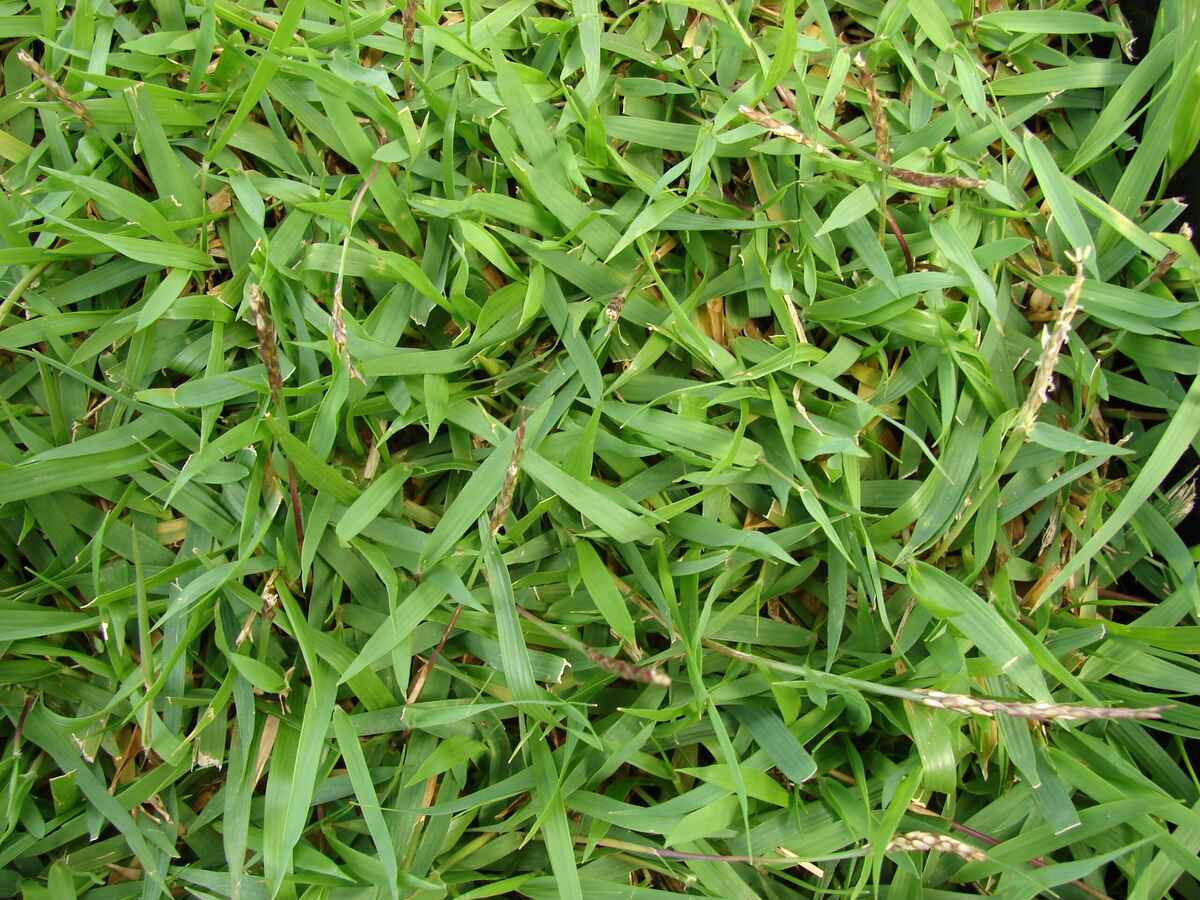
Main Image: Close-up of zoysia grass with seedheads. Image Credit: Forest & Kim Starr / Wikimedia Commons / CC BY 3.0
Sources:
- Amanda Marek, Extension agent and Florida-Friendly Landscaping specialist with University of Florida IFAS Extension, Marion County. Personal interview.
- Jack LeCroy, home horticulture Extension agent with Alabama Cooperative Extension, Mobile County. Personal interview.
- Ralph Mitchell, director/horticulture agent for the UF/IFAS Charlotte County Extension Service. Personal interview.
Related Posts: