| Key Takeaways |
|---|
| ● Dormancy is a natural process that protects your lawn during stressful weather. ● Dormant grass browns evenly across the whole lawn; dead grass shows scattered brown patches. ● Do the tug test: resistance means live roots, grass that pulls out easily likely means it’s dead. |
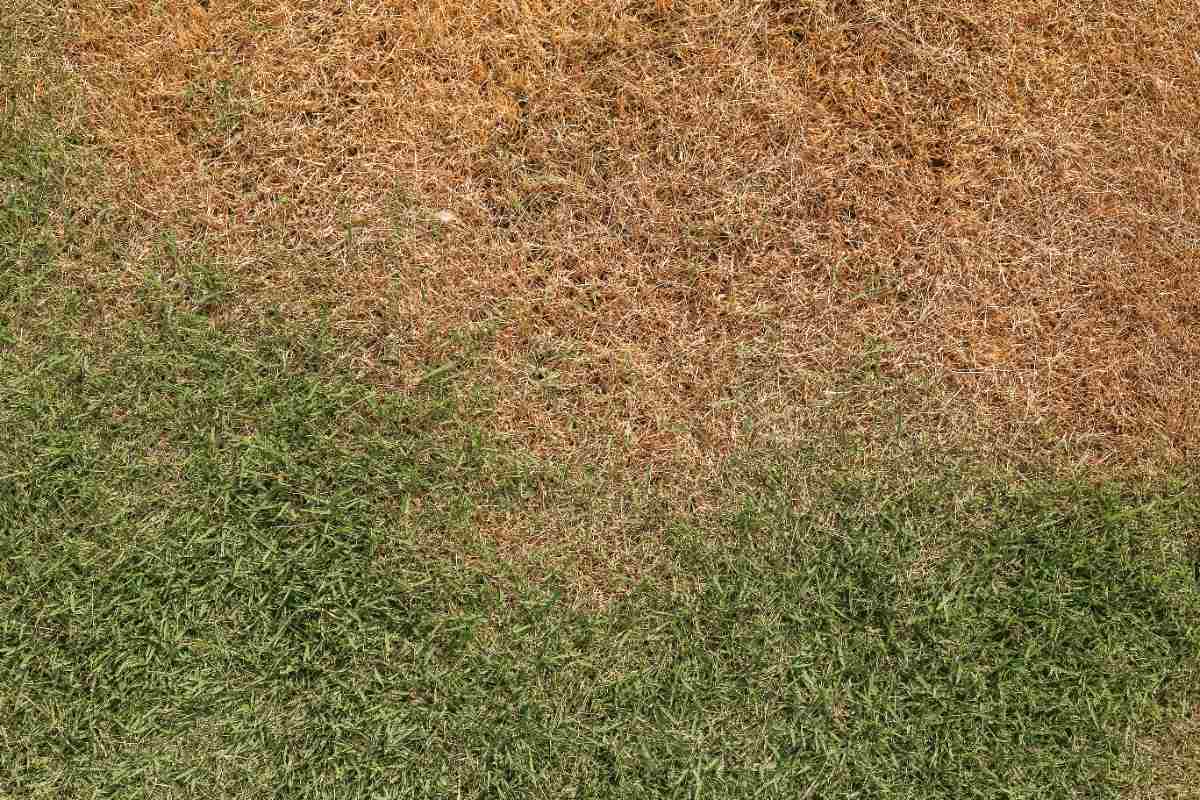
Staring at a brown lawn and fearing the worst? Take a breath. Most brown grass is dormant, alive and resting to survive heat, drought, or cold, and it greens up on its own when conditions improve.
Three quick checks settle it: Dormant grass browns evenly across the whole lawn, resists a gentle tug, and keeps a firm, whitish crown (where the blade meets the root). Dead grass browns in patches, pulls out easily, and feels mushy at the base.
This guide walks you through each test, explains why grass goes dormant in summer and winter, and shows what to do next, whether your lawn needs patience and TLC or an overseeding pro to reseed it.
How to Tell Dormant Grass From Dead Grass
| Dormant Grass | Dead Grass | |
| Color | Tan or straw-colored (never dark brown or black) | Dark brown, black, or slimy, especially if wet |
| Pattern | Even, across the entire lawn | Patchy or concentrated in one area |
| Crown | Firm and whitish to pale green | Brown, brittle or mushy |
| Tug test | Resists pulling | Pulls out with no resistance |
| Recovery | Greens up when weather improves | Won’t come back on its own |
Dormant grass is turfgrass that has stopped growing and browned to conserve energy while it waits out stressful weather. Three checks tell you if you’re looking at dormant or dead grass:
- Look at the pattern. Dormant grass doesn’t brown in well-defined patches. “When healthy grass changes to a yellowish or light-brown color in winter, the color shift should happen evenly across the lawn,” says Susan Haddock, Extension educator with the University of Florida.
- Check the crown. The crown is the point just above the soil where the stems and roots meet. Dormant grass has a firm, whitish crown. Dead grass has a crown that’s brown, brittle, or mushy.
- Try the tug test. Grab a handful of grass and pull gently. Resistance means the roots are alive and the grass is dormant. If it slides out easily, the grass is dead.
Why Grass Goes Dormant in Summer and Winter
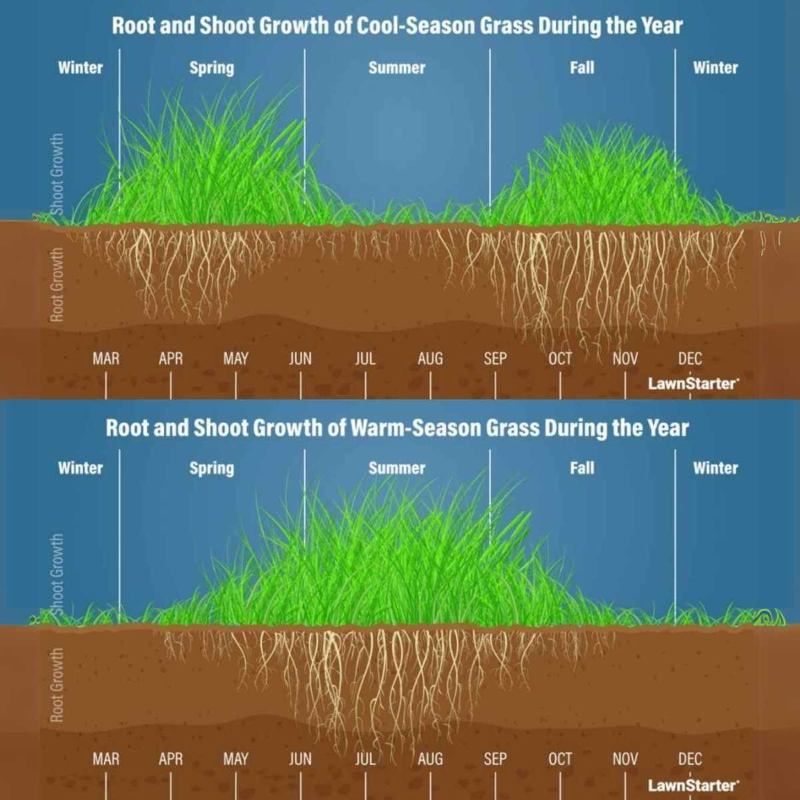
Grass goes dormant when stressed by excessive heat and drought during summer and by low temperatures in winter. In both cases, it’s a survival strategy.
“It’s OK if your yard goes dormant; it’s not killing it. It’s a normal, natural process,” says LawnStarter pro Justin Stultz, owner of Wildflower Lawn Care in Hutto, Texas.
Winter Dormancy
Warm-season grasses (Bermuda, Zoysia, St. Augustine) go dormant and lose color when average air or soil temperature drops below 50 to 55 degrees and stay brown until soil reaches 65 degrees.
Cool-season grasses (fescue, bluegrass, ryegrass) slow sharply as soil cools through the 40s and hold color longer, browning fully only where winters are consistently freezing.
Haddock explains what happens: “In the fall, plants begin moving carbohydrates and nutrients from their leaves down into their roots.” Those stored nutrients are what keep grass alive through winter until warmth returns and growth resumes.
Summer Dormancy
Cool-season grasses often go dormant in summer when temperatures go above 80 to 90 degrees, and there’s little to no rain. Warm-season grasses tolerate that heat better and enter dormancy only when exposed to prolonged drought.
Water availability drives summer dormancy more than temperature alone. Heat increases how much water grass loses each day, and dormancy begins when soil moisture can no longer keep up with the grass’s needs.
See Related: How to Prepare Your Lawn for Summer, With LawnStarter’s Help
Dormancy and Watering Restrictions
Most “Is my lawn dead?” questions trace back to a stretch of dry heat or a watering ban that leaves no choice but to wait it out.
A dormant lawn can survive roughly 3 to 6 weeks without permanent damage. Past that, thinning and patchy death start setting in.
Under watering restrictions: Follow your local rules. Use your water allowance to ensure about half an inch every 2 to 3 weeks. It does more for survival than daily sprinkling, and uses less water overall.
One way to check recovery on a drought-dormant lawn is the rebound test: Water a small patch by hand, or wait for the next rain. If the lawn is dormant but alive, green growth shows up across the whole area within 7 to 10 days.
If you can irrigate weekly during drought: Choose a lane and stay in it. Irrigate consistently during prolonged summer drought, or let the lawn stay dormant.
Watering heavily for a few weeks to keep it green, then stopping, then watering regularly again, burns through the reserves the grass needs to survive stressful periods.
See Related:
Signs Your Grass Might Actually Be Dead
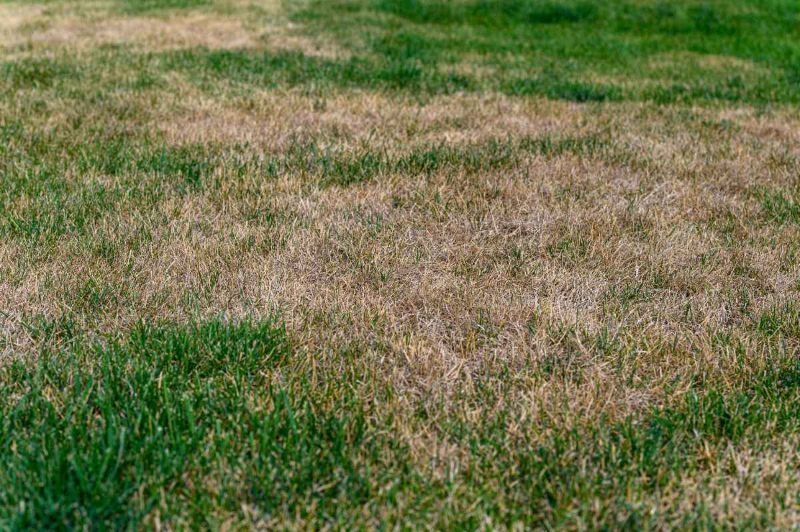
Not all brown means dormant. Pest and disease damage can end badly, though it is fairly easy to spot because it turns up as circular or irregular patches that grow and merge.
“These issues rarely affect the entire lawn unless they’re not noticed or treated early,” Haddock says.
| What the Damage Looks Like | Likely Cause |
| Straight edges or stripes matching spreader passes | Fertilizer burn or chemical damage |
| Small round tan spots ringed with dark green grass | Dog urine |
| Brown patches that grow and merge | Fungal disease |
| Irregular patches where turf rolls back like carpet | Grubs |
| Thin straw-colored strips along driveways and walkways | De-icing salt |
| Winding surface trails of tan grass; mounded soil | Voles or moles |
| Matted, crusted patches appearing as snow melts, sometimes pink- or gray-edged | Snow mold |
| Bleached, brittle grass on exposed high spots, slopes, and windy edges | Winter desiccation |
| Low spots that stay brown while the rest greens up | Crown hydration |
Spreading damage is the one case where waiting costs you. Grubs, fungal disease, and moles keep working while you watch, so treat those as soon as you spot the pattern, or hire a lawn treatment pro to do it.
See Related:
- 11 Summer Lawn Pests and How to Get Rid of Them
- Lawn Fungus Treatments: Costs, Types, and Do They Work?
How to Care for Dormant Grass
A dormant lawn asks for very little. The goal is to keep the crown alive until growing weather returns, then get out of the way while the grass rebuilds.
- Water lightly for survival. Half an inch every 2 to 3 weeks keeps summer-dormant grass alive until rain returns without waking it up. Use the same treatment in winter during mild and dry weather.
- Stay off the turf. Traffic on dry, dormant grass, wet spring soil, or frosted blades can turn a recoverable lawn into a reseeding job.
- Stop mowing until the grass starts growing again.
- Don’t aerate the lawn. Dormant grass can’t recover from the mechanical damage that comes with it.
- Skip the fertilizer until the grass is actively growing, meaning you’ve mowed at least 2 times.
When the lawn wakes up, expect some scattered thinning. Before you decide to overseed:
- Give it a few weeks before judging. Green-up can be patchy and slow.
- Wait until fall to repair cool-season lawns. The best time to overseed cool-season lawns is from late August through mid-October, when soil is warm enough for seed to germinate but air temperatures have eased.
See Related: How to Take Care of Your Lawn During a Drought
What to Do If the Grass Is Dead
Dead turf won’t recover with water, fertilizer, or time. The fix is replacing the plants, and how much work that takes depends on the size of the damage.
- Clear the dead material first. Rake out the dead blades and thatch so new seed reaches the soil.
- Fix the cause before you replant. Grubs, drainage problems, and salt spray will kill the replacement grass the same way they killed the first stand of grass.
- Seed or sod. Seeding costs $0.09 to $0.15 per square foot and works well on small to medium areas. Sod installation costs, on average, $1.65 per square foot, gives instant coverage, and suits large patches and slopes.
- Time it right. Early fall is the best window to seed cool-season grasses. Late spring through early summer is the best time for warm-season grasses.
To prolong the summer green in drought-prone areas, choose a more drought-tolerant grass.
“In northern climates, this includes tall fescue and fine fescue, while in southern climates, this includes Bermudagrass and centipedegrass,” says Alec Kowalewski, turfgrass specialist at Oregon State University.
Drought-tolerant grass can stay green through the hottest part of summer even if you only give it about half the water it would naturally use up, he says.
Not sure whether your lawn repair is a seeding job or a sod job? A local LawnStarter landscaping pro can walk the yard, confirm what killed it, and price both options.
See Related:
Regional Differences in Dormancy
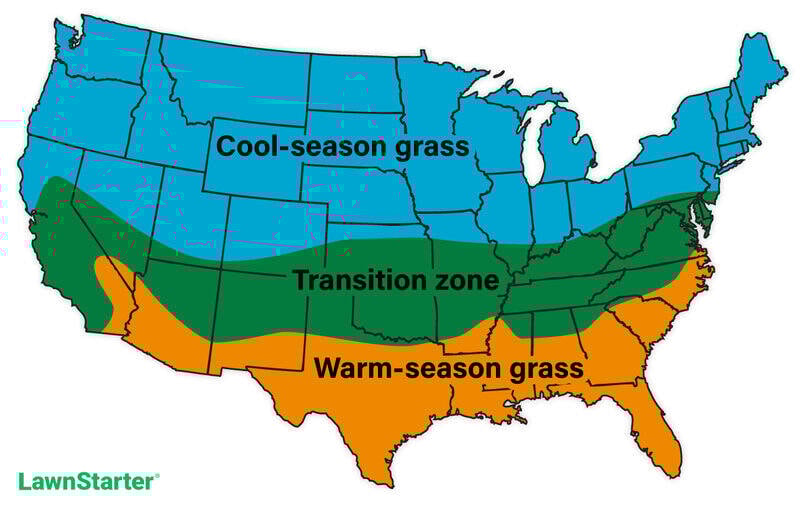
How brown your lawn gets, and for how long, depends on your grass type and climate. After a brutal winter, yellow dormant turf can remain stunted well into spring, says Ed Nangle, turfgrass specialist at Ohio State University.
That’s especially true for perennial ryegrass, which struggles with temperatures below 0. Kentucky bluegrass handles the cold better, he says.
| Region | Winter Dormancy | Summer Dormancy |
| North (cool-season grasses) | For most lawns, fully dormant by late November, yellow-brown until March; some lawns may stay green all season | Brown during hot, dry spells. About 1 to 1.5 inches of water per week can prevent this. |
| Transition zone (both) | Cool-season browns in January to February (mild coastal spots stay green); warm-season browns by mid-fall | Cool-season is stressed and browns during midsummer; warm-season hits peak green during this time |
| South (warm-season grasses) | Browns fully in areas that freeze; only yellows in milder areas; green year-round in the southernmost regions | Dormant under severe drought or watering restrictions |
Moving from Virginia to North Texas, Bennett Barrier, who runs an artificial turf company, has watched how natural lawns behave and the differences that play out across the transition zone and grass types.
“In Virginia, the cool-season grasses hardly change color in winter, with the occasional tinge of yellow,” he says. “Down here, warm-season grasses turn completely brown almost overnight after a freeze.”
See Related: Guide to Growing Grass in the Transition Zone
FAQ
You can, but most lawn pros recommend letting grass go dormant. A safer workaround for winter and summer curb appeal is grass paint, a non-toxic pigment that holds color for 2 to 3 months without stressing the plant.
Yes. As long as the crown and roots are alive, dormant grass greens back up once temperatures and rainfall return to normal for the season, typically within 2 to 4 weeks.
Hire a Local Lawn Care Pro
Figuring out if your lawn needs help or just needs time takes a trained eye. If you’d rather leave the diagnosis and the fix to someone who does this every day, LawnStarter makes it simple.
Hire a vetted local landscaping pro to diagnose your lawn and provide a solution that brings your dormant or dead lawn back to life.
Sources:
- Alec Kowalewski, turfgrass specialist at Oregon State University. Personal interview.
- Bennett Barrier, a homeowner and the CEO of DFW Turf Solutions, Dallas, Texas. Personal interview.
- Ed Nangle, turfgrass specialist and associate professor at Ohio State University/ATI, Wooster, Ohio. Personal interview.
- Justin Stultz, LawnStarter pro and owner of Wildflower Lawn Care, in Hutto, Texas. Personal interview.
- Susan Haddock, Extension agent IV at the University of Florida Extension in Hillsborough County, Seffner, Florida. Personal interview.
Main Image: A lawn shows a striking contrast between a large patch of dry, brown grass and the surrounding healthy green turf. Photo Credit: saitharn / Adobe Stock