As the heat of summer bakes Texas, your green grass likely is turning yellow and brittle. How to keep your grass alive in record heat? We asked a couple of our LawnStarter pros for their tips.
After all, our Texas lawn mowing pros aren’t just mowing your grass or your neighbor’s, but they have to brave this same brutal heat to keep their own lawns looking trim and sharp. So their 5 tips can help you care for your grass wherever you live in the Lone Star State.
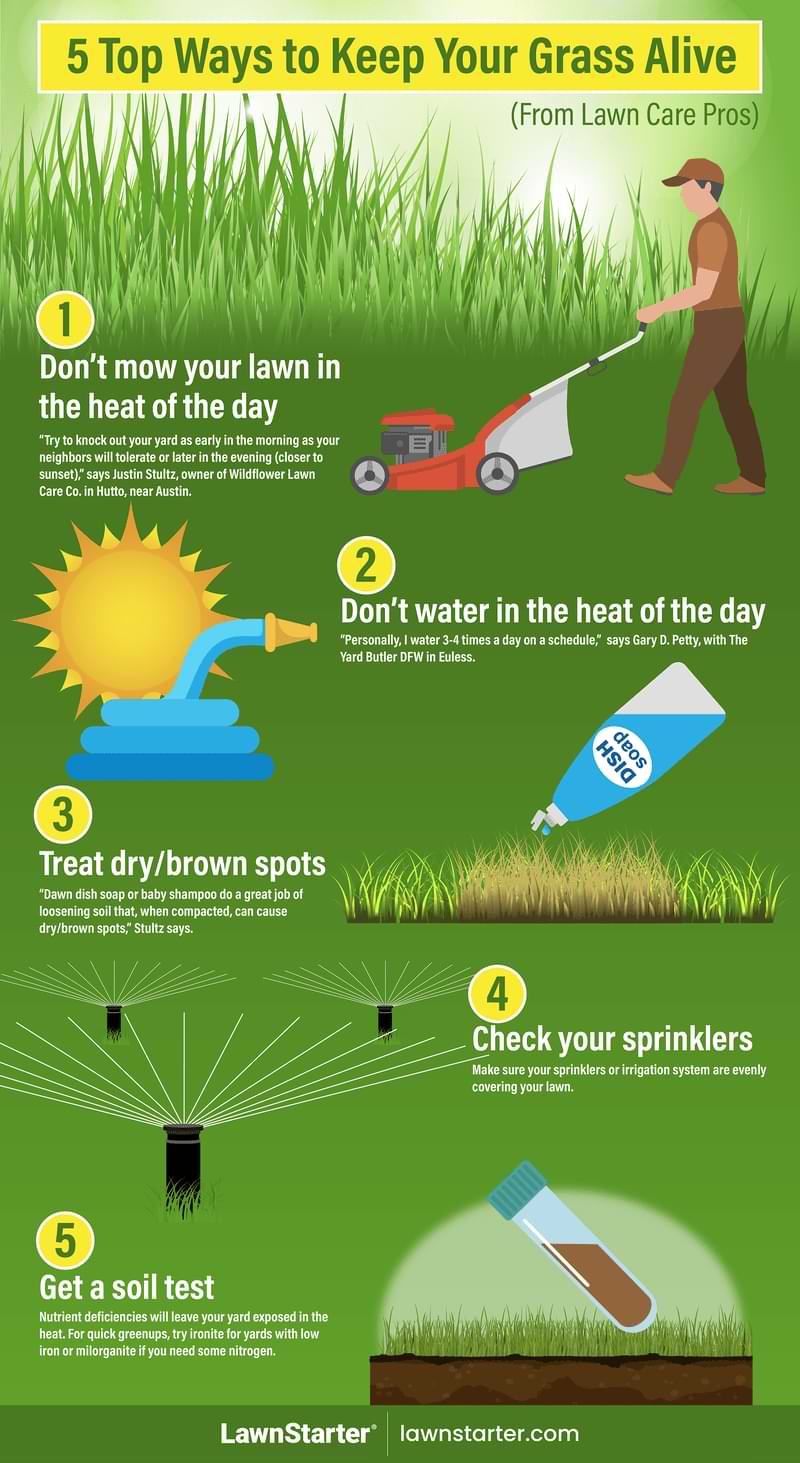
1. Don’t Mow in the Heat of the Day
The best time of the day to mow your lawn in summer is between 8 a.m. and 10 a.m. Avoiding conditions that are too hot, too moist, and too late (or early) in the day reduces stress on your lawn and gives it plenty of time to recover before nightfall.
“Try to knock out your yard as early in the morning as your neighbors will tolerate or later in the evening (closer to sunset),” says Justin Stultz, owner of Wildflower Lawn Care Co., in Hutto, near Austin.
2. When and How to Water Your Grass in Summer
The best time to water your lawn in hot weather is between 5 a.m. and 9 a.m.
“Personally, I water 3-4 times a day on a schedule,” says Gary D. Petty, with The Yard Butler DFW in Euless. (This is easy to do with a sprinkler or irrigation system on a timer.):
– 6:30 a.m. for 15-20 minutes
– 10 a.m. for 10-15 minutes
– 8:30 p.m. for 20-25 minutes
– 2 a.m. for 10-15 minutes
Watering times vary due to soil type. Sandy soil types, for example, benefit from a cycle and soak approach.
Note: Always follow your town’s water restriction regulations/laws.
Petty, who has been in the lawn care business since 1998, noted that there will likely be many different answers when it comes to watering, and Stultz offers his take below.
Water for Longer Periods and Less Often
Most lawns need 25 to 30 minutes of water per session, twice a week, to deliver the recommended 1 inch of water.
“Watering early will keep as much moisture from evaporating in the heat as possible,” Stultz says. “And watering for longer durations, less frequently, will cause the root system to grow deeper because it will become acclimated to accessing moisture from deeper in your soil.”
See Related:
— How Long to Water Your Lawn in Summer
— How Often to Water Your Grass in Summer
3. Treat Dry Grass and Brown Spots
Possible causes of brown spots in your yard include poor pH levels, thatch buildup, fungal diseases, animal waste, and lawn pests.
And how can you get rid of patches of dry grass and brown spots in your yard?
“Dawn dish soap or baby shampoo do a great job of loosening soil that, when compacted, can cause dry, brown spots,” Stultz says.
4. Check your sprinklers
Do a sprinkler audit to make sure your irrigation system is evenly covering your lawn. “If you notice certain areas having difficulty staying green, leave an empty tuna can in the dry area overnight or for a watering cycle and see how much water the area is getting compared to greener spots,” Stultz says.
What to look for in the tuna can test: You want your grass to get 1 inch of water. Less than an inch of water in the tuna can means your grass could use more water. More than an inch and you should cut back on the duration of your watering.
5. Get a Soil Test
Why should you get a soil test? Nutrient deficiencies will leave your yard exposed in the heat.
For quick greenups, try ironite for yards with low iron or Milorganite if you need some nitrogen, Stultz says. Liquid foliar applications (on leaves of grass, not the soil) in the evening should deliver nutrients with plenty of time to dry before the next day’s heat.
Of course, make sure you are following usage instructions for quantity and frequency of use.
Tip for next year? Aerate Your Lawn
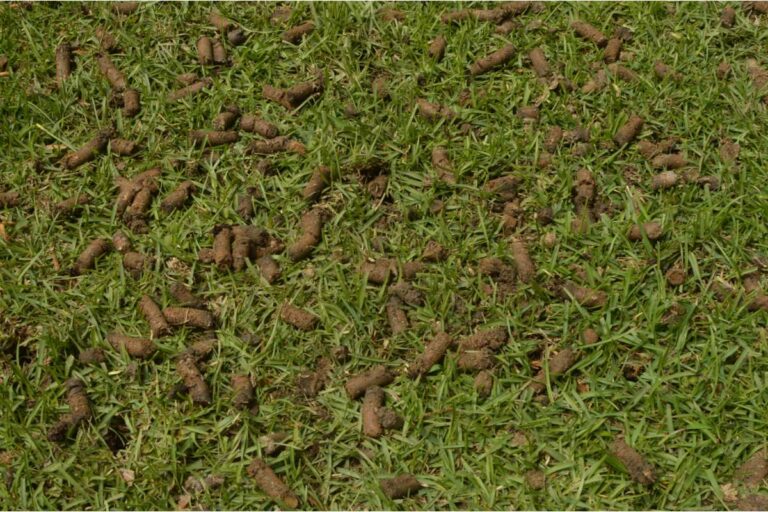
Aerate your Texas lawn in early spring so your grass can better weather the heat. What is aeration? Over time, soil becomes compacted. This makes it difficult for water, air, and nutrients to penetrate the soil.
Core aeration is basically the process of pulling up little dirt plugs out of your lawn to relieve this pressure. Liquid aeration uses chemical solutions designed to loosen compacted soil.
“Aeration helps open up your top layer of soil, so that proper water absorption can take place,” Petty says. “It allows your lawn to optimize the sedimentation rate, as well as providing proper oxygenation to the root.
“With proper preparation in spring, it is very possible to keep your lawn healthy,” Petty says.
See Related:
— Core Aeration vs. Liquid Aeration: Which is Right for Your Lawn?
Hire a lawn care pro to care for your lawn in the heat
If you’d rather not sweat pushing or riding your lawn mower and wielding a string trimmer, hire a LawnStarter lawn care pro (and get your first mow for $19). Our local lawn care providers are used to working under the Texas sun and have their own tricks to help them beat the heat.
“I hope these quick tips will help some folks out this summer!” Stultz says.
Main Photo Credit: Infographic by Juan Rodriguez
Related Posts: