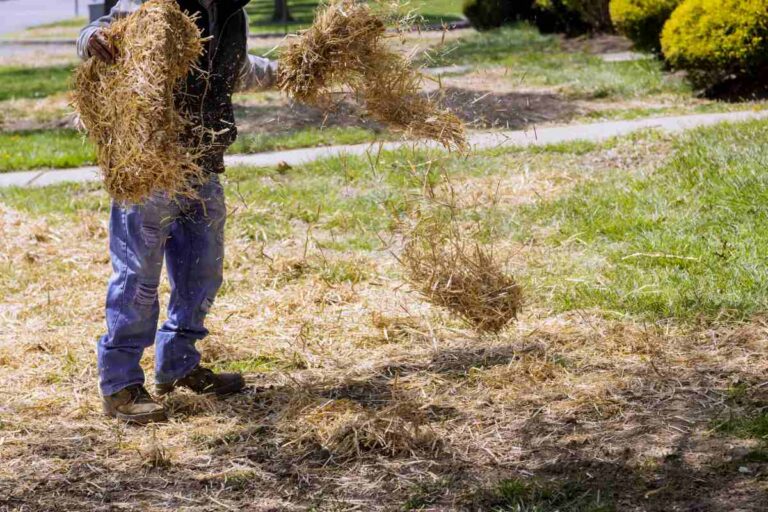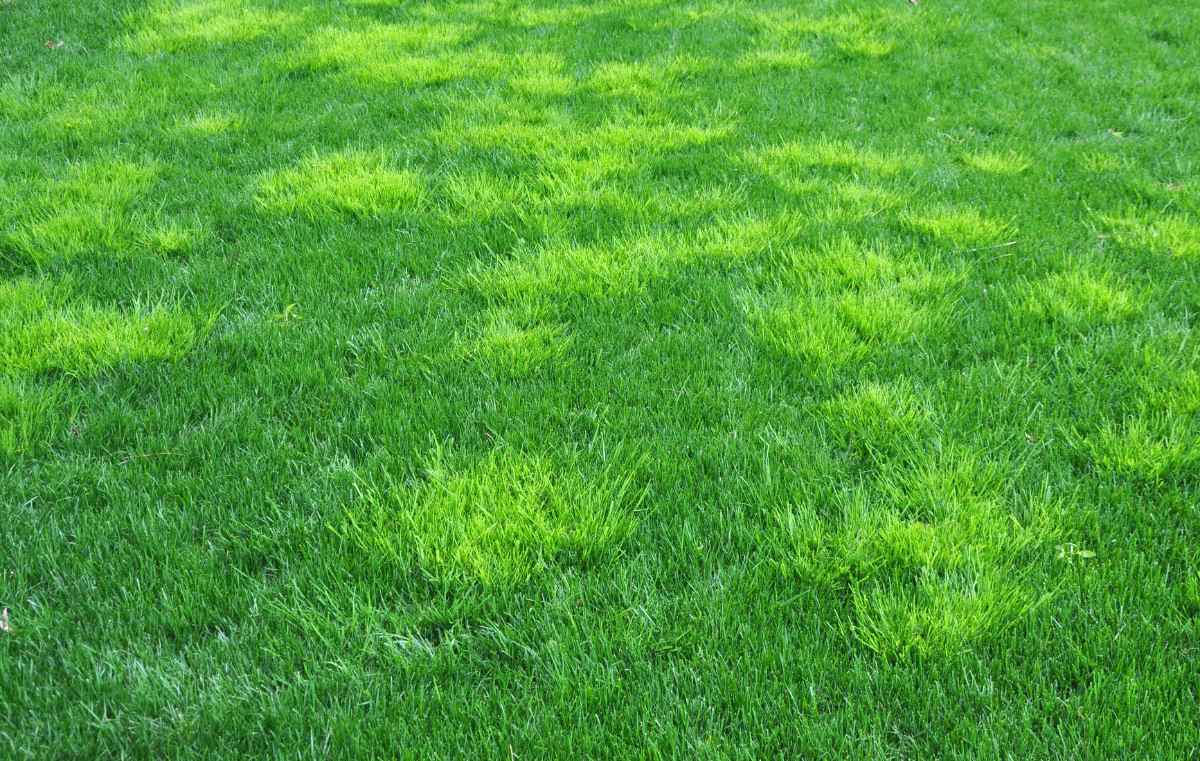
You spread pre-emergent expecting a weed-free lawn, but crabgrass is still pushing through. What went wrong?
Pre-emergent herbicides don’t kill existing weeds — they only prevent seeds from germinating when applied correctly. If weeds appeared anyway, the product was likely applied too late, it wasn’t watered in, missed spots, washed away in heavy rain, or broke down before the germination window closed.
The good news: You can fix it now and prevent it next year.
Dealing with breakthrough weeds after pre-emergent application? LawnStarter’s weed control pros provide targeted post-emergent treatments and properly timed pre-emergent applications for season-long protection. Get a quote in under a minute.
The 9 Most Common Reasons Pre-Emergent Fails
1. Didn’t Read the Label
The most common pre-emergent mistake? Skipping the fine print. According to Pawel Petelewicz, assistant professor of turfgrass weed science at the University of Florida, failures are almost inevitable when homeowners assume all pre-emergents work the same way.
“The label tells you the rate, timing, activation requirements, reapplication intervals, and turf safety limits, all based on how that specific herbicide behaves in soil,” he explains.
The fix for now: Check the product label. Did you apply at the right rate? Water it within the required window? You may find the answer to what went wrong and a solution in the sections below.
For next year: Before buying, compare labels. Products differ in how long they last, when they need water, and how often you can reapply. Choose one that fits your climate and schedule.
2. Applied Too Late
Pre-emergent must be applied BEFORE weed seeds germinate. For crabgrass, the most common target, that means applying when soil temperatures (not air temperatures) reach 50 F-55 F for 3-5 consecutive days. This is typically Feb. 1 in South Florida to as late as May in the northern states.
“Applying too late, after weeds have emerged, does pretty much nothing,” says Petelewicz, unless your product has some post-emergent activity.
The fix for now: Look for products with dithiopyr (Dimension is a popular brand), which also works as a post-emergent for crabgrass seedlings.
For next year: Monitor local soil temperatures through university Extension websites or use a soil thermometer. Apply when soil temperatures consistently reach 50-55 degrees for about 5 days.
See Related:
3. You Didn’t Water It In
Watering in the pre-emergent herbicide within 1-2 weeks of application is what activates the product. “Most PRE herbicides have to be moved into the upper soil profile to be effective,” says Petelewicz. “If that step is missed, we cannot really talk about an effective barrier.”
Without water, the product sits on the surface, breaking down from sun exposure. By the time it finally rains, less of the active ingredient reaches the weed seed zone.
Most products require 0.5 inch of water (from irrigation or rainfall) within the first week after application — the sooner, the better.
The fix for now: If you applied pre-emergent within the past two weeks and haven’t watered, irrigate immediately with 0.5 inch of water.
For next year: Apply pre-emergent right before forecasted rain, or plan to irrigate within 24-48 hours of application.
4. Uneven or Missed Coverage
Pre-emergent only works where you apply it. Miss a spot, and weeds will find it. Common causes include poor calibration, spreader streaking, skipped passes along edges, or simply walking too fast.
“Even small gaps can lead to very visible and persistent failures,” Petelewicz warns.
The fix for now: Apply post-emergent herbicide to visible weeds in breakthrough areas. Make note of where gaps occurred.
For next year: Use a professional weed control service for even coverage, or split your application into 2 passes at half rate, with the second pass perpendicular to the first.
5. One Application Isn’t Enough
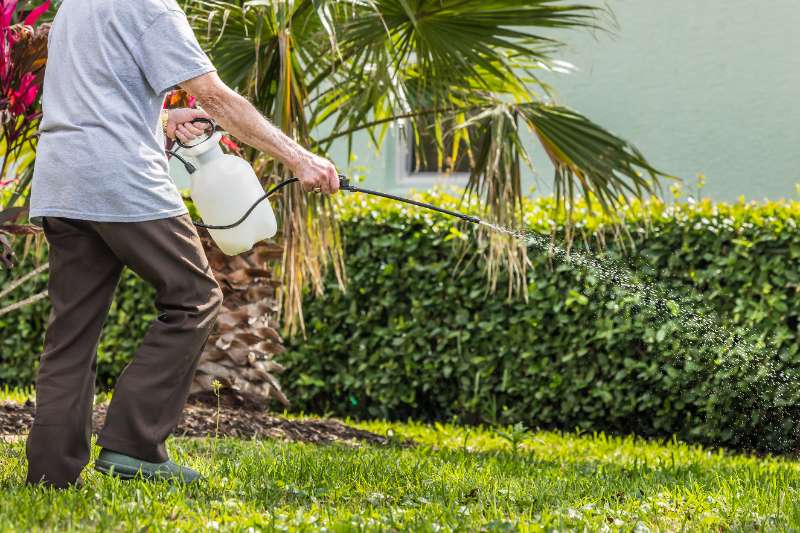
Many common pre-emergents protect for 8-12 weeks. But in warmer regions like the Deep South, Texas, and California, crabgrass can germinate for 4-6 months or longer, from late winter through midsummer. A single application simply can’t cover the entire window, which is why a second one is recommended.
The fix for now: Seeing new weeds in the summer? Treat with a post-emergent herbicide. If it’s still early enough in the season, do a second pre-emergent application (if the label allows) to prevent more weeds from sprouting.
For next year: Plan for 2 applications: one in early spring and another 6-8 weeks later.
See Related: When and How to Apply Crabgrass Preventer
6. You Used the Wrong Product
Not all pre-emergents control all weeds. Some products target grassy weeds like crabgrass but don’t prevent broadleaf weeds. Others work on cool-season weeds but miss warm-season ones.
Common scenarios:
- Used a crabgrass-only preventer, but got spurge, clover, or other broadleaf weeds.
- Applied a spring pre-emergent, but got poa annua or chickweed (cool-season weeds needing fall application).
- Used a short-residual product (6-8 weeks) in a climate needing 12+ weeks of control.
The fix for now: Identify your weeds correctly, then use targeted post-emergent herbicides. Grassy weeds need different treatments from broadleaf weeds.
For next year: Match the product to your specific weed problems. Prodiamine (Barricade) and dithiopyr (Dimension) provide broad-spectrum control of most grassy and some broadleaf weeds. For poa annua and winter weeds, apply pre-emergent in fall (September/October).
See Related: How to Kill Winter Weeds
7. Core Aeration Disrupted the Barrier
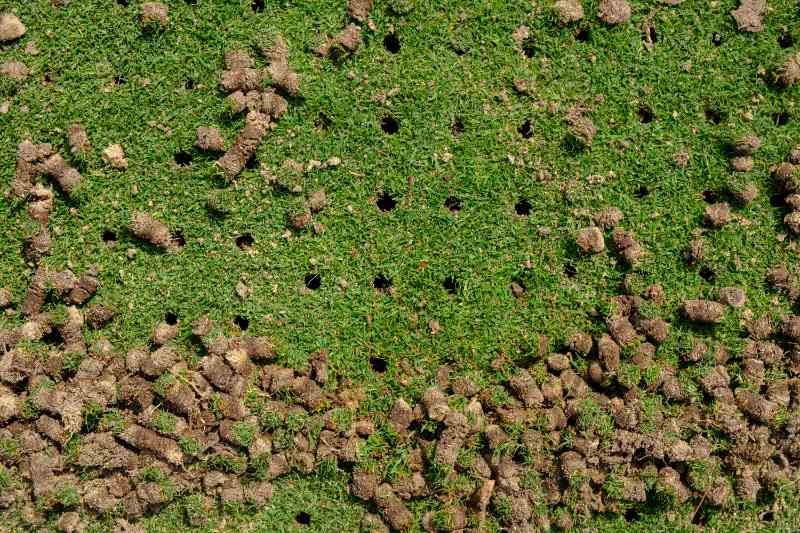
Core aeration pulls up plugs of treated soil, creating thousands of small gaps in your herbicide barrier, where weed seeds can germinate. Even worse, aeration distributes untreated soil with weed seeds from deeper layers across the lawn surface.
The fix for now: You may see breakthrough weeds in aeration holes. Spot-treat with post-emergent herbicide or hand-pull weeds.
For next year: Time your services correctly. Aerate BEFORE applying pre-emergent. Avoid aerating and dethatching within 6-8 weeks after pre-emergent application.
8. Heavy Rain Washed It Away
Pre-emergent needs water to activate, but too much works against you. According to Petelewicz, heavy rain can push the herbicide deeper into the soil (beneath where weed seeds actually germinate) or wash it sideways. Sandy soils, compacted ground, and slopes are especially vulnerable.
“Once the herbicide is no longer concentrated near the soil surface, weeds can emerge above it,” he explains.
The fix for now: Don’t panic — and don’t immediately reapply. Check your product label for reapplication intervals and annual limits, advises Petelewicz.
If weeds appear, apply a post-emergent herbicide.
For next year: Check the forecast. Avoid application if heavy rain is predicted within 48-72 hours — light rain helps, storms don’t. In rainy climates, use the split-application strategy: half rate in early spring, the rest 3-4 weeks later.
9. Application Rate Too Low
Soil rich in organic matter binds more herbicide, so less is available to work its magic on the weed seeds. If you have heavy clay soil, you’ll need to use the highest recommended application rate for best results.
The fix for now: Get your soil tested and ask the local Extension office for recommendations, or hire a weed control pro to apply the right amount of pre-emergent.
For next year: Make a note to use the highest recommended rate on the label.
What to Do About Weeds Right Now
Since pre-emergent doesn’t kill existing weeds, you need a different approach for current infestations.
Post-Emergent Herbicides for Active Weeds
Post-emergent herbicides kill weeds that have already germinated and are actively growing. Choose products based on weed type:
| Grassy Weeds (Crabgrass, Foxtail, Goosegrass) | Broadleaf Weeds (Clover, Dandelions, Spurge) |
| • Quinclorac (Quali-Pro Quinclorac 75 DF) for newly emerged crabgrass (<2 tillers) and mature plants (>4 tillers) • Mesotrione (Tenacity) for crabgrass with fewer than 4 tillers | • Standard three-way herbicides with 2,4-D, dicamba, and mecoprop (Trimec) handle most broadleaf weeds |
Timing matters: Young weeds are easier to kill than mature ones. Don’t wait for crabgrass to fully tiller or broadleaf weeds to flower. Weed control pros identify weed species and use the most effective treatments at the right growth stage.
See Related: Post-Emergent Herbicides: Which One for Which Weed?
Hand-Pulling and Spot Treatments
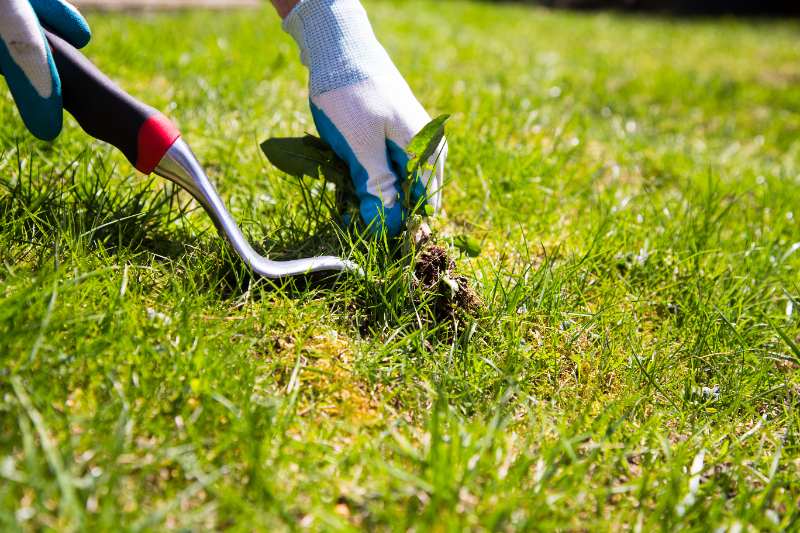
For light infestations, hand-pulling works well — especially for annual weeds before they set seed. Water the lawn first to soften the soil, then pull weeds with roots intact. This prevents seed production and reduces next year’s weed pressure.
Spot-treating with post-emergent herbicide saves money and reduces chemical use compared to broadcast applications. Use a pump sprayer to target individual weeds or small patches.
When Weeds Win: Starting Over
If your lawn is more than 40%-50% weeds, renovation may be more effective than trying to treat your way out of the problem. Complete lawn renovation involves killing everything (weeds and grass), improving the soil, and reestablishing turf. It’s drastic, but it gives you a clean slate.
FAQs
Apply pre-emergent in early to late spring, then overseed in fall. This timing gives you weed prevention during the prime germination season while allowing fall overseeding when cool-season grasses establish best.
For warm-season grasses, apply pre-emergent in late winter to early spring, wait 12 weeks, and overseed in late spring to early summer.
See Related: How Soon Can You Overseed After Pre-Emergent?
Most pre-emergents last 3 months, but you can’t see the barrier. If you applied in early April, expect protection through late June or early July. If weeds start appearing, the barrier is likely broken down. Keep application records with dates so you know when protection ends and can plan second applications or post-emergent treatments.
Not if your lawn is established and healthy. Pre-emergents target germinating seeds, not mature turf. However, stressed grass (drought, disease, heat) and newly seeded lawns are vulnerable. The University of Georgia recommends waiting a full year after planting a new lawn before using pre-emergent herbicides.
Get Professional Pre-Emergent Applications
When pre-emergents fail it’s usually timing, coverage, or application errors — not the product. LawnStarter’s weed control pros eliminate the guesswork with properly timed applications, commercial-grade products, and post-emergent treatments for breakthrough weeds. Get a quote in under a minute and stop fighting weeds every spring.
Sources:
- “Aerification Following Preemergence Herbicide?” By Zac Reicher, former turfgrass specialist. Purdue University.
- “Barricade, Prodiamine, Resolute, Regalkade G (prodiamine) Herbicide Information Factsheets.” North Carolina State University Extension.
- “Crabgrass Management in North Dakota Lawns.” By Yolanda Schmidt, rangeland specialist, Alan Zuk, associate professor in the Department of Plant Sciences, and Esther McGinnis, Extension horticulturist. North Dakota State University.
“Dimension (dithiopyr) Herbicide Information Factsheets.” North Carolina State University Extension. - “Effect of Excessive Rainfall on Preemergent Herbicides.” By Dr. Fred Yelverton, Emeritus Extension Specialist, and Dr. Travis Gannon, professor of Crop & Soil Sciences. North Carolina University.
- Pawel Petelewicz, assistant professor of turfgrass weed science at the University of Florida, Institute of Food and Agricultural Sciences, Gainesville, FL. Personal interview.
- “Preventing Spring & Summer Weeds.” Texas Master Gardener.
- “Topic: Why Herbicides Sometimes Fail: Section One.” By Tom Tracy, executive director at Virginia Turfgrass Council.
- “Water Requirements for Activating Preemergence Herbicides.” By Michael Marshal, assistant professor, Agronomic/Forage Weed Science. Clemson University.
- “Winter Application of Pre-emergence Herbicide Reduces Spring Lawn Weeds.” By Heather N. Kolich, ANR agent. UGA Extension Forsyth County.
Main Image: Patchy lawn with grassy weeds emerging. Image Credit: Stephen VanHorn / Adobe Stock
Related Posts: