| Key Takeaways |
|---|
| • Fertilize buffalograss only during summer (late May through early August) when the grass is actively growing. • Buffalograss needs only 1 to 2 pounds of nitrogen per 1,000 square feet per year. More than that invites weeds. • Use a slow-release fertilizer with a fertilizer ratio of 3-1-2 or 4-1-2 and at least 35% slow-release nitrogen. |
Most fertilizer advice is written for thirsty, high-maintenance grasses. If you have buffalograss, that advice can backfire. Too much nitrogen, the wrong timing, and you’re feeding weeds instead of grass.
Knowing when to fertilize buffalograss makes all the difference. This native Plains grass needs only 1 to 2 pounds of nitrogen per 1,000 square feet per year, applied in summer when it’s actively growing. Get that window right, and a modest two-application schedule is all it takes to keep the lawn healthy.
This guide covers the exact timing, the right fertilizer ratios, how much to apply, and what to avoid, so you can fertilize once or twice a season and move on.
LawnStarter’s local pros handle the timing and application so you don’t have to. Get a free lawn treatment service quote and take it off your to-do list.
Does Buffalograss Need Fertilizer?
Technically, no. Buffalograss can survive without fertilizer. It’s one of the toughest native grasses on the Plains, evolved to thrive in low-nutrient soils with minimal care.
But if you want a dense, green lawn that keeps weeds from taking over, 1 or 2 modest annual applications make a real difference.
Fertilizing during the active growing season (late May through late July) helps buffalograss stay thick and competitive. Just don’t overdo it: Applying more than 2 pounds of nitrogen per 1,000 square feet per year can actually invite weed invasion rather than prevent it.
When and How Often to Fertilize Buffalograss
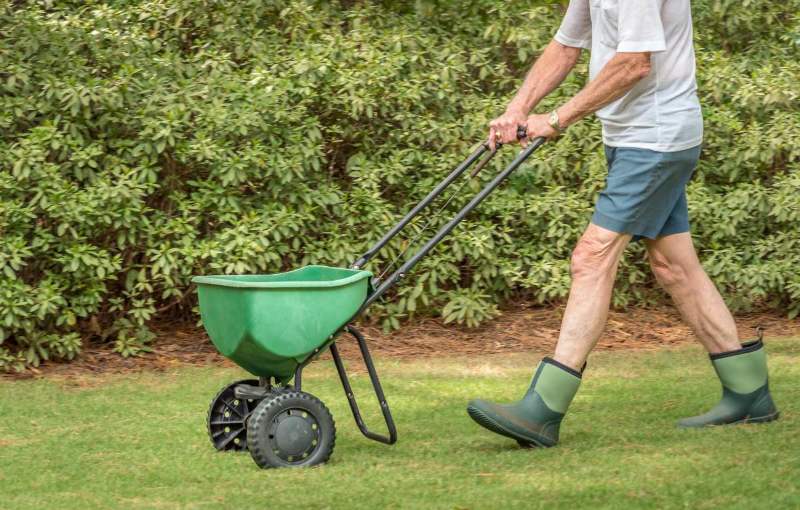
Follow a summer fertilizing schedule for buffalograss: Apply in late May to mid-June, and again in late July.
Applying fertilizer after mid-August is too late. Fertilizing warm-season lawns should end by then to reduce winter injury.
Fertilizing in spring would be too early and isn’t recommended either. Early spring application encourages weed growth at a time when buffalograss won’t be able to outcompete. And an unexpected spring frost can damage grass that’s been encouraged to grow too soon.
Split the annual amount into 2 applications:
First application: Late May to early June when stolon growth begins
Second application: Late July or early August to prepare for fall dormancy
This schedule delivers steady nutrients across the peak growing season without overwhelming the grass.
See Related:
How Much Fertilizer Does Buffalograss Need?
| Timing | Amount per 1,000 sq ft | Notes |
| Late May to early June | 0.5 to 1 lb. nitrogen | First application |
| Late July to early August | 0.5 to 1 lb. nitrogen | Second application |
| Annual total | 1 to 2 lbs. nitrogen | Do not exceed |
Buffalograss requires between 1 and 2 pounds of actual nitrogen per 1,000 square feet annually as its seasonal nitrogen rate (not 1 to 2 pounds of the fertilizer bag itself).
When you apply more than the lawn can use, it tends to boost fast-growing weeds instead of strengthening the turf.
See Related: Can You Over-Fertilize Your Lawn?
Best Fertilizer for Buffalograss
Most lawn fertilizers on store shelves are formulated for high-demand grasses like Bermuda or tall fescue. These products typically have high nitrogen numbers (the first number on the bag, often 20 or above) and are designed for 4 to 6 applications per year.
That’s far more than buffalograss needs, and applying them on a buffalograss lawn can push too much growth and invite weeds.
For buffalograss, look for a fertilizer with a lower first number that fits a 3-1-2 or 4-1-2 NPK ratio (examples include 12-4-8 or 16-4-8) and at least 35% slow-release nitrogen. These products feed the lawn gradually over weeks, which reduces the risk of fertilizer burn and matches buffalograss’s slower, lower-nutrient growth pattern.
Nitrogen is the most important nutrient during buffalograss’s growing season. Apply phosphorus and potassium only based on your soil test results, and in smaller amounts than nitrogen.
See Related:
New or Established Buffalograss Lawn? The Fertilizer Rules Are Different
| Fertilizer Type | When to Use | Key Feature |
| Starter fertilizer | New lawn | Higher phosphorus and potassium for root development |
| Maintenance | Established lawn (year 2 and beyond) | 3-1-2 or 4-1-2 NPK ratio |
If you’re planting buffalograss, whether you seed, sod, or install plugs, you’re in starter fertilizer territory. Starter fertilizer has more phosphorus and potassium, nutrients that are essential for growing healthy, strong roots.
Once the lawn is established (after the first year), switch to a maintenance fertilizer with low phosphorus and the recommended 3-1-2 or 4-1-2 ratio.
See Related: What Does Potassium Do for Lawns?
Organic vs. Synthetic Fertilizer for Buffalograss
| Type | Best For | Key Benefit |
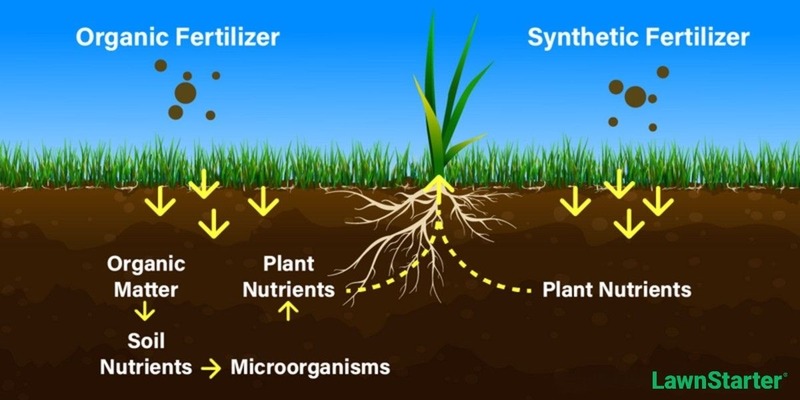
| Organic | Low-maintenance approach | Slow nitrogen release |
| Synthetic | Precise nutrient control | Exact NPK ratios |
Both organic and synthetic fertilizers work well for buffalograss. Organic options like compost or Milorganite release nitrogen slowly (making them especially forgiving if you accidentally apply slightly too much), which aligns perfectly with this grass’s low-nutrient needs.
See Related: Will Fertilizer Kill New Grass?
How to Apply Buffalograss Fertilizer
But before spreading fertilizer across your turf, there are several steps to undertake:
Test your soil: Determine nutrient needs, especially nitrogen levels.
Purchase the right fertilizer: Choose a ratio based on your soil test results.
Mow the lawn: Trim the grass 3 to 4 inches tall so fertilizer reaches the soil.
Water your lawn: Irrigate 1 or 2 days before fertilizing.
Check the forecast: Skip the application if moderate to heavy rain is expected within 24 hours (the nitrogen will leach away or wash into storm drains).
Read package directions: Review instructions carefully before applying.
Spread evenly: Cover the entire lawn without over-applying to any one area.
Water again: Ensure nutrients penetrate the soil and reach the root system.
See Related: How to Fertilize Your Lawn
Let LawnStarter Handle Your Buffalograss Fertilization
Buffalograss is low-maintenance, but its fertilization window is narrow. Miss it, and you’ll spend the season battling weeds instead of enjoying your yard.
LawnStarter’s local pros apply the right nutrients at the right time, with no guesswork required. A lawn treatment service plan from LawnStarter can keep your annual nitrogen total in the 1 to 2 pounds per 1,000 square feet sweet spot. Get a free quote today.
FAQs
Avoid weed-and-feed products on buffalograss. Most extension sources advise against them outright. Many contain 2,4-D, which can injure or stunt the grass, especially once temperatures reach 75 degrees or higher.
For weed control, use labeled herbicides separately and time fertilizer applications to the summer growing season.
Buffalograss doesn’t need overseeding often, but thin areas benefit from it. After new seedlings appear, apply a turf fertilizer (not a weed-and-feed product) about 2 to 3 weeks after germination, then again 6 weeks later.
Heavy fertilizer combined with too much water can fuel weed invasion, so don’t overdo it. Once established, follow the standard summer fertilization schedule.
Yellowing buffalograss can have several causes: dormancy, nitrogen deficiency, disease, or iron chlorosis. On high-pH soils, iron becomes chemically unavailable to roots, causing leaves to yellow while veins stay green.
Chelated iron applications can help, but the relief is temporary if high pH is the underlying issue. Get a soil test first to confirm the cause before treating.
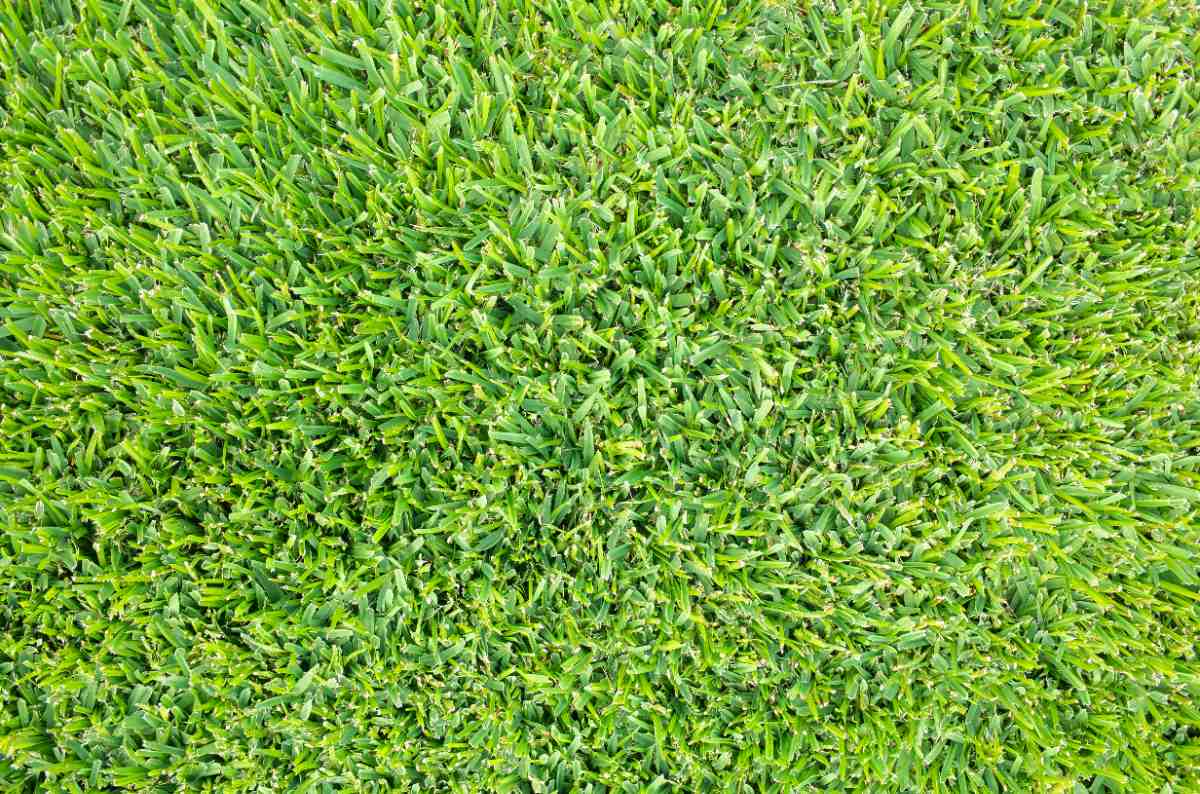
Main Image: Closeup of lush buffalograss in a lawn. Image Credit: Doublelee / Adobe Stock