| Key Takeaways |
|---|
| • Neighbors intentionally blowing their leaves into your yard is different from leaves falling naturally, and you have grounds to ask them to stop. • Start with a calm, direct conversation, then escalate to the HOA, code enforcement, or mediation if the problem continues. • Physical barriers like fences and privacy hedges can reduce future leaf drift regardless of how the neighbor dispute resolves. |
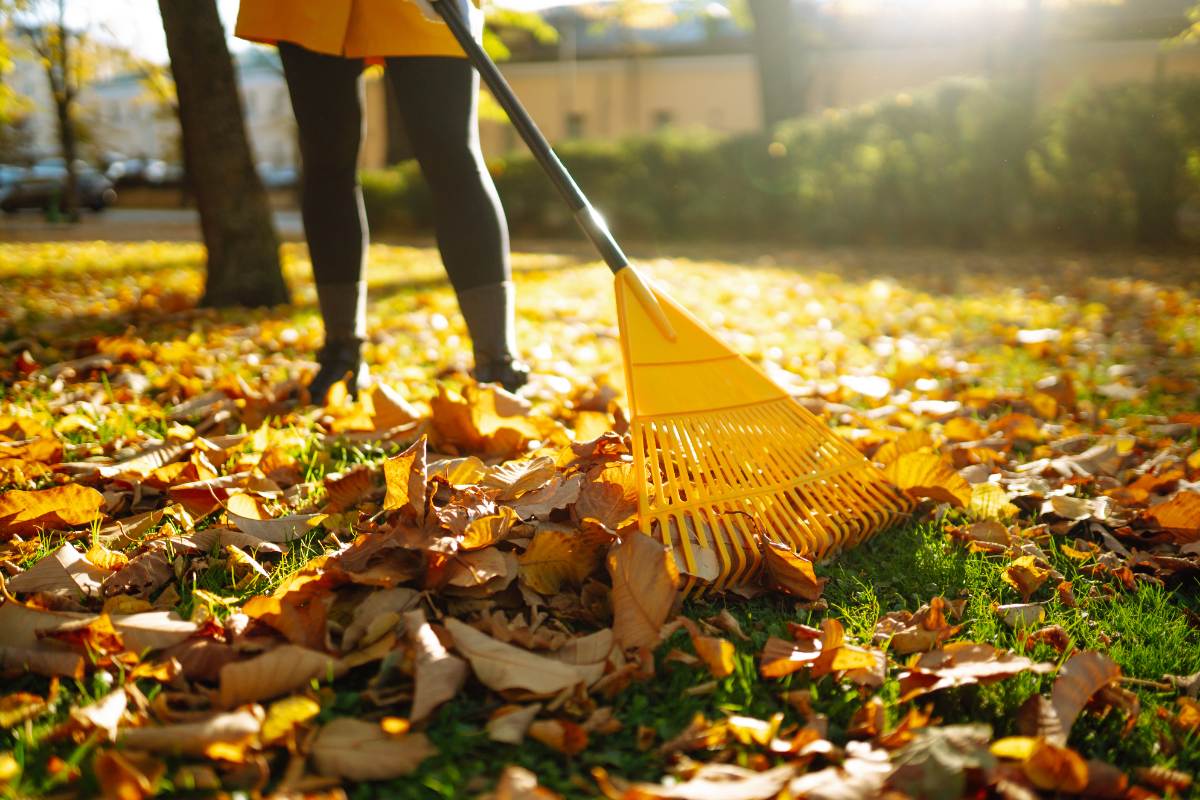
When leaves fall naturally from your neighbor’s tree onto your property, they’re legally yours to deal with. But a neighbor intentionally blowing his or her fallen leaves into your yard? That’s different, and in many places, it may actually violate local law.
You can ask them to stop, and a friendly conversation usually solves the problem. If talking doesn’t work, you have several escalation options we’ll cover in this article, with expert tips.
Dealing with a neighbor leaf dispute requires patience, documentation, and knowing your rights. LawnStarter’s leaf removal service can handle the cleanup while you focus on resolving the issue.
Naturally Falling Leaves vs. Intentionally Blown Leaves: What’s the Difference?
| Naturally Falling Leaves | Intentionally Blown Leaves |
| Act of nature from neighbor’s tree | Deliberate action by neighbor |
| Your responsibility to clean up | May violate local ordinances |
| No legal recourse against neighbor | You can ask neighbor to stop |
Naturally falling leaves and intentionally blown leaves are legally different, and that distinction matters for what you can do about it. Leaves that fall naturally from a neighbor’s tree onto your property are yours to handle. Your neighbor has no legal obligation to remove them.
However, a neighbor intentionally blowing their leaves onto your property is a different matter. This deliberate action may violate local ordinances or Homeowners Association (HOA) rules.
Naturally Falling Leaves Are Yours to Handle
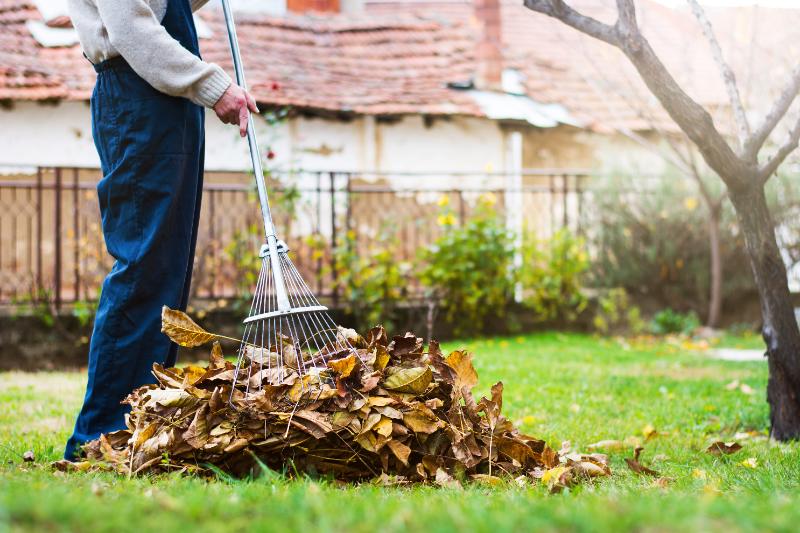
The rule is simple: “You clean up the leaves that fall on your property. What’s on their (neighbor’s) side is their issue,” says Reuben Wilt, a homeowner and the owner of Pool Screen Repair Tampa Bay.
”I don’t even have leaf-bearing trees, but every season I’m still hauling 10+ bags that blew in. Do I like it? No. However, owning a house means you take care of it,” Wilt says.
See Related:
If Your Neighbor Is Blowing Leaves into Your Yard, That Is Different

Start by talking with your neighbor. Assume it’s an honest mistake; it often is. With just 26% of adults saying they know most of their neighbors, according to Pew Research, a friendly introduction may be your first real conversation with them.
Explain that you’re making an effort to keep your yard clean and that blowing leaves onto your property causes more work for you. Most people will be open to correcting their behavior.
How to Talk to Your Neighbor About It
How to Approach the Conversation
Most neighbors want to get along and will respond positively when approached respectfully. Tips for approaching the conversation:
Be calm and positive
Focus on how the situation affects you, rather than their action
Frame it as “our” challenge instead of “their” problem
Suggest solutions, like planning a joint leaf cleaning day
Try something like:
“Hi, George. Your shrubs are looking great. Listen, I wanted to discuss something minor with you.”
“I’ve noticed that when you’re doing yard work, some leaves end up blowing over to my side. I’m sure it’s completely unintentional, but with my back problems, the extra cleanup is tough for me. Could we figure out a way to prevent this together?”
What to Do If Talking Does Not Work
If your neighbor’s leaf-blowing habit is sending you back to the yard every week, the costs add up fast. LawnStarter’s leaf removal cost averages $170 per visit, and a few of those in a season could justify escalating the dispute.
If repeated discussions lead nowhere, escalate through these steps:
| Step | Action | When to Use |
| 1 | Document everything | Before any escalation |
| 2 | Contact HOA or Code Enforcement | If local rules apply |
| 3 | Try mediation | Before legal action |
| 4 | Send a formal demand letter | If mediation fails |
| 5 | Small claims court | Last resort only |
Document everything: photos, dates, and a record of prior conversations. Your evidence log is the foundation of any formal complaint.
Save receipts for any professional leaf cleanup you’ve paid for as a direct result of your neighbor’s actions. These receipts are your strongest evidence in both a code enforcement complaint and a small claims case.
Consider mediation before taking legal action, says Robert Montanez, Esq., founding partner of Montanez Yu Personal Injury Lawyers. “A neutral third party can often resolve leaf disputes,” he says. It usually works, with roughly 70% of mediated disputes reaching a settlement.
If mediation fails, Montanez recommends sending your neighbor a formal demand letter along with documentation, such as “photos, dates, and prior attempts to resolve the issue.” This demonstrates good faith and strengthens your position if the matter later goes to court, he says.
According to him, litigation is a last resort, reserved for when there’s “measurable financial or property damage, such as lawn care costs or damage to gutters.”
Your Rights and Legal Options
If talking to your neighbor doesn’t resolve things, knowing your legal standing is your next best tool. Here’s what the law says, and what you can actually do with it.
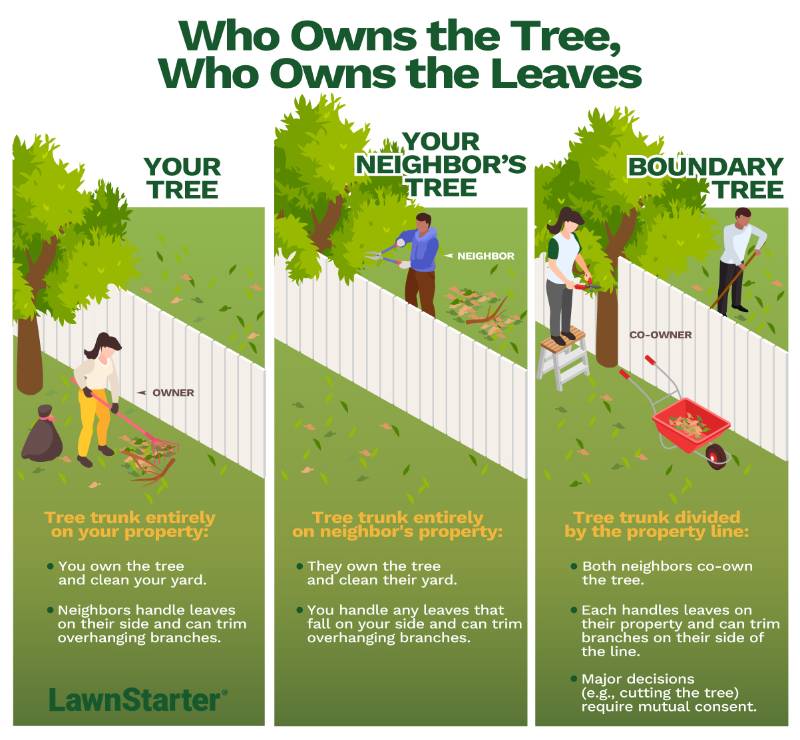
Who Owns the Tree, Who Owns the Leaves
| Tree Location | Who Owns It | Leaf Cleanup Responsibility |
| Entirely on your property | You | You clean your yard; neighbor cleans theirs |
| Entirely on neighbor’s property | Neighbor | You clean leaves on your side |
| On the property line | Both (co-owned) | Each cleans their own side; major decisions need mutual consent |
Common law principles establish clear tree ownership rules:
Tree trunk entirely on your property: You own the tree and clean your yard. Neighbors handle leaves on their side.
Tree trunk entirely on neighbor‘s property: They own the tree. You handle any leaves that fall on your side.
Tree trunk divided by the property line: Both neighbors co-own the tree. Major decisions (e.g., cutting the tree) require mutual consent. Each handles leaves on their property.
See Related: How Much Does Tree Removal Cost?
Is It Illegal for Your Neighbor to Blow Leaves into Your Yard?
It can be, and in many places, it is. Intentionally blowing leaves onto a neighboring property is a deliberate act, not an act of nature. It can be classified as a nuisance under local law or a direct violation of a municipal ordinance.
To find out if this applies to you, search your city or county’s official website for “yard debris ordinance” or “nuisance code,” or check with your HOA’s management office directly.
If you live in a community with an HOA, there are likely specific rules about yard maintenance and debris disposal. Homeowners do act on them, with South Carolina alone logging 452 HOA complaints in 2025.
Check your HOA bylaws (usually available in your welcome packet or from your HOA’s management company) or call your city’s Code Enforcement office to find out what’s prohibited in your area.
Can You Trim Overhanging Branches?
It depends. “Homeowners need to be careful when trimming branches that overhang onto their property. You have the right to cut back to your property line, but going further can create liability,” Montanez says.
Some smart precautions to take:
Give your neighbors a heads-up about trimming; they might even offer to handle it themselves.
Consider hiring a tree care pro. Tree trimming costs an average of $430 to $640 per tree, but that’s cheap compared to a potential lawsuit for over-trimming.
“Over-trimming that kills or disfigures the tree may expose you to lawsuits for property damage, aesthetic loss, or even the costs of tree replacement, which can often run into the thousands,” Montanez says.
See Related: 8 Common Tree Trimming Mistakes
Ways to Stop Leaves from Getting Into Your Yard
Install a Fence
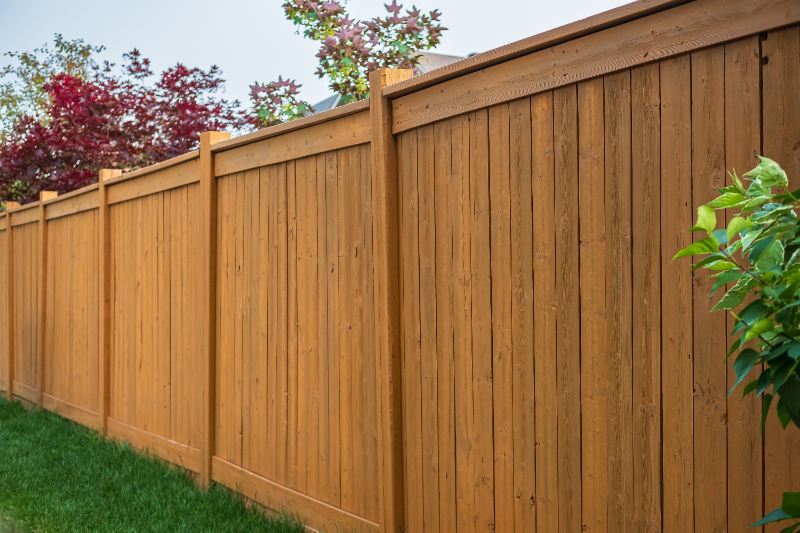
If wind brings tons of leaves from your neighbor’s yard, installing a fence on the property line can stop them.
Fences create a vertical barrier that stops leaves piling in your neighbor’s yard from drifting into yours. There are plenty of eco-friendly fencing options if sustainability matters to you. They won’t stop leaves falling from above, such as from overhanging branches.
You have several fence options:
Solid fences (wood or vinyl): Best options, but more expensive. They stop all leaf sizes, from large leaves to pine needles. Wooden fences require repainting or restaining every few years.
Chain link or net fences: Cheaper and easier to install. Suitable for stopping large leaves.
How tall should a leaf barrier fence be? Even a fence height of 2 feet can stop some leaves, as most of the time they drift close to the soil.
Strategic Landscaping
Well-planned landscaping for privacy can also create natural barriers that catch your neighbor’s leaves before they reach your main yard areas.
Plant a privacy hedge along the property line. It’s a greener alternative to a fence and can be just as effective. Good shrubs include privet, English laurel, and boxwood.
Create a natural leaf barrier from tall ornamental grasses, such as pampas grass, feather reed grass, or blue oat grass.
Trim the Trees
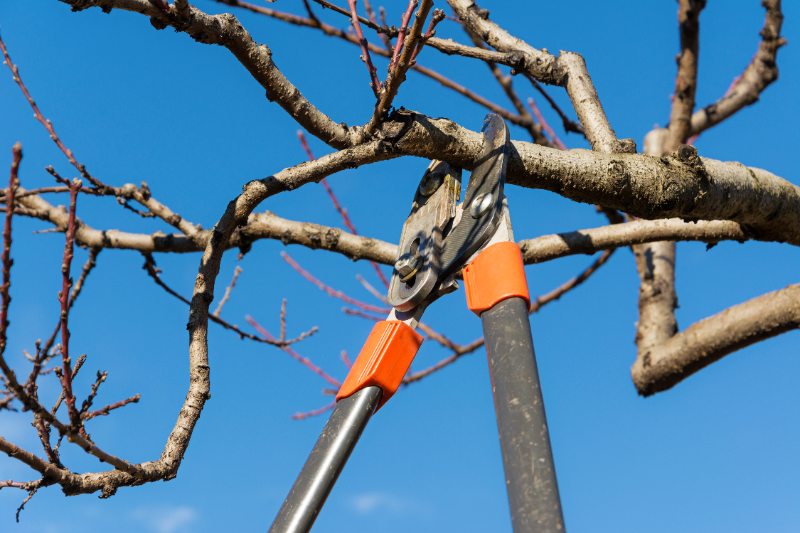
Trim overhanging branches to reduce the amount of leaves your neighbor’s tree sheds in your yard. The best time for pruning trees is late winter to early spring.
Can you throw the cut branches back into your neighbor’s yard? No. You’re responsible for disposing of the cut branches, unless your neighbor offers to take care of them.
FAQs
In heavy leaf season, plan to clear leaves at least once a week, and more often after windy days. Regular cleanup helps prevent slick spots on sidewalks and keeps piles from smothering grass. If you mulch leaves, keep the layer thin so sunlight and air can still reach the turf.
If the behavior continues after a written request, start documenting each incident with dates and photos, and save any cleanup receipts. Then contact your HOA (if you have one) or your local Code Enforcement office to ask about nuisance or yard debris rules. Mediation can also help before court.
Yes, in most cities and counties, blowing leaves into the street or storm drains is illegal because it creates traffic hazards and clogs drainage systems. You can report it to your city’s Code Enforcement or public works department as a separate municipal violation.
Skip the Raking
Neighbor dispute or not, fallen leaves are a fact of life, and cleaning them up every weekend isn’t how you want to spend your fall. LawnStarter’s leaf removal service keeps the yard from turning into a soggy, slippery leaf mat all season.
Main Image: Person raking leaves in a yard. Image Credit: maxbelchenko / Adobe Stock
Related Posts: