| Key Takeaways: |
|---|
| • Common lawn spurges have small leaves along a pink to reddish stem. • The key identifying factor? Milky sap that oozes when stems are cut. • Spurge and purslane are often confused. Check the sap to get an ID: Unlike spurge, purslane has clear sap. |
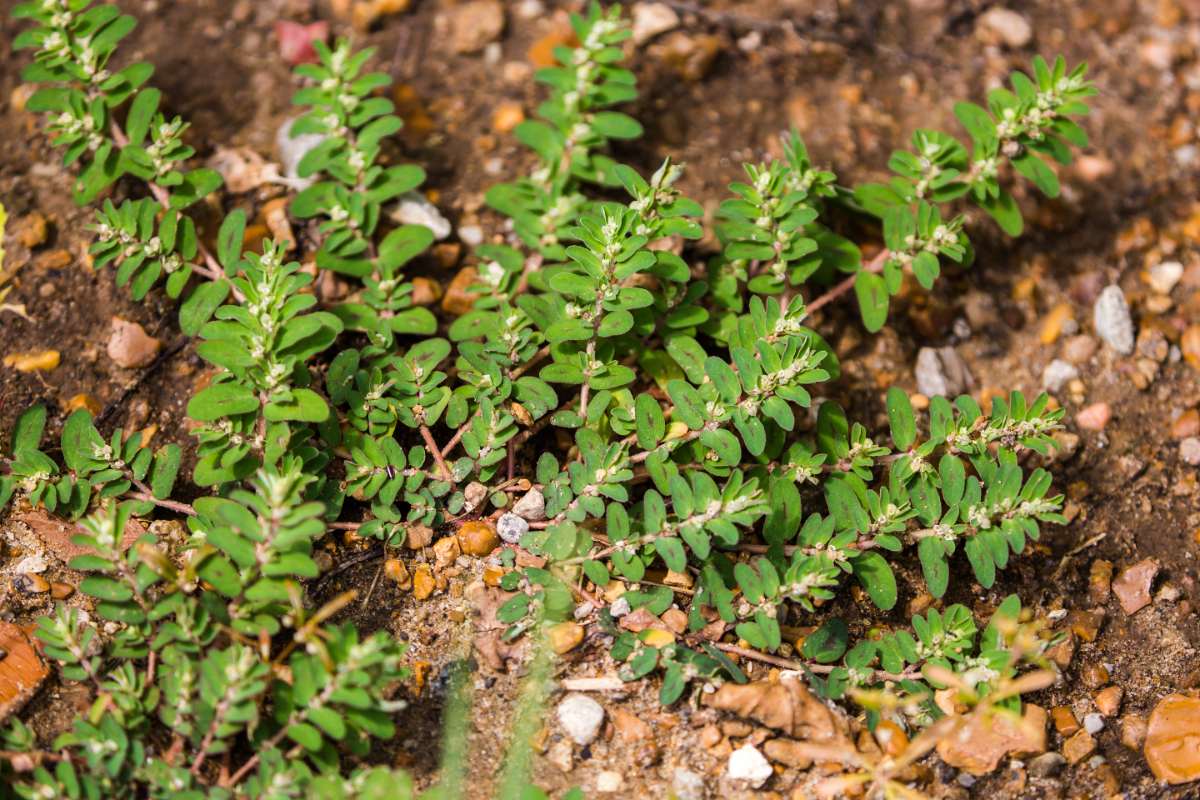
Spurge weed is an annoying, low-growing plant that pops up in the bare or thin areas of your lawn.
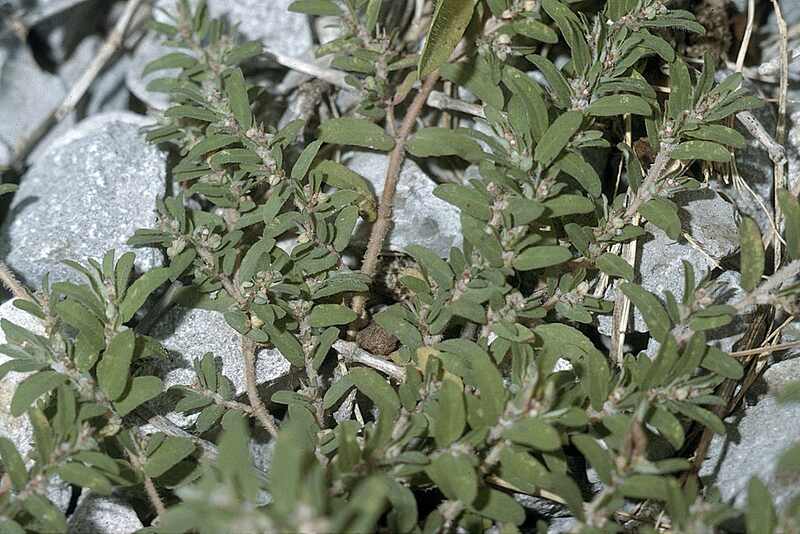
But what does spurge weed look like exactly? It has reddish stems, small oval leaves, and a milky sap that can irritate your skin.
In this article, we’ll help you recognize whether you’re dealing with spurge or another look-alike weed so you can choose the right approach to remove it from your yard.
For large weed infestations, hire a LawnStarter lawn treatment pro to identify and treat lawn weeds, restoring your lawn.
How to Identify Spurge Weed
As Debbie Dillon, a horticulture expert at North Carolina State University, says, identifying the weed that’s growing in your lawn helps you choose the most effective control technique and understand your soil conditions.
Here’s how to tell if it’s a spurge weed:
- Lifecycle: Summer annual (spotted, prostrate, and creeping spurge). It sprouts in late winter or early spring and can thrive until fall frosts arrive.
- Leaves: Oval or lobed, often with a milky white or red vein running down the center.
- Milky Sap: Oozes out when you break or cut the stem. According to Anna Hill, horticulture Extension agent at Clemson University, “This sap has varying levels of toxicity depending on the species and can cause allergic dermatitis in many people.”
- Flowers: Tiny greenish-yellow flowers in clusters near the top of the stems. They don’t have petals, but “they produce thousands of small seeds that do not require a dormancy period, allowing them to spread quickly,” says Hill.
- Stems: Hill says, “Stems are hairy, and at some stage in the life cycle, they are pink to reddish.” Spurge clusters can grow up to 3 feet across.
- Roots: Central taproot system capable of extending more than 20 inches into the soil.
Spurge vs. Purslane
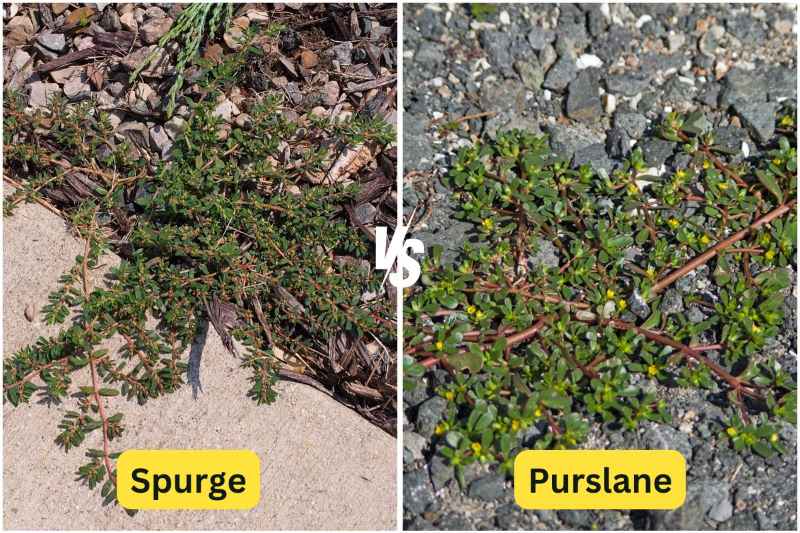
Spurge: F. D. Richards / Flickr / CC BY-SA 2.0
Purslane: Katya / Flickr / CC BY-SA 2.0
Prostrate spurge, a lawn weed that is poisonous if eaten, is often confused with common purslane, an edible weed. Here’s how to tell them apart:
| Prostrate Spurge | Common Purslane |
| Milky, white sap | Clear sap |
| Green, pink, or white flowers | Yellow flowers |
| Dry, flat leaves | Succulent leaves |
Pro Tip: Still unsure if it’s spurge? Check out handy weed identification apps like PictureThis, Plant Story, or PlantNet.
Types of Spurge Weed: Identification Tips
With over 2,000 spurge species, the exact species in your yard might vary. However, the 3 most common types that plague lawns and gardens include:
- Spotted spurge (Euphorbia maculata): Small oval leaves (less than half an inch), often with a reddish spot in the center and reddish-pink stems.
- Prostrate spurge (Euphorbia humistrata): Leaves are typically small, oval-shaped, and pale green. According to Hill, “The primary distinguishing factor of prostrate spurge is the absence of leaf spots.”
- Creeping spurge (Euphorbia serpens): Light green, pale red, or almost white leaves. Unlike the spotted variety, it has no distinct leaf markings. Moreover, “The leaves are also smaller and rounder than those of the prostrate spurge,” Hill says.
Where Does Spurge Weed Grow?
Look for spurge in areas of your yard where the grass is weak or sparse, such as along sidewalks, in garden beds, or near the edges of your lawn.
While it can grow almost anywhere, spurge thrives in hot, dry conditions and poor or compacted soil. Although some species are found regionally, you’re likely to see spurge in lawns throughout the lower 48.
If you spot spurge taking over, fight back immediately. Read our guides on How to Get Rid of Spurge and How to Prevent Spurge to learn how to control this persistent weed.
FAQ About Identifying Spurge Weed
Yes, spurge weed can definitely come back if not properly managed. For one, it has a long taproot that makes it difficult to remove completely. Even if you pull it out, the plant can regenerate from any remaining roots left in the soil.
Additionally, spurge produces a large number of seeds (thousands from a single plant) that can remain dormant in the soil for years, ready to sprout when conditions are right. So, if you don’t take steps to control it, you’ll find spurge returning season after season.
Yes. All varieties of spurge produce a milky white sap that can cause skin irritation and allergic reactions in some people. If ingested, it can be harmful to pets and livestock, potentially leading to serious health issues. When dealing with spurge, Hill says, “Wear gloves to avoid contact dermatitis.”
Don’t Let Spurge Sneak In
Identifying and eliminating weeds can be tricky, but you don’t have to figure it out alone. LawnStarter has trusted lawn care experts in your area ready to help. They’ll take a look at your lawn, pinpoint the problem, and create a custom plan to get rid of spurge for good.
Reach out to LawnStarter’s local lawn treatment pros today.
Source:
Anna Hill, horticulture Extension agent with Clemson University, Barnwell, South Carolina. Personal interview.
Main Image: Closeup of Spotted Spurge in a lawn. Image Credit: Melissa McMasters / Flickr / CC BY 2.0
Related Posts: