| Key Takeaways |
|---|
| • Treat a heat-stressed lawn as soon as you notice symptoms. Waiting makes recovery harder and longer. • Water deeply and infrequently (about 1 to 1.5 inches per week), and raise your mower blade to shade the soil. • Brown grass isn’t always dead. Dormant grass can recover once temperatures drop and regular watering resumes. |
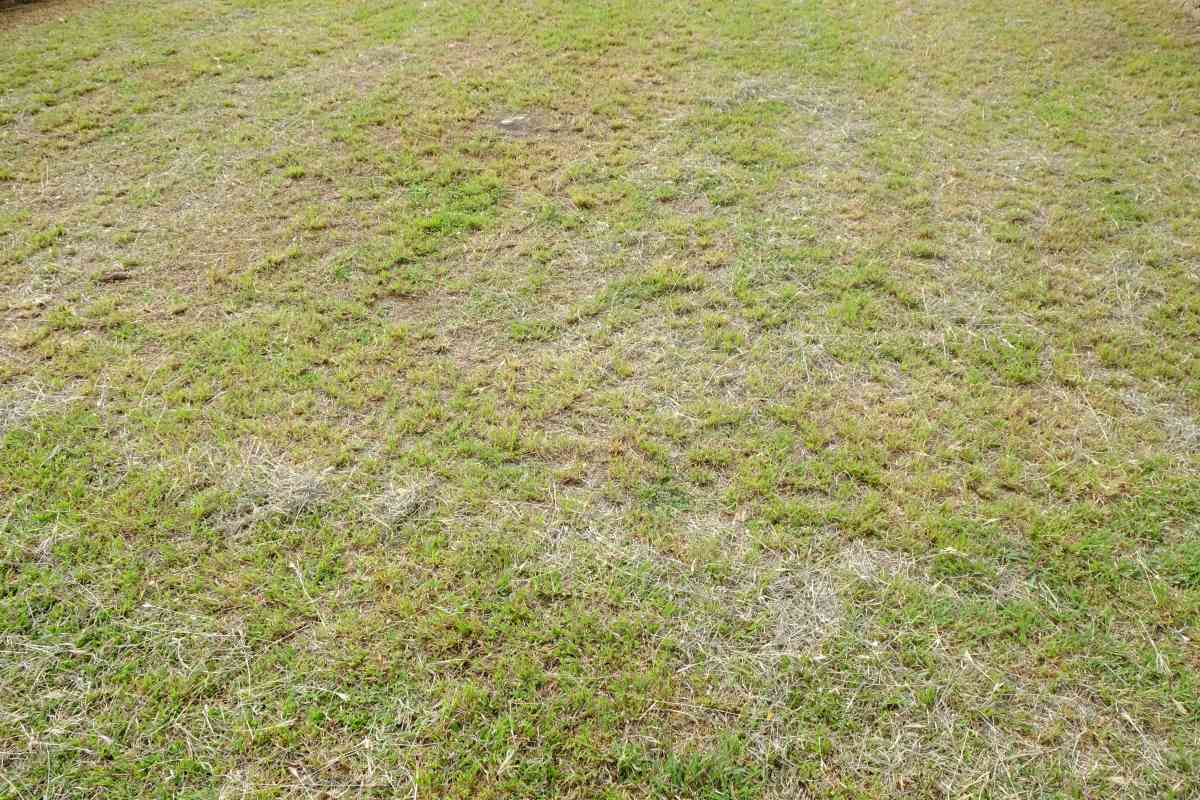
If your lawn looks brown and wilted this summer, it needs your attention. A heat-stressed lawn requires immediate intervention before the damage becomes permanent.
Treating heat stress correctly means more than just grabbing the hose. The right timing, watering depth, mowing height, and post-heat recovery steps make the difference between a lawn that bounces back and one that doesn’t.
Keeping a lawn healthy through a heatwave is hard to stay on top of. Let LawnStarter’s local pros handle routine lawn mowing so a rushed, too-short cut doesn’t damage your grass.
Signs of a Heat-Stressed Lawn
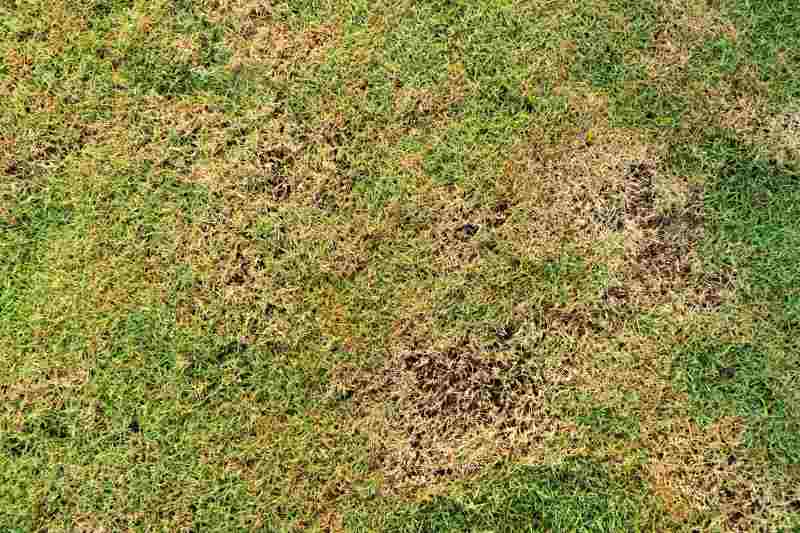
A heat-stressed lawn shows folding blades, footprints that don’t bounce back, and dull gray-green or bluish discoloration.
For cool-season grasses, these signs can appear within days of temperatures climbing above 75 degrees. Warm-season grasses tolerate heat far better. They grow best in the 80- to 95-degree range and typically don’t show stress until conditions push well beyond that.
If not treated quickly, those early warning signs can escalate into:
Wilting
Yellowing
Browning patches
Bare spots
Early Warning Signs of Heat Stress in Your Lawn
Your lawn can start showing heat stress symptoms within days, well before it turns fully brown. Watch for these 4 warning signs before the damage gets harder to reverse:
Persistent footprints: If footprints linger after you’ve walked across the lawn, your grass is dehydrated. Healthy grass should bounce back into shape quickly.
Discoloration: Blades that are usually vibrant green begin to look dull gray-green or take on a bluish tinge, indicating dehydration.
Folding foliage: If your turf seems to be folding, it is going into survival mode to conserve whatever moisture it has left.
Hard ground: Check soil compaction by pushing a screwdriver into the ground. If you’re facing resistance, your soil is compacted.
What Causes Heat Stress in Grass
Heat stress happens when your grass can’t cool itself down fast enough. That’s usually when temperatures push past its active growing range.
Your grass loses moisture faster than its roots can replace it, disrupting the photosynthesis it needs to stay alive and green.
| Grass Type | Temperature Range | Heat Stress Threshold |
| Cool-Season Grasses | 60 to 75 degrees Fahrenheit | Above 75 degrees |
| Warm-Season Grasses | 80 to 95 degrees Fahrenheit | Above 95 degrees |
The problem gets worse when soil is compacted (blocking root access to water). Heat stress is also more severe when roots are shallow from years of light, frequent watering, or when the lawn goes into a heatwave already dry.
See Related:
How to Protect Your Lawn From Heat Stress
You can’t stop a heatwave. They now occur at least 5 times more frequently than in the 1960s, according to the Center for Climate and Energy Solutions.
But you can control how much damage it does. Start the steps below as soon as you notice signs of heat stress.
Water Your Heat-Stressed Lawn Deeply and Less Often
“It’s better to water less frequently, but deeper,” says Chuck Vogt of Metro Lawns in Atlanta, Georgia.
Drowning your grass with daily shallow watering weakens roots and makes heat damage worse, not better.
Aim for about 1 to 1.5 inches per week in 1 or 2 sessions. Get the soil moist up to 6 inches deep. Tdeep watering encourages roots to grow deeper and makes grass more resilient against heat and drought.
Water early in the morning: The best time to water your lawn during hot months is between 5 a.m. and 9 a.m. Less water is lost to evaporation, and the grass has time to dry off before nightfall, reducing the risk of fungal diseases.
Consider using a sprinkler: Pulsating, impact, or oscillating sprinklers offer even water dispersal across large lawns.
Pro tip: Gauge your watering accurately with a rain gauge or an emptied tuna can. Turn off the sprinkler when these collect 1 to 1.5 inches of water.
See Related: How Often to Water Grass in Summer
Mow Taller to Reduce Heat Stress
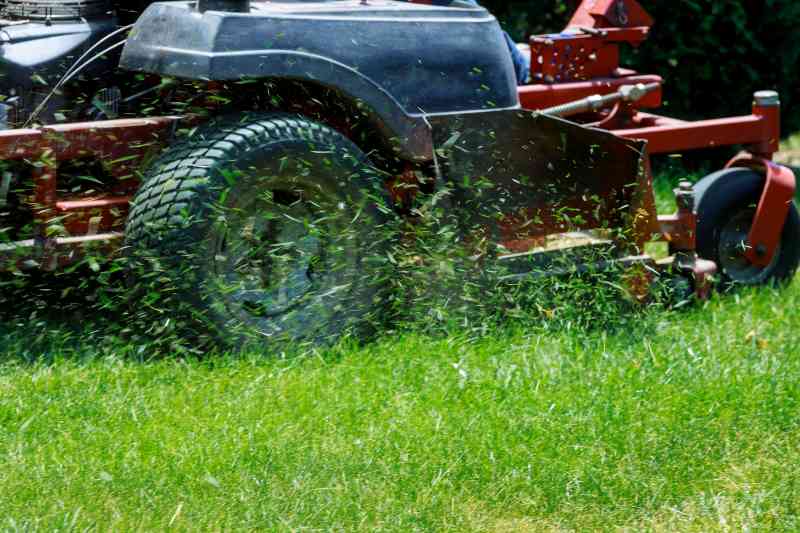
Raise your mower‘s blade: Taller grass shades the soil, blocking rapid water evaporation. More leaf surface area also means more photosynthesis and healthier turf.
Mow less frequently: Follow a mowing schedule that spaces out cuts when growth slows in the heat, rather than sticking to a weekly routine.
Leave grass clippings: They’ll share their nutrients with the roots while providing much-needed shade.
Keep the blades sharp: A dull blade tears grass, causing ragged tips that are perfect targets for sun scorch or disease. Sharpen those blades and ensure a clean slice with each mow.
See Related:
Avoid Foot Traffic While the Lawn is Heat-Stressed
When the sun beats down relentlessly, foot traffic compounds the problem. The blades are already weakened from dehydration, and every step compacts the soil, making it harder for roots to breathe.
Minimize Fertilizer on Your Heat-Stressed Lawn
As a rule of thumb, avoid fertilizing your lawn when it’s heat stressed. It forces growth the grass can’t sustain.
However, there are certain conditions in which fertilization can help mitigate your lawn’s distress during extreme temperatures:
When nutrients are low: If a soil test shows low nutrient levels, a gentle, slow-release fertilizer could give your warm-season lawn the boost it needs.
Organic fertilizers: Using liquid seaweed or fish emulsion helps strengthen grass cell walls and enhance resistance to heat stress.
Note: Always consult a local lawn pro before adding anything to your heat-stressed lawn.
Avoid These Common Mistakes During a Heatwave
Don’t fertilize cool-season grass: An overfertilized lawn is forced into growth it can’t support.
Don’t mow at your normal low setting: Short grass scorches faster.
Don’t water at midday: Most of it evaporates before reaching roots.
Don’t pull up brown patches: Dormant grass can recover; bare soil invites weeds.
See Related:
How to Recover a Heat-Stressed Lawn
Once the heat breaks and temperatures drop back into your grass’s comfort zone, it’s time to shift from damage control to active recovery.
Assess the Damage to Your Heat-Stressed Lawn
When the temperatures cool and you’ve resumed regular watering, take a slow walk across your lawn. Look for green growth pushing through (recoverable) and persistent brown patches with no new growth (may not have survived).
Where you find the latter, that’s where you focus recovery efforts.
Aerate if Needed After Heat Stress
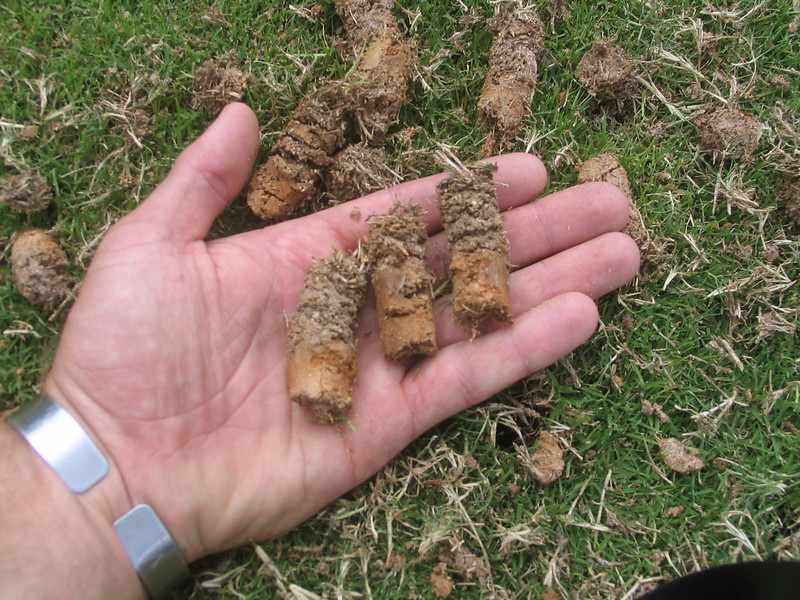
The best time to aerate varies by grass type:
Cool-season grasses: Early fall is the top choice.
Warm-season grasses: Late spring to early summer is best.
If compaction is part of what pushed your lawn over the edge, aeration is usually the fix that helps water actually soak in again.
See Related: How to Aerate Your Lawn: A Complete Guide
Overseed After Heat Stress Damage
Early fall is an excellent period to overseed cool-season grasses, while the best planting time for warm-season grasses is late spring to early summer. Some rules of thumb for successful overseeding are:
Avoid rash actions during summer: If your lawn features chunks of dead grass from brutal heat waves, don’t be quick to pull them out. They might still recover.
Timely reseeding or resodding: If your area is prone to hard frosts, complete any reseeding or resodding tasks at least 45 days before the first expected frost date.
Rather have your lawn repaired without the hassle? LawnStarter’s aeration and overseeding services can bring your yard back to life.
See Related:
Dormancy vs. Dead Grass in Heat-Stressed Lawns
The timing of dormancy varies by grass type. Cool-season grasses often go dormant when temperatures rise above 75 degrees and moisture is limited. Warm-season grasses usually stay active through summer heat and go dormant as cooler weather arrives.
Knowing your grass type is the fastest way to predict whether your lawn is sleeping or lost.
| Characteristic | Dormant Grass | Dead Grass |
| Appearance | Brown, straw-like texture | Brown, straw-like texture |
| Root Test | Roots intact when tugged | Pulls out easily, no roots |
| Recovery Potential | Revives with water when temps normalize | Won’t revive, even with water |
“In a drought situation, […] the turfgrass should respond to rain or irrigation and turn green and perky again after getting water,” says Amanda Marek, UF/IFAS Extension Agent in Marion County, Florida.
“If the turfgrass does not respond to irrigation or rainfall in the growing season, that is a good indication that it is likely dead.”
When to let your lawn go dormant intentionally: If water restrictions make deep watering unsustainable, you can let a cool-season lawn go dormant. Use dormant watering of about 1/2 inch every 2 to 3 weeks to keep the crowns alive.
See Related: When Does Grass Stop Growing?
FAQs
The 150 rule combines your daily high and low temperatures. When the sum stays below 150 degrees, cool-season grasses actively grow, but when it exceeds 150, they slow or go dormant.
Temporary shade cloths or structures can reduce soil temperature and slow moisture loss in small, high-visibility areas of your lawn. However, most turfgrasses still need at least 4 to 6 hours of direct sunlight daily. Use shade structures strategically, not as a permanent fix.
Yes, Bermudagrass, St. Augustinegrass, and Zoysiagrass are known for their heat tolerance and thrive in southern regions. Cool-season grasses like Kentucky bluegrass and tall fescue struggle once temperatures exceed 75 degrees and are more likely to go dormant in summer heat.
A dormant lawn typically takes 2 to 4 weeks of consistent watering and cooler temperatures to show green growth again. Severely damaged lawns that need overseeding or resodding may take a full growing season to fill in completely, depending on grass type and local conditions.
Yes, but raise your mower blade to its highest setting. Mow every 10 days instead of weekly, avoid peak afternoon heat, and never cut more than one-third of the blade at once.
Pros to the Rescue: Bring Your Heat-Stressed Lawn Back to Life
When the summer heat keeps winning or you just don’t have time to stay on top of it, LawnStarter’s lawn care pros are ready to step in.
Whether it’s identifying heat damage, mowing, or dialing in a recovery plan with targeted lawn treatment services, LawnStarter’s vetted lawn care pros know exactly what your turf needs.
Main Photo Credit: Green grass next to dry grass. Photo Credit: srckomkrit / Adobe Stock Free / License
Read More: How to Water Your Lawn in Fall and Winter