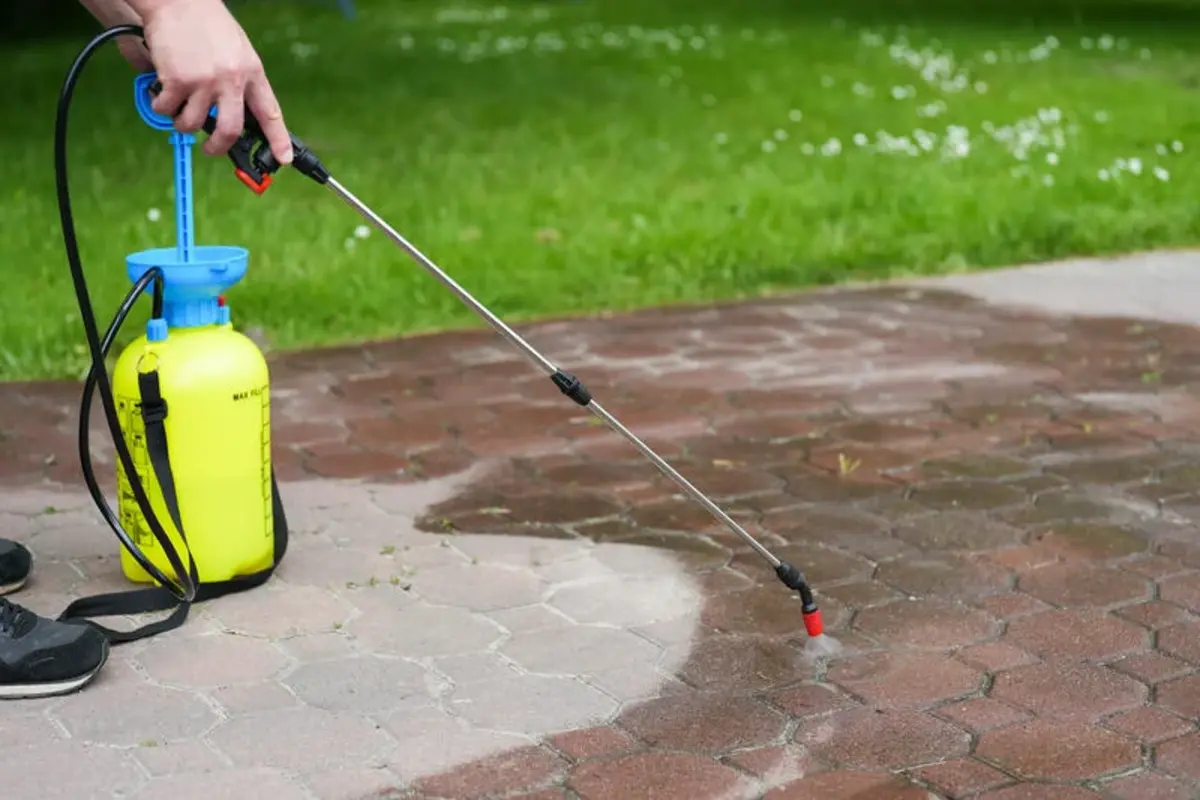
If you’ve been eyeing the vinegar in your pantry as a cheap, chemical-free way to deal with weeds, the short answer is yes, it works. Vinegar can kill weeds, but only some weeds, and under the right conditions.
Vinegar’s active ingredient, acetic acid, breaks down plant cells, and leaves wilt within hours. What acetic acid can’t do is reach the roots, so established weeds with deep roots bounce right back. Vinegar strength, weed type, and timing decide whether you get a clean kill or a temporary cosmetic fix.
If you’d rather skip the trial and error, LawnStarter connects you with local lawn treatment pros who can match the right treatment to your weeds.
| Key Takeaways |
|---|
| • Vinegar kills weeds by burning plant tissue on contact, but it does not travel to the roots, so established perennial weeds can regrow. • Kitchen vinegar (5% acetic acid) works only on young, shallow-rooted weeds with 1 or 2 leaves. Horticultural vinegar (10% to 30%) is more effective. • Vinegar is non-selective and will kill grass and other desirable plants it touches, so targeted application is essential. |
How Vinegar Kills Weeds
Yes, vinegar kills weeds, and it works fast. Vinegar’s active ingredient, acetic acid, breaks through the outer cell walls of a weed’s leaves and stems on contact, causing the plant to lose moisture and dry out. Results are visible within 24 hours.
However, because acetic acid kills only what it physically touches and never reaches the root system, established perennial weeds (think dandelions, Canada thistle, and horsetail) will simply regrow from their roots even after the top growth dies.
Vinegar is a surface-level fix, not a permanent one.
Does Vinegar Permanently Kill Weeds?
It depends on the type and size of the weed. Vinegar can kill young plants that have recently germinated and have up to 1-2 leaves.
Small annual weeds with shallow roots are more likely to die out completely, while established perennials will typically resprout. That is because vinegar destroys only the leaves and stems it touches and doesn’t move through the plant to the roots.
For permanent control of deep-rooted perennials, a systemic post-emergent herbicide that moves through the entire plant (or repeated manual removal) is required.
See Related: Post-Emergent Herbicides: Which One for Which Weed?
Which Type of Vinegar Actually Kills Weeds?
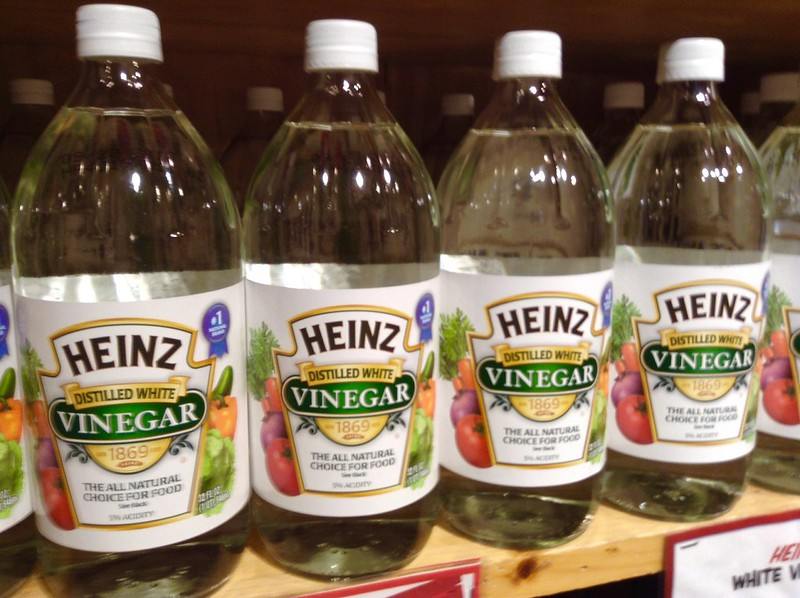
Not every vinegar works equally well. The higher the acetic acid concentration, the more effective it is as an organic herbicide. Here are the different concentrations of acetic acid used for residential weed control:
| Vinegar Type | Acetic Acid | Best For |
| Household vinegar | 5% | Young, shallow-rooted weeds (first 2 weeks after emerging from the soil) |
| Horticultural vinegar | 10% to 30% | Young to medium-stage annual weeds (broadleaf especially); top-kill only on shallow perennials |
Household Vinegar (5% Acetic Acid)
This is the regular vinegar in your kitchen cabinet, the same stuff you’d put on a salad. It can kill weeds, but only under the right conditions, and it has real limits.
Household vinegar works on very young weeds, ideally within about 2 weeks of sprouting, when they have just 1 or 2 leaves. It does its best work on broadleaf weeds, the ones with wide, flat leaves. It barely touches grassy weeds, and it won’t kill anything with an established root system.
Young broadleaf weeds it can knock out include:
Common chickweed
Lambsquarters
Carpetweed
Young pigweed
Broadleaf plantain seedlings
The trick most people miss is how much you spray. In one USDA study, plain 5% vinegar killed young broadleaf weeds, but only when sprayed heavily. Soak the weed until it’s dripping, not just a light mist, and you’ll get far better results.
What household vinegar can’t do: kill mature weeds, kill grasses, or kill anything with a deep root. Spray a flowering dandelion and the leaves will brown within a day, but the root pushes new growth right back within a week. Same story with Canada thistle and any weed past a few leaves. Vinegar only burns what it touches, and it never reaches the roots.
See Related:
— How to Get Rid of Chickweed
— How to Get Rid of Carpetgrass
— How to Get Rid of Dandelions
Horticultural Vinegar (10% to 30% Acetic Acid)

This is the strength at which most weed-killing vinegars are sold, and it’s where vinegar starts to earn its keep. It kills a wider range of broadleaf weeds than household vinegar, works on slightly bigger weeds, and gives you your only real shot at young grassy weeds.
Here’s what the research shows:
Broadleaf weeds like carpetweed, pigweed, and spiny amaranth: 20% vinegar can wipe these out completely when they’re young.
Grassy weeds like crabgrass: even at 20%, you’re looking at 28% to 45% control. Grasses are tough, and vinegar struggles with them no matter the strength.
As with household vinegar, how much you spray matters as much as the strength. Spray to the point of runoff for the best results.
Best uses for horticultural vinegar:
Young broadleaf weeds with only a few leaves
Crabgrass and other grassy weeds that just sprouted
Weeds in gravel, sidewalk cracks, and patio joints
Driveways and other spots where you won’t hit plants you want to keep
Top garden-strength vinegar products:
| Image | Title | Rating | |
 Cleanaroo 20 Percent Concentration Vinegar, All-Natural Multipurpose General Cleaner, 4 Gallons (1 Gallon, 4 Pack) Photo Credit: Amazon | Cleanaroo 20% Concentration Vinegar | ⭐⭐⭐⭐⭐ | Check Pricing |
 MaxTite High-Strength 20% Vinegar for Home & Garden Cleaning (1 Gallon) Photo Credit: Amazon | MAXTITE High-Strength 20% Vinegar for Home & Garden | ⭐⭐⭐⭐⭐ | Check Pricing |
 Green Gobbler 30% Concentrated Cleaning Vinegar for Home and Outdoor Use – Ultra-Filtered, 6x Stronger Than Traditional Table Vinegar, 1 Gallon Photo Credit: Amazon | Green Gobbler 30% Concentrated Cleaning Vinegar for Home and Outdoor Use | ⭐⭐⭐⭐⭐ | Check Pricing |
Safety Risks of Vinegar as a Weed Killer
Household vinegar at 5% is generally low-risk. Horticultural and industrial vinegar are a different story. At concentrations of 11% or higher, acetic acid can cause severe chemical burns on contact with skin and permanent eye injury, so vinegar safety matters.
Wear chemical-resistant gloves: Standard garden gloves that liquids can penetrate are not enough.
Wear splash-proof goggles: Not regular sunglasses.
Keep children and pets away: Do not allow them in treated areas until the solution has fully dried.
Apply on calm days: Wind carries the acid onto your skin and desirable plants.
Vinegar Weed Killer Recipe
If you‘re using 5% vinegar, mix these ingredients:
Vinegar: 1 gallon
Dish or Castile soap: 1 cup
Spraying plain vinegar works, but mixing in a few extra ingredients makes it significantly more effective, and you probably already have them in your kitchen. Here’s what each one does:
Dish soap: Acts as a surfactant, meaning it breaks down the waxy outer layer (cuticle) of weed leaves so the acetic acid can penetrate rather than bead off.
Salt: Draws moisture out of weed leaves, accelerating die-off. Add sparingly; too much can make your soil infertile.
Baking soda: It raises pH and adds sodium that can burn foliage on contact.
Lemon juice: Both citric and acetic acid are burn-down acids; some commercial organic herbicides combine them.
If you’re using horticultural vinegar, follow the instructions on the label.
See Related: How to Make Homemade Weed Killer
How to Apply Vinegar Weed Killer
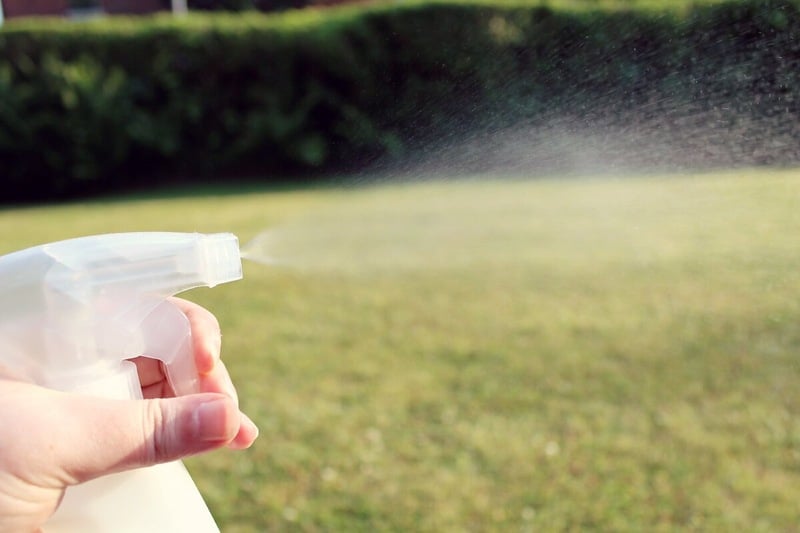
Effective weed spraying with vinegar requires sunny, dry days when weeds are actively growing. Here are the best practices to follow:
Apply on a sunny, dry day: Vinegar needs to stick to weeds without being washed away. If it rains, wait 24 to 48 hours before applying your vinegar weed killer.
Target young weeds: Vinegar works best on weeds in the first 2 weeks after germination (the plant has 1 or 2 leaves), before they develop deep root systems. The older the weed, the less effective vinegar will be.
Mix with dish soap: Always add a few drops of dish soap to help the vinegar adhere to weed leaves.
Apply with care: Vinegar is non-selective and will harm surrounding plants. Target weeds precisely and use plastic sheeting or cardboard to shield nearby plants.
Spray thoroughly: Results depend on leaf coverage. Spray enough so you see the liquid starting to drip.
Stay away from metals: Acetic acid can stain or corrode metals like aluminum and iron. Avoid applying near metal fences or outdoor furniture.
Use stronger vinegar for tough weeds: Deep-rooted or established weeds require higher concentrations of acetic acid. Household vinegar won’t cut it for mature growth.
Reapply as needed: Check treated areas after a few days. For stubborn weeds, reapply, but no more than once every 2 weeks. Vinegar breaks down quickly and won’t affect your soil’s pH at this frequency, though periodic soil testing can confirm this.
See Related:
— Weed Spraying in Your Lawn: How to Do It Safely and Effectively
— How to Remove Weeds From Gravel
When Not to Use Vinegar to Kill Weeds
Vinegar’s biggest strength is also its biggest risk: it kills whatever it touches. Here are the situations where vinegar will do more harm than good:
Flower beds and ornamental plants: Vinegar cannot distinguish between weeds and desirable plants. Spray drift will burn leaves on anything it contacts.
Lawn grass: Spraying vinegar on lawn weeds will also kill the surrounding grass, leaving dead patches.
Mature perennial weeds: Vinegar kills only top growth, not roots. Deep-rooted perennials will simply regrow.
Near metals: Acetic acid is corrosive and can stain or damage metal fences, furniture, and garden tools.
During wet or windy conditions: Rain washes vinegar away before it can work, and wind carries the acid onto plants you want to keep.
See Related:
— How to Get Rid of Weeds in Flower Beds
— 11 Best Weed Killers for Flower Beds
FAQs
Usually not very well. Vinegar works best when weeds are actively growing and can absorb a contact spray. In cold weather, many weeds are dormant, and vinegar burn may be minimal or temporary. For winter weeds, wait for a warmer day with full sun and above freezing, or use mechanical removal.
No. Glyphosate is a systemic herbicide that travels through the entire plant to kill roots. Vinegar kills only whatever it physically touches above ground. For established perennials such as dandelions, creeping Charlie, and Canada thistle, glyphosate is significantly more effective.
Vinegar, by a wide margin. Bleach (sodium hypochlorite) kills weeds on contact but sterilizes soil for a prolonged period, meaning nothing will grow in that spot afterward. Never use bleach as a weed killer near any area where you want plants to grow.
Yes. Vinegar weed killer can work well on weeds between pavers, in cracks, and in gravel because you’re less likely to hit desirable plants. Apply on a sunny, dry day, focusing on leaf coverage. For weeds rooted deep in joints, expect regrowth and plan to reapply or combine with pulling and re-sanding.
Control Weeds Naturally in Your Lawn
Vinegar is a solid first move for young, shallow-rooted weeds, but if you’re battling perennial weeds that keep coming back, or you’re nervous about spraying anywhere near your lawn, it might be time to call in backup.
LawnStarter connects you with local lawn treatment professionals who use the right herbicide for the right weed and know when it’s best to spray.
For most homeowners, weed control costs range from $50 to $210, and you get healthy grass instead of dead patches. Get a free instant quote from LawnStarter today and take your Saturday back.
Main Image: Person spraying patio pavers with garden sprayer. Image Credit: Trineso / Adobe Stock
