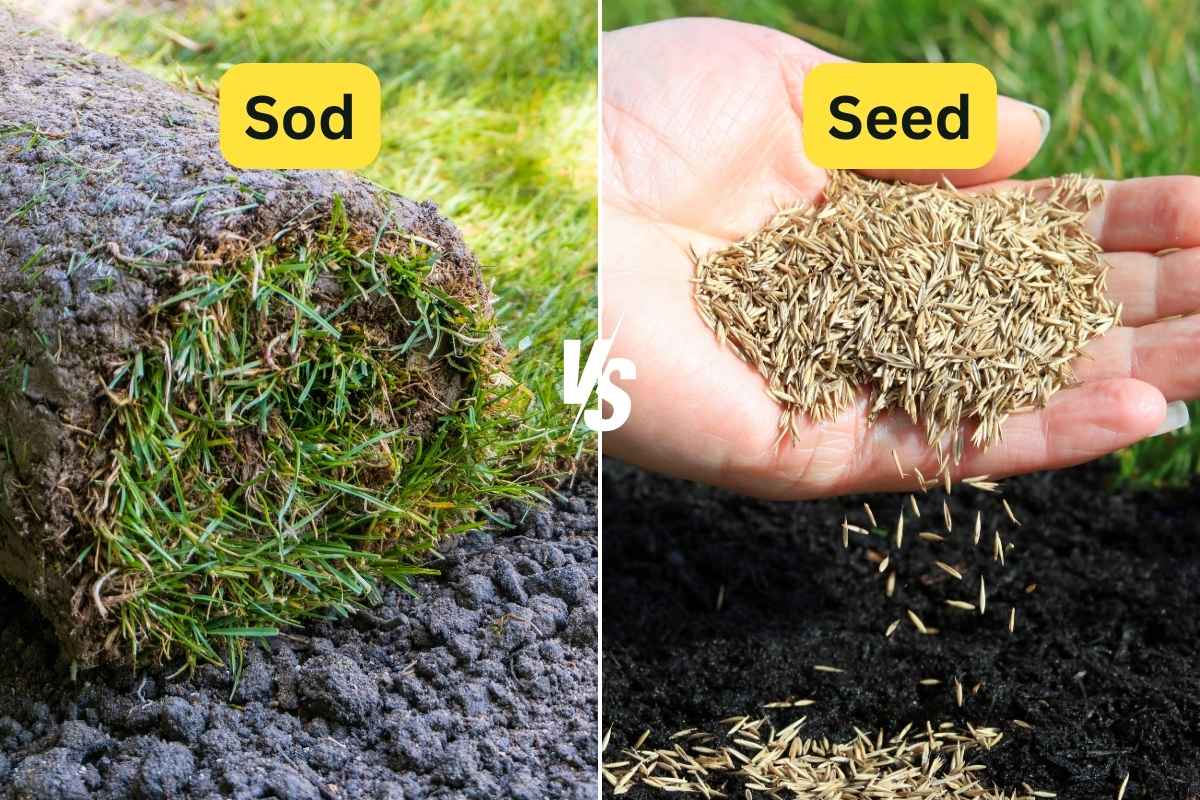
Choosing between sod and seed can feel stressful when you just want a lawn that works. Sod delivers instant results and superior weed control, while seed costs far less and is better for patching or long-term growth.
So is seed better than sod? It depends. For most homeowners, sod makes sense when you need fast and reliable results and can afford the upfront cost. Seeding is usually better when you’re repairing smaller areas or working on a tighter budget.
This guide breaks down the real tradeoffs so you can choose what’s right for your yard, timeline, and budget.
Don’t want to plant seed or lay sod on your own? Contact a local landscaping pro who can handle the entire process.
| Key Takeaways: |
|---|
| • Sod costs more but provides instant coverage and the fastest results. • Seed develops stronger root systems but requires months of patient care. • Use both sod and seed strategically to maximize your results and budget. |
Sod vs. Seed: Side-by-Side Comparison
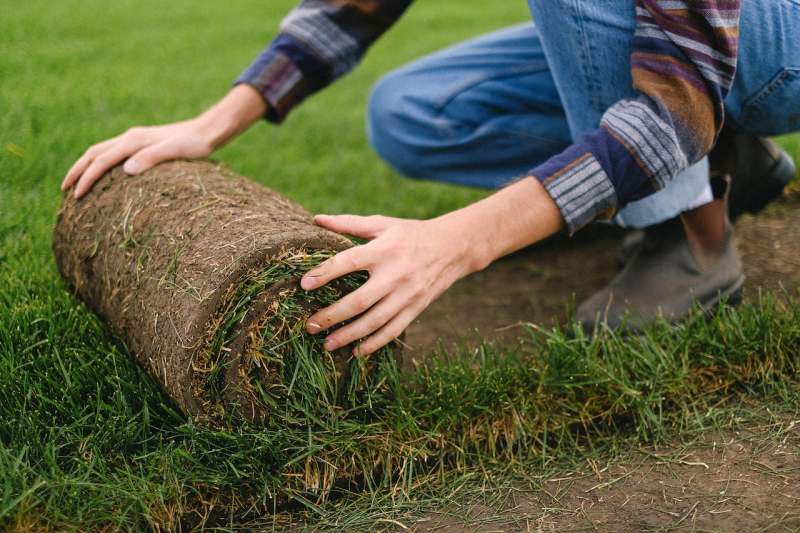
Use the table below to compare sod and seed across the factors that matter most:
| Factor | Grass Seed | Sod |
| Cost per square foot | $0.09 to $0.15 | $0.60 to $1.65 per square foot. |
| Start Time | 2-4 months | 2-4 weeks |
| Root Growth | Deeper, stronger | Shallower initially |
| Installation | Easy DIY | Professional |
| Grass Variety Options | Extensive | Limited |
| Erosion Control | After foundation | Immediate |
| Foot Traffic | Wait 2-4 months | After 2-4 weeks |
| Weed Control | High competition | Natural suppression |
| Maintenance | High for 2-4 months | High for 2-3 weeks |
Sod vs. Seed Cost: The Price Difference
Is sod cheaper than seed? No, sod costs around 6 to 10 times more.
“Seed is more affordable and can yield deeper root systems over the long term, making it durable, but it takes longer to establish and is more sensitive to timing,” says Allison Bailey, agriculture and natural resources agent at the University of Georgia.
Real example: For a 5,000-square-foot lawn, professional seeding costs $450-$750, while sodding costs $3,000-$8,250 installed.
The cost difference reflects more than materials. You’re paying for instant results, installation labor, reduced maintenance time, and immediate erosion control.
Key Factors to Consider
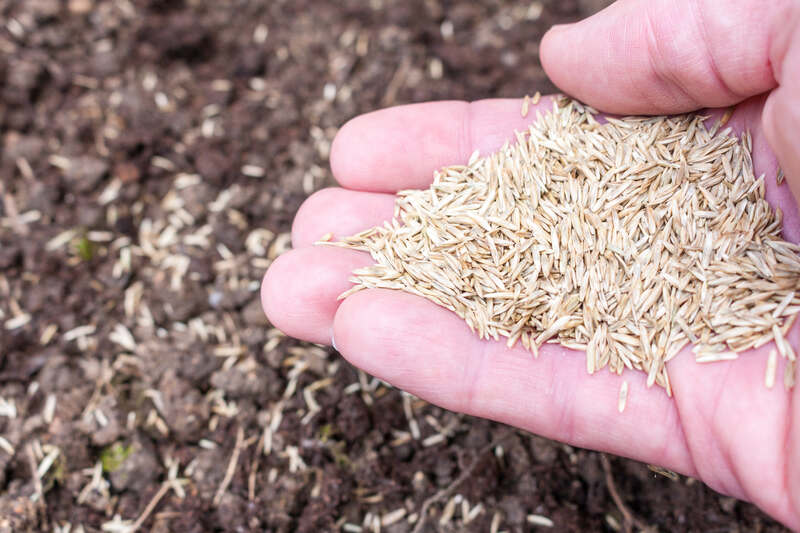
There’s no one-size-fits-all when it comes to sod vs. seed. For Bailey, “Choosing between seed and sod really depends on your goals, like how quickly you want a lawn, your budget, and your soil situation.”
The key factors below can help you make the best decision based on your needs:
Grass Type Availability
In some cases, the decision comes down to the type of grass you want to grow. For Bailey, “Sometimes it also depends on what type of grass the homeowner wants for their lawn, as certain varieties (such as Zoysia) often perform better as sod or have limited seeded options.”
If your preferred grass type is challenging to find as seed, sod may be your only option. “Warm-season grasses generally perform better here [in Georgia], and some of those warm-season grasses do better as sod,” she notes.
See Related: How to Choose the Right Grass for Your Lawn
Maintenance Requirements
How much work you’re willing to put into your new lawn matters in your decision. Sod and seed both require care, but the time commitment and maintenance during establishment is very different:
Sod (first 2-4 weeks):
- Water lightly twice a day until roots establish
- Stay off the lawn completely for 2 weeks
- After establishment, transition to standard watering
Seed (first 2-4 months):
- Water lightly 1-3 times daily until the grass is 1-inch tall
- No foot traffic during the entire establishment
- Protect from birds with a straw covering
- Hand-pull competing weeds
While sod generally requires less maintenance than seed, it still needs consistent watering early on. Without it, sod can dry out and die before establishing.
See Related: How to Plant Grass Seed
Timeline
While it’s a bigger investment, sod provides an instant lawn, so you’re also buying time and convenience.
Here’s the main timeline to consider:
- Sod: Day 1 = green lawn; Week 2-4 = usable lawn
- Seed: Month 1 = germination; Month 2-4 = usable lawn
Yard Condition
The condition of your yard can also affect the option you choose. “Poorly drained or compacted soils can make seed establishment more difficult without proper preparation or amendments,” says Bailey.
- When to choose seed: There are small bare patches (under 40% of lawn); shaded areas needing specific varieties; or existing healthy grass that needs thickening
- When to choose sod: More than 50% of the lawn is damaged or overrun by weeds; there are sloped areas needing immediate erosion control; you have a new construction with bare soil
Expert Tip: “The biggest issues I see with seed and sod are usually related to poor soil health or compaction. Without soil test info, you don’t truly know what’s going on with your soil. And soil health matters whether you are planting seed or putting down sod,” Bailey warns.
See Related:
– Reasons Why Soil Testing Is Important for the Lawn
– How to Test for Compacted Soil
Which Is Better: Sod or Seed?
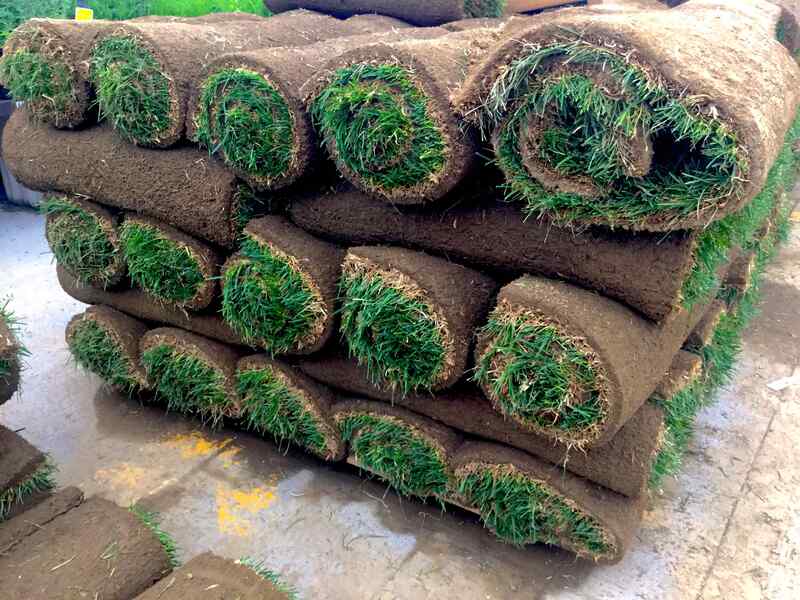
The better option depends on how quickly you need results, how much lawn you’re repairing, and how much time and money you’re willing to invest.
Many homeowners use both, sodding high-visibility areas while seeding less visible sections to balance budget with results.
When to Choose Sod
Sod is the right choice when speed and reliability matter more than cost. It’s best suited for situations where waiting for the seed to establish isn’t practical or where immediate coverage is necessary.
Sod is better when you:
- Need a finished lawn within 2-4 weeks
- Want the most effective weed control from day 1
- Are replacing 50% or more of your lawn
- Have the budget for professional installation
Pros of sod:
- Instant lawn appearance transforms your yard in 1 day
- Fast establishment with usable lawn in 2-4 weeks
- Superior weed suppression, blocks sunlight naturally
- High success rate with proper installation
Cons of sod:
- High cost at $0.60 to $1.65 per square foot
- Limited variety selection restricted to local sod farm offerings
- Professional installation required for success
- Adaptation challenges when sod farm conditions differ from your yard
Read more about how to lay and care for new sod in our articles, with tips on specific time frames and installation guides:
– How to Care for New Sod
– How to Lay Sod (Step-by-Step Guide)
– The Best Types of Sod for Your Lawn
When to Choose Seed
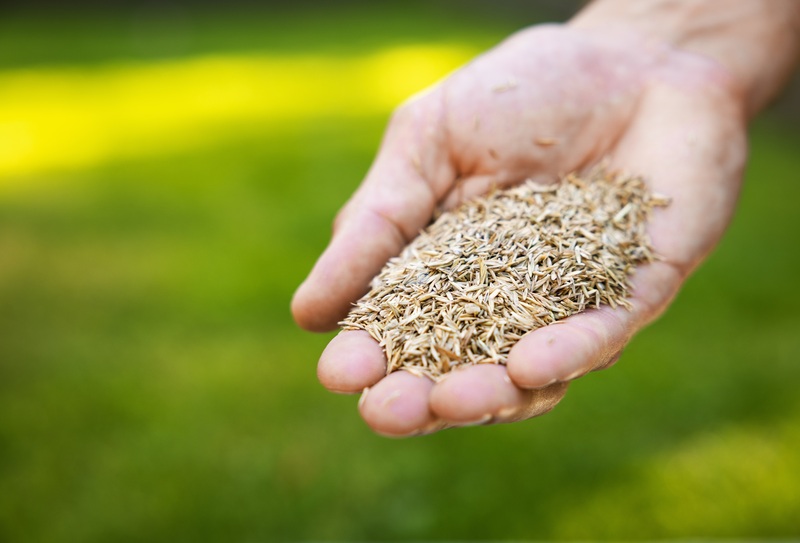
Seeding is the better option when cost, flexibility, and long-term root development matter more than speed.
According to Bailey, “Seed generally performs best when soil temperatures, moisture, and timing are ideal, since germination and early growth are sensitive to heat, drought, and heavy rainfall.”
Seed is better when you:
- Have a limited budget but enough patience (2-4 months)
- Need to repair bare spots in existing lawns or make your grass look thicker
- Want specific grass varieties unavailable as sod
- Prefer deeper, drought-resistant root systems long-term
Pros of seeding:
- Significantly lower cost at $0.09 to $0.15 per square foot.
- Extensive variety selection for any condition
- Easy DIY installation with basic tools
- Seamless integration with existing grass
Cons of seeding:
- Extended establishment of 2-4 months
- Intensive maintenance with multiple daily waterings for weeks
- Vulnerability to weather (rain and wind) and weeds
- No foot traffic allowed for months
Read more about how to plant and care for grass seed with our articles:
– How to Plant Grass Seed
– How to Keep Birds From Eating Grass Seed (Simple Tips)
– When to Mow After Overseeding
Which Is Better for Weed Control: Sod or Seed?
Sod wins on better weed control. Lawns that are overrun with weeds usually respond better to sod, which establishes quickly and limits space for weeds. As Bailey notes, “Sod generally has fewer weed problems when prepared properly.”
If you plan to seed, it’s important to treat weeds first to set your new grass seedlings up for success. Bare soil invites weed seeds that germinate faster than grass. Your seedlings must compete with weeds for water, nutrients, and sunlight.
Sod or Seed for Fastest Results?
Sod delivers the fastest results. Your lawn transforms from dirt to green grass in 1 day. Roots establish in 2-4 weeks.
Bailey says that “Sod provides instant cover and is best if you need a finished look quickly or have slopes or bare soil, but it costs more up front and still needs proper soil prep.”
FAQ
Dormant seeding is a lawn care technique in which grass seeds are planted when the ground is cold enough to prevent germination but not frozen. This concept is effective because sowing seeds during the dormant season prepares the lawn to sprout as soon as the soil warms up, giving you a head start.
See Related: How to Dormant Seed Your Lawn
A sod cutter removes existing grass with a thin soil layer underneath. You need one when replacing an old lawn with new sod to ensure the new sod sits level with sidewalks and driveways. It is available for rent at around $75-$150 per day.
See Related: How to Use a Sod Cutter
Sod always wins for erosion control. Bailey explains that “On slopes or erosion-prone areas, sod is usually the better choice because it provides immediate soil stabilization, while seed can wash away before it takes hold.”
Deep-rooted species like tall fescue and Bermudagrass work even better.
See Related: How to Control Erosion in the Yard
No, never lay sod over existing grass. Sod needs direct soil contact to root properly. Old grass creates a barrier, preventing new sod from establishing. Always remove existing grass completely before installation.
Get Professional Help to Restore Your Lawn
Ready to transform your lawn? Let’s do a final recap:
Should I sod or seed?
- Budget primary? Choose seed.
- Time primary? Choose sod.
- Weed control matters? Choose sod.
- Variety selection matters? Choose seed.
- Erosion problem? Choose sod.
Once you’ve determined the best option for you, LawnStarter connects you with local landscaping professionals who handle seeding, sod installation, and ongoing maintenance. Whether you choose seed or sod, professional installation ensures optimal results.
Get your dream lawn today — Find a lawn care pro near you.
Sources:
- Allison Bailey, agriculture and natural resources agent at the University of Georgia, Washington, GA. Personal interview.
- “Seeding and Sodding Home Lawns.” By Extension experts Sam Bauer, Bob Mugaas, and Brad Pedersen. University of Minnesota Extension.
Main Image: Side-by-side image of sod and grass seeds.
Image Credit:
Sod: makasana photo / Adobe Stock Free / License, Created using Canva Pro.
Seed: dean / Adobe Stock Free / License