
| Key Takeaways: • Measure shade level manually or using a smartphone app. • Use shade-tolerant grasses like fine fescue and St. Augustinegrass. • Reduce fertilizer by 25%-50% and cut watering frequency by 30%-40%. • Raise mowing height by 1/4 to 1/2 inch above normal. |
If you have big trees in your yard, you’ve probably noticed that grass struggles to grow underneath them. And bare spots are not the only problems when growing grass in shade.
Growing a healthy lawn in the shade is possible — but you must determine how much shade you’re dealing with and choose the right type of grass for those conditions. From there, you’ll need to adjust how you fertilize, water, and mow.
Still confused about growing grass in shade? LawnStarter’s lawn care professionals can take care of your lawn year-round so you don’t have to lift a finger.
1. Measure the Shade Level
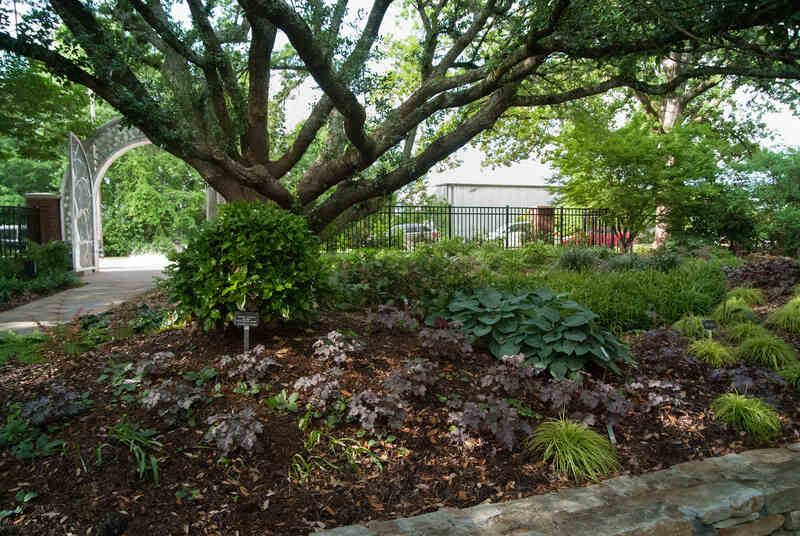
Before you choose grass seed or make any changes, you need to know exactly how much sunlight your yard is getting.
“The amount of sunlight a site gets will dictate which grass has the potential to do well,” says Mike Richardson, turfgrass management specialist at the University of Arkansas Division of Agriculture.
Get it right from the start to avoid the frustrations many homeowners face when growing grass in shaded areas. This way, you can choose the right grass species and adjust your mowing and care routine.
Here are two simple methods to measure shade and sunlight in your yard:
Method 1: Sun Hours Method
This is the straightforward “sit in your yard with a watch” approach. Pick a typical sunny day and note how many hours of direct sunlight your yard receives. The table below shows the sunlight exposure depending on how much sunlight your lawn gets in a day:
| Sunlight Exposure | Hours of Direct Sun |
| Full sun | 6+ |
| Partial sun / light shade | 4 to 6 |
| Partial shade | 2 to 4 |
| Full shade | Less than 2 |
My Tip: You can also use a time-lapse camera to record how many hours your lawn receives sun exposure.
Method 2: Smartphone Method
Your smartphone can be a helpful tool in figuring out how to grow grass in shaded areas. The right sun tracking app will give more precise readings.
- Download a sun and shade or light meter app, such as Sun Seeker (iOS/Android) or Sun Position & Path (iOS), on your smartphone.
- On a clear day, take readings in the target area at 9 a.m., noon, and 3 p.m.
- Compare your readings to see where each spot falls:
- Full sun: Strong readings at all times, unblocked light
- Light shade: Morning or late afternoon sun, or filtered light
- Moderate shade: Short direct sun windows or dappled tree light
- Full shade: Very low readings all day, little to no direct sunlight
Note: This method gives you a more precise picture compared to the first. But you can combine the two methods to confirm the app readings match what you’re actually seeing in your yard.
2. Choose a Shade-Tolerant Grass Species
When planting grass in shade, consider how shade tolerance varies among different grass types. Some grasses can thrive with just a few hours of filtered light, while others fail the moment tree branches block the sun.
Cool-Season Grasses
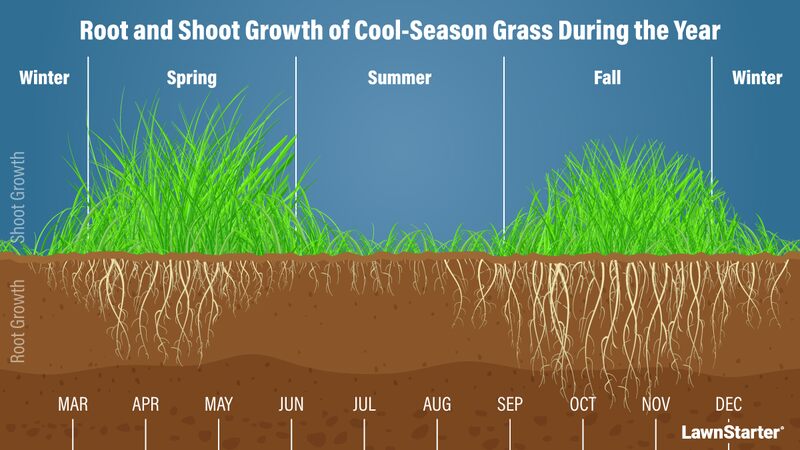
Cool-season grasses grow best in northern regions with moderate summers and cold winters. Use the tables below to find the best grass types for your yard’s sunlight level:
Light shade (4 to 6 hours of sun):
| Grass Type | Best Regions (USDA Zones) | Recommended Cultivars |
| Kentucky bluegrass | 3-7 | ‘Midnight’, ‘Moonlight SLT’, ‘Compact America’ types, or shade-tolerant blends |
| Perennial ryegrass | 3-8 | ‘Manhattan 5’, ‘Palmer III’ |
| Fine fescues | 3-8 | Blend of creeping red, Chewings, and hard fescue |
Partial shade (2 to 4 hours of sun):
| Grass Type | Best Regions (USDA Zones) | Recommended Cultivars |
| Tall fescue (shade-tolerant types) | 3-8 | ‘Rebel Exeda’, ‘Falcon IV’ |
| Fine fescues | 3-8 | Blend of creeping red, hard, and sheep fescue |
Full shade (Under 2 hours of sun):
| Grass Type | Best Regions (USDA Zones) | Recommended Cultivars |
| Fine fescue (hard or creeping red) | 3-8 | ‘Reliant IV’, ‘Beacon’, ‘Aurora Gold’ |
| Rough bluegrass (colonial type) | 3-7 | ‘Sabre II’ |
Warm-Season Grasses
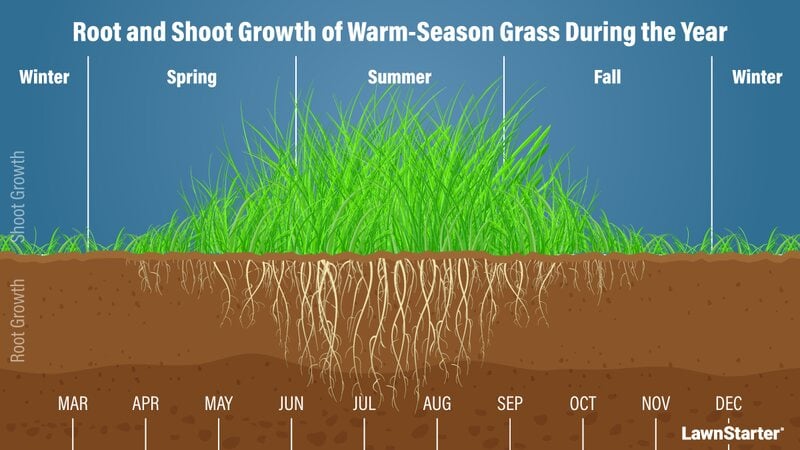
If you live in the southern regions, your lawn choices shift toward warm-season grasses. Here’s what you can plant based on your shade level:
Light shade (4 to 6 hours of sun)
| Grass Type | Best Regions (USDA Zones) | Recommended Cultivars |
| St. Augustinegrass | 7-12 | ‘Palmetto’, ‘Seville’, ‘CitraBlue’, Delmar’, ‘Captiva’ |
| Zoysiagrass | 5-11 | ‘Emerald’, ‘Zeon’, ‘Geo’ |
3. Adjust Fertilizer in Shade
Grass in shady areas doesn’t need as much fertilizer as grass in full sun because it grows more slowly and uses less energy.
“Growth is a consumer of energy,” says Richardson, “and it (fertilization) should be limited as much as possible.” That’s why it’s important to adjust your fertilizer application for grass in the shade. Reduce nitrogen by 25% to 50% compared to what you use on sunny turf.
Fertilize your shaded lawn once or twice a year:
- Cool-season grass: Spring and early fall
- Warm-season grass: Late spring
How to apply:
- Apply evenly using a spreader, but dial the spreader down for the reduced rate.
- Fertilize only healthy, established grass — not thin or struggling patches.
- Water lightly after application to help nutrients move into the soil.
Pro Tip: Use a slow-release fertilizer to avoid growth spurts that shaded grass can’t handle. Also, avoid applying nitrogen late in the season, as shaded grass is more prone to diseases during the cold months.
4. Reduce Watering Frequency
Trees drastically change your lawn’s water needs. Their canopies block sunlight and slow down evaporation. At the same time, tree roots compete fiercely with your grass for moisture.
“Many grasses, like Kentucky Bluegrass, are more susceptible to diseases in the shade because shaded environments tend to retain dew and moisture longer than sunny areas,” says Richardson.
Sunny lawn vs. shaded lawn watering needs:
| Condition | Total Water Per Week | Watering Frequency |
| Sunny lawn | 1-1.25 inches | 2-3 times per week |
| Shaded lawn | 1 inch | 1-2 times per week |
Reduce watering frequency by 30% to 40%, but not the watering depth. Deep watering encourages deeper root growth, which is important because the grass is already dealing with limited sunlight.
“So, the bottom line is that you do not want to water shaded turfgrasses frequently, as it will cause the turf to stay wet and could lead to disease activity,” adds Richardson.
5. Increase Mowing Height
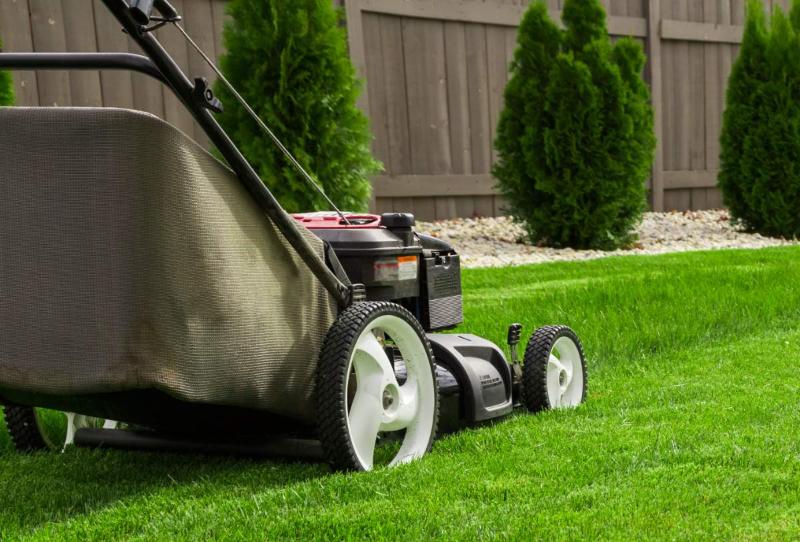
When it comes to capturing sunlight, raising your mowing height can give your shaded grass the boost it needs. Experts from the University of California suggest increasing mowing height by 1/4 to 1/2 inch above the recommended mowing height for each grass type.
Below is a quick reference for the grass types we listed earlier:
| Grass Type | Standard Mowing Height (Inches) | Shaded Mowing Height (Inches) |
| Cool-Season Grasses | ||
| Fine fescue | 2 – 4 | 2.5 – 5 |
| Kentucky bluegrass | 2 – 4 | 2.5 – 5 |
| Perennial ryegrass | 1.5 – 3.5 | 2 – 4.5 |
| Rough bluegrass | 1.5 – 3.75 | 2 – 4.25 |
| Tall fescue | 2 – 4 | 2.5 – 5 |
| Warm-Season Grasses | ||
| St. Augustinegrass | 3 – 4 | 3.75 – 5 |
| Zoysiagrass (fine-textured) | 0.25 – 1 | 0.37 – 1.5 |
| Zoysiagrass (medium- to coarse-textured) | 1 – 2.5 | 1.25 – 3.75 |
When to Accept Alternatives to Grass
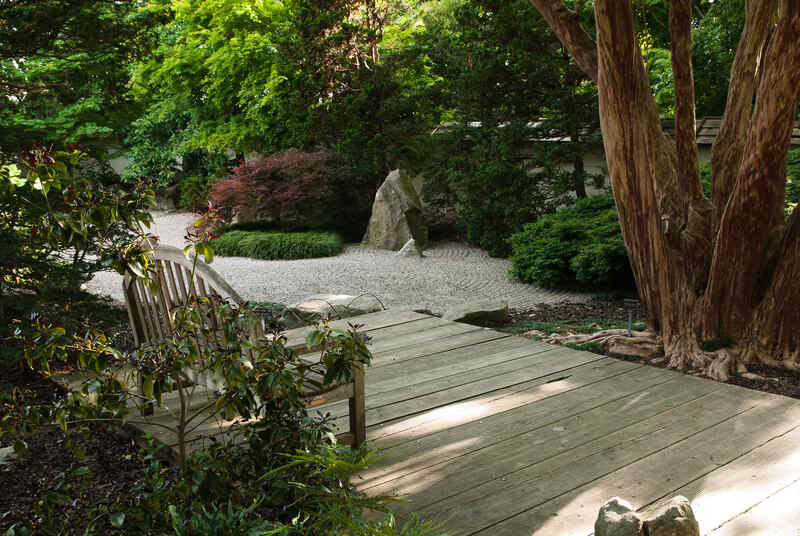
Sometimes, no amount of fertilizer, watering tweaks, or shade-tolerant seed will make grass grow in a shaded area. If grass struggles despite your best efforts, it’s time to consider an alternative:
- Shade-loving groundcovers: Mondo grass, liriope, Asiatic jasmine, vinca, and English ivy all stay green with minimal care.
- Mulch beds: Using mulch is budget-friendly, easy to maintain, and great for improving the look of root-heavy, tree-dense areas.
- Decorative gravel or stone pathways: Ideal for high-traffic shade areas where grass refuses to grow.
- Raised planters: A good alternative for areas where tree roots make planting impossible at ground level.
- Woodland garden beds: Ferns, hostas, and shade perennials can create a lush, natural look under trees.
Expert Tip:Since conditions vary by location, Richardson recommends contacting your local Extension office for information specific to your region.
See Related:
How to Manage Trees for Less Shade and Better Grass Growth

Managing the trees themselves can make a big difference. Opening up the tree canopy can dramatically improve light levels, especially in spots where you’re growing grass in shade beneath large trees.
Here are some strategic adjustments that can help improve light levels:
- Reduce density in multi-stem trees
- Trim back wide, overhanging limbs
- Prune lower branches (crown raising)
- Thin the tree canopy by removing select interior branches
- Clear small understory trees and saplings around mature trees
Pro Tip: Consider removing overcrowded trees if your yard is overly shaded. Also, avoid planting dense, shade-casting species, such as maples, magnolias, or beech trees, near lawn areas.
See Related:
FAQ About Growing Grass in Shade
Yes, you can use the same fertilizer in a shaded lawn, as long as you apply less of it.
Grass grows weaker in shade, creating thin areas that weeds exploit. Moist soil and low airflow also help weed seeds germinate faster, making shaded spots more vulnerable to weed invasion.
Shade fertilizers mainly offer lower nitrogen, but you can also adjust your regular fertilizer rate accordingly.
Let LawnStarter Help with Your Shade Lawn
Growing grass in the shade can be challenging. Between choosing the right grass seed, adjusting fertilizer and water, raising your mowing height, and managing trees, it’s a lot to handle.
That’s where LawnStarter comes in. Our local lawn care professionals understand how to grow grass in shade. They can also help with:
Contact us for a free quote today.
Sources:
- “Knowing Your Yard’s Sun and Shade Patterns.” Johnson County K-State Research and Extension.
- “Managing Lawns in Shade.” By Ali Harivandi, horticulture advisor, and Victor Gibeault, environmental horticulturist. University of California Cooperative Extension.
- Mike Richardson, professor and turfgrass management specialist at the University of Arkansas Division of Agriculture.
- “North Carolina Extension Gardener Plant Toolbox.” North Carolina State University Extension.
Main Image: Curved shady lawn bordered by lush garden. Image Credit: Joanne Dale / Adobe Stock
