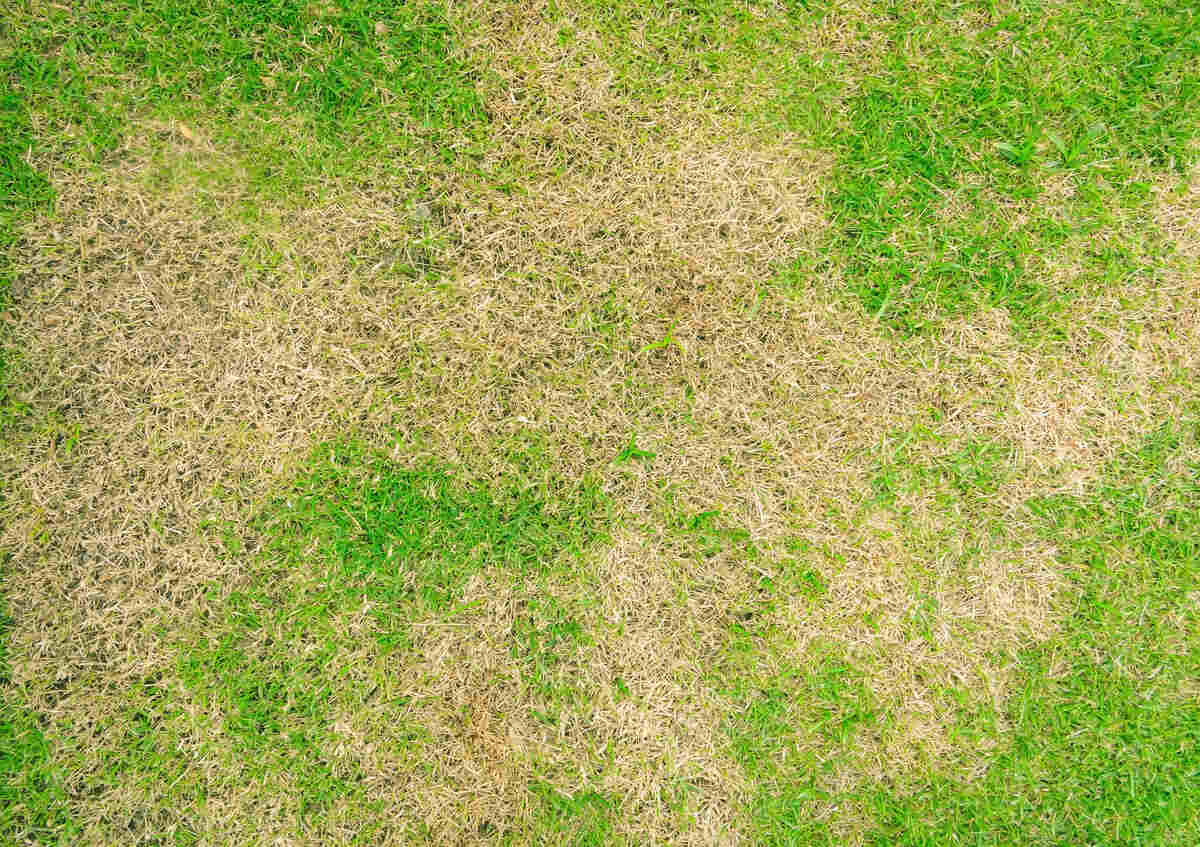
Fixing patchy grass comes down to identifying the cause and choosing the right repair method. Use grass seed for small bare spots — it’s affordable and straightforward. For large bare areas or when you need instant coverage, sod is your best bet.
The repair process is simple: Clear debris, loosen compacted soil, apply seed or sod, then water consistently for two weeks.
But before you grab your rake, figure out what caused the patches in the first place: pet urine, foot traffic, disease, or poor soil. A soil test from your local Extension Office can reveal the underlying issue, so those bare spots don’t keep coming back.
Ready for a lush, even lawn without the DIY hassle? LawnStarter’s local landscaping pros can diagnose the problem, repair bare spots, and establish a maintenance plan. Get free quotes from top-rated landscaping experts in your area.
Quick Tips to Identify the Cause of Bare Patches
Before repairing patchy grass, find out why your grass just doesn’t want to grow in certain spots. Fix the root cause first — otherwise, those bare spots will return, and you’ll keep wasting money and weekends on repairs.
Common causes and fixes for patchy grass:
| Problem | How to Identify | Solution |
| Compacted Soil | Screwdriver won’t push into the soil easily | Core aerate before seeding/sodding |
| Pet Urine | Circular brown patches with dark green rings | Flush with water |
| Lawn Disease | Irregular dead areas, discoloratio, and fungal growth | Apply fungicide, improve air circulation |
| Grubs | Dead grass peels back like carpet, white grubs visible | Apply grub control in late summer |
| Poor Drainage | Standing water in low spots | Aerate, fill in low spots, and amend clay soil with compost |
| Wrong pH | Grass yellows despite fertilizing | Test soil, add lime (raise pH) or sulfur (lower pH) |
| Dense Shade | Grass is thin under the trees | Trim trees, use shade-tolerant plants or groundcover |
| Buried Debris | Persistent dead zones in specific spots | Dig out obstacles, replace with topsoil |
| Fertilizer Burn | Brown patches matching the spreader pattern or spill areas | Water heavily to wash salts, reseed after the soil recovers |
Get a soil test: This prevents wasted effort on repairs that won’t last. Local Extension offices charge $20-$35 for standard testing (soil pH, nutrient levels) per sample, while a more in-depth analysis ranges $50 to $100.
See Related: 9 Reasons Why Soil Testing Is Important for the Lawn
How to Fix Patchy Grass With Seed
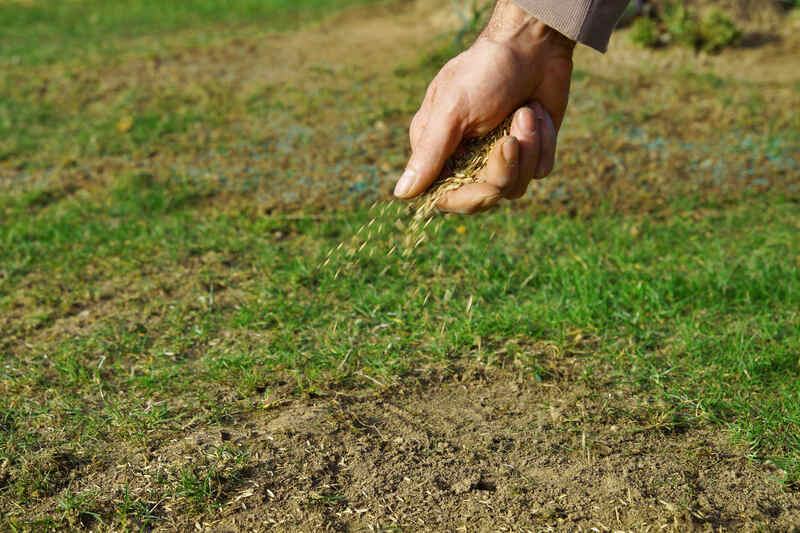
Grass seed is an easy, affordable way to repair your lawn. However, growing grass from seed can be time-consuming and is best for fixing small patches.
Follow these steps to reseed bare spots:
Step 1: Prepare the Area
- Mow grass short (1.5-2 inches).
- Rake out debris and dead grass; pull weeds by hand (herbicides prevent germination).
- Loosen the top inch of soil with a rake. For compacted areas, aerate first: Use a garden fork for small patches and a core aerator for large ones.
See Related: How to Aerate Your Lawn
Step 2: Spread Seed
You’ll need 2-8 pounds per 1,000 square feet for bare patches and 1.5 to 4 pounds (half the rate) where grass is still growing. Rates vary by grass type — check your package instructions.
- Apply grass seed uniformly with a hand-held spreader.
- Lightly rake to work seeds into the top 1/4 inch of soil.
- Cover with a thin layer of straw (not hay, as it has weed seeds).
See Related: How to Choose The Right Lawn Spreader
Step 3: Water Consistently
Seeds die if they dry out even once before germinating completely. Keep the top 1 inch of soil moist (not saturated) until patches are covered in tiny seedlings (1-4 weeks).
Water lightly but often (2-4 times a day) for the first two weeks, then gradually reduce the frequency while increasing the amount. By week 6, you should be down to 2-3 times weekly. Once the grass reaches mowing height (3-4 inches), it’s ready for a normal watering schedule.
See the detailed schedule in our guide: How Often to Water Grass Seed.
Struggling with bare spots that won’t fill in? LawnStarter’s landscaping pros use professional-grade seed and expert timing to fix your lawn.
How to Fix Patchy Grass With Sod
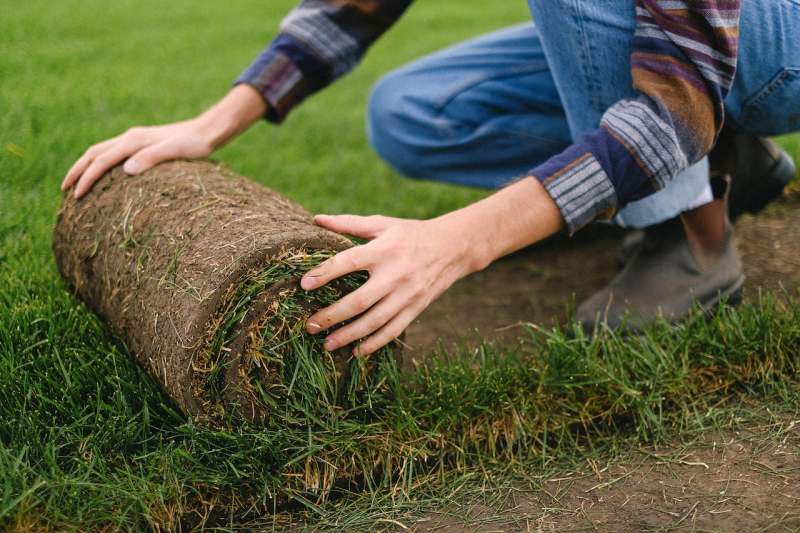
Patching with sod is a quick way to make a scarred lawn look spotless. It works best on bare patches and large damaged areas.
Step 1: Measure and Purchase
- Mark straight boundaries around the damaged area with a string or spray paint.
- Measure the patch (length × width).
- Choose sod matching your grass type. Buy 10%-15% extra for trimming.
- Install within 24 hours (sod dies quickly on pallets).
Step 2: Prep the Area
- Remove weeds, dead grass, and debris to bare soil.
- Loosen the soil 3-4 inches deep. Aerate if compacted.
- Level the soil to sit 3/4 inch below the surrounding areas (accounts for sod thickness).
- Water the patch deeply a few hours before installing the sod.
Step 3: Install Sod
- Cut sod pieces slightly larger than your bare patches. Use a garden knife.
- Press firmly into place, patting down by hand for small pieces or with a water-filled lawn roller for larger areas.
See Related: How to Lay Sod (Step-by-Step Guide)
Step 4: Water Immediately
Water right after you lay the sod down. Sod comes with about 1 inch of soil and roots — soak them well so they take hold.
For the first two weeks after installation, water twice daily (15-20 minutes each session) to keep the soil moist to encourage root growth.
Test if rooted after 2 weeks by gently tugging a corner. If it resists, roots have established, and you can water less often and in longer sessions. By week 4, you’ll go from short, frequent watering to deep soaks once or twice a week.
Don’t mow or walk on the repaired patches for 2-4 weeks after sod installation.
Pro Tip: If possible, walk the mower diagonally to the sod patches the first time you mow. You’ll avoid picking up loose sod.
Seed vs. Sod: Which Method is Right for You?
Repairing bare patches with seed or sod comes down to your budget, how much damage you’re dealing with, and how fast you want results. Here’s what to expect from each:
Grass seed:
- Budget-friendly ($10-$45 per 500-1,000 square feet)
- Easy to install DIY
- Slow results (4-8 weeks until you can mow or walk on it)
- Best for small to medium patches
Sod:
- Pricier ($150-$450 per 500 square feet)
- Takes some skill to install well
- Instant coverage (green grass in 1 day, ready for mowing and foot traffic in 2-4 weeks)
- Best for large bare areas and weedy patches
Want the full breakdown? Check our guide: Sod vs. Seed: Which Is Right For You?
Note: Choose a seed or sod that matches your existing grass type. The exception: If bare spots keep showing up in shady areas, repair with a shade-tolerant variety. Here’s a guide to choosing grass types if you need help.
See Related:
When to Repair Your Lawn
Unlike seeding grass, you can lay sod almost anytime, but both methods work best during the peak growing season.
| Grass Type | Best Repair Time | Avoid |
| Cool-season (bluegrass, fescue, ryegrass) | Early fall or early spring | Mid-summer heat |
| Warm-season (Bermuda, St. Augustine, Zoysia) | Late spring to early summer | Fall/winter dormancy |
Summer repairs: Sod is more reliable than seed in heat. Water 2 to 4 times daily.
Winter repairs: Only sod works in winter, as long as the soil is not frozen. Seed won’t germinate at soil temperatures below 50 F.
FAQ
No, dead grass blocks seeds from reaching the soil. Rake down to bare soil before seeding.
For seed, wait until grass reaches 3-4 inches (about 3-4 weeks after germination). For sod, wait 2-4 weeks until roots anchor — test by gently tugging a corner.
Yes, use starter fertilizer (high in phosphorus) when spreading seed, as it promotes root growth. Apply 1 pound of nitrogen per 1,000 square feet. Avoid regular lawn fertilizer, which can burn seedlings.
See Related: 9 FAQs About Applying Starter Fertilizer to Your Lawn
No. Clippings block seeds from reaching the soil and shade out new sprouts. If your lawn has a disease, clippings can also spread pathogens. Remove them from bare patches during repair.
Get Professional Lawn Repair Help
Fixing patchy grass successfully comes down to 5 things: tackling the root cause, good timing, proper soil preparation, skillful installation, and consistent watering while your new grass takes hold.
Don’t have time for DIY? Hire our local landscaping pros who can treat lawn problems, repair bare spots, and keep your lawn looking good in the long term. LawnStarter’s vetted, insured pros offer free quotes and can usually start within days. Get matched with top-rated experts in your area.
Sources:
- “Buying and Installing Certified Sod.” By Susan Barton, ornamental horticultural specialist. University of Delaware Cooperative Extension.
- “Grass Seed.” By Debra Ricigliano, Maryland certified professional horticulturist (retired). University of Maryland Extension.
- “Use Sod For Quick Repair Of Damaged Lawns.” By Ronald Strahan, regional director of the Northwest region, and Thomas J. Koske, LSU AgCenter horticulturist.
Main Image: Patchy lawn with brown, dry grass mixed with green growth. Image Credit: singjai / Adobe Stock Free / License