Watering your lawn in summer usually takes 25 to 30 minutes per session. But the right number depends on your soil, grass type, and sprinkler output. Set the timer wrong and you’ll either drown the roots or scorch the blades.
Most homeowners overwater. Some underwater. Both leave you with a tired, patchy lawn by August, which is the opposite of what all that effort was supposed to buy you. This guide walks through how to calculate your watering time, when to water for the best results, and how to spot the signs of too much or too little.
If summer watering feels like one chore too many, let LawnStarter’s lawn mowing pros take your other weekly lawn care task off your to-do list.
| Key Takeaways |
|---|
| • Most lawns need 25 to 30 minutes of water per session, twice a week, to deliver the recommended 1 inch of water. • Water in the early morning (between 4 a.m. and 10 a.m.) to prevent evaporation and reduce the risk of fungal disease. • Grass type, soil type, and sprinkler output all affect how long to water your lawn in summer. |
How Long to Water Your Lawn in Summer
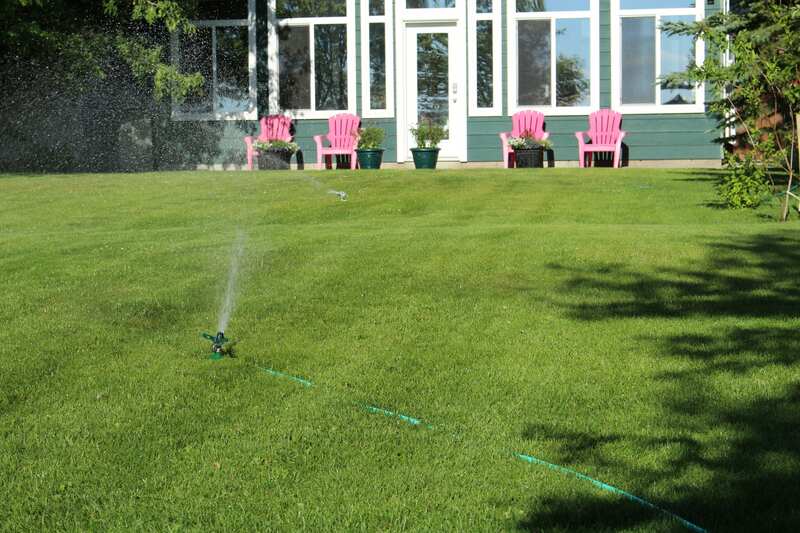
Most lawns need 25 to 30 minutes of watering per session, twice a week in summer. This delivers about 1 to 1.5 inch of water per week, including rainfall. Skip a session if it rains.
How many minutes should you run your sprinkler system? For most residential sprinklers, run each zone for 25 to 30 minutes per session if watering twice a week, or 20 minutes if watering three times a week.
Output varies across different types of sprinklers, anywhere from 0.5 to 2 inches per hour, depending on whether you have rotors, rotary nozzles, or spray heads. Most homeowners with conventional spray heads land in the 20- to 30-minute range, but rotor systems take longer.
Twice-weekly watering encourages roots to grow deeper, where moisture stays cooler and lasts longer than near the surface.
“It’s better to water less frequently, but deeper, rather than more frequently and shallower,” says Chuck Vogt, owner of Metro Lawns in Atlanta. “We need to water deeply for the root system.”
How to Measure How Long to Water Your Lawn (The Catch Can Test)
“How much is an inch of rain? Well, take an empty tuna fish can and place it out on the lawn. If that fills up in a week, you’ve had an inch of rain,” Vogt says.
The catch can test technique is similar, only it helps you measure your sprinkler’s output in minutes to find your ideal watering time:
Step 1: Place at least 6 straight-sided containers (empty tuna cans work perfectly) evenly around your lawn.
Sprinkler coverage is rarely even, which is why using multiple cans matters.
Step 2: Turn on your sprinklers and let them run for exactly 20 minutes.
Step 3: Use a ruler to measure the depth of water in each container.
Step 4: Add all measurements, then divide by your container count to find the average depth.
Step 5: Multiply the average depth by 3. This gives you the estimated inches per hour.
Use the table below to match your sprinkler’s output to your ideal session length:
| Sprinkler Output (inches per hour) | Time to Deliver 1 inch | Per Session (2x / 3x Weekly) |
| 0.5 | 2 hours | 60 min / 40 min |
| 1 | 1 hour | 30 min / 20 min |
| 1.5 | 40 min | 20 min / 13 min |
| 2 | 30 min | 15 min / 10 min |
Smart irrigation controllers adjust run times based on weather automatically — running the catch can test once confirms the factory settings match your lawn. According to the Environmental Protection Agency (EPA), WaterSense-labeled controllers can reduce irrigation water use by up to 30% annually.
See Related: Keep Your Grass Healthy with a Lawn Sprinkler Audit
When to Water Your Lawn in Summer
Is 70 degrees too hot to water your lawn? No, the temperature reading itself isn’t the deciding factor. Evaporation depends on a combination of temperature, humidity, wind, and direct sun exposure.
A 70-degree day with full sun and low humidity will lose more water to evaporation than an 85-degree morning with cloud cover. That’s why time of day matters more than the thermometer: Watering between 4 a.m. and 10 a.m. avoids the worst evaporation conditions regardless of the daily high.
Best time to water your lawn in summer:
Ideal window: Early morning, between 4 a.m. and 10 a.m., is the best watering time.
Why it works: Water soaks deep into the soil before the heat of the day kicks in.
What to avoid: Afternoon heat (water evaporates before reaching roots) and nighttime (promotes fungal disease).
See Related: Best Time to Water Your Grass
What Affects How Long You Should Water Your Lawn?
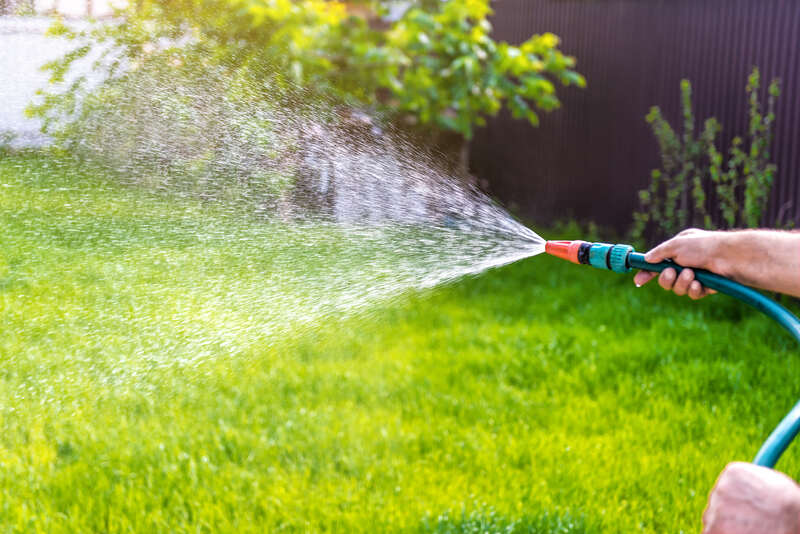
Three factors determine how long you should water your lawn in summer: your grass type, your soil type, and your sprinkler’s output rate.
The table below shows recommended watering durations by grass and soil type, based on a sprinkler output of 1 inch per hour, the average rate for most residential systems. If your sprinkler’s output is higher or lower, adjust the durations using your catch can test results.
| Lawn Type | Frequency | Duration (per session) |
| Warm-season grass | Twice a week | 30 minutes |
| Cool-season grass | Three times a week | 20 minutes |
| Sandy soil | Three times a week | 20 minutes |
| Clay soil | Once a week | 40 minutes (cycle and soak) |
| Loamy soil | Twice a week | 30 minutes |
See Related: How Often to Water Grass in Summer
How Long to Water Your Lawn in Summer by Grass Type
Warm-season grasses (Bermuda, Zoysia, St. Augustine) are known for their drought tolerance and thrive in summer heat:
Frequency: Twice a week
Duration: 20 minutes per session
Why: Deep root systems retain moisture better between waterings
Cool-season grasses (Kentucky bluegrass, fescue, ryegrass) have higher water needs during summer, requiring 0.21 to 0.26 inches daily at peak use, according to United States Golf Association (USGA) research:
Frequency: Three times a week
Duration: 15 minutes per session
Why: These grasses struggle with moisture retention in high temperatures
See Related:
How Long to Water Your Lawn in Summer by Soil Type
Sandy soil: Water up to 3 times a week for around 15 minutes per session. If water drains through too fast, you may need to amend your sandy soil to improve moisture retention.
Clay soil: A once-a-week watering of 40 minutes is generally sufficient. Use the cycle and soak method: Break it into 3 cycles of 13 minutes with a 30-minute rest between each. This prevents runoff and lets water penetrate deeply.
Loamy soil: The ideal soil type for lawns, loam balances drainage and retention well. Water approximately twice a week for around 20 minutes per session.
See Related: Guide to Soil Types: Pros, Cons, and Plant Suggestions
Signs Your Lawn Is Getting Too Much or Too Little Water
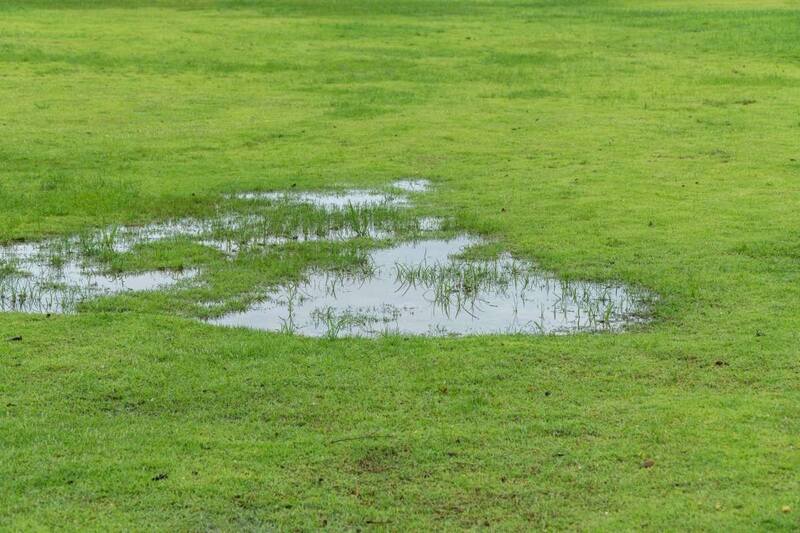
Both overwatering and underwatering stress your lawn. Yellowing grass is a symptom of both. The key is checking your soil, not just your grass blades, to know which problem you’re dealing with.
One reliable early indicator: the footprint test. Step on your grass. If the blades spring back within seconds, moisture levels are fine. If footprints linger, your lawn is thirsty.
Signs You’re Watering Your Lawn Too Long in Summer
Soggy soil: If the ground feels consistently squishy, you’re watering too much.
Puddles and runoff: Water pooling or running off after a session is a clear sign to cut back. Excess runoff wastes water and can carry nutrients away from your soil.
Fungal diseases: Overwatered lawns often become breeding grounds for mushrooms and fungal disease.
Yellowing grass: Yellow or pale-green patches can signal nutrient imbalances caused by waterlogged roots.
See Related: 10 Signs of Overwatering Your Lawn
Signs You’re Not Watering Your Lawn Long Enough in Summer
Dry, cracked soil: If the ground appears parched and breaks apart easily, your lawn needs more water.
Stunted growth: Grass that isn’t reaching its expected height or looks sparse is probably lacking water.
Yellowing grass: Both overwatering and underwatering can cause yellowing of the grass. Check your soil moisture to determine which problem you’re dealing with.
See Related: Why Is My Grass Dying Even Though I Water It?
Let LawnStarter Handle Your Summer Lawn Care
Getting your watering schedule dialed in is a great start, but summer lawn care involves more than sprinkler settings. Mowing frequency, fertilization, and weed control all need attention too.
LawnStarter makes it easy to hand all of that off. Find a pro for lawn mowing, fertilization, and weed control with LawnStarter, and keep your grass healthy all summer long with less effort on your part.
FAQs
Not how long (you still water deeply), but how often. Shaded areas retain moisture longer and need water less often than full-sun areas. Reduce frequency by about 30% to 40% for heavily shaded zones.
Yes, light watering after fertilizing helps nutrients soak into the soil and reach the root zone. Apply about 1/4 inch of water (roughly 10 minutes with most sprinklers) to activate the fertilizer without washing it away.
If your lawn looks dry despite regular watering, 2 common culprits may be the cause:
• Thatch buildup: A thick layer of dead and live grass blocks water from reaching roots.
• Compacted soil: Dense soil prevents water penetration.
You can solve the problem by removing thatch over 1/2 inch thick (dethatching costs run $65 to $165) and core aerating the lawn (aeration costs run $107 to $202).
For most lawns, 30 minutes is ideal for a twice-weekly schedule, delivering close to half an inch of water per session. Run a catch can test if you have high-output sprinklers or clay soil to make sure water is soaking in instead of running off.
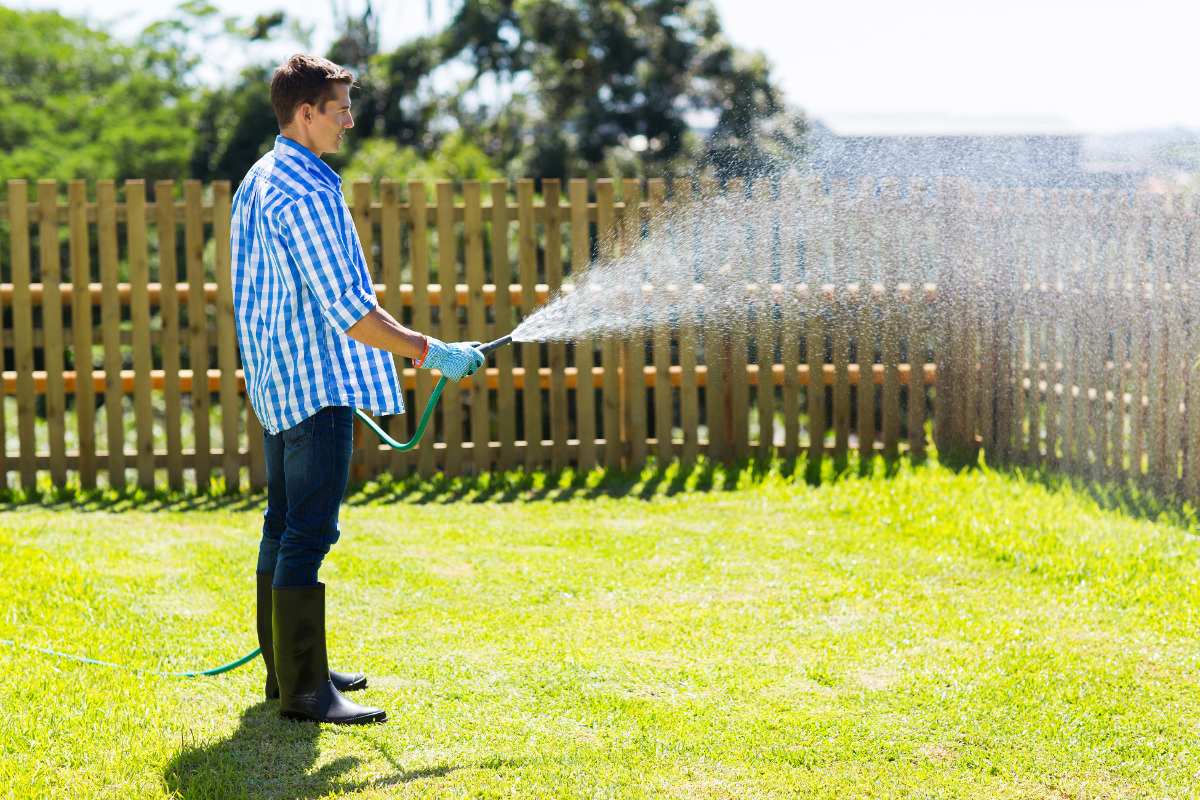
Main Image: Man watering lawn in summer. Image Credit: michaeljung / Adobe Stock