| Key Takeaways |
|---|
| • Always follow the waiting period on your product label. It's the most accurate source for your specific product. • General guidance: at least 4 weeks for post-emergent-only products, and at least 12 weeks for any product containing a pre-emergent. • Pre-emergent herbicides in weed and feed create a barrier that prevents all seeds from germinating, including grass seed. |
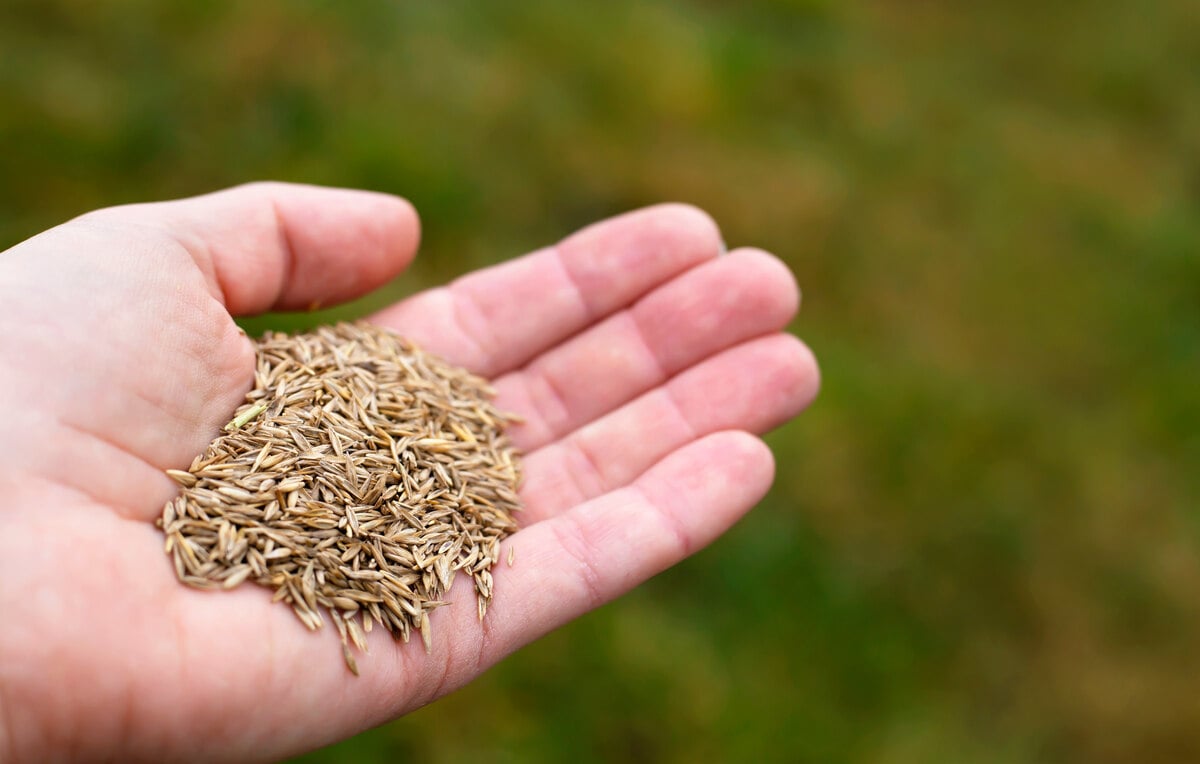
How long after weed and feed can you plant seed? At least 4 weeks for weed and feed formulas with a post-emergent herbicide, but 12 weeks or longer if your product contains a pre-emergent. The type of herbicide decides the waiting time.
In this guide, you’ll discover the best time to apply weed and feed, when to plant seed, and how to coordinate both for the healthiest lawn possible, including what to do if the 4- to 12-week wait pushes you outside your ideal seeding window.
Timing lawn treatments correctly can be tricky. LawnStarter’s lawn treatment pros handle fertilization and weed control so you don’t have to worry about getting it wrong.
- When Can You Plant Grass Seed After Weed and Feed?
- What Happens if You Plant Grass Seed Too Soon After Weed and Feed?
- Does Your Weed and Feed Type Change When You Can Plant Seed?
- When to Plant Grass Seed After Weed and Feed
- When to Apply Weed and Feed So You Don’t Miss Your Seeding Window
- Should You Apply Weed and Feed or Plant Seed First?
- FAQs
When Can You Plant Grass Seed After Weed and Feed?
As general guidance, expect to wait at least 4 weeks for post-emergent-only products and at least 12 weeks for products containing a pre-emergent.
The herbicides in these products kill weeds effectively but also prevent new grass seeds from germinating, including yours. During this time, the herbicide breaks down in the soil. Once it’s gone, seeds can germinate normally.
You may have seen different waiting periods online, and that’s because the answer truly depends on the product.
Pre-emergents require the longest waiting time. Don’t rush it and always follow the label, says Pawel Petelewicz, assistant professor of turfgrass weed science at the University of Florida.
“If the label says to wait 3 to 4 months before overseeding, that is what I would recommend homeowners follow, and likely the longer of the specified range to stay in the safe.”
What Happens if You Plant Grass Seed Too Soon After Weed and Feed?
The weed part of weed and feed doesn’t know the difference between a weed seed and a grass seed. If you plant too early, one of two things will happen:
No germination: The seeds won’t sprout at all.
Weak seedlings: The seeds will sprout, but the young seedlings will be weak and quickly die off.
See Related: Is Weed and Feed Bad for Your Lawn?
Does Your Weed and Feed Type Change When You Can Plant Seed?
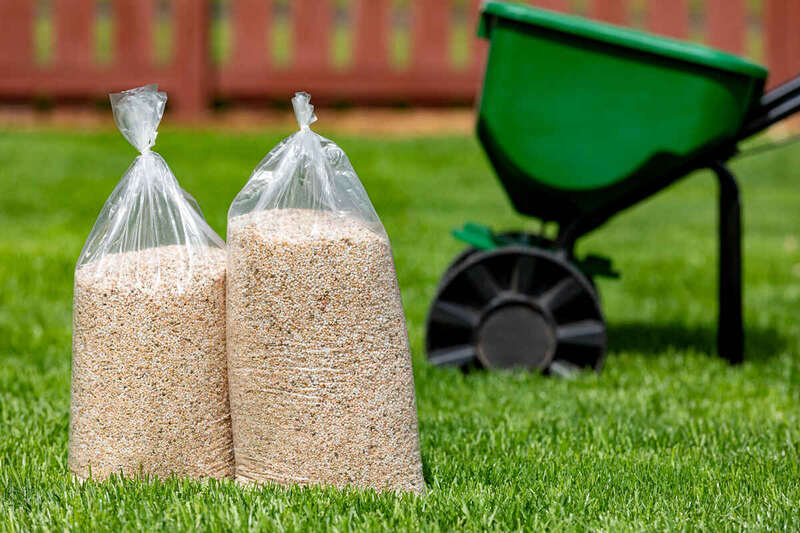
Not all weed and feed products are the same. The type of herbicide yours contains determines exactly how long you need to wait. Check your product label before you do anything else.
To figure out which type you’re dealing with, flip the bag over and look at the Active Ingredients section.
Pre-emergent ingredients include: prodiamine, dithiopyr, pendimethalin, isoxaben
Post-emergent ingredients include: 2,4-D, dicamba, MCPP, MCPA, mecoprop
If you see both, your product has both types and the stricter pre-emergent wait time applies.
| Herbicide Type | What It Does | Wait Time to Seed |
| Pre-emergent | Prevents seeds from sprouting | 12 weeks or longer |
| Post-emergent | Kills existing weeds | 4 weeks or longer |
Pre-emergent herbicides: These prevent seeds from sprouting by creating a chemical barrier in the soil.
If your product contains a pre-emergent (like prodiamine, dithiopyr, or pendimethalin), wait the full 12 weeks or longer. According to North Carolina State University, prodiamine can persist up to 16 weeks. Always confirm with the label.
Post-emergent herbicides: These kill existing, actively growing weeds (plants already visible in your lawn), not seeds in the ground.
Products with only post-emergents (like 2,4-D or dicamba) may allow a shorter wait than pre-emergents (about 4 weeks), but always check the label. When in doubt, waiting longer is safer.
Always check the product label. It’s your best guide for specific waiting times.
See Related: Corn Gluten Meal: All Natural Weed and Feed?
When to Plant Grass Seed After Weed and Feed
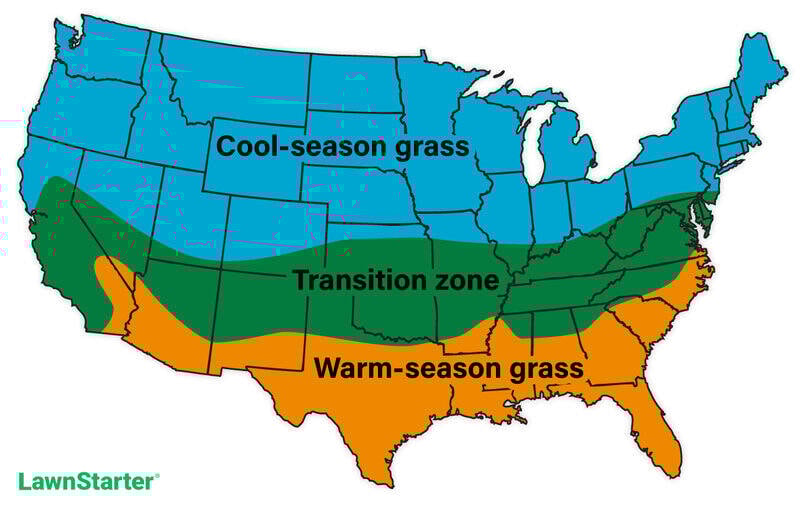
Once you’ve cleared the 4- to 12-week waiting period, the next question is: Is this actually a good time to be planting seed? The answer depends on your grass type. If the timing doesn’t line up, you may be better off waiting for next season.
Warm-season grasses: The best time to plant warm-season grasses is in late spring and early summer.
Cool-season grasses: The ideal time to plant cool-season turf is in late summer or early fall.
If you’ve recently applied weed and feed, wait 4 to 12 weeks before planting to give your grass the best chance of success.
See Related:
What if the Weed and Feed Waiting Period Pushes You Outside the Seeding Window?
If your weed and feed application pushes you past that ideal window, it’s better to wait until the next season rather than plant at the wrong time of year.
This is one of the most common timing traps. For example: If you apply weed and feed to a cool-season lawn in late August, your 4- to 12-week wait puts you, at best, in early-to-mid October. October may be too late for germination in northern states.
In that situation, your best move is to skip seeding until next season and focus on proper winter lawn care in the meantime.
Planting outside the ideal temperature window wastes seed just as surely as planting too soon after weed and feed. “Grass takes about 4 to 8 weeks to fully germinate and sprout and to get its roots in the ground,” says Scott Culala, owner of The Lawn Cypress, in Gardner, Kansas.
Patience here saves money.
See Related: When is the Best Time to Plant Grass Seed?
When to Apply Weed and Feed So You Don’t Miss Your Seeding Window

If you haven’t applied weed and feed yet, timing it right means you can tackle weeds and still hit your ideal seeding time.
The right application window depends on your grass type and local conditions. Here’s a quick reference:
| Grass Type | Best Application Time | Temperature Range |
| Warm-season | Late spring | Below 90 degrees (85 degrees for Bermuda) |
| Cool-season | Early fall | Below 80 degrees air temperature, 70 degrees soil |
Grass type: Late spring for warm-season grass, early fall for cool-season grass.
Temperature in late spring: Under 90 degrees (85 degrees for Bermuda) to avoid grass damage by treating a heat-stressed lawn.
Temperature in early fall: Under 80 degrees in the air (70 degrees in the soil) to ensure best results with pre-emergents.
Frequency: As stated by the product’s label (usually no more than twice yearly).
Weather: No application during extreme heat, drought, or windy days.
See Related:
Should You Apply Weed and Feed or Plant Seed First?
This is a common dilemma. Here’s the simple rule of thumb:
| Your Main Problem | Do This First | Then Do This |
| Weeds | Apply weed and feed | Wait 4 to 12 weeks, then seed |
| Thin lawn | Plant grass seed | Mow 3 to 4 times, then apply post-emergent |
If your main problem is weeds: Apply weed and feed first or use targeted spraying for isolated problem areas. Get the weeds under control, wait out the 4 to 12 weeks, then plant your grass seed in a clean, prepared lawn.
If your main problem is a thin lawn: Plant your grass seed first. You can even fertilize and overseed at the same time if you use a starter fertilizer without a herbicide.
Wait until the new grass is well-established, meaning it has reached the mowing milestone of at least 3 mows. Then apply a post-emergent herbicide to tackle any weeds. Using a pre-emergent at this stage would prevent your new grass from filling in.
See Related:
FAQs
Not if the label says to wait longer. While watering helps break down herbicide, stick to the product’s recommended timeline to protect your seed investment.
There’s no at-home test for herbicide breakdown. The most reliable method is to follow your product label’s recommended waiting period. If you’ve lost the label, wait at least 12 weeks for pre-emergent products.
In northern states, October is likely too late for cool-season grass. The soil is too cold for the temperature range (59 to 86 degrees in the air) needed for germination.
Generally, yes. Many organic options use corn gluten meal, which acts as a pre-emergent and can prevent grass seed germination just like chemical herbicides. So don’t assume “organic” means “seed-safe.” Check the label for its specific waiting period.
Take the Guesswork Out of Lawn Care
Getting the timing right between weed control and seeding is the tricky part, and if you get it wrong, you’re back to square one. LawnStarter’s local pros handle both weed and feed applications and lawn seeding as part of lawn treatment services so you don’t have to guess.
Professional weed control costs typically run $50 to $210, while seeding a lawn costs $0.09 to $0.15 per square foot.
Get your free quote and let a LawnStarter pro handle the sequencing for you.
Read More:
Main Image: Grass seeds in hand with grass in background. Image Credit: Reddogs / Adobe Stock
Related Posts: