| Key Takeaways |
|---|
| • Glyphosate is one of the most effective broad-spectrum herbicides available. It kills nearly any plant it contacts, but it also faces significant controversy and ongoing litigation. • The Environmental Protection Agency considers glyphosate unlikely to be a human carcinogen at normal use levels, while the International Agency for Research on Cancer classifies it as "probably carcinogenic," because the two agencies are answering different questions about hazard versus risk. • Bayer removed glyphosate from residential Roundup products starting in late 2022. |
When it comes to weed control, Roundup is a household name. But the ingredient that made it famous, glyphosate, has become one of the most debated chemicals in America.
You’ve probably seen the lawsuit commercials. Maybe you’ve heard it causes cancer. Maybe you’ve heard it doesn’t. The truth is more complicated, and we’ll break it down clearly.
In this guide, we’ll walk through what glyphosate is, whether it’s safe for your family and pets, and your options if you decide to avoid it.
If you’d rather skip the research entirely and let a pro handle your weed control, LawnStarter’s lawn treatment service can cover that, and lawn treatment costs for most suburban lots run $79-$120 per visit.
What Is Glyphosate?
Glyphosate is a non-selective herbicide that kills nearly any plant it contacts. It works by blocking a specific enzyme pathway that plants (but not animals) need to survive. It is the active ingredient in Roundup and over 750 other weed-control glyphosate products sold in the United States.
Its widespread adoption has sparked intense debate over its safety for humans, pets, and the environment.
Glyphosate’s Uneasy History
Glyphosate was patented by Monsanto as a weed killer and launched as Roundup in 1974. The Environmental Protection Agency’s (EPA) registration review documents glyphosate’s regulatory timeline.
Glyphosate-based products brought Bayer more than €2.5 billion ($2.9 billion) in global sales in 2025, nearly half of its total herbicide revenue. The company is currently the only U.S. maker of glyphosate.
Questions Emerge
Farmers adopted Roundup for its effectiveness, then landscapers and homeowners followed. As use spread, so did concerns that long-term exposure might be dangerous, particularly as a potential cause of non-Hodgkin lymphoma (NHL).
Two major agencies looked at the evidence and reached opposite conclusions. In 2015, the International Agency for Research on Cancer (IARC) classified glyphosate as “probably carcinogenic to humans.”
The Environmental Protection Agency (EPA) said the opposite, most recently in 2020, when it determined that glyphosate is not likely to be a carcinogen. A federal court struck down that EPA decision in June 2022, and a new one is still pending.
Court Challenges
Monsanto and Bayer AG have faced multiple lawsuits from people who allege their cancers were caused by exposure to Roundup.
In March 2019, a jury awarded $80 million to a California man who contended that Roundup use was a factor in his cancer.
As of 2025, Bayer had already settled 17,000 Roundup-related cases and faced at least 61,000 more. In February 2026, it proposed a $7.25 billion class settlement, still pending final court approval, to resolve current and future claims.
In June 2026, the U.S. Supreme Court ruled 7-2 that federal law takes precedence over state failure-to-warn claims over Roundup’s label. The decision cuts off the most common legal theory in Roundup cancer suits. States can no longer require a cancer warning beyond what the EPA has approved.
The company still maintains that glyphosate is safe when used as directed.
Bayer AG Reformulates Roundup
Bayer says the new residential Roundup formula began selling in 2023, replacing glyphosate-based products in the U.S. lawn and garden market. But the reformulation is messier than it sounds.
New Roundup residential products now use triclopyr, fluazifop, diquat, and imazapic (depending on the product) instead of glyphosate. The new “Exclusive Formula” products are labeled with a prominent banner and the list of active ingredients on the front label.
The swap isn’t a clear safety upgrade. Environmental advocacy group Friends of the Earth has analyzed the new formulas and estimated they’re, on average, up to 45 times more toxic than glyphosate for long-term, chronic exposure.
Two of the replacement ingredients, diquat dibromide and imazapic, are banned in the European Union, though both remain EPA-approved for U.S. use. Bayer maintains the new formulas are safe when used as directed, and the EPA has not restricted them.
That said, older glyphosate-containing Roundup products may still be on store shelves. And glyphosate-based Roundup continues to be sold for agricultural use without restriction.
The National Pesticide Information Center (NPIC) reports that more than 750 products containing glyphosate remain available in the U.S., so glyphosate isn’t hard to find. It just may not be in the bottle labeled Roundup at your local garden center.
However, some municipalities are limiting lawn chemicals, such as pesticides and herbicides, including those containing glyphosate, so use is also limited from the community side.
Bottom line for homeowners: Switching to “Exclusive Formula” Roundup avoids glyphosate, but it isn’t a guaranteed safety win. Check the label, review the active ingredients, and don’t assume “new” automatically means “safer.”
Is Glyphosate Safe? What the Research Actually Says
If you’ve seen conflicting headlines (“Roundup causes cancer” and “Roundup is safe”), both are technically defensible. The agencies behind each claim are answering different questions, and the research on both sides is real.
Hazard vs. Risk: Why the EPA and IARC Disagree
The confusion around glyphosate comes down to the difference between hazard and risk, 2 words that mean very different things to scientists.
A hazard is anything that could cause harm under some circumstances. A risk is the likelihood of harm given how you actually use something. A kitchen knife is a hazard, but the risk of injury depends on how carefully you handle it.
The IARC asks: Can this substance cause cancer under any conditions? That’s a hazard question, and for glyphosate, its classification is probably yes.
The EPA asks: Will this cause cancer at realistic exposure levels? That’s a risk question, and the EPA’s repeated answer has been unlikely.
EPA and IARC also considered different datasets. IARC used a smaller set of studies from the public literature; EPA also weighed industry-submitted registration studies.
Overall, neither agency is wrong per se. They’re answering different questions.
What the Research Shows
The largest human study is the National Cancer Institute’s Agricultural Health Study. Its 2018 update followed 54,251 pesticide applicators and found no link between glyphosate and NHL or other cancers. But the heaviest users showed more leukemia cases than never-users, a result that researchers say needs confirmation from future studies.
A 2019 University of Washington meta-analysis disagreed, finding a 41% higher risk of NHL among the most heavily exposed workers.
In 2025, the Ramazzini Institute reported that rats dosed from before birth developed more tumors at levels the EU treats as safe for daily human intake. Critics have challenged the statistics.
To date, more research is still needed to reach a clear conclusion.
Pros and Cons of Using Glyphosate
Like any herbicide, glyphosate has advantages and drawbacks. Here’s what you need to know before deciding whether to use it in your yard.
Pros of Using Glyphosate
It gives quick results: One application is often enough to start visible injury. Roundup’s product page says to expect visible results in hours while killing weeds to the root.
Cons of Using Glyphosate
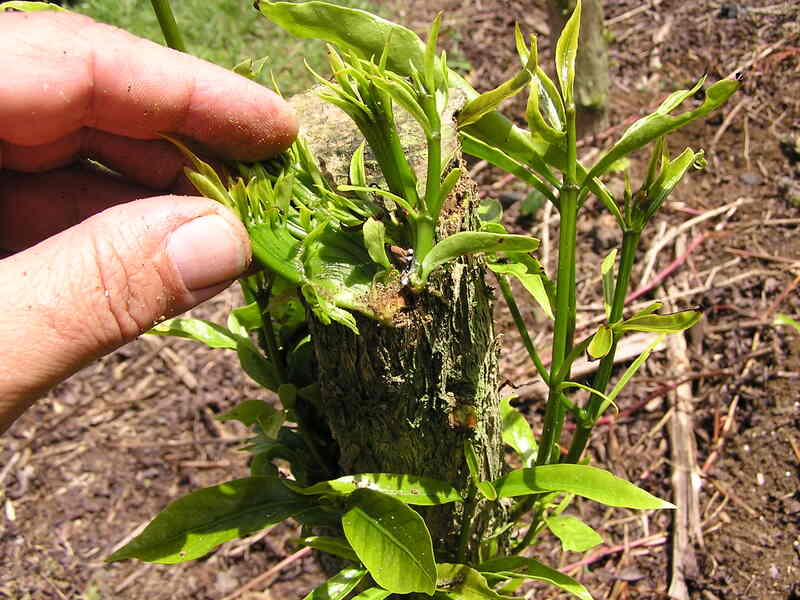
It might work too well: Roundup is a “nonselective” herbicide, meaning it kills any foliage it contacts. If overspray hits your garden flowers, they’ll die, too.
The Penn State Extension suggests protecting young trees from the spray. Glyphosate can be absorbed by bark and reach the root system, causing multiple injuries.
It could harm the environment: Glyphosate binds tightly to soil particles, which limits runoff and means it is rarely detected in groundwater. However, a 2018 study found that even at low doses, it may stimulate toxic algae growth, a concern for ponds, streams, and wildlife near treated areas.
Glyphosate in foods has caused concern: Trace amounts of glyphosate residues are found in many foods, including fruits, vegetables, and cereals. The EPA says “these trace amounts are not of concern for the consumer.”
According to recent USDA testing, 99 percent of produce samples had pesticide residues below EPA benchmarks. However, various advocacy groups such as the Environmental Working Group (EWG) have published analyses showing high levels of glyphosate in various foods.
Glyphosate Alternatives
There are several effective ways to reduce the weed population in your lawn without glyphosate.
| Alternative Method | Best For | Effort Level |
|---|---|---|
| Hand-pulling | Young weeds, shallow roots | High |
| Organic herbicides | Broad weed control | Low |
| Pre-emergent treatments | Preventing weed seeds from germinating | Low |
| Mulch or landscape fabric | Garden beds and borders | Medium |
| Vinegar or boiling water | Patios and driveways | Medium |
| Flame weeder | Hard surfaces | Medium |
Alternative weed-control methods you can try:
Pull out the weeds by hand: This method, also called mechanical weed removal, works best when the weeds are young or have shallow root systems. Otherwise, any bit of root left behind will grow again.
Use organic herbicides: There are many effective organic herbicides available. Ingredients in these products include:
Herbicidal soaps
Citric acid
Essential oils
Chelated iron
Horticultural vinegar (acetic acid)
Use an Integrated Pest Management (IPM) approach: IPM focuses on non-chemical methods to maintain a healthy lawn. Hand-pulling, overseeding to keep grass thick, and mowing at the proper height are all ways to maintain a nearly weed-free lawn without chemicals.
Use pre-emergent weed killers: Commercial pre-emergents are available to keep annual weeds from germinating. Corn gluten meal is an considered a chemical-free pre-emergent option.
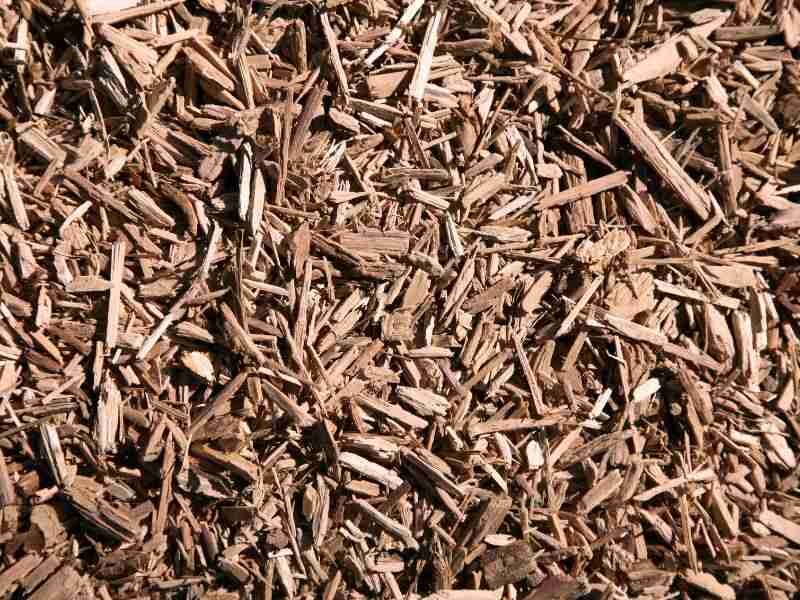
Use mulch and other physical barriers:
Mulch
Landscape fabric
Newspapers, cardboard, and other landscaping fabric alternatives
Try a vinegar or DIY weed killer: A vinegar solution spray is a popular DIY option; boiling water works well for weeds in patios and driveways.

Use a flame weeder: This works best on weeds on a solid surface, like a sidewalk. Use caution near flammable surfaces and on windy days.
If you wish to avoid glyphosate, weeds that can be well-controlled with alternate methods include:
Chickweed
Spurge
Yellow woodsorrel
Glyphosate Safety Tips
If you use a weed killer that contains glyphosate, take the same steps to protect yourself that you’d follow with any herbicide use.
Protective gear: Wear long sleeves, long pants, gloves, and goggles.
Weather conditions: Don’t spray when it’s raining or windy.
Application care: Avoid overspray on desirable plants since glyphosate kills any plant it touches.
Re-entry time: Keep people and pets off treated areas until the spray has dried.
Before you spray weeds with any garden chemical, read the label and follow the manufacturer’s directions for use.
FAQs
Skin or eye contact can cause irritation. Swallowing it can burn your mouth and throat and bring on nausea, vomiting, or diarrhea. Rinse the affected area right away, then call Poison Control or your doctor.
Not always, but it can if your pet touches or eats wet product. If your pet comes into contact with a wet, treated area, rinse their paws with clean water. Symptoms of exposure include drooling, vomiting, diarrhea, loss of appetite, and lethargy.
Glyphosate binds tightly to soil particles, so it doesn’t move much once it lands. Residues can linger for months depending on soil type, moisture, and microbial activity. Check the label for replanting intervals before you reseed a treated area.
In February 2026, President Trump signed an executive order invoking the Defense Production Act to boost domestic production of glyphosate. The order does not change glyphosate’s EPA registration status or safety classification, but signals continued federal support. For homeowners, glyphosate products remain legal and available to purchase and use as directed.
Get Help With Weed Control
Weed control decisions are ultimately yours to make. But if sorting through herbicide options feels like too much, LawnStarter’s lawn treatment service is one way many homeowners handle it.
For most suburban lots, lawn treatment costs $79–$120 per visit, and you see your exact price before booking.
Read More: Guide to Weed Control in Your Yard
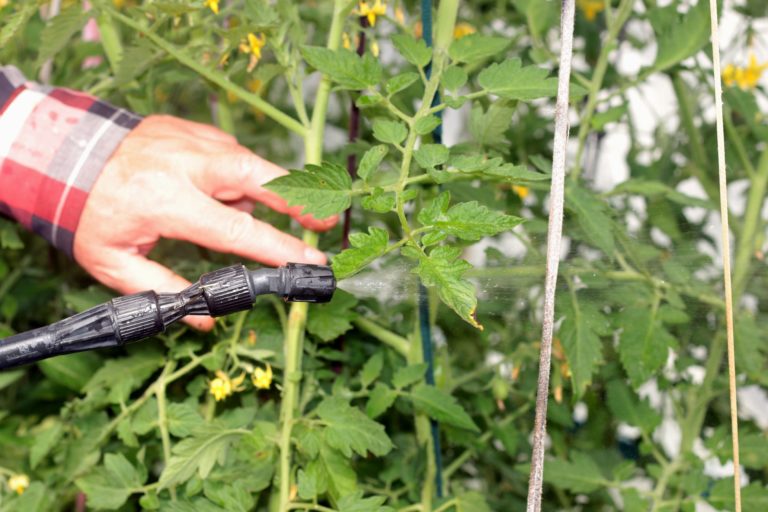
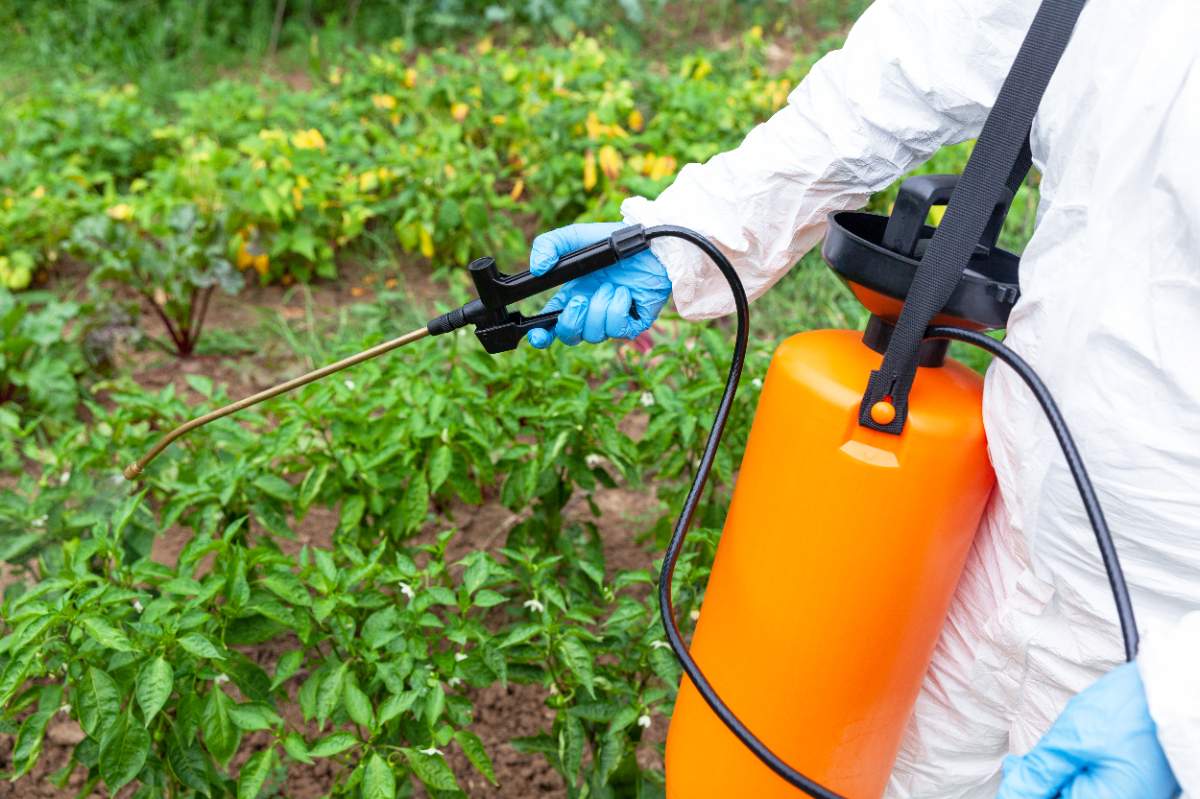
Image Credit: A person in a protective suit applies herbicide to garden plants using an orange sprayer. Photo Credit: Mihajlo Maricic / Adobe Stock
Related Posts: