| Key Takeaways |
|---|
| • Bermudagrass thrives in warm, sunny climates across the South and Southeast, making it one of the most popular warm-season grasses in the U.S. • It offers excellent drought, heat, wear, and salt tolerance but needs consistent maintenance and performs poorly in shade. • Common Bermudagrass grows from seed; hybrid varieties must be planted as sod, plugs, or sprigs. |
Bermudagrass is one of the toughest lawn grasses in the South: fast-growing, heat-tolerant, and built for backyards that take a beating.
This guide covers everything you need to know to grow a healthy Bermuda lawn, from what Bermudagrass looks like, where it grows best, and the different types, to how to plant and care for it properly.
Keeping Bermudagrass in top shape takes consistent mowing, fertilizing, and watering. If you’d rather skip the weekly upkeep, LawnStarter’s local lawn care pros can handle the lawn mowing service for you.
What Is Bermudagrass?
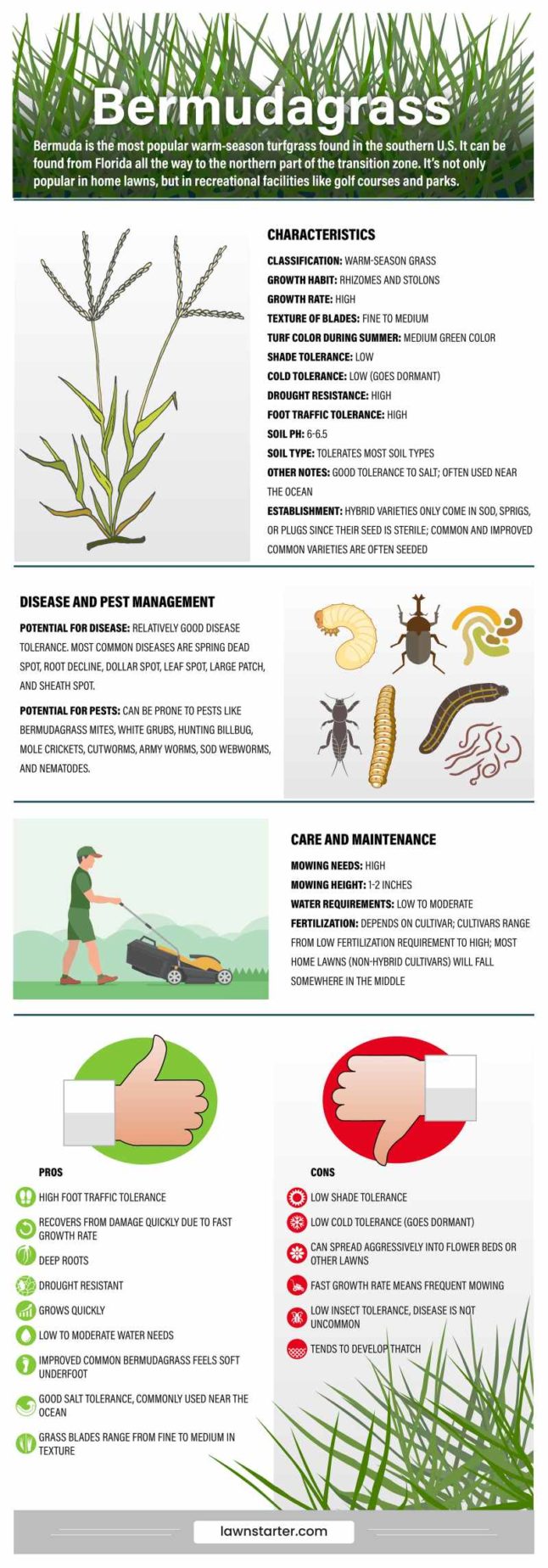
Bermudagrass is a warm-season turfgrass that thrives in hot, sunny climates across the southern United States. This tough, fast-growing grass forms dense lawns that handle drought, heat, and heavy foot traffic better than most other grass types.
Despite its name, Bermudagrass didn’t come from Bermuda. It most likely arrived in North America centuries ago from Africa, India, or southern Europe. Its scientific name is Cynodon dactylon (you’ll sometimes see this on seed bags or at garden centers).
What Does Bermudagrass Look Like?
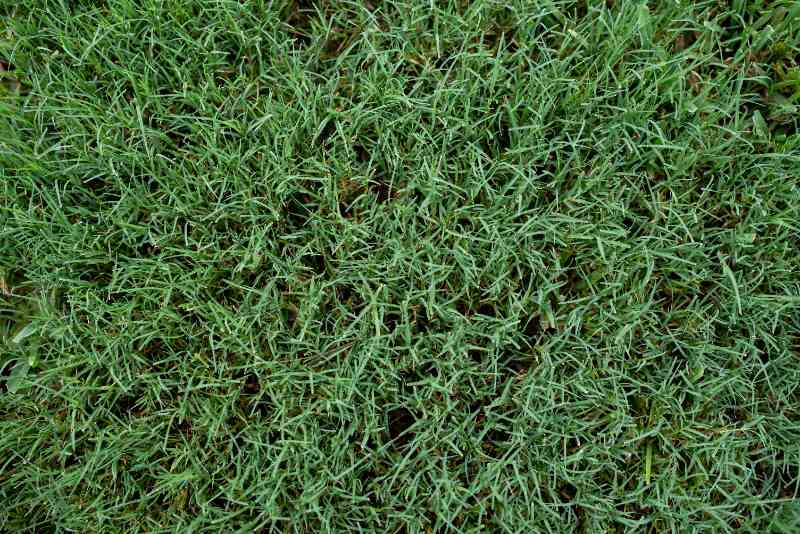
Bermudagrass blades are gray-green to dark green with a fine to medium texture — rough, but not prickly. It spreads through above-ground stems (stolons) creeping across the soil and below-ground stems (rhizomes) working underground.
That aggressive growth explains why it can creep into garden beds if left unchecked and why it recovers so easily after damage.
Bermudagrass Characteristics
| Bermudagrass Trait | Rating | What It Means for Your Lawn |
| Drought Tolerance | High | Survives prolonged dry spells |
| Heat Tolerance | High | Withstands extreme temperatures |
| Wear Tolerance | High | Handles heavy foot traffic well |
| Salt Tolerance | High | Ideal for coastal yards |
| Shade Tolerance | Low | Requires full sun to thrive |
| Maintenance Needs | High | Frequent mowing and care required |
Bermudagrass Is a Warm-Season Grass
As a warm-season grass, Bermudagrass turns brown and enters dormancy when cold winter arrives. In warmer temperatures, it greens up and resumes active growth.
Consider overseeding in the fall with ryegrass to maintain year-round green color.
See Related: Guide to Growing Warm-Season Grasses
Bermudagrass Has High Wear Tolerance
Bermudagrass is a terrific choice for active backyards. It’s used on several NFL stadiums, including the Cardinals, Chiefs, Dolphins, and Falcons.
See Related: U.S. Stadiums Switch to Grass for FIFA World Cup 2026
Bermudagrass Has High Drought Tolerance
During drought, Bermudagrass goes dormant and turns brown, but it bounces back once water returns. A typical schedule calls for 1 inch of water per week during the growing season, often covered by summer rainfall in the South.
See Related: 10 Best Drought-Tolerant Grasses for Your Yard
Bermudagrass Has High Salt Tolerance
Bermudagrass has high salt tolerance, making it a smart choice for coastal areas and inland regions that may get hit with salt spray from hurricanes and tropical storms.
See Related: Best Salt-Tolerant Grasses for Your Lawn
Bermudagrass Has High Heat Tolerance
Bermudagrass thrives in daytime temperatures of 80 to 95 degrees, which makes it well-suited for the hottest U.S. regions. Its full-sun requirement aligns with heat exposure, and it recovers quickly from wear in those conditions.
Will Bermudagrass Grow in the Shade?
Not very well. Bermudagrass needs full sun and won’t thrive under tree canopies or building overhangs. If your yard has significant shade, consider St. Augustine instead; it grows much better with limited sunlight.
See Related: How to Grow Grass in the Shade
Bermudagrass Spreads Aggressively
Bermudagrass spreads rapidly by stolons, rhizomes, and seeds, with a deep root system that makes it difficult to control in flower beds and walkways.
What Maintenance Does Bermudagrass Require?
Expect to mow almost every week during the growing season, fertilize every 4 to 6 weeks from April through September, and dethatch at least once a year.
Where Bermudagrass Grows Best

Bermudagrass is most at home in the subtropical belt stretching from southern California east to the Gulf Coast and southeastern states, the same regions where summers are too brutal for cool-season grasses to survive.
It grows well in the low-desert Southwest (Phoenix, Tucson, and California’s major valleys included) and is a primary lawn grass across the Southeast and transition zone.
It turns up as far north as New England and the Great Lakes, though in those cooler climates it’s typically an escaped or naturalized plant, not a lawn choice. Cold-tolerant cultivars are pushing its practical range northward, but that expansion is still cultivar-specific, not a blanket trend.
See Related: Guide to Growing Grass in the Transition Zone
Types of Bermudagrass
There are 3 main types of Bermudagrass: common (seeded), improved common (seeded), and hybrid (sod, plugs, or sprigs only).
| Bermudagrass Type | How to Plant | Best Use |
| Common | Seed | Home lawns, roadsides, reclamation sites |
| Improved Common | Seed | Parks, home lawns, golf course tees and fairways |
| Hybrid | Sod, plugs, or sprigs | Sports fields, golf courses, and premium lawns |
Source: Clemson Cooperative Extension
Common Bermudagrass
Common Bermudagrass (Cynodon dactylon) is the most affordable option because you can establish it from seed. Expect coarser texture and lighter green color than improved or hybrid varieties. It’s a good fit for a durable lawn if you don’t mind a less manicured look.
Improved Common Bermudagrass
Improved varieties (such as Sahara, Sultan, Princess 77) are still seeded but bred for darker color, finer texture, deeper roots, and better density. They’re a strong middle ground for home lawns, parks, and athletic fields.
Hybrid Bermudagrass
Most hybrids cross common Bermuda (C. dactylon) with African Bermuda (C. transvaalensis) to combine durability with finer texture. Well-known cultivars include Tifway 419 (sports fields), Celebration (better shade tolerance), and TifTuf (drought-prone areas).
Hybrid Bermudagrasses are sterile, meaning they must be established through plugging, sodding, or sprigging. They require more care than common varieties but typically produce higher quality, denser turf with superior drought tolerance, and fewer disease problems.
How to Plant Bermudagrass
The method you choose depends on the type of Bermudagrass you selected.
When to Plant Bermudagrass
Plant Bermudagrass in late spring or early summer, once the threat of frost has passed and soil temperatures are between 65 and 75 degrees.
See Related: When is the Best Time to Plant Grass Seed?
Bermudagrass Planting Methods
You have 3 main options:
Seeding: Most affordable, works only for common and improved common varieties.
Sodding: Instant results from mature turf strips, works for all types.
Plugging or sprigging: Required for hybrid varieties, cheaper than sod, and establishes faster than seed.
How to Care for Bermudagrass
Bermudagrass needs consistent attention throughout the growing season:
| Bermudagrass Task | When to Do It | How Often |
| Mowing | Active growing season | Weekly |
| Watering | Active growth | 1 inch per week |
| Fertilizing | April through September | Every 4 to 6 weeks |
| Aerating | Early summer | Once per year |
| Dethatching | When thatch exceeds 0.5 inch | As needed |
| Pre-emergent herbicide | Late February to March, then August to September | Twice per year |
Mowing Bermudagrass
The optimum mowing height for common Bermudagrass is 1 to 2 inches. Hybrid varieties grow best at 0.5 to 1.5 inches. If your lawn is under drought or heat stress, raise the mowing height until the stress has passed.
For a higher-quality lawn, mow frequently and keep it at a lower height. Avoid scalping, which exposes the turf’s stems and invites disease.
Watering Bermudagrass
During the growing season, Bermudagrass needs 1 inch of water per week from rain or irrigation. The easiest way to measure? “Take an empty tuna fish can and place it on the lawn. If it fills up in a week, you’ve had an inch of rain,” says Chuck Vogt of Metro Lawns in Atlanta.
Signs your lawn needs water include a bluish-gray color, wilting, or folded blades. Water until the soil is wet 4 to 6 inches deep. Deep watering promotes deep roots and improves drought resilience.
Scale back gradually as fall approaches. Once Bermuda goes dormant, light watering during extended dry spells is enough to keep the roots from drying out.
See Related: How Often Should I Water My Lawn?
How and When to Fertilize Bermudagrass
Test the soil January through April to check nutrient deficiencies and pH. Bermudagrass grows best at a soil pH of 6 to 6.5; apply sulfur if your pH is higher.
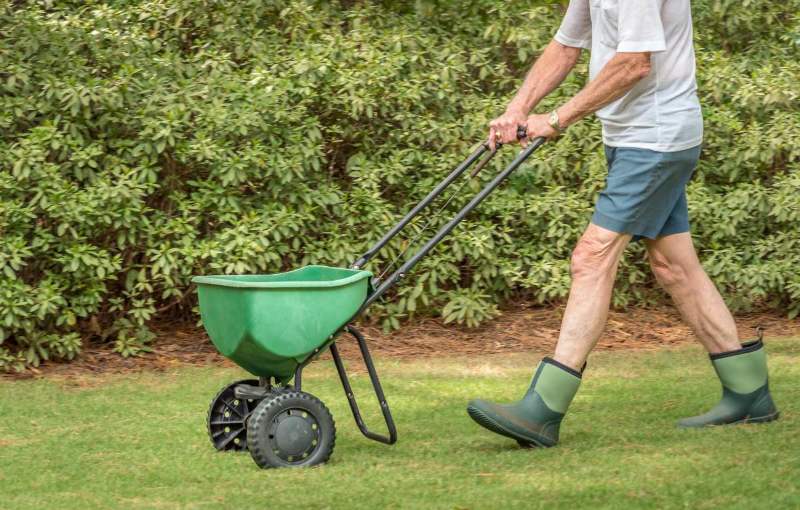
This grass needs 2 to 4 pounds of nitrogen throughout the growing season applied every 4 to 6 weeks. Do the first application (0.5 to 1 pound of nitrogen per 1,000 square feet) several weeks after the grass turns green (April or May).
Apply the last nitrogen of the season in August of early September, and ideally 4 to 6 weeks before your region’s first expected frost.
See Related: How and When to Fertilize Bermudagrass Lawns
Aerating Bermudagrass
Soil compaction (packed-down ground from foot traffic or equipment) is one of the most overlooked causes of a struggling Bermuda lawn. When soil is too dense, water and nutrients can’t reach the roots.
Aerate in early summer while Bermuda is actively growing, using a core aerator, a machine that pulls small plugs of soil and opens up airways for water, air, and nutrients.
Dethatching Bermudagrass
Bermudagrass grows fast, which makes it prone to thatch buildup (the layer of organic material between the turfgrass leaves and the soil surface). When it’s too thick (over 0.5 inch), it harbors pathogens and pests.
Dethatch late spring to early summer, when the lawn has fully greened up, and there’s no threat of frost.
See Related: How to Dethatch Your Lawn (Plus When to Hire a Pro)
How to Control Weeds in Bermudagrass
Apply pre-emergent in the spring when soil temperatures stay between 50 and 55 degrees for several consecutive days. This puts the chemical barrier in place before crabgrass germinates.
For goosegrass, which germinates later, a follow-up application 6 to 8 weeks afterward may be needed.
If weeds appear as the grass begins to green, wait until the grass has fully greened before applying a post-emergent herbicide.
Insect Control for Bermudagrass
Mole crickets are a major problem for Bermudagrass lawns in the Gulf Coast and coastal Southeast, where they cause significant economic damage to warm-season turf.
Their activity peaks up in the spring, but the best time to treat with insecticides is June through July when their nymphs are small and easier to kill.
See Related: How to Get Rid of Mole Crickets in Your Lawn
Disease Control for Bermudagrass
Bermudagrass is most susceptible to spring dead spot, dollar spot, and leaf spot.
Spring dead spot is one of the most damaging Bermuda-specific diseases. It infects roots in the fall, then shows up as bleached, circular patches the following spring when the grass tries to break dormancy.
To reduce disease problems, ensure adequate soil drainage, manage thatch, fertilize appropriately, and avoid overwatering.
See Related: How to Identify, Control, and Prevent Spring Dead Spot Lawn Disease
How to Keep Bermudagrass from Spreading
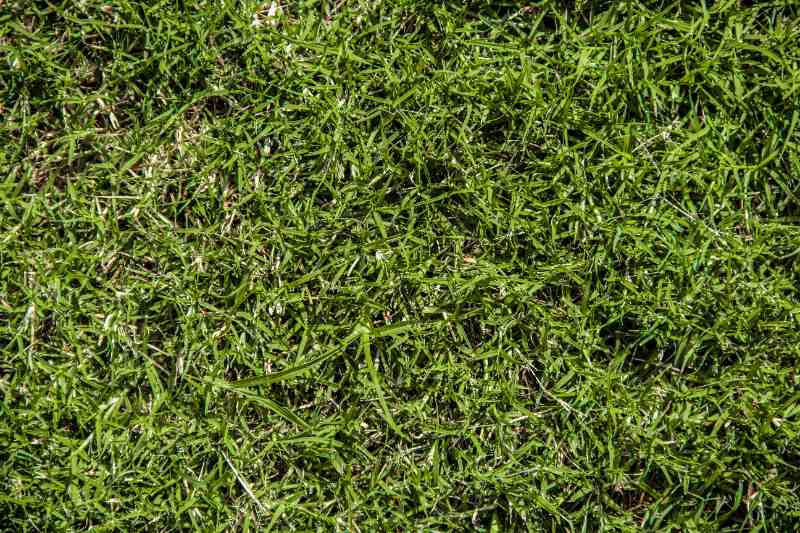
Bermudagrass spreads by stolons, rhizomes, and seeds and it can spread into unwanted places fast. Here are 5 ways to keep it in check:
Withhold water from invaded areas
Increase shade with trees or tall shrubs
Remove and compost lawn clippings after mowing
Apply black polyethylene plastic or landscape fabric as mulch for 6 to 8 weeks
Use post-emergent herbicides on actively growing, unwanted Bermudagrass
See Related: How to Keep Bermudagrass Out of Flower Beds
Is Bermudagrass Right for Your Lawn?
Bermudagrass is the right choice if your yard gets full sun, you live in the warm-season or transition zone, and you’re ready to commit to regular mowing, watering, and fertilizing.
It’s not a good fit for shady yards, low-maintenance lawns, or cold northern climates.
FAQs
Bermudagrass demands weekly mowing, regular fertilizing, and dethatching to look its best. It performs poorly in shade, turns brown when dormant in winter, and spreads aggressively into flower beds and walkways if not edged.
Seeded Bermuda typically germinates in 7 to 14 days under good conditions. When soil is properly tilled and there’s no weed competition, it can produce 95% cover in about 45 days; a fully established, dense lawn ready for normal use generally takes 8 to 12 weeks.
Yes, for warm, sunny yards with active families or pets. It handles heat, drought, and heavy foot traffic better than most grasses. It’s a poor fit for shady yards, northern climates, or homeowners who want low maintenance.
Let LawnStarter Handle Your Bermudagrass Lawn
Bermudagrass rewards you with one of the most durable, attractive lawns in the South but it demands consistent work from April through the first frost. If you’d rather be in your yard than working on it, LawnStarter‘s vetted local pros handle mowing, fertilizing, aeration, and more.
Connect with a LawnStarter lawn care pro and get your Bermudagrass lawn looking its best without giving up your Saturdays (especially once the weekly mowing service kicks in).
Main Image: Closeup of bermudagrass in a lawn. Image Credit: woodleywonderworks / Flickr / CC BY 2.0 with text overlay using Canva Pro