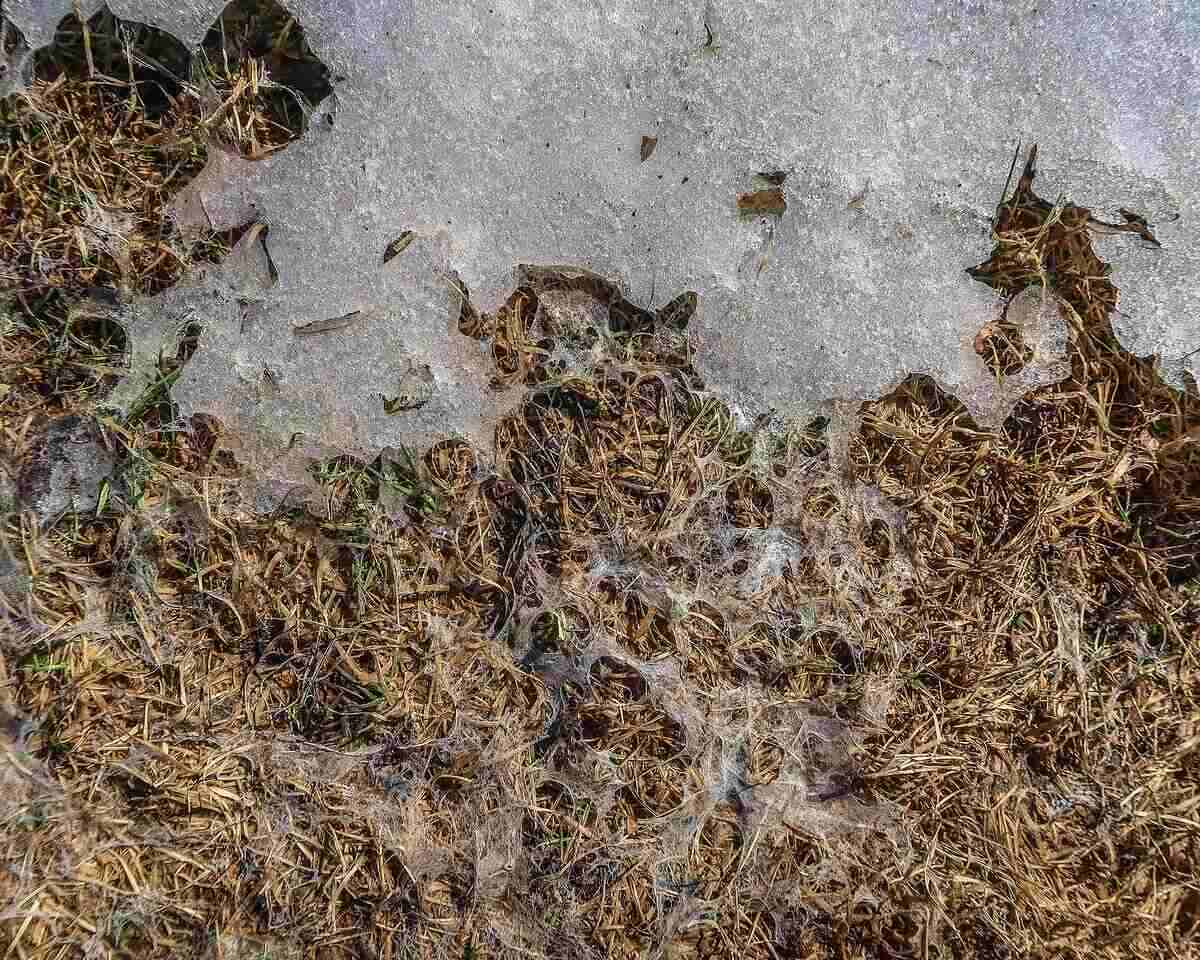
| Key Takeaways: ● Snow mold appears as tan or pink circular patches after the snow melts. ● It dies naturally when temperatures reach 45 F to 60 F. ● Gray snow mold: Affects leaf blades. ● Pink snow mold: Damages grass crowns and roots. |
Notice tan or pink patches on your lawn after the winter snow melts? That’s most likely snow mold — a common lawn fungus that appears in spring.
The good news: It’s easy to get rid of snow mold on your lawn. Gently rake the matted grass on dry soil, allowing sunlight and air to dry out the lawn fungus. The mold usually dies within days of proper raking. But severely damaged lawns may need reseeding.
You don’t have to deal with the snow mold treatment yourself. LawnStarter’s lawn treatment pros can diagnose and treat snow mold damage, crossing this job off your spring yard care to-do list. Plus, our local landscaping pros can reseed your lawn and provide year-round maintenance to help prevent snow mold from returning.
What is Snow Mold?
When snow melts in early spring, round tan or pink patches of flat, dead-looking grass with fuzzy white or pink webbing signal a snow mold infection.
This fungal lawn disease affects cool-season grasses (such as tall fescue, Kentucky bluegrass, and perennial ryegrass) and grows under snow during wet, snowy winters (in most cases). The fungi penetrate grass blades and rot the tissue from the inside. And the longer the snow sits on your lawn, the worse the damage gets.
There are two types of snow mold:
- Gray snow mold (aka Typhula blight) damages only grass leaves, and most lawns recover naturally by late spring.
- Pink snow mold (Microdochium nivale), or Fusarium patch, attacks crowns and roots and can kill grass. It sometimes appears with a copper-colored ring around pink-tinted patches.
“Gray snow mold (Typhula spp.) develops under prolonged snow cover. Pink snow mold can develop with or without snow,” says Haibo Liu, professor of turfgrass and soil sciences at Clemson University.
See Related: How Snow and Ice Affect Your Lawn
5 Steps to Get Rid of Snow Mold
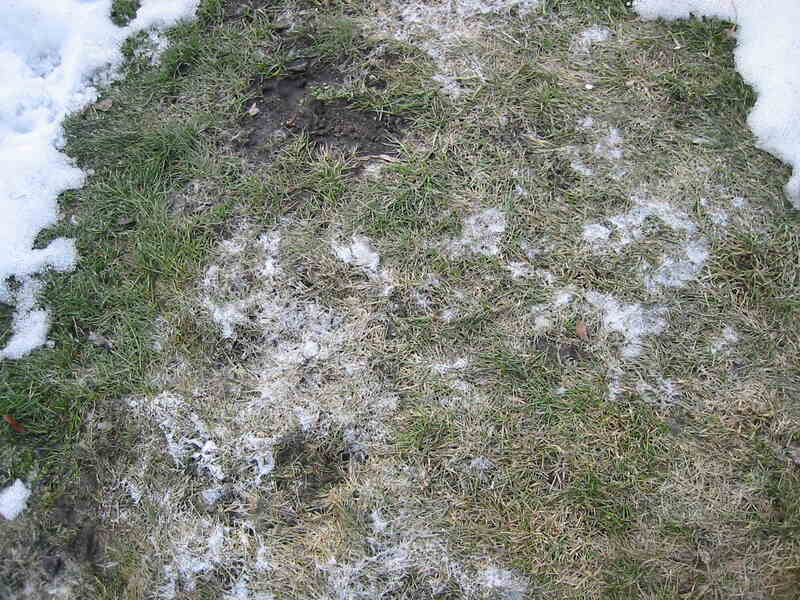
Snow mold dies naturally when the weather warms, but this process can take several weeks. These 5 simple steps can help you remove snow mold and speed up your lawn recovery:
1. Identify Snow Mold Damage
Fortunately, snow molds are quite easy to spot. “Both have circular patches with obviously different colors, either gray or pink patches,” says Liu.
Here are other distinct characteristics to look out for:
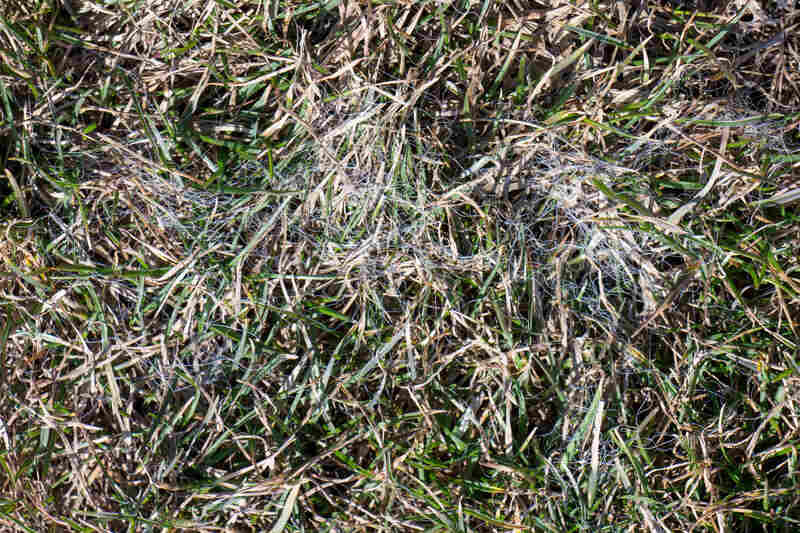
- Bleached grass that looks matted and brittle
- Grayish, silvery hue (gray snow mold) or pinkish tint (pink snow mold), sometimes with copper rings
- White mycelium (fine fungal strands) is visible on wet grass leaves soon after the snow thaws.
- Varying sizes: Gray snow mold can grow up to 3 feet wide, while pink snow mold typically reaches 2 to 10 inches in diameter. But if thick snow covers the grass for months, patches can merge into large matted areas.
Is it snow mold or something else? Tan and brown patches can also result from crown hydration or winter desiccation. Only snow mold has that distinctive grayish or pinkish tint across damaged areas.
2. Inspect the Yard
Snow mold can quickly spread across the lawn through wind, rain, lawn equipment, and shoes. So, if you find snow mold in one spot, check your entire lawn to determine which areas are affected.
Look for remaining snow drifts — those areas will likely show damage once they melt.
3. Remove Snow Drifts Still on the Lawn
Slowly melting snow keeps the grass soggy and cool, supporting fungal growth. So, if snow sits on your lawn longer than it should, it can cause even more damage.
Break up remaining snow piles with a shovel or rake and spread the snow around your yard to accelerate melting.
4. Rake the Infected Areas
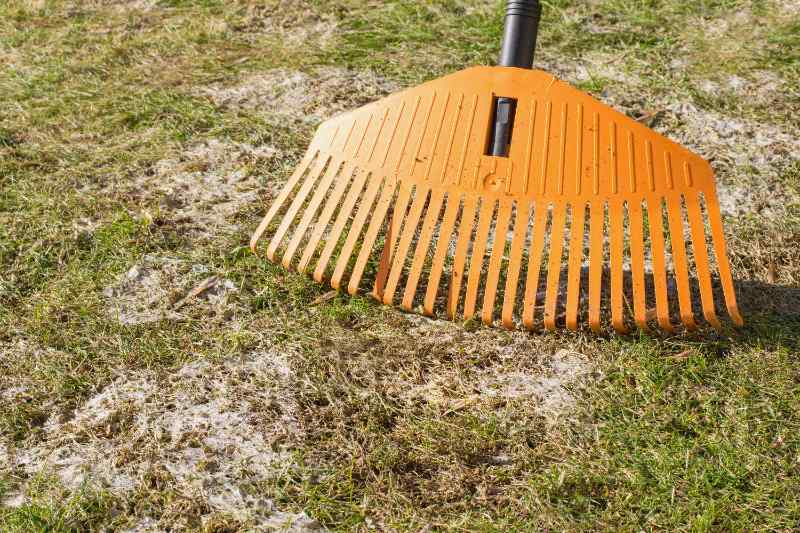
Raking snow mold patches breaks up matted grass, allowing fresh air, heat, and sunlight to dry the fungus faster. For best results, follow these steps:
- Wait until the soil is slightly dry. Raking wet soil risks pulling grass out by the roots and causing soil compaction where you walk. (If you can see your shoe imprint on bare soil, it’s still too wet.)
- Wear a safety mask to prevent snow mold fungi from triggering allergies.
- Gently rake damaged patches to avoid harming grass crowns (the base of the plant and growing point for leaves and roots).
- Collect and discard dead grass in a bin or yard waste bag.
- Disinfect your rake by dipping it in a 10% bleach solution to prevent the fungus from spreading.
After raking the affected areas, you should notice improvement right away. You can also check for bare spots that need reseeding.
5. Remove Dead Grass and Reseed
Now that you’ve eliminated the mold, the next step is to restore your lawn’s appearance.
How to repair snow mold patches:
- Remove dead grass and thatch with a rake.
- Loosen compacted soil with a pitchfork (or use a core aerator for large areas).
- Add quality topsoil to level low spots.
- Plant grass seed and spread fertilizer to boost growth.
Reseed bare spots or overseed thinned areas in spring when soil temperatures reach 50 F to 65 F (optimal for cool-season grass germination).
Pro Tip: Kentucky bluegrass, perennial ryegrass, and tall fescue are more susceptible to snow mold than fine fescues. To improve snow mold resistance, overseed with fine fescues, such as hard fescue and creeping red fescue.
See Related:
Prevent Snow Mold from Coming Back
Once you’ve removed snow mold, take steps to prevent it from returning next winter:
- Aerate your lawn to improve soil drainage.
- Remove thatch and clean up fallen leaves before snow falls.
- Trim your trees to expose the lawn to more sunlight.
- Apply preventive fungicides as part of your fall lawn prep or in late fall, before the first snow.
Expert Tip: Liu also recommends limiting nitrogen fertilizer in late fall.
For complete prevention guidance, see our full article: How to Prevent Snow Mold.
FAQ About Snow Mold
Yes, snow mold dies naturally as temperatures warm and conditions dry out. It stops growing when temperatures reach 45 F to 60 F.
If left untouched, snow mold will last a few weeks — until sunlight and warmer temperatures kill it naturally.
Snow mold is not dangerous to humans, but it can trigger allergies in sensitive individuals. The fungal spores may cause respiratory irritation, sneezing, or itchy eyes.
No, spring fungicide applications are ineffective because the mold dies naturally as the weather warms.
Focus your spring efforts on raking and reseeding, then apply preventive fungicide in late fall before snow covers your lawn. Since lawn conditions vary by location, Liu recommends consulting your local Extension office before applying preventive fungicide for snow molds.
When to Call a Lawn Care Pro
Not sure whether you’re dealing with snow mold or other winter lawn diseases? A LawnStarter lawn care professional can identify the problem, treat it properly, and set up preventive care to keep your lawn healthy all year.
Our pros also handle routine lawn maintenance, including:
Get a free quote for snow mold treatment →
Sources:
- “Clean and Disinfect Gardening Tools and Containers.” By Julie Weisenhorn, Natalie Hoidal, and Annalisa Hultberg, Extension educators. University of Minnesota.
- “Gray Snow Mold, Turfgrass Disease Profiles.” By Richard Latin, plant pathology professor. Purdue University.
- “Major Winter Injuries of Cool-Season Turfgrass in New England: Understanding, Prevention and Recovery.” By Michelle DaCosta, associate professor, and J. Scott Ebdon, professor emeritus. University of Massachusetts.
- “The Snow Molds.” By M. Bess Dicklow, plant pathology specialist. University of Massachusetts.
- “Turfgrass Diseases: Pink Snow Mold (Causal fungus: Microdochium nivale).” By Tim Abbey, Extension educator, Peter Landschoot, former professor, and Tanner Delvalle, former Extension educator. Pennsylvania State University.
- “When It Comes To Snow Mold, Fine Fescue Is the Choice.” By Paul Koch, professor. University of Minnesota.
Main Image: Snow mold and snow on grass. Image Credit: Maasaak / Wikimedia Commons / CC BY-SA 4.0
