| Key Takeaways: |
|---|
| • Robot lawn mowers cut a little grass at a time and automatically return to their charging station when the battery runs low. • Newer models use GPS/RTK mapping, while traditional models rely on boundary wires to stay within the lawn. • Robot mowers work best on relatively smooth, accessible lawns, with an average cost around $1,499. |
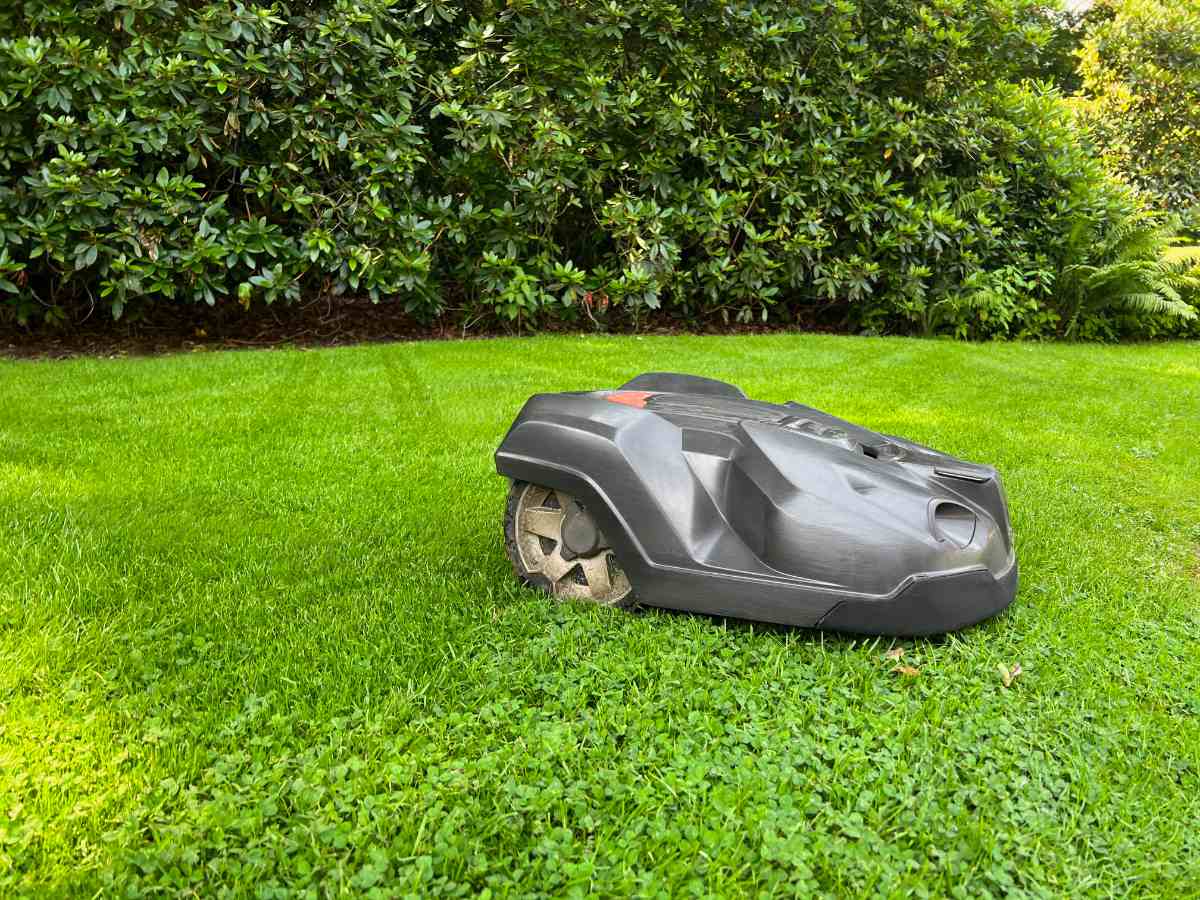
A robot lawn mower works by self-navigating your yard on a set schedule, trimming a little grass at a time. Once it finishes or runs out of power, it drives itself back to the charging station to recharge.
Think of it as a Roomba for your yard: quiet, battery-powered, and happy to mow at dawn while you sleep. Because it cuts so often, it shaves off only a tiny bit each pass, which it mulches back into the lawn as free fertilizer.
If you’d rather skip the setup and upkeep entirely, you can book a local lawn mowing pro in about a minute. Otherwise, in this article, we’ll tell you exactly how these little machines work and whether they’re a good fit for your lawn:
What Is a Robot Lawn Mower?
A robot lawn mower, sometimes called an automatic or robotic mower, is a small, battery-powered machine that cuts your grass on its own, without you pushing it or steering it.
Unlike a remote-control mower, a robot lawn mower operates on its own using boundary wire or GPS-based navigation systems.
It has two main parts:
- The mower: A compact electric unit powered by a rechargeable battery. It heads out on a schedule, trims a little grass at a time, and returns to its dock when the battery gets low. Most models can be controlled through a smartphone app.
- The charging station: When the battery runs low, the mower returns to its charging station, recharges, and resumes mowing if needed.
As Newman Aguiar of Mowbot of the Triangle puts it: “[The robot] is an autonomous machine that manages itself and decides when to mow, how frequently it needs to mow, whether the grass actually needs to be cut.”
How Robot Mowers Navigate Your Yard
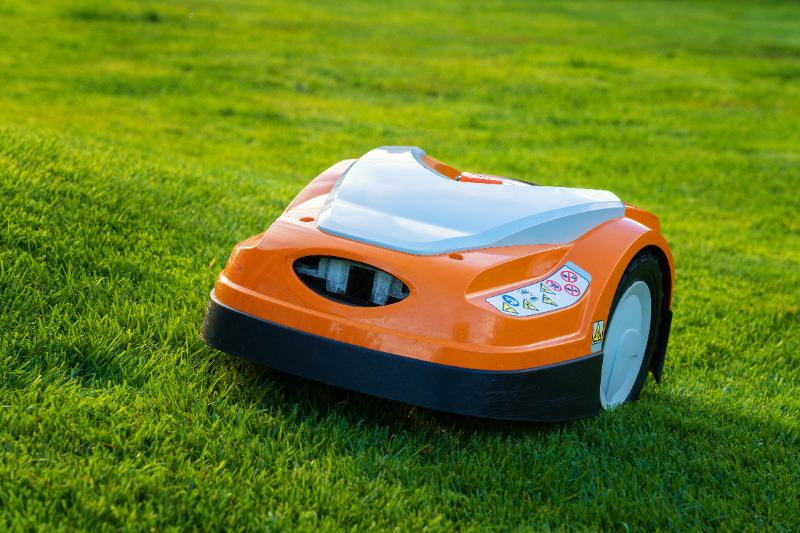
Robot mowers keep track of where they can and can’t go in one of two ways:
| Feature | Boundary Wire | GPS/RTK Mapping* |
| Setup | Install a perimeter wire around the lawn | Create virtual boundaries in an app |
| Accuracy | Very good | Excellent |
| Up-front cost | Lower | Higher |
| Best for | Smaller, simpler lawns | Larger or more complex properties |
* Global Positioning System/Real-Time Kinematic
Boundary wire (traditional): You or a landscaping professional runs a perimeter wire around the lawn and around obstacles like trees and flower beds, either pegged above ground or buried just below it.
The wire works like an invisible fence, telling the mower where the lawn ends. It has to form a continuous loop back to the charging station. It’s reliable but labor-intensive to install and can be cut by lawn tools like a shovel or an aerator.
GPS/RTK mapping (wire-free): Newer models skip the wire entirely. Using RTK-GPS, a small fixed base station in your yard that corrects the satellite signal, they can pinpoint their location within a few centimeters and follow virtual boundaries created in an app.
If your landscape changes, you can simply redraw the mowing zone instead of moving buried wire. The trade-off is that performance may be less accurate under dense tree cover or next to large buildings.
How they mow depends on the model. Traditional boundary-wire mowers often use a semi-random mowing pattern to cover the lawn gradually. Many GPS/RTK models follow planned routes and can mow in straight, organized lines for greater efficiency. Many models also include a rain sensor that sends them back to the dock when the weather turns.
Advantages of Robot Lawn Mowers
The biggest advantage is simple: Once it’s set up, a robot mower handles routine mowing for you. But that’s not the only benefit:
- Self-mulching: They leave behind tiny grass clippings that break down quickly and return nutrients to the soil. That means no bagging and less yard waste.
- Cleaner and quieter: Unlike gas-powered mowers, robot mowers run on rechargeable batteries. They also operate much more quietly, typically around 65 decibels, compared with roughly 100 decibels for a gas push mower.
- Smart controls: Most models can be programmed from a smartphone app, and many work with Alexa, Google Assistant, or other smart-home systems.
- Consistent mowing: The mower doesn’t care if it’s dark or if there’s a game on. It runs the schedule.
- Healthier turf: According to recent research from the University of Florida, because robot mowers trim a little grass at a time and mow more frequently than most homeowners, they can encourage denser grass that may be more resistant to pests and disease.
Disadvantages of Robot Lawn Mowers
Robot mowers can save time, but they aren’t the right fit for every yard:
- You’ll still need a trimmer: Most robot mowers can’t reach grass along fences, walls, foundations, and other tight spaces, so you’ll still need to edge and trim by hand.
- Steep slopes can be a challenge: Many models struggle on grades steeper than 70% (or 35 degrees), although some premium models are designed for much steeper terrain.
- Setup takes time: You’ll need to map your lawn, create mowing zones, and, on some models, install boundary wire before the mower can get to work. In lightning-prone areas such as Florida, you’ll also need to ground the docking station.
- Fire ants can be a problem: This is mostly a concern in the Southeast, where fire ants may build mounds around charging stations and other mower components, potentially interfering with operation or causing damage if left untreated.
- Not every lawn fits: Big ruts, steep hills, and lawns split into disconnected islands of grass can defeat them (more on that below).
See Related: How to Get Rid of Fire Ants in Your Yard
Are Robot Mowers Safe?
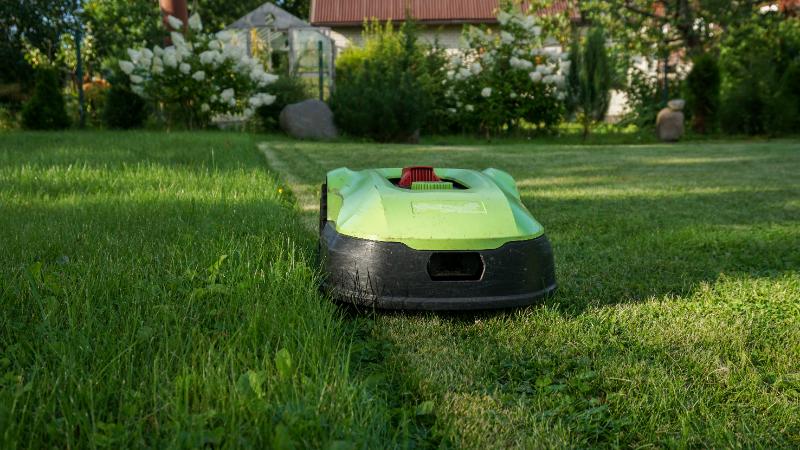
Yes, robot mowers are safe. They are designed with multiple safety features that help reduce the risk of injury and property damage.
- Collision sensors detect objects in the mower’s path and cause it to stop, slow down, or change direction.
- Lift and tilt sensors stop the blades within a fraction of a second if the mower is picked up or tipped over.
- PIN codes and alarms make a stolen mower useless and sound an alarm if it’s lifted without the code.
Warning: The blades on robot mowers are typically smaller and less powerful than those on conventional lawn mowers, but they can still cause injury if used improperly. For that reason, manufacturers generally recommend keeping children and pets away while the mower is operating.
Is Your Lawn Right for a Robot Mower?
Robot mowers work best on relatively smooth, accessible lawns with clear mowing areas. While many newer models use GPS/RTK navigation instead of boundary wires, yard layout still matters.
For traditional boundary-wire models, a connected lawn is ideal. As Aguiar explains, “An ideal lawn would be a lawn that is contiguous. We need to install the perimeter wire that keeps the robot in the yard … That wire has to be contiguous because it connects to the charging station where the robot lives and where it recharges.”
A few practical considerations to keep in mind:
- Edges: Because there’s a gap between the blade and the edge of the mower’s body, it leaves a thin strip of uncut grass along fences and walls. You can edge it by hand or lay a brick or gravel border so the mower can ride closer.
- Obstacles: Large roots, deep ruts, steep slopes, and narrow passages can make navigation more difficult. Keeping the lawn free of toys, branches, and other debris also helps the mower operate more efficiently.
- Power: The charging station needs an outdoor outlet nearby and a clear path to and from the dock.
How Much Do Robot Lawn Mowers Cost?
Robot mowers range from around $665 to over $17,000 for commercial models, with an average near $1,499 for consumer models.
Most residential models are designed for lawns less than 1 acre, while some high-end and commercial-grade mowers can cover up to roughly 220,000 square feet (about 5 acres). Recharging costs only a few cents a session.
For a full breakdown of models and prices, see our guide to robot lawn mower costs.
FAQ
Yes, if your lawn is a good fit. Robot mowers work best on relatively smooth, accessible lawns and can keep grass at a consistent height by mowing frequently. They struggle on steep slopes and oddly shaped areas.
A robot mower operates on its own using boundary wire or GPS-based navigation and follows a programmed schedule. A remote-control mower still requires a person to drive it using a handheld controller.
No. Robot mowers mulch grass clippings and leave them on the lawn. Because they cut so little at a time, the clippings are tiny and decompose quickly instead of clumping.
Less than a traditional mower, but not zero. You’ll need to clean the mower periodically, replace the blades as they wear out, keep the charging contacts clean, and replace the battery when it reaches the end of its lifespan. Boundary-wire models may also require occasional wire repairs.
See Related: DIY Lawn Mower Maintenance Guide
Hire a Local Lawn Care Pro
Getting lawn mowing right takes practice, the right equipment, and time you may not have. If you’d rather leave it to someone who does this every day, LawnStarter makes it simple. Get an instant lawn mowing quote, pick a time, and a background-checked local pro will handle the rest.
Read More:
– How Much Does Lawn Mowing Cost?
– How to Mow Your Lawn: A No-Nonsense Guide
Main Image: Robotic mower trimming grass beside leafy garden shrubs. Image Credit: New Africa / Adobe Stock
Related Posts: