| Key Takeaways |
|---|
| • Companion plants are plant pairings that support each other through soil enrichment, pest deterrence, and pollinator attraction. • Some companion plants, like clover, can grow directly in your lawn to improve its health naturally. • Not all plants make good neighbors; some, like fennel and black walnut trees, can actively harm nearby plants and turf. |
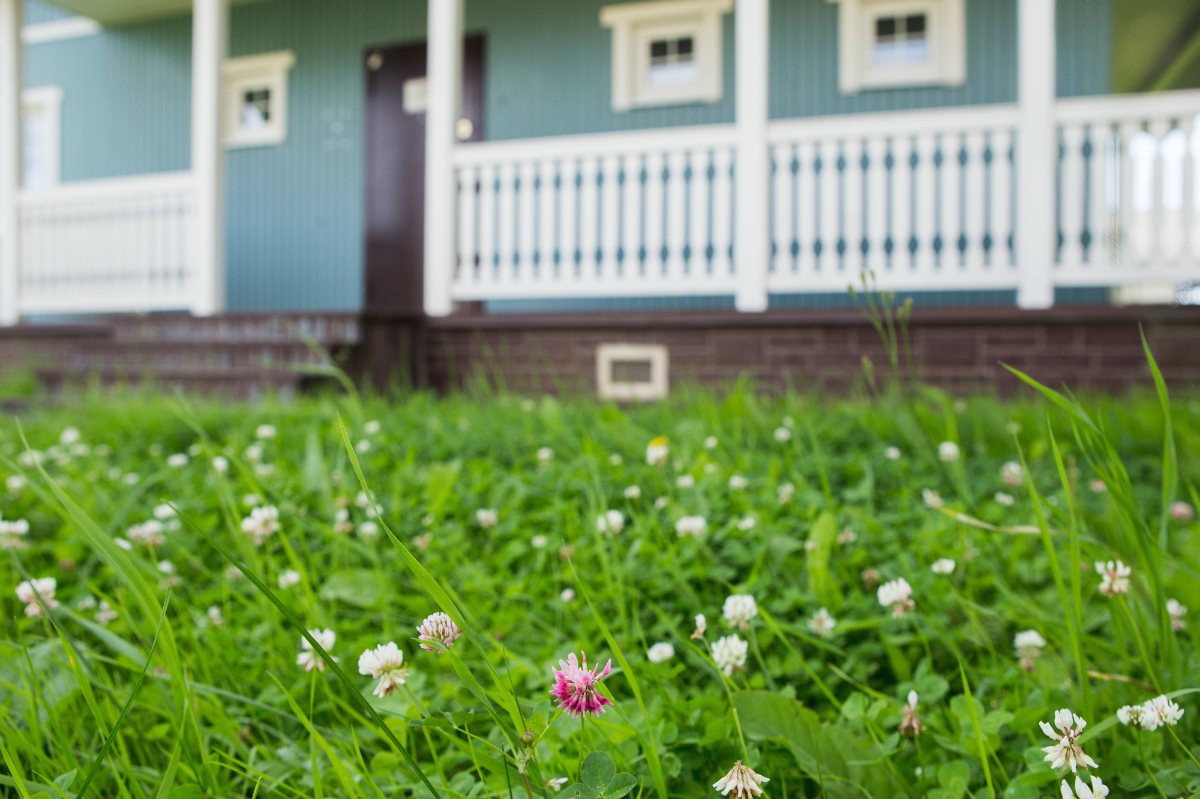
Your lawn doesn’t have to go it alone. Adding companion plants to your lawn, like clover and peonies, can boost soil health, repel pests, and bring color to your yard without extra chemicals or constant maintenance.
If you’ve watched your lawn struggle with bare patches, thirsty soil, or pests no matter how much you fertilize, the problem might not be your lawn at all. It might be what’s (not) growing around it. Companion planting is a centuries-old gardening technique that vegetable growers swear by, and it works just as well for turf.
The trick is knowing which plants help your lawn thrive and which ones quietly sabotage it. LawnStarter’s landscaping services can help you plant and care for your lawn and companion plants.
What Are Companion Plants and How Do They Work?
Simply put, companion plants are plant pairings that help each other grow through pest control, nutrient sharing, pollinator attraction, or soil improvement.
You’ve probably seen this without knowing it: think of basil planted next to tomatoes or, the most famous companion plants of the vegetable garden, pole beans, corn and squash (the “three sisters”).
Companion plants generally fall into one of these groups, based on the job they do in the garden:
Pest repellents: Plants whose smell, oils, or root chemicals drive harmful insects away (marigolds, basil, thyme).
Trap crops: Plants that attract pests to themselves and away from your prized crops or turf (blue hubbard squash, nasturtium).
Predator attractors: Plants that feed and shelter the natural enemies of pests, like parasitic wasps, ladybugs, and lacewings (peonies, yarrow, sweet alyssum).
Pollinator magnets: Nectar-bearing flowers that draw bees and butterflies, improving pollination across your garden (coneflowers, black-eyed Susan).
Soil builders: Nitrogen-fixers like clover and deep-rooted plants like comfrey that feed neighboring plants through the soil.
Ground covers: Low-growing plants, including grasses, that retain moisture and suppress weeds.
See Related: How to Grow a Three Sisters Garden in Your Backyard
How Does Companion Planting Help Your Lawn?
The short answer: Less work, fewer chemicals, and a healthier yard. Here’s how it breaks down.
| Benefit | How It Works | Example |
| Attract natural enemies of pests | Nectar feeds insects and parasitic wasps that prey on lawn pests | Peonies attract Tiphia wasps that kill Japanese beetle grubs |
| Soil Enrichment | Nitrogen-fixing plants pull nitrogen from the air and deposit it into the soil | Clover mixed into turfgrass |
| Pollinator attraction | Flowers feed bees and other beneficial insects | Violets blooming in early spring |
Can Companion Plants Keep Pests Away?
Yes, and they can attract helpful insects at the same time. Some companion plant pairs draw in pollinators like bees and butterflies; others act as organic pest control tools, by preventing pests from laying eggs on your crops or by attracting natural predators.
Penn State Extension lists several research-backed pairings:
Basil planted around tomatoes reduces egg-laying by tomato hornworm moths.
Thyme underplanted with tomatoes deters yellow-striped armyworm moths from laying eggs nearby.
Cole crops paired with dill, chamomile, hyssop, or sage reduce egg-laying by imported cabbageworms.
For lawns, the most effective mechanism is planting species like peonies and coneflowers which attract natural enemies of lawn pests like Tiphia wasps and lacewings.
See Related:
Companion Plants That Feed Your Soil
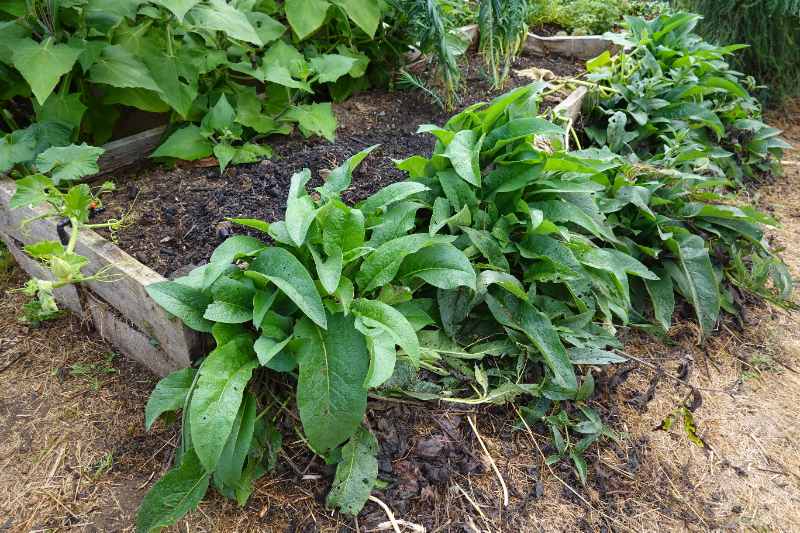
Some of the best companion plants do their work underground, where you can’t even see them.
Deep-rooted plants like comfrey pull nutrients up from below the surface; as their leaves decompose, earthworms help cycle those nutrients back into the soil.
Other plants, like clover, are nitrogen-fixers, meaning they pull nitrogen directly from the air and store it in their roots, acting as natural, slow-release fertilizer.
It won’t replace a full lawn program, but consistent care can reduce what you buy later. Professional fertilization costs $67 to $405 per treatment — clover is a meaningful offset.
Companion Plants That Help Your Lawn
Here are the best companion plant pairings for a healthy yard and lawn — what to plant, what to pair it with, and why it works.
Companion Planting Chart for Your Lawn
If you want to use companion planting to improve your lawn, but still keep a classic, neat turf, choose plants you can install as a lawn border or in a nearby flower bed.
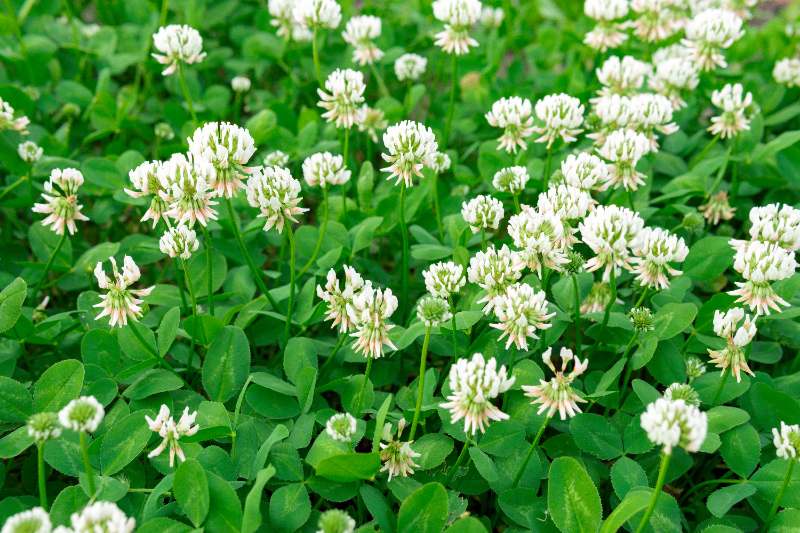
If you’d rather have a more natural, pollinator lawn, some companions, like clover and violets, can be mixed in with the turf.
| Good Companion | Benefit | Where to Plant |
| Dutch white Clover, miniclover | Adds nitrogen to the soil; stays green during drought | Mix with the grass |
| Peonies | Attract Tiphia wasps which kill grubs | Lawn border |
| Yarrow, black-eyed Susan, coneflowers | Attract ladybugs and lacewings that eat aphids | Flower beds |
| Daffodils | Early spring color; daffodils go dormant as grass begins peak growth | Lawn border |
| Violets | Crowd out weeds; broadleaf early bloomers | Mix with the grass |
Allowing some companion plants to grow with your turf brings real benefits and Fred Meyers, founder of Backyard Abundance in Iowa City, Iowa, agrees that one of the best additions is “Dutch white clover, or mini clover.”
Here are the best companion plants for a healthy lawn:
Clover: White and red clover offer nitrogen-fixing and ground cover abilities, both of which help grass immensely. According to one seed retailer, white clover costs about $3.50 per 1,000 square feet, though prices vary by seller and bag size.
Peonies: Their nectar feeds adult spring Tiphia wasps in May and early June. Female adults lay eggs inside Japanese beetle grubs and kill them, protecting your lawn. The University of Connecticut research identified cultivars including ‘Festiva Maxima,’ ‘Big Ben,’ ‘Bowl of Beauty,’ and ‘Sarah Bernhardt’ as strong attractors.
Yarrow, black-eyed Susan, coneflowers: They attract ladybugs and lacewings which eat aphids and prevent them from infesting your lawn.
Daffodils: These early bloomers add golden beauty in spring while leaving grasses be, creating no competition for your turf.
Violets: Their broadleaf habit helps crowd out unwanted weeds, and their early purple blooms appear when little else is flowering.
See Related:
Plants Your Lawn Helps
Companion planting works both ways. A healthy lawn can also create a good environment for nearby plants:
Blueberries: A 2019 study published in Frontiers in Plant Science found that intercropping blueberries with red fescue or Kentucky bluegrass corrects iron deficiency in alkaline soils, with red fescue significantly increasing yield.
Even so, most experts hesitate to recommend the pairing for home lawns. “Turfgrass is really hungry for nitrogen, nutrients, and water — things that blueberries need,” Meyers says.
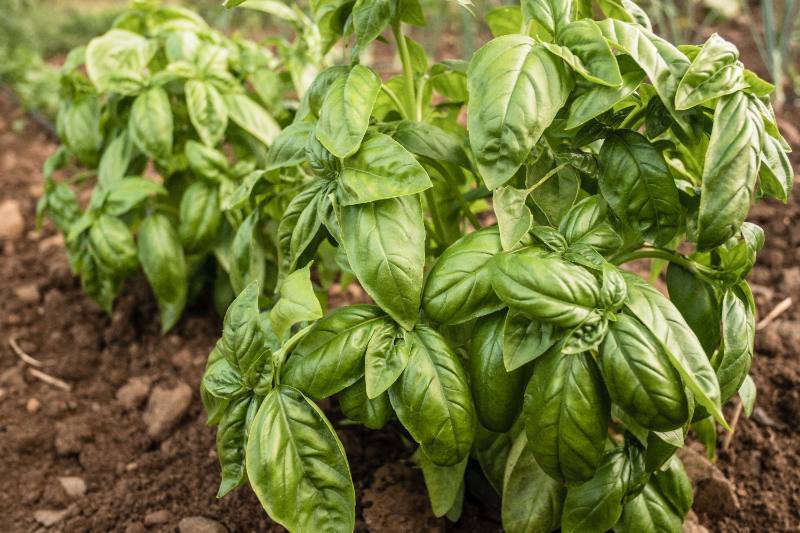
Basil: Some gardeners report that basil grown near turfgrass produces stronger, more aromatic leaves (no data to support it, but it’s a common anecdotal observation).
Trees: A healthy lawn around the base of trees can help retain soil moisture, moderate temperature, and reduce weed competition near young roots. Just leave a mulched ring around the trunk to prevent mower damage.
See Related: Centipedegrass Lawn Maintenance Guide
How Close Do Companion Plants Need to Be?
Closer is generally better, but exact spacing depends on the plant’s role and root spread:
Nitrogen fixers like clover should be interplanted directly with grass to feed the soil where roots overlap.
Pest-repelling and predator-attracting plants like peonies, yarrow, and coneflowers work best when they border the area they protect, close enough that beneficial insects move between them and your turf.
Lawn-border plants like daffodils can sit at the edge of the turf without competing with it.
Always follow each plant’s normal spacing recommendations as a baseline. Don’t crowd plants that need their space, like tomatoes or peonies, even with friendly neighbors.
What Companion Plants Should You NOT Put Near Your Lawn?
Not every plant is a good neighbor. Some actively harm nearby grass through toxic chemicals, aggressive spreading, or intense competition for water and nutrients. Here’s what to keep away from your turf:
Black walnut trees: These trees release a natural chemical called juglone through their roots, bark, and leaves. Juglone is toxic to turfgrass, tomatoes, and many other plants. Symptoms typically arise within 50-60 feet of the trunk, so keep your lawn and vegetable beds well away from the tree.
Aggressive spreaders: English ivy and certain mint varieties can escape beds and choke out your lawn, competing for water, sunlight, and nutrients.
Fennel: Its roots release allelopathic compounds that may inhibit nearby plant growth.
Whenever possible, choose native plants suited to your region, and always check a plant’s growth habit before planting near your turf. A little research upfront saves a lot of frustration later.
See Related: 10 Benefits of Native Plants in Landscaping
Get Help With Your Lawn’s Companion Planting
The right companion plants can make your lawn healthier, more colorful, and lower-maintenance, without extra chemicals.
If you’d like help planning which plants work best in your yard, LawnStarter’s landscaping pros can help you choose and take care of the installation. Get your free quote today and enjoy a healthier lawn with fewer chemical treatments.
FAQs
Some plants actively inhibit each other’s growth. Black walnut trees release juglone, a chemical toxic to turfgrass, tomatoes, and blueberries within 50 to 60 feet of the trunk. Fennel is often cited as a poor neighbor due to allelopathic compounds. Aggressive spreaders like English ivy and mint can also outcompete grass and garden beds.
Some of the most reliable research-backed pairings come from university extension trials. The University of Minnesota Extension confirms that basil planted with tomatoes reduces thrip damage and may even improve tomato growth. Thyme, onion, and nasturtium grown near broccoli reduce cabbage looper and cabbageworm damage. In lawns, clover paired with grass adds nitrogen naturally.
Not entirely, but it can reduce how much you need. Nitrogen-fixing plants like clover return nitrogen to the soil naturally, which can meaningfully cut the synthetic fertilizer your lawn requires. Think of companion planting as a supplement to a solid lawn care routine, not a full replacement for it.
Main Image: Clover growing in a front lawn. Image Credit: scharfsinn86 / Adobe Stock