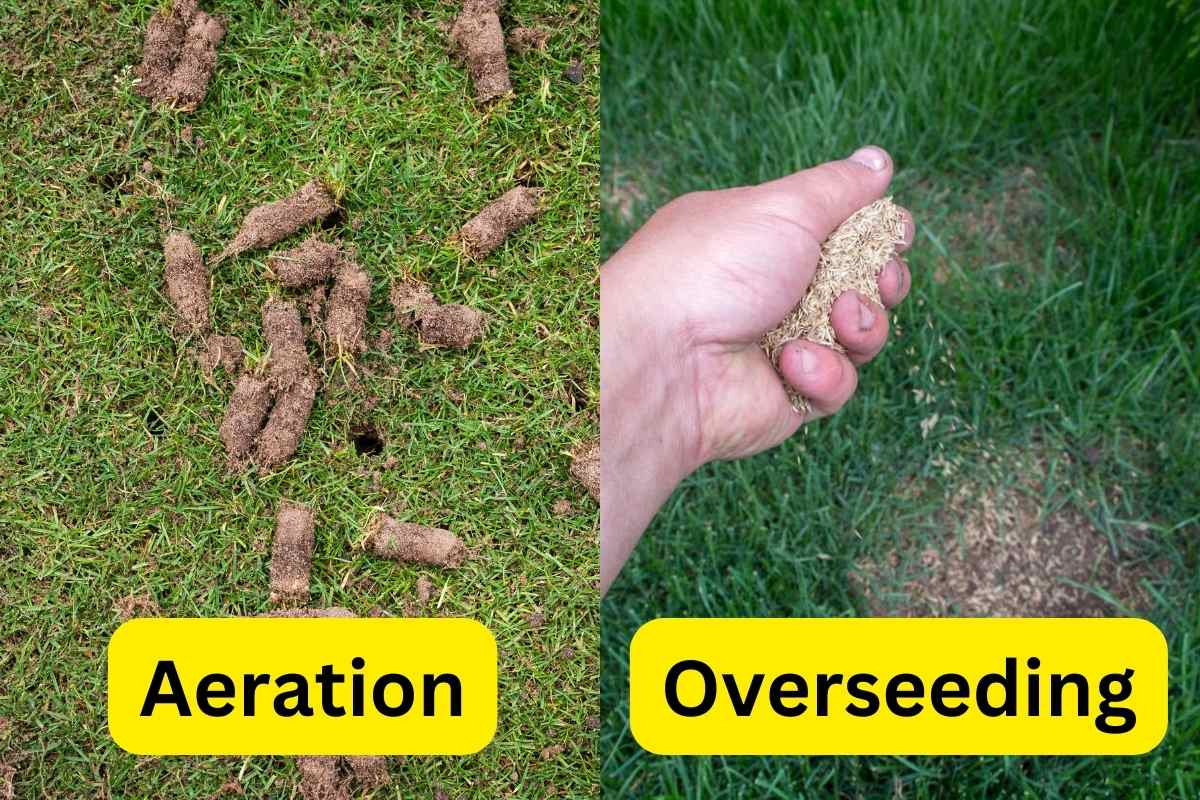
Yes, LawnStarter offers aeration, overseeding, and aeration plus overseeding, and the services are available by phone and through the app or website.
These services are delivered through LawnStarter’s local lawn care providers and our national and regional partners.
It’s so easy. You book and manage everything through LawnStarter, and an experienced lawn care provider does the work.
What Aeration Services Does LawnStarter Offer?
LawnStarter offers 2 types of aeration: core aeration and liquid aeration
With core aeration, a lawn care provider uses a hollow-tine aerator to pull small soil plugs — typically 0.5-inch in diameter and 2-3 inches deep — from across your lawn.
According to Clemson University Extension, core aeration “loosens compacted soil and increases the availability of water and nutrients” while also stimulating new root and shoot production.
With liquid aeration, available across much of Texas, a solution is applied to break up compaction and improve water and nutrient absorption.
Liquid aeration is less disruptive to your yard (no unsightly plugs) and works well on smaller lawns or in tight spaces where equipment access is limited.
Signs your lawn needs aeration:
- Water pools instead of soaking in
- Grass looks thin despite regular fertilizing
- Soil is hard even after rain
- A screwdriver won’t push more than 2-3 inches into the ground
See Related: What Lawn Care Services Does LawnStarter Offer? (Full List)
What Overseeding Services Does LawnStarter Offer?
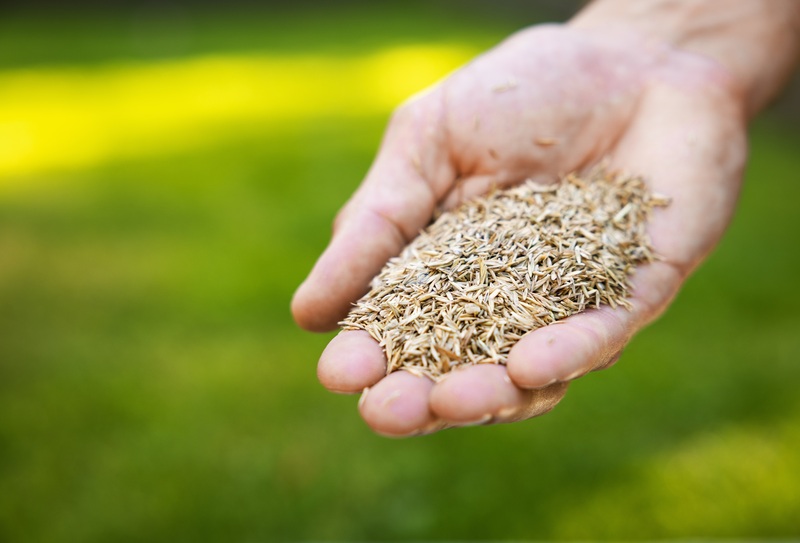
LawnStarter offers 2 overseeding options for existing customers:
Aeration plus overseeding (combined package): Overseeding happens immediately after aeration so fresh seed falls directly into the aeration holes, giving it direct soil contact and better moisture retention.
Purdue University Extension notes that the benefit of aeration is that it will “increase the seed-soil contact and improve germination and establishment rate.” This is why combining both services consistently outperforms overseeding alone.
Overseeding (without aeration) as also available. Call or request aeration in the app or online.
See Related:
When to Schedule Aeration and Overseeding
Timing depends on your grass type. Aerating at the wrong time of year stresses your lawn rather than helping it recover.
| Best Time to Aerate and Overseed | Grass Type |
| Late Spring (May-June) | Zoysia |
| Late Spring (May-June) | Bermuda |
| Spring or Summer (April – July) | Centipede |
| Fall (mid Aug–mid September) | Kentucky bluegrass |
| Fall (mid Aug–mid September) | Perennial ryegrass |
| Fall (mid Aug–mid September) | Tall fescue |
Warm-season grasses (Bermuda, Zoysia, centipede): Aerate in late spring or early summer (April through July) during active growth. Don’t aerate in periods of drought or dormancy.
Cool-season grasses (tall and fine fescues, Kentucky bluegrass, perennial ryegrass): August to September is the optimal window. Cooler temperatures, more rainfall, and fewer competing weed seeds give new grass the best chance to establish before winter.
Clemson Extension recommends at least 4 weeks of good growing weather remaining after aerating.
See Related:
Best Time to Aerate and Overseed Your Lawn
7 Steps to Prepare Your Lawn for Aeration and Overseeding
What to Do After Aerating Your Lawn
Get Aeration and Overseeding Through LawnStarter
Aeration and overseeding are available to LawnStarter customers through our local lawn care providers and partnerships with TruGreen and Emerald Lawns. To get started, sign up for aeration and overseeding or aeration by itself directly through the app or website whenever your lawn needs it.
Get a free instant quote near you →
Main Image: Side-by-side image of lawn aeration and overseeding.
Image Credits:
Aeration: Dziurek / Adobe Stock
Overseeding: Shutterstock
Related Posts: