| Key Takeaways |
|---|
| • Large patch disease creates circular tan or brown patches with orange borders, typically appearing in spring after a fall infection. • The fungus thrives when soil ranges 50 to 70 degrees and moisture levels stay high for at least 48 hours. • Prevention focuses on reducing soil moisture through proper watering, dethatching, aeration, and correct fertilization timing. |
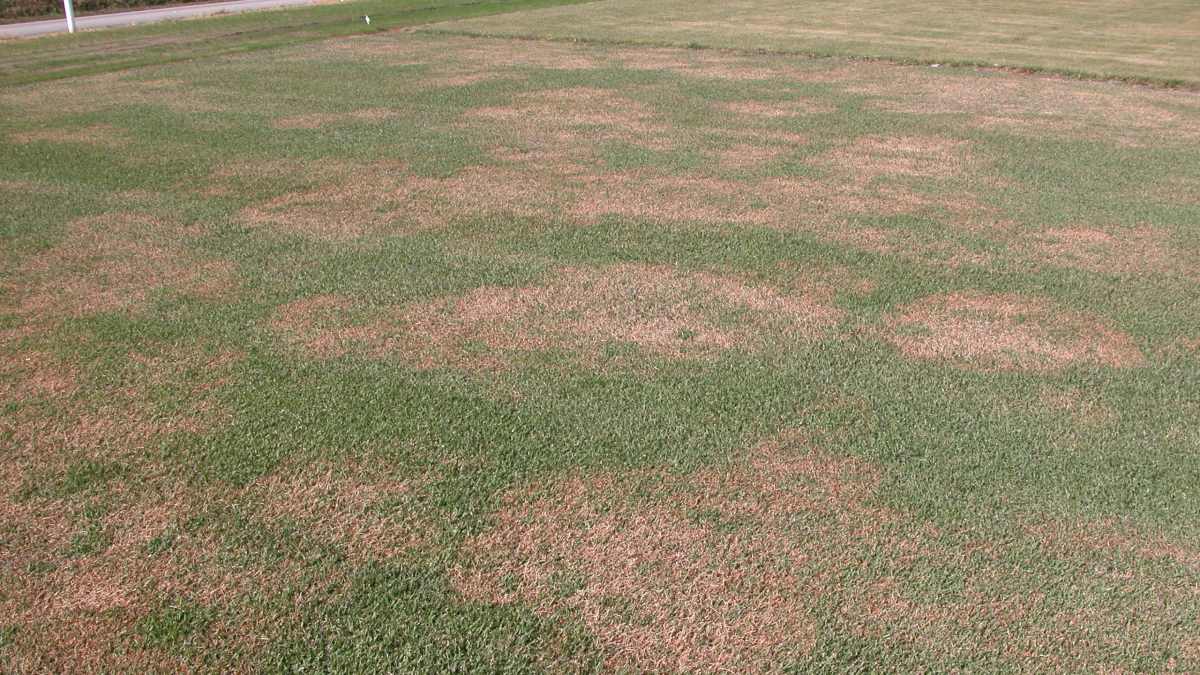
Large patch disease attacks warm-season grasses during fall and spring dormancy transitions. If your lawn looks patchy and thin right when it should be greening up, this fungus may be the reason. It’s worse on over-fertilized, over-watered, or scalped lawns.
The good news: turfgrass recovers well with early treatment. This guide covers identification, treatment, and prevention of large patch lawn disease.
Need professional help with fungicide timing? LawnStarter connects you with lawn treatment pros in your area so you can get back to enjoying your yard.
How to Recognize Large Patch Disease in Your Lawn
Large patch disease (LPD) creates circular tan or brown patches that often range from 2 to 10 feet in diameter, with yellow to orange borders. According to the American Phytopathological Society (APS), the fungus Rhizoctonia solani attacks during fall and spring when thatch and soil temperatures are 50 to 70 degrees.
Signs and Symptoms of Large Patch Disease
Brown spots have many causes: drought stress, soil compaction, nutrient deficiency, pests, or fungal diseases. Before treating, confirm it’s large patch. Check for these main symptoms:
| Symptom | What to Look For | When Visible |
| Patch color | Light green to tan or brown circular patches | Fall (subtle), Spring (obvious) |
| Patch size | A few inches to 10 or more feet wide | Spring |
| Border appearance | Yellow to orange edge on active patches | Spring |
| Center pattern | Sunken brown areas Green grass in middle (frog-eye shape) | Spring |
| Leaf damage | Dead leaves turn tan, yellow, orange or reddish | Spring |
| Grass blades pull test | Blades pull easily with dark, rotted base | Any time |
Light green patches in the fall: More common on St. Augustine lawns. The color change is subtle and easy to miss.
Frog-eye shape: As the lawn recovers, patches develop bunches of green grass in the middle, creating a frog-eye or donut appearance.
Easy-to-pull grass blades: A soft, dark rot at the base of infected leaves (the sheath) makes blades pull easily from the stems.
Root and crown: Large patch targets leaf sheaths, not roots or crowns. This is a key difference from diseases like spring dead spot that damage grassroots.
Fungal signs: No visible mycelium (the fluffy, cloud-like substance seen with some fungal diseases). No smoky rings at patch edges.
When is Grass Vulnerable to Large Patch Disease?

The fungus Rhizoctonia solani thrives, multiplies, and kills grass when soil temperatures are 50 to 70 degrees. Its active period runs August to May, though this varies by location. Contact your local Cooperative Extension Office for a more precise risk window.
Heat and drought slow the disease. According to Oklahoma State University, temperatures above 85 degrees suppress large patch in late spring and early summer, giving damaged areas a chance to recover.
Your grass may look healthy by July or August, but LPD is not gone, just dormant. It survives year-round as mycelium and sclerotia (hard, dormant survival structures that can persist for years) in:
Soil
Thatch layer
Dead leaves left on the lawn
Other organic debris
Untreated, the pathogen returns and damages more of your lawn each year.
How to Test for Large Patch Disease
A simple home test:
Go up to the edge of an infected area.
Pinch the tip of a damaged grass leaf and gently pull up.
If the leaf comes off easily and its base is dark and smells of rot, you’re likely dealing with large patch disease.
Repeat with multiple leaves in and outside of infested areas. If grass leaves and stolons pull out together, it might be take-all root rot.
For more precise results, send samples of symptomatic grass to your local Cooperative Extension Office or a plant diagnostic lab.
Large Patch Disease vs. Brown Patch vs. Yellow Patch
Large patch, brown patch, and yellow patch are part of the same fungal disease family. Rhizoctonia solani causes both brown and large patch, while Rhizoctonia cerealis causes yellow patch. Here’s how to tell them apart:
| Large Patch | Brown Patch | Yellow Patch |
| Affects: warm-season grasses | Affects: cool-season grass | Affects: cool and warm-season turf types |
| Active in: fall and spring (50-70 degrees with high humidity) | Active in: summer (75-90 degrees with high humidity) | Active in: fall and spring (50- 65 degrees with high humidity) |
| Patch size: a few inches to over 10 feet wide | Patch size: 4-12 inches | Patch size: 6-12 inches |
| Color: Tan, orange, and off-color patches with an orange border and sunken center | Color: Olive-green to brown patches with a gray-white smoke ring | Color: Yellow or tan-colored patches or rings; margins yellow or reddish-brown |
Other Warm-Season Grass Diseases You Can Confuse With Large Patch
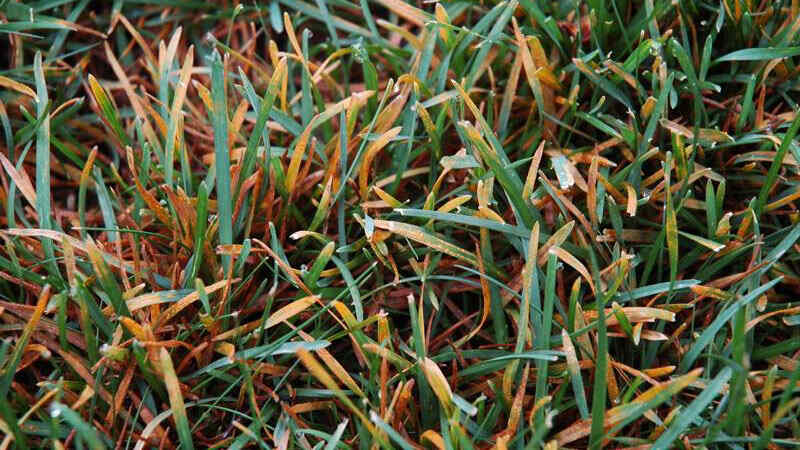
Other fungal diseases produce similar symptoms. Large patch only damages leaf sheaths, these confusable diseases each leave a different signature:
- Spring dead spot (Bermudagrass, Zoysiagrass, buffalograss): Bleached, dead circular patches. Spring dead spot rots roots, rhizomes, and stolons (dig some damaged grass to check). Large patch doesn’t damage roots.
- Leaf rust (most cool-season grasses, plus Zoysia and Bermuda): Diffuse golden-yellow or orange tinge instead of defined patches. Leaf rust‘s name comes from the orange powder that rubs off on your shoes.
- Take-all root rot (warm-season grasses exiting dormancy): Light green to yellow patches that turn into bare spots. TARR is active in late spring through summer, damaging stolons and rhizomes.
Confusing Large Patch Disease with Herbicide Damage
Herbicide damage is easy to confuse with large patch in St. Augustinegrass. Herbicides can cause yellow to brown patches, and leaves may pull off easily from stems.
The key difference: Herbicide damage leaves a dry, tan-colored leaf base. Large patch leaves a dark base that smells of rot.
How to Treat Large Patch Disease
A single infestation isn’t catastrophic if caught early. Most turf recovers during summer. The real danger is dormant fungal structures that survive winter and summer and return more aggressively each year. Eliminating LPD takes both proper maintenance and effective fungicides; neither alone removes it for good.
What to Do (and Avoid) Once You Have Large Patch Disease
The moment you suspect large patch disease, start these tasks to limit the fungal growth and its spread to healthy areas.
| Do These | Avoid These |
| Mow diseased areas last | Dethatching when infested |
| Collect all clippings | Evening watering |
| Clean equipment after use | Standard irrigation schedule |
| Water early morning only | Watering when it rains |
Do:
Mow less often if possible: Your mower can spread fungus from diseased patches to healthy grass.
Mow diseased areas last: Stops the mower from carrying fungi into healthy zones.
Collect all grass clippings: Dispose of them. Don’t use the clippings as mulch or in compost.
Clean and disinfect equipment after use: Do this after working in diseased areas. Large patch doesn’t spread by spores, but the mycelium travels easily on tools, clothes, and animals. Clean your shoes and pants before working in flower beds or the vegetable garden.
Don’t:
Dethatch or aerate when infested: You’ll spread the fungi even more.
Water in the evening: Switch to early morning routine while the disease is active.
Irrigate on the standard schedule: Check soil and grass first. Extra moisture feeds the fungus.
Water after rainfall: Skip your scheduled watering if it rains to avoid excess moisture.
Chemical Treatments for Large Patch Disease
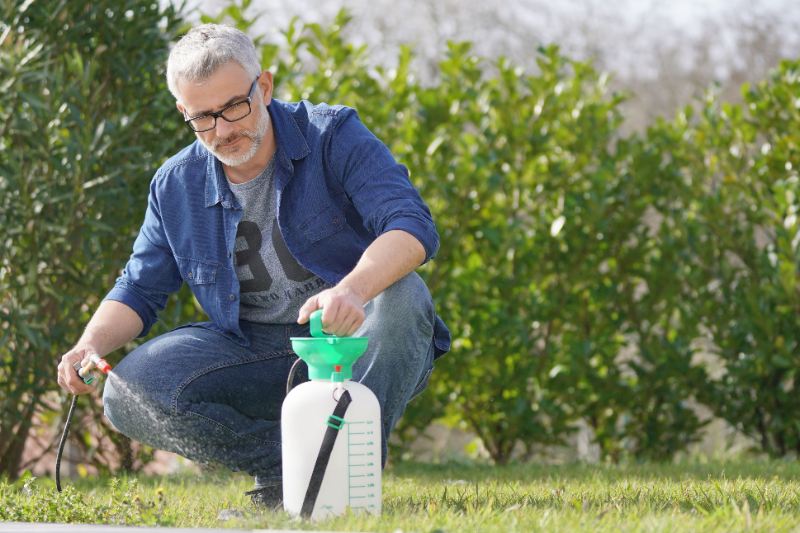
Fungicides work best against as preventive applications, before the disease shows up. Make the first application in fall, when conditions start favoring the LPD fungus. According to North Carolina State University, apply preventive fungicides when:
Soil temperature drops below 80 degrees for 5 consecutive days in St. Augustinegrass and centipedegrass lawns.
Temperatures drop below 70 degrees for 5 consecutive days for Zoysiagrass.
Make a second application after 4-6 weeks. Repeat for severe infestations. Stop when temperatures drop below 50 in the fall.
Effective Fungicides
The University of Missouri recommends these fungicides for large patch control:
Azoxystrobin: Scotts DiseaseEx Fungicide, Heritage G
Propiconazole: Ferti-lome Liquid Systemic Fungicide II, Bioadvanced Fungus Control for Lawns
Myclobutanil: Ferti-lome F-Stop, Monterey Fungi-Max
Application intervals run 14 to 28 days. Check the product label for specifics.
See Related: Lawn Fungus Treatments: Costs, Types, and Do They Work?
How to Prevent Large Patch Disease
Prevention is the best way to keep large patch at bay and limit damage if infestation does happen.
Avoid Overwatering to Prevent Large Patch Disease
“Too much water pushes out oxygen, weakens the root system, and invites disease like large patch,” says Eric DeBoer, assistant professor of turfgrass management at Louisiana State University.
Irrigate deeply and less often: Get water to penetrate soil 4-6 inches deep. Schedule the next watering when grass shows stress signs: wilting, a grayish tint, or delayed recovery after walking on the lawn.
Install a good-quality sprinkler system: Apply water uniformly. Leave the timer off in spring and fall, and run it only when the turf needs watering.
Water in the early morning: This limits evaporation and keeps watering frequency low. Early morning sunlight quickly dries water from leaves and thatch surface.
Fall irrigation is critical because it overlaps with large patch’s primary infection window. DeBoer recommends reducing watering to every 10 -14 days as temperatures cool and daylight shortens, or turning the system off when cold fronts bring regular rainfall.
Ensure Air Circulation to Prevent Large Patch Disease
Trim trees and shrubs near the lawn: Less dense foliage allows air to flow better and dry excessive moisture.
Mow at the proper height: Scalping causes grass to grow too dense in mild, rainy weather, trapping moisture and blocking airflow. Recommended mowing heights for common warm-season grasses:
| Grass Type | Recommended Mowing Height (inches) | Mow When it Reaches This Height (inches) |
| Bermudagrass (common) | 1 – 2 | 1.5 – 3 |
| Hybrid Bermuda | 0.5 – 1.5 | 0.75 – 2.25 |
| Centipedegrass | 1 – 2 | 1.5 – 3 |
| St. Augustinegrass | 3 – 4 | 4.5 – 5 |
| Zoysiagrass | 1 – 2.5 | 1.5 – 3.75 |
Remove grass clippings during the wet season: Even without infestation, removing clippings during rainy periods improves airflow and evaporation.
Improve Soil Drainage to Prevent Large Patch Disease
Soil drainage matters most if fall and spring are rainy in your area. These annual maintenance tasks keep your soil permeable.
Keep the lawn free of thatch: Thatch is a layer of dead and live grass between the soil and turf. When over ½ inch, it traps moisture around stems and leaves, exactly what large patch needs. Dethatch to promote water absorption and airflow. Average dethatching cost is $65 to $165, or rent a dethatching rake and DIY.
Aerate the soil: Compacted ground absorbs water slowly, causing puddles, runoff, and prolonged humidity. Core aeration pulls plugs from the ground, creating channels for air and water. Professional aeration costs average $107 to $202; rent a core aerator for around $100 per day.
Reduce foot traffic in fall and spring: This prevents further compaction when the turf is semi-dormant and most vulnerable.
See Related: Ways to Improve Drainage in Your Yard
Fertilize Correctly to Prevent Large Patch Disease
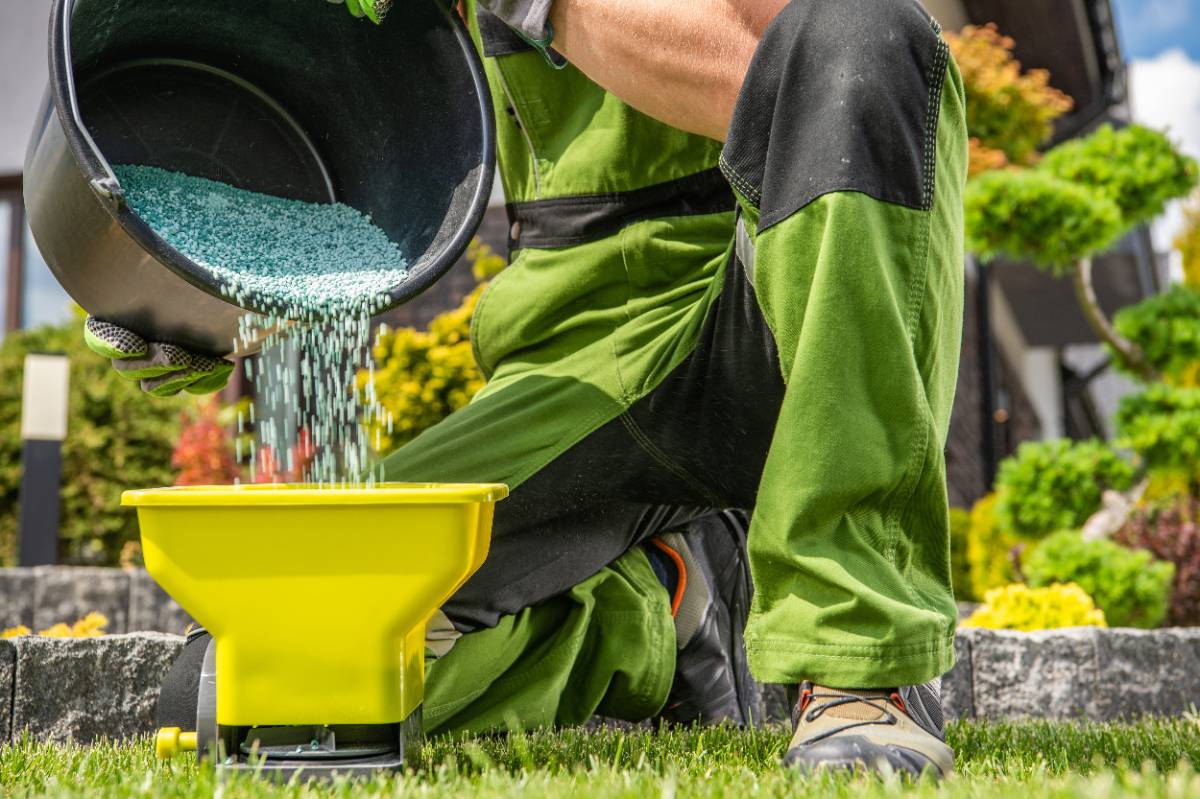
Too much nitrogen at the wrong time creates tall, lush grass with tender leaves that fungi penetrate easily.
Avoid heavy nitrogen in late summer and fall: The 6 weeks before dormancy is when warm-season grasses prepare for winter rest.
Wait 3 weeks after spring green-up to fertilize: Grass grows too slowly during greenup to need extra nutrients.
Use slow-release fertilizer with potassium: A blanaced formula strengthens roots and makes the grass more resilient to diseases.
Turfgrass Types Susceptible to Large Patch Disease
Large patch disease prefers warm-season grasses. If you’re growing a cool-season lawn and noticing similar symptoms, you’re likely dealing with another fungus.
All warm-season turfgrasses are affected by LPD, but recovery rates vary:
| Grass Type | Vulnerability | Recovery Speed |
| Centipedegrass | Most vulnerable | Slowest |
| Seashore paspalum | Most vulnerable | Slowest |
| Zoysiagrass | High vulnerability | Slow |
| St. Augustinegrass | Moderate vulnerability | Moderate |
| Bermudagrass | Most resilient | Fastest |
Large patch is sometimes called Zoysia patch because Zoysiagrass is among the most frequently and severely affected types.
See Related: Guide to Growing Warm-Season Grasses
FAQs
Treat large patch disease by reducing soil moisture: avoid overwatering, remove thatch, and aerate the soil. Apply fungicides with active ingredients like azoxystrobin, propiconazole, thiophanate-methyl, or triadimefon.
No. Large patch disease is more severe in overfertilized lawns. Excess nitrogen promotes lush, tender growth that the fungus penetrates more easily.
No. Heat makes the fungus dormant, not dead. It survives in soil and thatch as mycelium or sclerotia, then reinfects when temperatures drop. Use fungicide to eliminate it completely.
Large patch typically doesn’t kill grass since it only damages leaves and sheaths — healthy plants regrow from their roots. However, repeated yearly infections thin your lawn and expand damaged areas progressively.
Get Help with Large Patch and Other Lawn Diseases
There’s little room for guesswork when you’re dealing with fungal diseases on your lawn. LawnStarter connects you with lawn treatment pros who apply the right treatment at the right time to keep your lawn healthy and thriving.
Get a free quote from LawnStarter and let our pros handle it.
Main Image: Large patch lawn disease on turfgrass. Image Credit: NC State Cooperative Extension
Read More:
How to Identify, Control, and Prevent Summer Patch Lawn Disease
Red Thread and Pink Patch: What They Are and How to Get Rid of Them