Most articles about solo lawn care operators are written from the outside – by someone wondering whether to hire one. This isn’t that article.
If you’re running a one-man operation like me, or thinking about starting one, this is written for you. I’ll tell you what I like (and don’t) about being a solo operator, and I’ll also tell you what it actually means to be a solo operator, and how to know when it’s time to stop doing it alone.
Here’s a preview of coming attractions. Skip ahead if you see an interesting part.
What I Like (and Don’t) About Being a Sole Proprietor
I love being a solo-operator and the owner of Wildflower Lawn Care Co. in Hutto, Texas (an Austin suburb). I love talking to people about what I do. I love that I get to build my own schedule and talk with customers when they have questions about their lawn.
The most common feedback I get from customers is that my enthusiasm for lawn care is “infectious.”
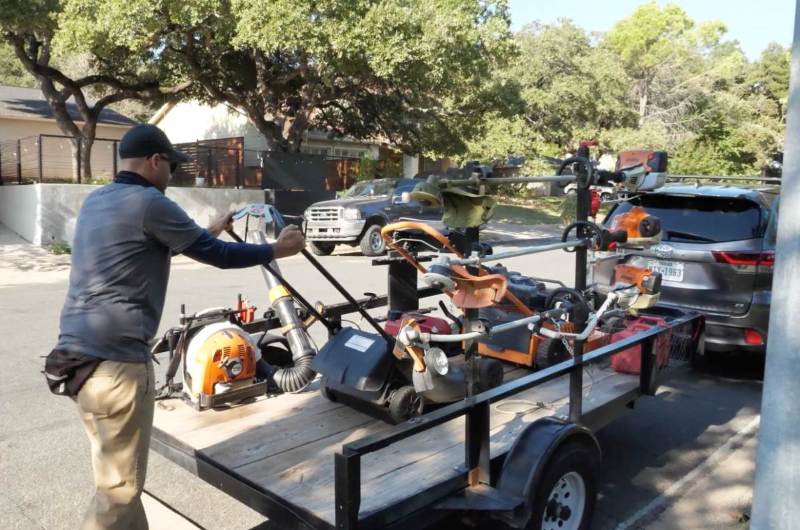
I don’t have a big ole wrapped truck, or super fancy equipment, but If I can be responsive to my customers, I can offer them a “white glove” service to back up my “dirty glove” effort.
What I don’t love is realizing it’s time to stop running solo. I’m very fortunate that I have been able to mow lawns myself for as long as I have (nearly 5 years now), but in a few months I’ll be 45,
I’m at the point in my life, and business, when the decision to hire someone to help has gone from a luxury to a necessity, so I figured it was the perfect time to write this post.
What ‘One Man and a Truck’ Actually Means
On my best days, owning a solo operation can be pretty great. I don’t have to sit in traffic for an hour, just to sit at a desk for 8 more hours. I get instant gratification from a job well done several times a day and I would argue that my windshield gives my “office” the best view in Texas.
And while that view can be pretty great, it’s not the whole view of my business.
On any given day, you can usually expect to be returning texts before you wipe the sleep from your eyes, mowing for 8-12 hours, quoting non-maintenance services, following up with customer calls, and planning your routes for the next day.
And if all of that goes perfect, you still have to hope that all of your skills as a part-time meteorologist pay off. If not, that rain storm that only had a 10% chance of hitting the area will wash your schedule away like a paper boat down a storm drain.
Being a solo-operator is hard work.
The Real Advantages of Running Solo
The old framing of solo operators focuses on what customers get: Customers always know who’s doing their lawn, the service feels personal. That’s true, but it undersells the actual business case for running lean.
Low overhead – When it’s just you, there’s no payroll, no workers’ comp, no managing someone else’s schedule or mistakes. Every dollar of margin you generate stays close to you.
Responsiveness – Being able to respond quickly to customers and handle their concerns really helps set my business apart from the other solo operators in my area. The speed at which I can respond to my customers is a competitive advantage that larger companies can’t match.
Strong customer relationships – These relationships last from mowing season to mowing season – the kind where a customer has your cell number, trusts your judgment, and refers you to their neighbor without being asked.
Learning the whole business – When you’re forced to handle estimating, routing, billing, equipment maintenance, and customer communication all yourself, you develop an understanding of how every piece fits together.
That knowledge is what makes you a better lawn care operator – and eventually, a better employer – than someone who only ever saw one part of the machine.
Join LawnStarter as a lawn care pro for free.
LawnStarter doubles the tips for Platinum pros like Justin Stultz. And doing a great job leads to lots of tips.
The Risks That Actually Matter
The standard critiques of solo operators – less professional looking, less reliable, hard to reach – are real, but shallow. Critiques are one thing, risks are another. Some of the following can be real business killers if you let them sneak up on you.
No redundancy – For me, it’s the lack of redundancies that are the biggest stress point. When you own a small business, you don’t take sick days. Since I started Wildflower Lawn Care Co back in 2021, I have worked through 3 flus, 2 COVIDs, and several mystery bugs. And let’s not even talk about the injuries.
My entire lawn care business continuity rests on me staying physically able and available, which is not something I can fully control. Most solo operators don’t have a plan for this, and most of the time they don’t need one – until suddenly they do.
The revenue ceiling – There are only so many hours in a day and so many days in a lawn care season. At some point – and you’ll hit it before you expect to – you run out of capacity. Not because the demand isn’t there.
The demand is there, but you can’t take on another customer without dropping another customer or working a day you don’t have. That ceiling is the point where your business stops growing and starts just surviving.
How You Know It’s Time to Stop Being Solo

This is the section where it gets real for me, because I’m living it.
In my case, the problem is as easy to see as looking at the numbers. Every crack in my knees and sore muscle in my back might as well be sirens blaring out a warning of the hazards of push mowing 45 yards a week, when I’m pushing 45 years old.
I’m at the point in my life, and business, where the decision to hire someone to help has gone from a luxury to a necessity, so I figured it was the perfect time to write this post.
What to Do Before You Hire – Not After
Most advice skips straight from “You’re too busy” to “Post a job listing.” What happens in between is what determines whether the hire works.
Get your operation out of your head AND ON PAPER!!! Right now, everything about how you run your lawn care business – your route logic, your mowing standards, how you handle customer communication, what you do when something goes wrong on a property – lives in your head.
That’s fine when you’re the only one executing it.
The moment someone else needs to represent your business, it needs to exist somewhere they can actually see it. A job checklist. A simple one-page standards document. A shared scheduling tool. It doesn’t need to be elaborate. It needs to exist.
Get your legal and financial obligations in order first. Hiring an employee is not just an operational decision – it’s a legal one.
Workers’ compensation insurance is required in most states the moment you have a single employee. Payroll tax withholding is not optional.
And the distinction between an employee and an independent contractor matters in ways that the IRS takes seriously – misclassifying someone to avoid payroll taxes is one of the most common and most expensive mistakes first-time employers make.
Talk to a CPA before you make the hire. It will cost you a fraction of what untangling it after the fact will cost.
Decide what you’re handing off – and what you’re keeping. Think about which lawn mowing jobs are most straightforward to execute consistently and let those be the training ground.
The point of the first hire isn’t to cut yourself in half – it’s to create lawn care capacity without creating chaos.
Checklists are your friend! I’m a list guy. The most helpful thing for me, so far, has been starting to break down this seemingly huge task into bite-sized pieces.
Reach out to your peer network. One thing that has been a HUGE help, that I wish I had thought of 6 months ago, is asking other pros for help. Give them a call and see if the owner can carve out a little time to help answer questions or guide you on the first steps.
The Thing Nobody Tells You
Running a solo operation is one of the most rewarding things I’ve done in my career. The overhead advantages are real. The relationship advantages are real. The freedom is real, even on the toughest days.
If you love rolling solo, then consider this an ode to lone wolves out there.
There are clear seasons when you own a lawn care business. I’m very fortunate that I have been able to roll solo for as long as I have (nearly 5 years now), but in a few months I’ll be 45.
When I think about hiring through this lens, it’s actually a relief to think my business is acquiring an extra set of knees and a fresh back (in the least Frankenstein’s monster way possible).
Sitting here typing this out, I’m realizing hiring a copilot can be a scary decision. But it can also be exciting. Until the time comes when you have to make your first hire, keep your blades sharp and your air filters flowing. When the sun comes up, it’s time to start mowing.
Read Next:
— 10 Ways to Grow Your Lawn Care Business Fast
— What Do Lawn Care Companies Do in Winter?
— Lawn Care and Landscaping Statistics
— Pros and Cons of Starting a Lawn Care Business
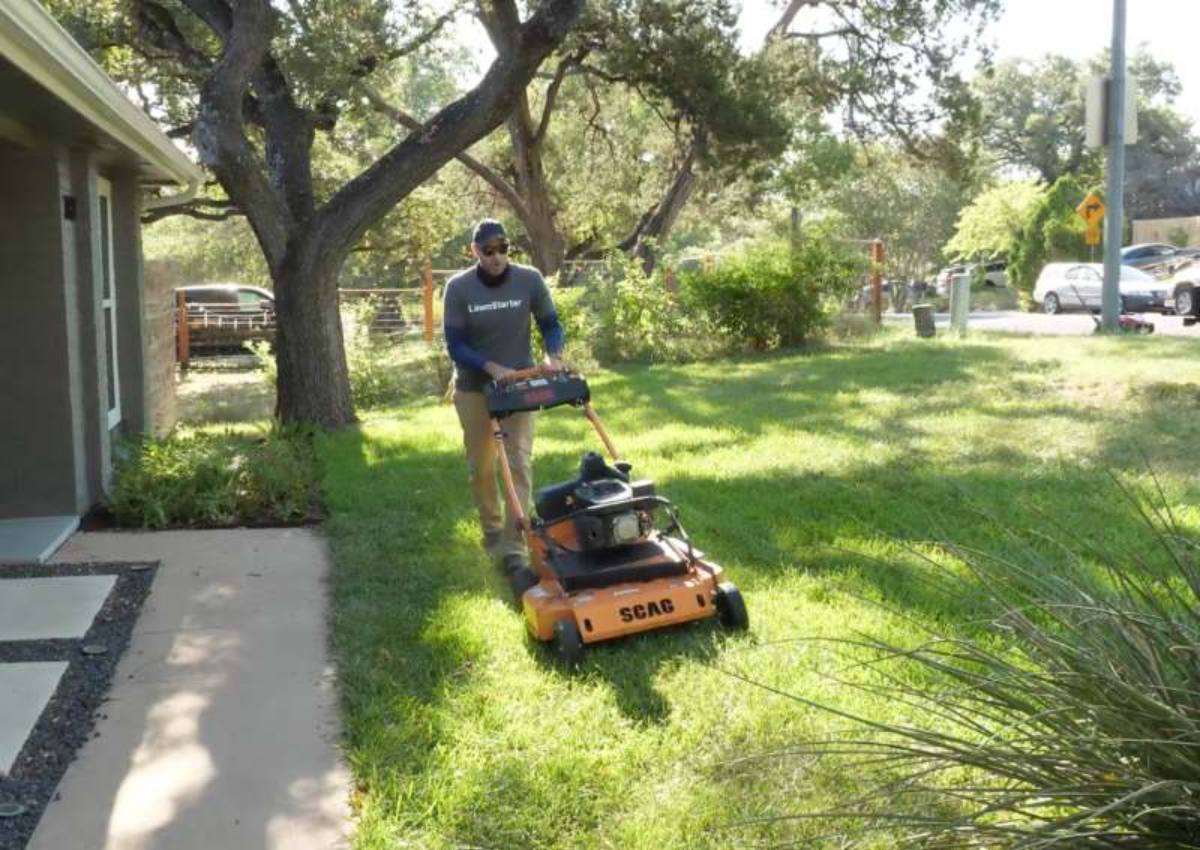
Main Image Credit: LawnStarter pro Justin Stultz mowing a lawn near Hutto, Texas / Photo from videos shot by Dustin Smith
Related Posts: