| Key Takeaways |
|---|
| • Don't skip watering after you fertilize. • Take a soil test before you fertilize. • Don't fertilize at the wrong time or overapply. |
Fertilizer can make a big difference for a struggling lawn, but it’s also easy to get it wrong. Many homeowners skip the crucial post-application watering, accidentally overapply, fertilize at the wrong time, or use the wrong nutrients.
These errors can waste your money, damage your lawn, and even contaminate local water sources. The good news? They’re all completely avoidable once you know what to watch out for.
In this guide, we’ll help you understand these 8 mistakes so you can get healthier grass without trial and error. Want expert help instead? LawnStarter connects you with lawn treatment pros who can handle it correctly from the start.
- Mistake 1: Not Watering After Fertilizing
- Mistake 2: Applying the Wrong Nutrients
- Mistake 3: Over-Fertilizing
- Mistake 4: Fertilizing New Grass Too Soon
- Mistake 5: Fertilizing at the Wrong Time
- Mistake 6: Not Fertilizing Often Enough (Or Too Often)
- Mistake 7: Not Preparing Your Lawn Before Fertilizing
- Mistake 8: Applying Fertilizer Unevenly
- Expert Tip: Check Your Soil, Not Just Your Grass
- FAQ
Mistake 1: Not Watering After Fertilizing
One of the most common questions homeowners ask: Should you water after fertilizing your lawn? The answer is yes, and skipping this step is one of the biggest mistakes you can make.
If you don’t water after a fertilizer application, the fertilizer will sit on the grass blades and be of no help to your lawn. It needs to get into the soil to be of use. Additionally, you risk fertilizer burn if you don’t water after fertilizing. Granular fertilizer sitting on grass blades in the hot sun can scorch your lawn within hours.
What To Do Instead:
- For granular fertilizer: Apply 1/4 inch of water (15-20 minutes with most sprinklers) immediately after application. This washes fertilizer from grass blades into the soil, activating the product.
- For liquid fertilizer: Wait 2-4 hours before watering. This allows the product to absorb through grass blades. Always check your product label for specific timing
Important: Don’t overwater after fertilizing. Too much water washes nutrients away before grass roots can absorb them and can contaminate local groundwater. One light watering session is sufficient.
See Related: Liquid vs. Granular Fertilizer
Mistake 2: Applying the Wrong Nutrients
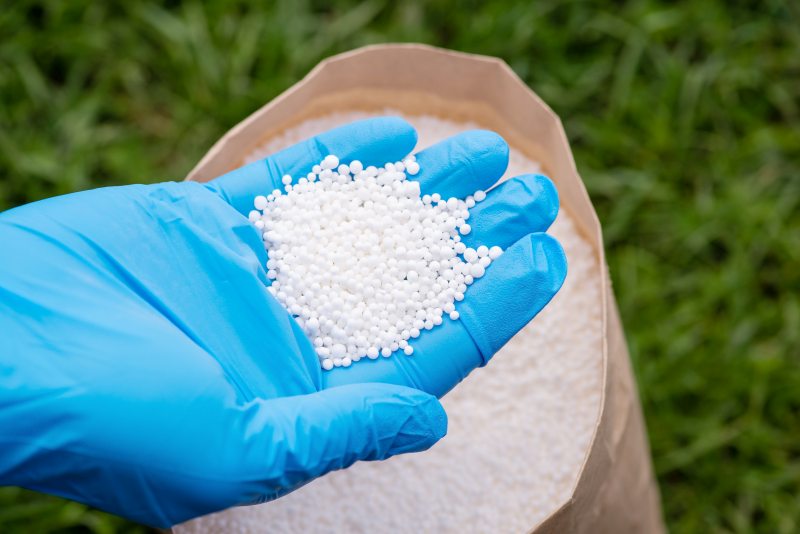
A common mistake homeowners make is using the wrong kind of fertilizer. Many people reach for all-in-one fertilizers because they’re convenient, but these products aren’t always the best fit for a lawn’s needs.
According to Hayden Bock, assistant professor of landscape sustainability at Penn State, “Homeowners should recognize that big-box store all-in-one fertilizers are typically formulated to achieve a very high aesthetic, which research shows is significantly higher than most people’s expectations.”
In other words, these products are often designed to push lawns to look greener and denser than necessary, which can lead to excess growth, wasted fertilizer, and unnecessary nutrient runoff.
What To Do Instead:
- Get a soil test from your local Extension office or a reputable lab before buying fertilizer.
- Review the results to see what nutrients your soil has and what it’s missing.
- Match your fertilizer to your needs using the fertilizer number (NPK) ratio on the bag.
See Related:
– How to Choose the Right Lawn Fertilizer
– How to Read a Soil Test Report
Mistake 3: Over-Fertilizing
Can too much fertilizer kill grass? Absolutely. Too many nutrients at once can cause fertilizer burn, thinning turf, brown patches, or even dead sections of lawn. It also increases the risk of nutrient runoff.
As Bock explains, “Research conducted by my colleagues and I shows that more fertilizer doesn’t automatically enhance aesthetics. Fertilizer promotes grass growth and improves aesthetics to a point, but doubling the amount doesn’t make the grass twice as green.”
“This means homeowners can often reduce fertilizer applications and still achieve an aesthetic that meets their expectations,” he adds.
What To Do Instead:
- Calculate your lawn’s square footage and follow label instructions.
- Get a soil test to know exactly how much fertilizer your lawn needs.
- Apply no more than 1 pound of nitrogen per 1,000 square feet per application.
- Wait 6-8 weeks between applications.
See Related: How to Fix an Over-Fertilized Lawn
Mistake 4: Fertilizing New Grass Too Soon
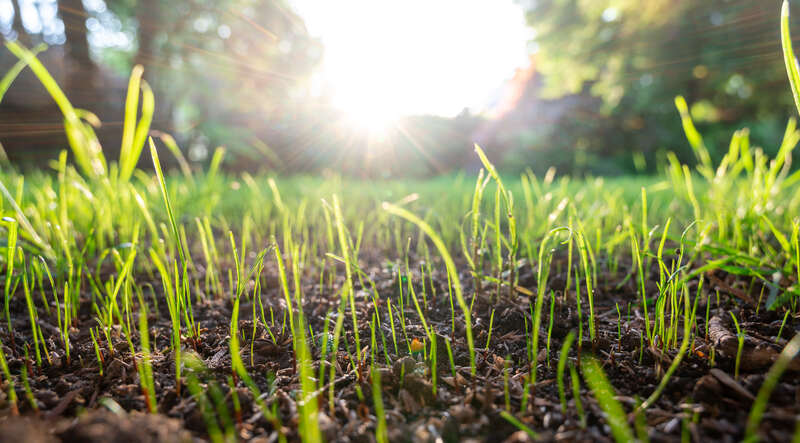
Will fertilizer kill new grass if you apply too soon? Yes. Premature application can harm or kill your new grass. Your grass is still establishing itself and developing its root system. The new growth will be tender and vulnerable to fertilizer burn as a result of early application.
Note: This waiting period does not apply to starter fertilizer. It’s still important to apply starter fertilizer when planting grass seed to help encourage germination.
What to Do Instead:
- For new grass seed, wait 4-8 weeks after planting.
- For new sod, wait about 1 month (when roots establish).
- After the waiting period, create a regular fertilizer regimen and stick to it.
See Related:
– Will Fertilizer Kill New Grass?
– 9 FAQs About Applying Starter Fertilizer to Your Lawn
Mistake 5: Fertilizing at the Wrong Time
Timing matters because different grass types grow actively at different times of year. Fertilizing outside your grass growth season can do more harm than good.
If you apply too early, your grass will grow too quickly, resulting in a weaker root system and increased susceptibility to pests and disease. Conversely, if you fertilize too late, your lawn won’t have the vital nutrients it needs during the growing season, which will weaken it.
What To Do Instead:
Follow the table below:
| Grass Type | Primary Application | Secondary Application |
| Cool-season (fescue, bluegrass, ryegrass) | Early fall (Sept.-Oct.) | Early spring (April-May) |
| Warm-season (Bermuda, St. Augustine, Zoysia) | Mid-spring/early summer (April-June) | Late summer (July-August) |
See Related: When to Fertilize Your Lawn
Mistake 6: Not Fertilizing Often Enough (Or Too Often)
How often should you fertilize your lawn? That depends on your grass type and climate. It is a mistake to assume that all lawns need the same number of fertilizer applications each year.
Some warm-season grasses benefit from multiple light applications throughout the year, while cool-season grasses typically require fewer applications concentrated in fall and spring.
Fertilizing too infrequently can leave grass undernourished, while overfertilizing can burn your grass and increase the risk of nutrient runoff.
What To Do Instead: Follow a fertilization schedule tailored to your grass type, region, and soil condition. A soil test and your local Extension office can help you create the ideal schedule for your lawn.
See Related: When and How Often Should You Fertilize Your Lawn?
Mistake 7: Not Preparing Your Lawn Before Fertilizing
If you don’t prepare your lawn, you can run into many different issues. The nutrients in your fertilizer will go straight to the weeds, for example, or the thick thatch layer might prevent fertilizer from reaching the soil.
What To Do Instead (complete 1-2 days before fertilizing):
- Water your lawn thoroughly.
- Mow the grass to the proper height (2.5-3.5 inches for most grasses).
- Remove or treat weeds so fertilizer feeds grass, not weeds.
- Dethatch or aerate if needed (if thatch exceeds 1/2 inch or soil is compacted).
See Related: Dethatching vs. Aeration: What’s the Difference?
Mistake 8: Applying Fertilizer Unevenly
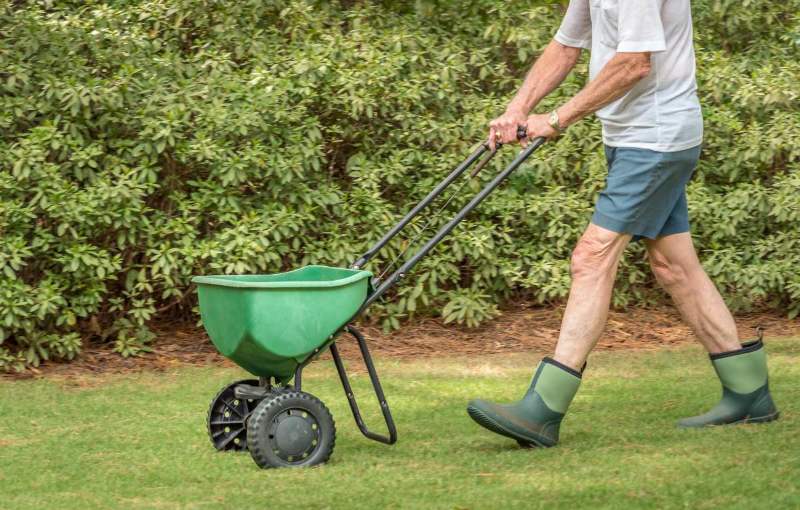
Finally, a common mistake during fertilizer application is applying it unevenly. This is often caused by hand spreading, which leaves streaks on your lawn. Even application is vital to avoid fertilizer burn and patchy grass.
What to Do Instead:
Choose the right lawn spreader:
- Broadcast (rotary) spreader: Best for large, open lawns — covers ground quickly.
- Drop spreader: Best for smaller lawns and precise applications near flower beds or sidewalks.
- Sprayer: Best for liquid fertilizer applications.
Inspect your spreader before applying to ensure it’s working properly and delivering an even amount throughout your lawn.
For a step-by-step guide, check out: How to Fertilize Your Lawn.
Expert Tip: Check Your Soil, Not Just Your Grass
Many homeowners don’t realize that one of the best ways to evaluate their fertilization approach is to look directly at the soil itself. For Bock, “It is useful for homeowners to grab a shovel, get their hands dirty, and take a look at the soil in their lawn every so often to build an intuition about what ‘soil health’ actually is.”
Healthy soil should show signs of life, feel moist and crumbly rather than compacted, and allow grass roots to grow deeper than just the top few inches. Over time, Bock notes that repeated chemical inputs can subtly alter these conditions.
“One application of fertilizer isn’t going to cause all these changes,” Bock says, “but over time, the chemical inputs associated with intense lawn management (pesticides, herbicides, fertilizer) can degrade the physical, chemical, and biological properties of soil.”
Checking your soil periodically gives you a baseline. If you notice increasing compaction, fewer organisms, or shallower roots, it may be time to reduce fertilizer inputs or rethink your approach.
FAQ
To fix fertilizer burn, you need to remove the damaged grass as well as the leftover fertilizer. Then, water your lawn deeply to flush out the remaining fertilizer — apply at least 1 inch of water over several days. Finally, reseed your lawn to replace the damaged patches. The lawn should recover in 2-4 weeks with proper care.
See Related: What is Fertilizer Burn?
It’s mostly a matter of preference and what best suits your lawn. Organic fertilizers release nutrients slowly and improve soil health, but cost more. Synthetic fertilizers provide immediate results and precise nutrient ratios, but don’t improve soil structure.
See Related: Organic vs. Synthetic Fertilizer: What’s the Difference?
Most fertilizers require 6-8 weeks between applications, though this varies by product type. Slow-release fertilizers may last 8-12 weeks, while quick-release formulas might need reapplication sooner. Always check your specific product label.
See Related: Slow-Release vs Quick-Release Fertilizer
Find Your Fertilization Gurus
Fertilizer is a valuable tool for homeowners to keep their lawns looking sharp. But if used wrong, it can have negative effects on your landscape.
If fertilizing your lawn correctly feels like more work than you want to handle, contact local lawn treatment professionals. They’ll fertilize your lawn with customized treatment plans and expert timing, so you don’t have to worry about making costly mistakes.
Sources:
Hayden Bock, assistant professor of landscape sustainability at Penn State University, University Park, PA. Personal interview.
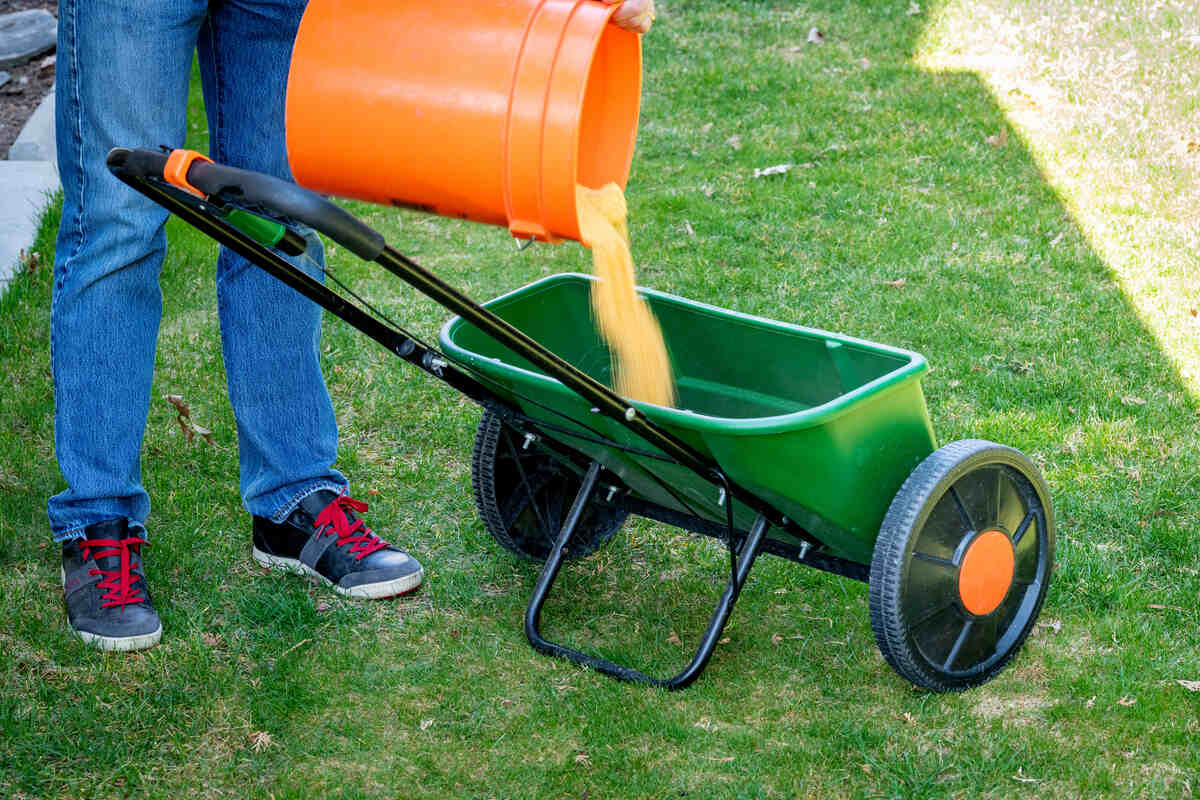
Main Image: Man pouring fertilizer into a drop spreader. Image Credit: knowlesgallery / Adobe Stock Free / License
Related Posts: