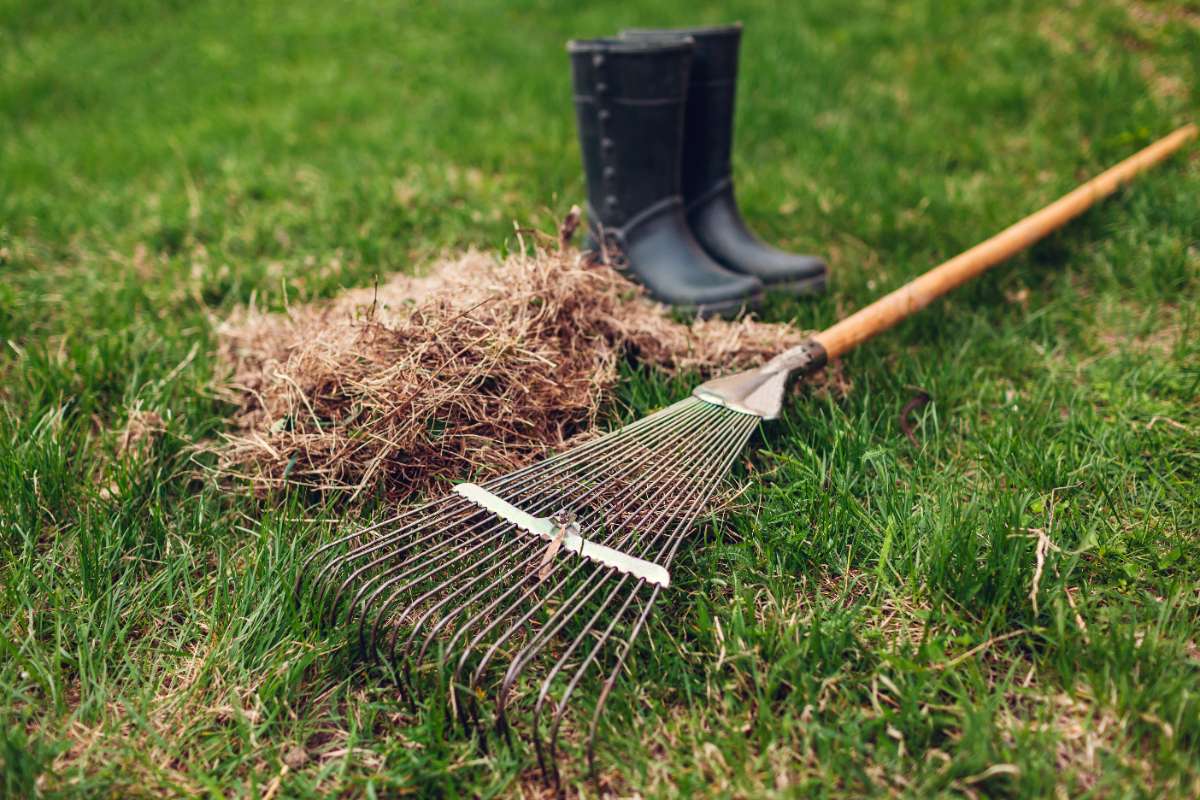
Dethatching the lawn in spring can work wonders for some lawns — but it can seriously damage others. It depends on factors such as the type of grass and soil conditions.
Many homeowners assume dethatching is a must-do spring chore, but that’s not always true. Unless you want to tear up new grass growth, expose roots to stress, and leave your yard looking worse than before, you should learn when spring dethatching causes more harm than good.
Don’t know if your lawn needs dethatching this spring? LawnStarter’s local lawn care pros can assess your yard at the first mow, recommend dethatching, if needed, and handle the job safely — so you don’t have to worry about damaging your turf.
| Key Takeaways: |
|---|
| • Don’t remove thatch less than 1/2 inch — it’s healthy for the lawn. • Skip dethatching lawns during drought, water restrictions, or when grass is recovering from winter dormancy. • Cool-season (northern) grasses: Don’t dethatch during stressful periods. • Warm-season (southern) grasses: Wait until June or July before dethatching. |
What is Thatch and Why is it Important?
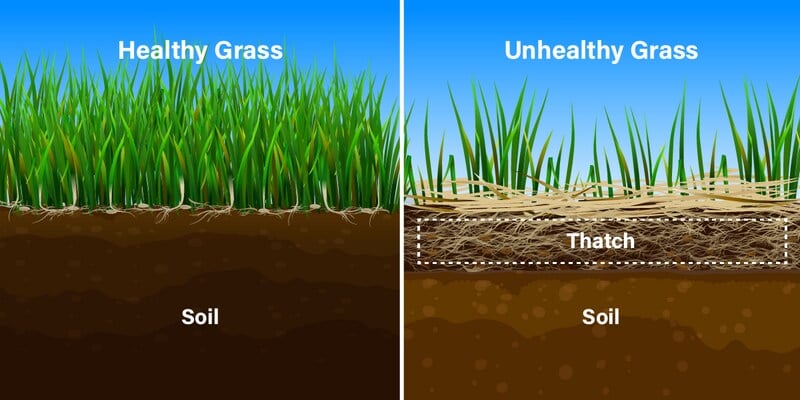
Do you feel a soft, spongy layer when you press down on your lawn? That’s thatch. It sits between the grass blades and the soil below. Thatch is made up of dead and living plant material — stems, roots, and grass clippings that have built up over time.
A thin layer of thatch is actually good for your lawn. Here’s what it does:
- Retains moisture
- Cushions foot traffic
- Reduces runoff and prevents erosion
- Feeds the soil and improves soil health
- Keeps the grass warmer in early spring and cooler during summer heat
While a thin thatch layer can be beneficial for your lawn, the problems start when your lawn has too much thatch.
What is the Threshold for Thatch?
Knowing when thatch becomes harmful is key to lawn care. Haibo Liu, professor of turfgrass and soil sciences at Clemson University, shares a simple test:
“Press a screwdriver into the turf: Easy penetration suggests thatch, while resistance indicates compaction,” he says.
You can also push a small garden tool or your finger through the grass until you hit soil. Measure the brown, spongy layer between the green grass and the dirt below.
Here’s what different thatch depths mean:
| Less than 1/2 inch |
| ➣ What it means: Healthy and beneficial for the lawn — protects soil and holds moisture. ➣ What to do: Leave it alone — no dethatching needed. |
| 1/2 inch to 3/4 inch |
| ➣ What it means: Starting to build up, but still okay. ➣ What to do: Keep an eye on it. Aerate your lawn and water properly to prevent more buildup. |
| 3/4 inch to 1 inch |
| ➣ What it means: Blocking water, air, and nutrients. Your grass may start showing stress. ➣ What to do: Plan for light dethatching or gentle raking soon. |
| Over 1 inch |
| ➣ What it means: Choking your grass roots and creating conditions for pests and disease. ➣ What to do: Dethatch your lawn to restore airflow and drainage. |
When to Avoid Spring Dethatching
Even if your thatch is over an inch thick, you shouldn’t dethatch right away. There are other factors to consider first, especially in spring.
Avoid spring dethatching in the following situations:
1. Don’t Dethatch Thin Thatch on Stress-Susceptible Grass
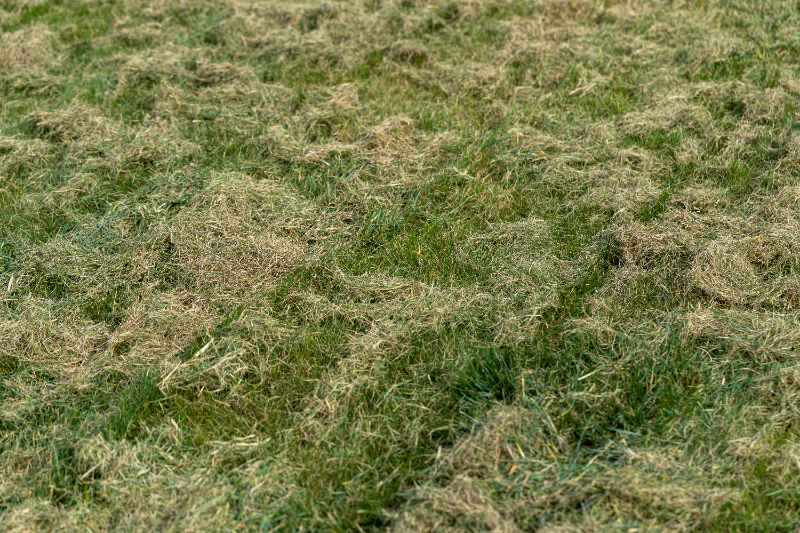
Some grass types don’t recover quickly from aggressive dethatching. Kentucky bluegrass, centipedegrass, and St. Augustinegrass are especially vulnerable to stress.
You don’t need to do anything if your thatch is less than half an inch thick. That thin layer actually protects these delicate grasses from heat, drought, and wear. Remove it too early in spring, and you’ll expose their roots to harsh conditions.
What to do: Stick to light maintenance instead of dethatching. Mow at the right height (use our guide, What’s the Best Height to Cut Your Grass?), overseed thin spots, and feed your grass with balanced fertilizer to strengthen roots before summer. Your grass is still recovering from winter dormancy, so it’s best not to stress it out.
See Related:
2. Don’t Dethatch When Compaction is the Problem
In spring, when lawns are just waking up and growth is slow, it’s easy to confuse compaction with thatch buildup. If your lawn feels hard when you walk on it, or water sits on top instead of soaking in, you likely have compacted soil.
Dethatching won’t fix soil compaction. In fact, it can make things worse by tearing up tender new growth.
Here’s a quick way to test for soil compaction:
- Push a screwdriver or garden fork into the soil.
- Notice how it feels.
- If it’s hard to push in, you have compaction.
- If it feels springy and spongy, you have thatch.
If you have compacted soil, spring is actually the perfect time to aerate your lawn. Once your lawn recovers, it will naturally start breaking down light thatch on its own.
3. Don’t Dethatch Cool-Season Grass During Stressful Periods
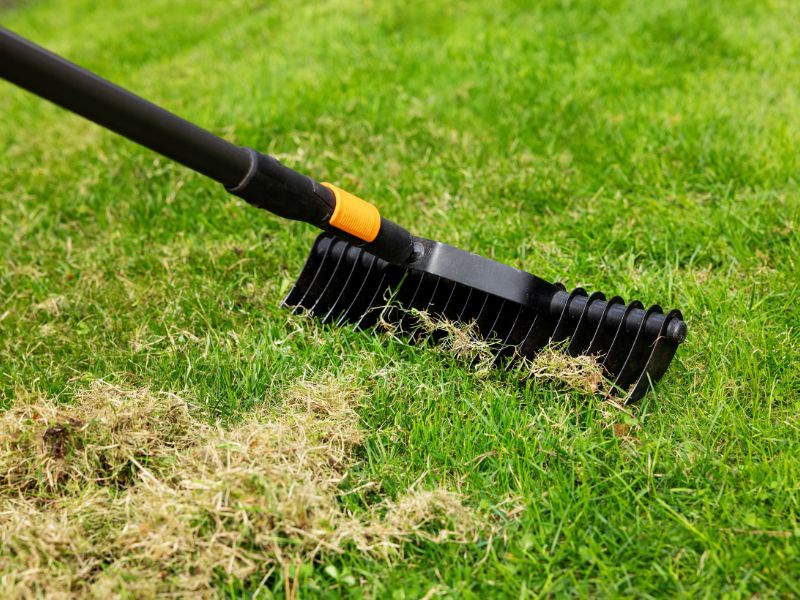
Spring brings challenges for cool-season grasses, such as tall fescue, perennial ryegrass, and fine fescue. These grasses are just coming out of winter dormancy, and conditions aren’t always ideal.
Wet, cool weather creates perfect conditions for fungal diseases. Freshly dethatched lawns are especially vulnerable because the soil is exposed and new growth is tender. Your grass will struggle with temperature swings and excess moisture at the same time.
Liu adds that drought and pest problems can also cause stress on your lawn. In these cases, he doesn’t recommend dethatching, especially for newly established turf.
Expert Tip: Even without these stress factors, don’t dethatch too early in spring, before greenup. You risk damaging new crowns and shoots. Plus, your grass may not have enough time to recover before the summer heat arrives.
4. Don’t Dethatch Warm-Season Grass Before Green-Up
If you have Bermudagrass, St. Augustinegrass, or Zoysiagrass, don’t dethatch too early in the spring. These warm-season grasses are still dormant or just starting to wake up. Dethatching before they’re fully green can rip out living stolons and rhizomes — the underground parts that help your lawn spread and fill in.
In early spring, those brown patches of dormant grass might tempt you to clean them up. But your lawn isn’t ready yet. Grass damaged by early dethatching may not have enough energy to recover, leaving you with thin or bare spots.
“Dethatching warm-season lawns should be conducted in June and July,” says Liu. “They grow best in those two months, so dethatching should be done in the summer.”
Wait until your lawn is at least 50% green before dethatching. At this point, your grass is actively growing and can quickly heal from the stress.
5. Don’t Dethatch During Drought or Water Restrictions
Spring doesn’t always bring rain. In many areas, dry spells or early-season watering restrictions are common. This typically happens when winter snowfall is low, rainfall is below average, or local water supplies are stretched thin.
When your lawn is already thirsty, or you can’t water at will, dethatching adds more stress. Here’s why you should wait:
- Exposes roots to heat and drying: Liu says that drought can weaken roots significantly. Removing thatch strips away natural insulation, causing soil to dry out even faster.
- Grass can’t heal properly: New shoots that appear after dethatching will wilt and die without enough water to help them get established.
- Invites weed takeover: Drought-weakened grass can’t compete with weeds like dandelion and chickweed, which will quickly fill in bare spots.
See Related:
6. Don’t Dethatch Sandy Soil with Low Organic Matter
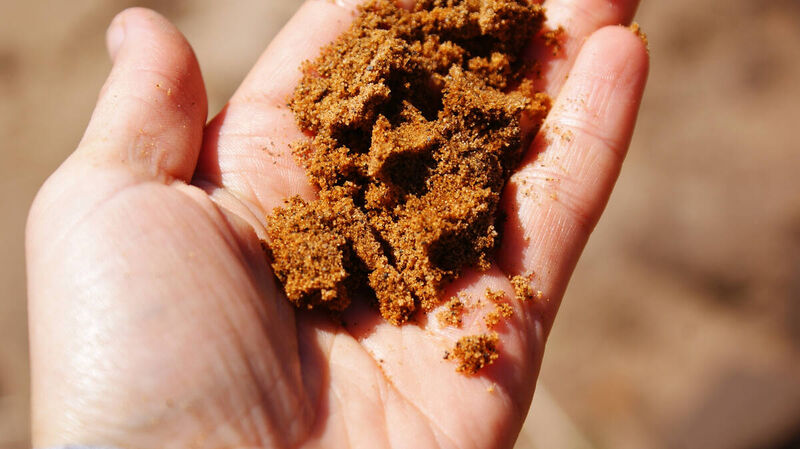
Sandy soils are common in coastal and southern regions. They drain quickly but don’t hold nutrients or moisture well. In spring, when temperatures rise and winds pick up, moisture loss speeds up. Dethatching removes the small amount of organic cushion your lawn has.
“The turf will dry out quickly without proper irrigation after dethatching,” says Liu. “Also, due to the sandy soil having lower organic matter, the turf can easily suffer nutrient deficiency.”
You can spot sandy soil with low organic matter if water disappears within seconds after watering, or if your grass looks pale green even with regular fertilization.
See Related: The Challenges of Growing a Lawn in Coastal Areas
FAQ About Dethatching Lawns
Dethatching is best done in spring or fall, depending on your grass type. For cool-season grasses, dethatch in fall, no later than 3 to 4 weeks before the first frost. For warm-season grasses, dethatch in spring, but avoid dethatching after the hottest part of summer.
See Related: When to Dethatch Your Lawn
Most lawns bounce back in 2 to 4 weeks, depending on grass type and growing conditions.
Once a year is usually enough. However, if you have heavy thatch buildup, you may need to dethatch in both spring and early fall.
Hire a Pro to Dethatch Your Lawn
Some homeowners include aggressive dethatching as part of their spring maintenance. But now you know better — spring dethatching isn’t right for every lawn.
If you’ve determined that your lawn is safe for spring dethatching, don’t tackle this tough job yourself. LawnStarter pros know exactly when and how to dethatch without damaging your turf.
Get a free lawn care quote, and let our pros take care of dethatching along with your other lawn care needs.
Sources:
- “Controlling Thatch in Lawns.” By Nancy Doubrava, former HGIC horticulture information specialist. Clemson University.
- “Cultivation and Thatch Control.” Kansas State University.
- Haibo Liu, professor of turfgrass and soil sciences at Clemson University. Personal interview.
- “How to Control Thatch in Your Lawn.” By Sam Bauer, Extension educator, Deborah Brown, and Don Taylor. University of Minnesota.
- “Mowing, Dethatching, Aerifying, and Rolling Turf.” By Zac Reicher, turfgrass Extension specialist, Aaron Patton, Department of Agronomy, Cale Bigelow, turfgrass Extension specialist, and Tom Voigt, turfgrass Extension specialist. Purdue University Extension and University of Illinois Extension.
- “Washington Water Supply Update.” Department of Ecology – State of Washington.
Main Image: Rake and dead grass pile with boots nearby. Image Credit: maryviolet / Adobe Stock
